The potluck was in three hours and I’d completely forgotten. My neighbor Marie had been planning her slow-braised short ribs for a week. Across the street, Kevin was bringing his famous from-scratch apple tart that took him two days to assemble. I had a half-stick of butter, a bag of russet potatoes I’d bought on sale, and some sage that was starting to wilt in the crisper drawer. Honestly, I almost just grabbed a bag of chips on the way out the door. But something stopped me — that stubborn voice that refuses to show up empty-handed, even when you’re totally unprepared.
So I did what any reasonable person in a panic does: I started boiling potatoes and browning butter, figuring I’d at least have something warm and edible. I wasn’t trying to impress anyone. I mean, mashed potatoes at a potluck? It’s the safe choice, the backup dish, the thing nobody raves about but everyone eats. But here’s the thing — when you brown that butter and let it get all nutty and golden, and you fry those sage leaves until they’re crackly and paper-thin, something shifts. That humble bowl of potatoes becomes the thing people hover around. The thing that gets scraped clean before the short ribs even hit the table.
I showed up with my pot, slightly embarrassed by how simple it was. Marie’s ribs were incredible. Kevin’s tart was a work of art. But you know what got asked for the recipe? The creamy brown butter sage mashed potatoes. Three different people came up to me, forks in hand, demanding to know what I’d done to make them taste so good. And I had to laugh — because I’d made them in a rush, with ingredients I had lying around, not even measuring half the time. Maybe you’ve been there, showing up to something with your “backup” dish only to have it steal the show. That’s this recipe. It’s the underdog that wins every time, and honestly, that’s why I keep making it.
Why You’ll Love This Recipe
These creamy brown butter sage mashed potatoes aren’t just another side dish. They’re the kind of recipe that makes you look like a kitchen genius with almost zero effort. And for busy families feeding a hungry crew on a budget, that’s pure gold.
- Budget-Friendly Ingredients: You probably already have potatoes, butter, and sage in your kitchen right now. No fancy truffle oil or expensive cheeses required. This is smart cooking that stretches your grocery dollar without skimping on flavor.
- Surprisingly Simple: The brown butter technique sounds fancy, but honestly, it’s just melted butter cooked a little longer. Anyone can do it, and the payoff is massive. You’ll feel like a pro chef without any of the stress.
- Picky Eater Approved: My kids used to push mashed potatoes around their plates. Not anymore. The nutty, toasty flavor of brown butter somehow makes them irresistible to even the fussiest eaters. It’s like magic, I swear.
- Reheats Like a Dream: These potatoes hold up beautifully in the fridge and taste just as good the next day. Perfect for meal prep or making ahead for holiday dinners when your oven is already packed.
- Comfort Food That Feels Special: There’s something about that golden-brown butter and crispy sage that makes a Tuesday night dinner feel like a celebration. It’s comfort food reimagined — richer, warmer, and more soul-soothing than plain mashed potatoes could ever be.
What makes this recipe different from every other mashed potato recipe out there? It’s the technique. Browning the butter transforms it from something ordinary into something deeply nutty and aromatic. And frying those sage leaves? That tiny step adds a crunch and herbaceous pop that makes every bite interesting. This isn’t just another version of mashed potatoes — it’s the best version, tested in my kitchen through countless family dinners and potluck disasters.
This recipe is the kind that makes you close your eyes after the first bite. It’s comfort food at its finest — affordable, forgiving, and absolutely unforgettable.
What Ingredients You Will Need
This recipe uses simple, wholesome ingredients to deliver bold flavor and satisfying texture without the fuss. Most of these are pantry staples you likely already have on hand, which makes this perfect for last-minute cooking emergencies.
- Russet potatoes, 3 pounds (about 6 medium) — These are my go-to for mashed potatoes. They’re starchy and fluffy, which gives you that light, creamy texture. Yukon Golds work great too if you want a slightly buttery color and flavor. Just avoid waxy potatoes like reds or fingerlings — they’ll turn gluey on you.
- Unsalted butter, 1 cup (2 sticks or 226 grams) — I use unsalted so I can control the salt level myself. Kerrygold is my favorite brand for browning because it has a higher fat content and lower water content, which means it browns more evenly and tastes richer. But any good unsalted butter will work beautifully.
- Fresh sage leaves, 15-20 leaves — Fresh is non-negotiable here. Dried sage just won’t give you that same crispy texture or bright flavor. Look for leaves that are vibrant green and not wilting. One bunch from the produce section is usually more than enough.
- Whole milk, ¾ cup (180 ml) — Whole milk adds richness without making the potatoes too heavy. You can substitute with 2% or even half-and-half if you’re feeling indulgent. For a dairy-free version, unsweetened oat milk works surprisingly well.
- Heavy cream, ½ cup (120 ml) — This is what makes these potatoes extra luxurious. If you don’t have heavy cream, you can use all milk, but the texture won’t be quite as velvety. Trust me, the cream is worth it.
- Salt, 1½ teaspoons (9 grams), plus more for the water — I use fine sea salt for cooking and flaky sea salt for finishing. The flaky salt on top at the end really makes a difference — it adds little bursts of saltiness that wake up your taste buds.
- Black pepper, ½ teaspoon (1 gram), freshly ground — Freshly ground pepper has so much more flavor than the pre-ground stuff. It’s one of those small upgrades that makes a big difference.
- Garlic, 2 cloves, smashed (optional but recommended) — I like to add a couple of smashed garlic cloves to the milk while it warms. It infuses the potatoes with a subtle garlic flavor without being overpowering. My kids don’t even notice it, and that’s a win.
Ingredient Selection Tips: When choosing potatoes, look for ones that are firm with no green spots or sprouts. For the sage, give the leaves a gentle sniff — they should smell earthy and slightly peppery. If they smell musty, they’re past their prime. And for the butter, if you can swing it, European-style butter really does make a difference in browning. It’s a small splurge that pays off in flavor.
Substitution Guidance: Need to make this dairy-free? Use a good vegan butter (I like Miyoko’s) and unsweetened oat milk or full-fat coconut milk. The texture won’t be exactly the same, but it’ll still be delicious. For a gluten-free version, you’re already good — potatoes are naturally gluten-free. Just double-check your butter if you’re serving someone with celiac, as some brands can have cross-contamination.
Equipment Needed
You don’t need a fancy kitchen to make these potatoes shine. Here’s what you’ll need:
- Large pot (5-6 quart) — For boiling the potatoes. Make sure it’s big enough that the potatoes have room to move around.
- Colander — For draining the potatoes. A fine-mesh one is nice but not necessary.
- Potato masher or ricer — I prefer a ricer for the smoothest texture, but honestly, a good old-fashioned masher works perfectly fine. My grandmother used a fork, and her potatoes were legendary. I’ve also used a hand mixer in a pinch, but be careful not to overmix or you’ll get gluey potatoes.
- Small skillet or saucepan — For browning the butter and frying the sage. A light-colored pan helps you see when the butter is browning.
- Wooden spoon or silicone spatula — For stirring the butter as it browns. A metal spoon can scratch your pan.
- Measuring cups and spoons — Accurate measurements help, though I’ll admit I eyeballed everything that first potluck and it still turned out great.
- Small saucepan — For warming the milk and cream. Cold liquid can make your potatoes seize up and turn gummy.
Budget-Friendly Options: If you don’t have a ricer, a standard potato masher from the grocery store costs about $8 and works beautifully. No need for fancy gadgets here. And if you don’t have a small skillet, any pan will work — just keep a close eye on the butter so it doesn’t burn.
Preparation Method
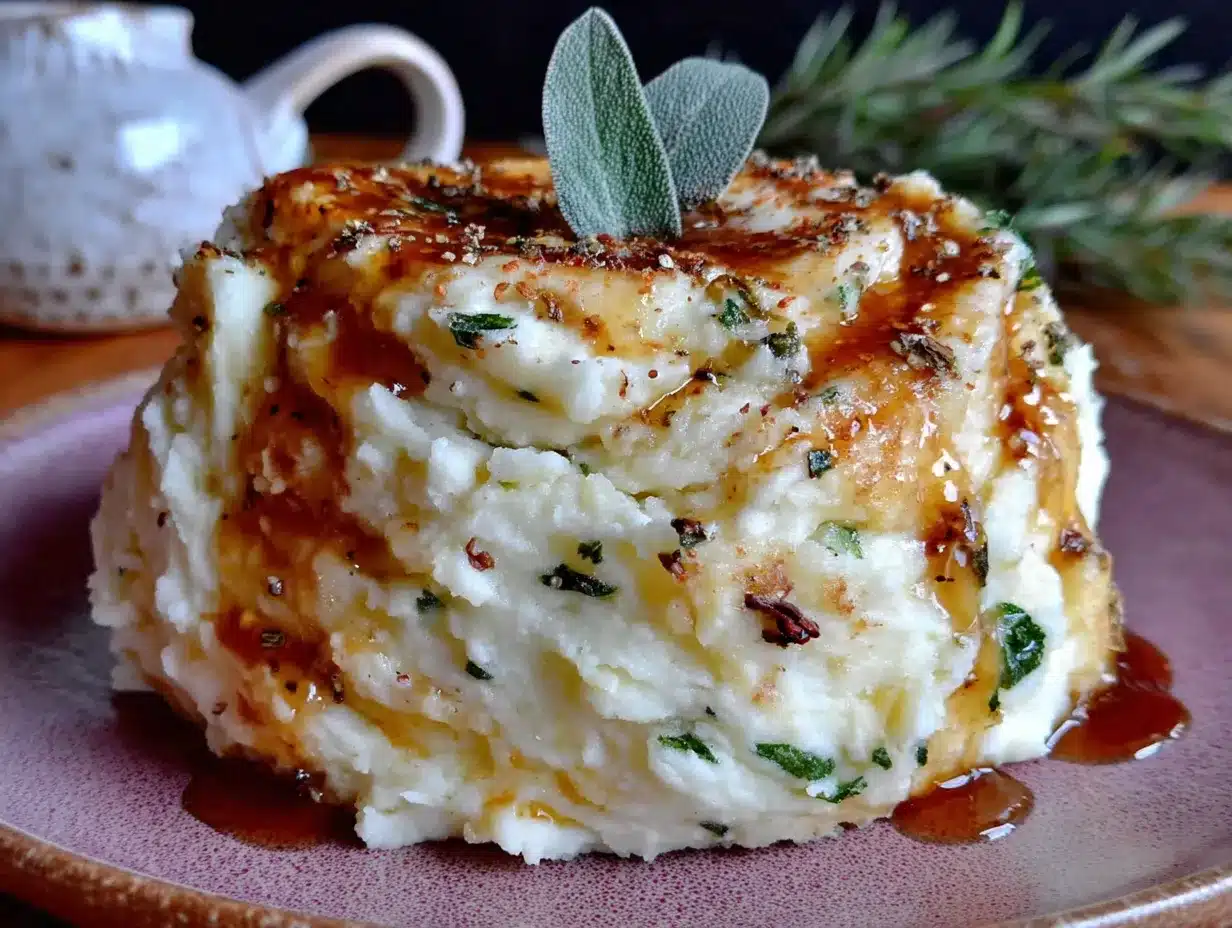
Let me walk you through this step by step. I’ve made these potatoes dozens of times, and these are the little tricks I’ve picked up along the way.
- Prep the potatoes (5 minutes) — Peel your potatoes and cut them into 1-inch chunks. Try to make them roughly the same size so they cook evenly. I know peeling is annoying, but trust me, the smooth texture is worth it. Rinse the chunks in cold water to remove excess starch — this helps prevent them from becoming gummy.
- Boil the potatoes (20-25 minutes) — Place the potato chunks in your large pot and cover them with cold water by about an inch. Add a generous tablespoon of salt to the water — this seasons the potatoes from the inside out. Bring to a boil over high heat, then reduce to a simmer. Cook until the potatoes are fork-tender, meaning a knife slides in with no resistance. Don’t let them get mushy or they’ll absorb too much water. Drain them in a colander and let them sit for a minute or two to steam dry. This is important — excess water is the enemy of creamy mashed potatoes.
- Warm the milk and cream (3 minutes) — While the potatoes are cooking, combine the milk, heavy cream, and smashed garlic cloves (if using) in a small saucepan. Warm over low heat until it’s hot but not boiling. You want it steaming gently. If you add cold milk to hot potatoes, they’ll seize up and turn stiff. I learned this the hard way, believe me.
- Brown the butter (5-7 minutes) — In your small skillet, add the butter over medium heat. Let it melt completely, then continue cooking, swirling the pan occasionally. The butter will foam up, then the foam will subside, and you’ll start seeing golden brown specks forming at the bottom. This is the milk solids toasting — and that’s where all the flavor lives. Swirl and watch carefully — it can go from perfect to burnt in seconds. When it smells nutty and looks amber-colored, remove it from the heat immediately. Pour it into a heatproof bowl to stop the cooking process.
- Fry the sage leaves (2 minutes) — In the same skillet (don’t wipe it out — there’s flavor left in there), add a tablespoon of the browned butter. Lay the sage leaves in a single layer and cook over medium heat for about 30 seconds per side. They’ll turn darker green and get crispy. Transfer them to a paper towel-lined plate and sprinkle with a tiny pinch of salt. They’ll crisp up more as they cool.
- Mash the potatoes (5 minutes) — Return the drained potatoes to the pot (or transfer to a large bowl). Mash them with your potato masher or push them through a ricer. If you’re using a ricer, work in batches. Don’t use a food processor or blender — you’ll end up with glue. I promise you, I’ve made that mistake and it’s not pretty.
- Add the warm liquid (3 minutes) — Remove the garlic cloves from the warm milk mixture. Pour about half of it over the mashed potatoes and stir gently with a wooden spoon. Add the remaining liquid and stir until incorporated. Don’t overmix — just until it’s combined. You want creamy, not pasty.
- Finish with brown butter (2 minutes) — Pour the browned butter over the potatoes, reserving about a tablespoon for drizzling on top. Fold it in gently. Season with salt and pepper to taste. I usually start with 1½ teaspoons of salt and adjust from there. Taste as you go — everyone’s salt preference is different.
- Serve (2 minutes) — Transfer the potatoes to a serving bowl. Drizzle with the reserved browned butter and arrange the crispy sage leaves on top. Sprinkle with a little flaky sea salt if you have it. Serve immediately while they’re hot and glorious.
Cooking Tips & Techniques
Let me share some hard-won wisdom from my years of making these potatoes. I’ve had my share of failures, and I want you to avoid them.
Don’t Overwork the Potatoes — This is the number one mistake people make. When you overmix mashed potatoes, you break down the starch cells and release too much starch, which turns them into a gluey, pasty mess. Use a gentle hand. Fold, don’t beat. And whatever you do, keep that hand mixer away. I once tried to speed things up with an electric mixer and ended up with potatoes that could have been used as wallpaper paste.
The Cold Liquid Trap — I cannot stress this enough: warm your milk and cream before adding them to the potatoes. Cold liquid makes the potatoes seize up and turn stiff. It also cools down the entire dish, which means you’ll have to reheat it, which can dry it out. Warm liquid keeps everything smooth and hot.
Brown Butter Timing — Browning butter is a game of seconds. The moment you see those golden brown specks and smell that nutty aroma, pull it off the heat. If you’re unsure, err on the side of under-browning. Burnt butter tastes bitter and will ruin your potatoes. I always transfer it to a separate bowl immediately to stop the cooking. And use a light-colored pan so you can actually see what’s happening.
Multitasking Strategy — Here’s how I time it all: Start the potatoes boiling first. While they’re cooking, warm the milk and cream. When the potatoes are about 5 minutes from done, start browning the butter. That way everything is hot and ready at the same time. The sage leaves can be fried right after the butter is done — they’ll stay crispy for about an hour, so you can do them ahead if needed.
Consistency Fixes — If your potatoes are too thick, add a splash more warm milk. If they’re too thin, let them sit for a few minutes — they’ll thicken as they cool. And if you accidentally over-salted them, add a splash of unsalted warm milk to balance it out. I’ve saved many a batch this way.
Variations & Adaptations
One of the best things about this recipe is how flexible it is. Here are some ways I’ve adapted it over the years:
- Garlic Lover’s Version: Roast a whole head of garlic in the oven at 400°F for 40 minutes, then squeeze the soft cloves into the potatoes along with the warm milk. The roasted garlic adds a sweet, mellow depth that’s absolutely incredible. I make this version for Thanksgiving and it disappears every single time.
- Cheesy Brown Butter Mashed Potatoes: Stir in ½ cup of grated Parmesan or aged Gruyère after adding the warm milk. The cheese melts into the potatoes and adds a savory, umami richness that pairs beautifully with the nutty brown butter. My husband claims this version is “life-changing.”
- Herb-Infused Variation: Add a sprig of fresh rosemary or thyme to the butter while it browns. The herbs infuse the butter with their flavor, and you can remove them before pouring the butter over the potatoes. I did this on a whim one Christmas and it was a huge hit.
- Dairy-Free Adaptation: Use vegan butter and unsweetened oat milk or full-fat coconut milk. The coconut milk adds a slight sweetness that actually works really well with the brown butter flavor. Just make sure your vegan butter is good quality — some brands have a weird aftertaste.
- Make-Ahead Method: Prepare the potatoes up to step 7, then transfer them to a greased baking dish. Cover and refrigerate for up to 2 days. When ready to serve, reheat in a 350°F oven for 20-25 minutes, then finish with the brown butter and sage. The flavor actually gets better overnight as everything melds together.
I once tried a version with truffle oil because I felt fancy, and honestly, it was overpowering. Stick with the simple version — it’s perfect as is.
Serving & Storage Suggestions
Serving Temperature: These potatoes are best served hot, straight from the pot. The brown butter should be glossy and warm, and the sage leaves should be crispy. If you’re serving them at a dinner party, keep them in a warm oven (200°F) covered with foil for up to 30 minutes. Just don’t leave them too long or they’ll dry out.
Presentation Tips: Transfer the potatoes to a warm serving bowl for the best presentation. Drizzle that reserved brown butter in a zigzag pattern on top, then arrange the crispy sage leaves in a cluster in the center. A sprinkle of flaky sea salt right before serving adds visual appeal and a lovely crunch. I sometimes add a few fresh sage leaves for color contrast.
What to Serve With It: These potatoes are incredibly versatile. They’re perfect alongside roasted chicken, grilled steak, or baked salmon. For a vegetarian meal, serve them with roasted mushrooms and a simple green salad. And honestly, they’re amazing on their own as a cozy comfort food dinner — I’ve definitely eaten a bowl of these for dinner more times than I’d like to admit.
Storage Instructions: Store leftovers in an airtight container in the refrigerator for up to 4 days. The sage leaves will lose their crispiness, so I recommend making fresh ones when you reheat. The potatoes themselves will absorb the brown butter flavor even more, which is actually a good thing.
Reheating Methods: The best way to reheat is in a saucepan over low heat, adding a splash of milk to loosen them up. Stir gently until heated through. You can also microwave them in 30-second bursts, stirring between each. If they seem dry, add a little butter or milk. The flavor will still be amazing — I actually look forward to leftovers.
Freezer Notes: These potatoes freeze well for up to 3 months. Place them in a freezer-safe bag or container, flattening them out for even freezing. Thaw in the refrigerator overnight, then reheat as directed. The texture won’t be quite as perfect as fresh, but it’s still delicious and a huge time-saver for busy nights.
Nutritional Information & Benefits
Per serving (based on 8 servings):
- Calories: 320
- Total Fat: 22g
- Saturated Fat: 14g
- Cholesterol: 60mg
- Sodium: 480mg
- Total Carbohydrates: 28g
- Dietary Fiber: 2g
- Sugar: 2g
- Protein: 4g
Health Benefits: Potatoes often get a bad rap, but they’re actually a good source of vitamin C, potassium, and vitamin B6. The skin contains most of the fiber, but even peeled potatoes offer some nutritional value. The sage in this recipe isn’t just for flavor — it’s packed with antioxidants and has anti-inflammatory properties. And while this isn’t a low-calorie dish, it’s made with real, whole ingredients that nourish your body and soul.
Dietary Considerations: This recipe is naturally gluten-free and vegetarian. For a vegan version, use the dairy-free adaptations mentioned above. It contains dairy and is not suitable for those with milk allergies. The sodium content can be reduced by using less salt in the cooking water and at the table.
My Wellness Perspective: I believe in balance. These potatoes are a treat, not an everyday food. But when you make them with quality ingredients and savor them mindfully, they’re absolutely worth every calorie. Food is about joy and connection, not just fuel. And these potatoes bring a lot of joy to the table.
Conclusion
These creamy brown butter sage mashed potatoes started as a panicked backup dish and became a family favorite that I make year after year. They’re proof that you don’t need fancy ingredients or hours of prep to create something truly special. With just a few simple tricks — browning the butter, warming the milk, frying the sage — you can transform humble potatoes into a dish that steals the show.
I hope you’ll make these for your family, for your next potluck, or just for yourself on a quiet Tuesday night. Don’t be afraid to tweak them to your taste — add more garlic, throw in some cheese, or experiment with different herbs. That’s the beauty of cooking. It’s personal, it’s forgiving, and it’s always better when you make it your own.
If you try this recipe, I’d love to hear how it went. Drop a comment below and let me know what you served it with, or if you came up with your own twist. And if you’re looking for more budget-friendly family dinner ideas, check out our creamy garlic chicken thighs recipe — it’s another one of those simple dishes that feels like a splurge.
Happy cooking, friends. You’ve got this.
Frequently Asked Questions
Can I make these potatoes ahead of time for Thanksgiving?
Absolutely! Prepare the potatoes up to step 7, then transfer them to a greased baking dish. Cover and refrigerate for up to 2 days. When ready to serve, reheat in a 350°F oven for 20-25 minutes, then finish with the brown butter and crispy sage. The flavor actually improves overnight.
Why did my mashed potatoes turn out gluey?
Gluey mashed potatoes happen when you overwork them. Using a food processor, blender, or electric mixer breaks down the starch cells too much. Stick with a potato masher or ricer, and use a gentle folding motion. Also, make sure you’ve rinsed the potatoes well to remove excess starch before boiling.
Can I use dried sage instead of fresh?
I really don’t recommend it for this recipe. Fresh sage leaves fry up crispy and add a beautiful texture and bright flavor. Dried sage will just turn into dusty bits and won’t give you that same visual appeal or crunch. Fresh sage is worth the small investment here.
How do I know when the butter is properly browned?
Watch for these signs: The butter will foam up, then the foam will subside. You’ll see golden brown specks forming at the bottom of the pan. The butter will smell nutty and toasty. And it will turn a warm amber color. As soon as you see and smell these signs, remove it from the heat immediately — it can burn in seconds.
Can I freeze these mashed potatoes?
Yes, they freeze well for up to 3 months. Place them in a freezer-safe bag or container, flattening them out for even freezing. Thaw in the refrigerator overnight, then reheat in a saucepan over low heat with a splash of milk. The texture won’t be quite as perfect as fresh, but they’ll still be delicious and a huge time-saver.
Pin This Recipe!
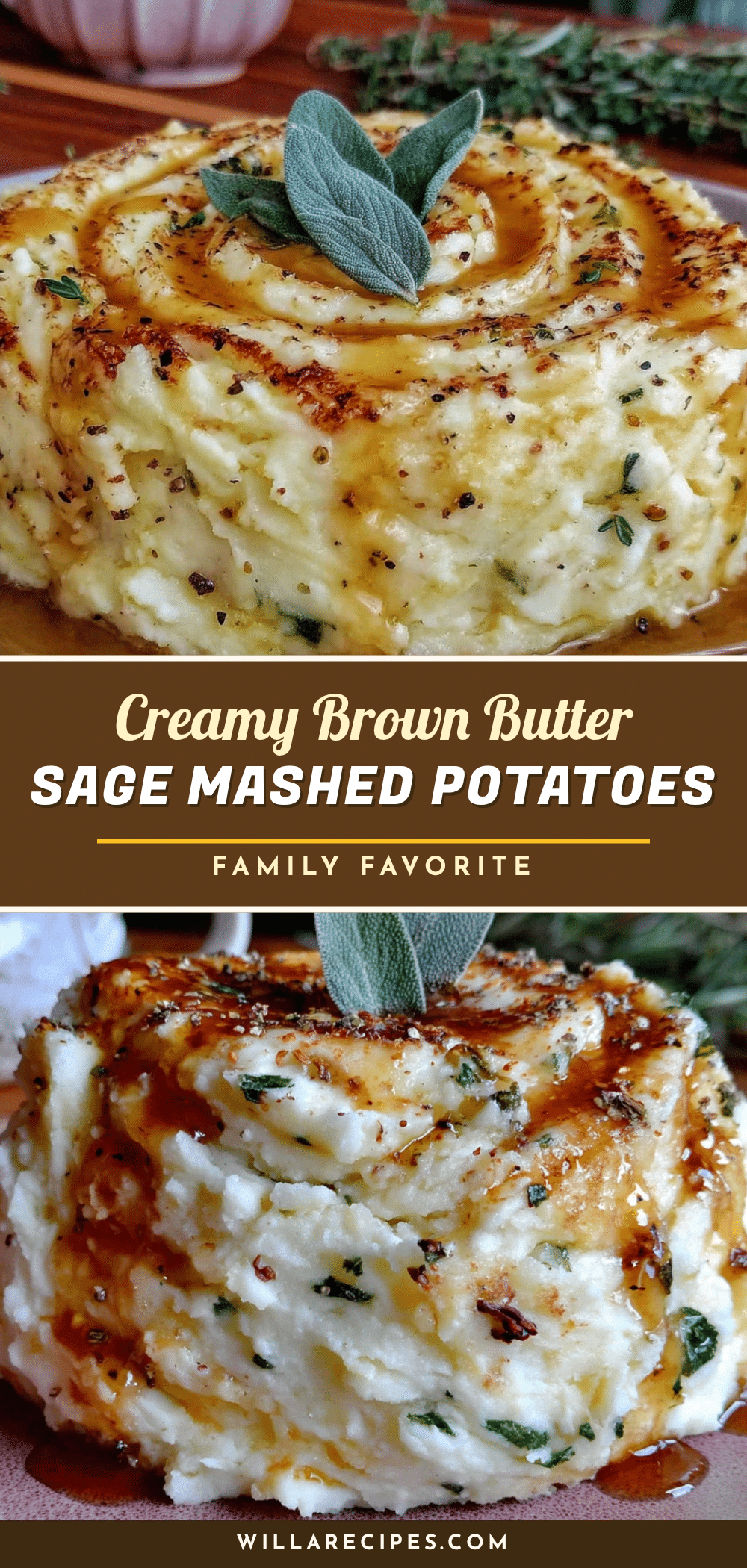
Creamy Brown Butter Sage Mashed Potatoes (Family Favorite)
These creamy brown butter sage mashed potatoes are a budget-friendly, surprisingly simple side dish that steals the show at any gathering. With nutty browned butter and crispy fried sage, they transform humble potatoes into an unforgettable comfort food.
- Prep Time: 15 minutes
- Cook Time: 30 minutes
- Total Time: 45 minutes
- Yield: 8 servings 1x
- Category: Side Dish
- Cuisine: American
Ingredients
- 3 pounds (about 6 medium) russet potatoes
- 1 cup (2 sticks or 226 grams) unsalted butter
- 15–20 fresh sage leaves
- 3/4 cup (180 ml) whole milk
- 1/2 cup (120 ml) heavy cream
- 1 1/2 teaspoons (9 grams) salt, plus more for the water
- 1/2 teaspoon (1 gram) freshly ground black pepper
- 2 cloves garlic, smashed (optional)
Instructions
- Prep the potatoes: Peel the potatoes and cut them into 1-inch chunks. Rinse in cold water to remove excess starch.
- Boil the potatoes: Place the potato chunks in a large pot and cover with cold water by about an inch. Add a generous tablespoon of salt. Bring to a boil over high heat, then reduce to a simmer. Cook until fork-tender, about 20-25 minutes. Drain in a colander and let steam dry for 1-2 minutes.
- Warm the milk and cream: In a small saucepan, combine the milk, heavy cream, and smashed garlic cloves (if using). Warm over low heat until hot but not boiling.
- Brown the butter: In a small skillet, melt the butter over medium heat. Continue cooking, swirling occasionally, until the butter foams, the foam subsides, and golden brown specks form at the bottom. When it smells nutty and turns amber, remove from heat immediately and pour into a heatproof bowl.
- Fry the sage leaves: In the same skillet, add 1 tablespoon of the browned butter. Lay the sage leaves in a single layer and cook over medium heat for about 30 seconds per side until crispy. Transfer to a paper towel-lined plate and sprinkle with a tiny pinch of salt.
- Mash the potatoes: Return the drained potatoes to the pot or transfer to a large bowl. Mash with a potato masher or push through a ricer. Do not use a food processor or blender.
- Add the warm liquid: Remove the garlic cloves from the warm milk mixture. Pour about half over the mashed potatoes and stir gently. Add the remaining liquid and stir until combined. Do not overmix.
- Finish with brown butter: Pour the browned butter over the potatoes, reserving about 1 tablespoon for drizzling. Fold in gently. Season with salt and pepper to taste.
- Serve: Transfer to a serving bowl. Drizzle with reserved browned butter, arrange crispy sage leaves on top, and sprinkle with flaky sea salt if desired. Serve immediately.
Notes
Don’t overwork the potatoes to avoid gluey texture. Always warm the milk and cream before adding to potatoes. Brown butter can burn quickly, so watch carefully. For make-ahead, prepare up to step 7, refrigerate for up to 2 days, then reheat in a 350°F oven for 20-25 minutes before finishing with brown butter and sage.
Nutrition
- Serving Size: 1 serving
- Calories: 320
- Sugar: 2
- Sodium: 480
- Fat: 22
- Saturated Fat: 14
- Carbohydrates: 28
- Fiber: 2
- Protein: 4
Keywords: mashed potatoes, brown butter, sage, side dish, comfort food, potluck, Thanksgiving, easy, budget-friendly