I wasn’t expecting cooking advice from a retired librarian named Marjorie, but there I was, elbow-deep in a pile of vintage Pyrex at a church rummage sale, listening to her describe exactly how to make the most soul-warming lasagna I’d ever heard of. She was sorting through a box of mismatched lids—honestly, who donates only lids?—when she started talking about her late husband’s obsession with butternut squash. “He’d grow them in the backyard,” she said, holding up a chipped casserole dish like it was a holy relic, “and every October, I’d make him this lasagna. No meat. Just squash and sage and butter so brown it looked like caramel.” I mean, I wasn’t even looking for a recipe. I was just hoping to find a decent mixing bowl for under three dollars. But Marjorie had this way of talking—like she was letting you in on a secret—and by the time she’d finished describing the layers, I’d forgotten all about the bowls.
She scribbled the instructions on the back of a receipt from 1987, and honestly, the handwriting was barely legible. But I stuffed it in my pocket, went home, and made it that very Sunday. The power went out halfway through roasting the squash—classic me, forgetting to check the weather—so I finished it by candlelight, feeling like some kind of pioneer woman with a gas stove and a stubborn streak. And when I finally pulled that bubbling, golden-brown pan out of the oven? Let me tell you, I nearly cried. It was everything I wanted: creamy, nutty, slightly sweet, with that sage brown butter soaking into every layer like a warm blanket. Maybe you’ve been there—where a dish feels less like food and more like a hug you didn’t know you needed. That’s this lasagna.
I’ve tweaked Marjorie’s original over the years—added a little ricotta, swapped in no-boil noodles for convenience, perfected the brown butter so it doesn’t burn (a lesson learned the hard way, trust me). But the heart of it? That’s all her. And every time I make it, I think of that chilly Saturday morning, the smell of old books and coffee, and a stranger who changed the way I think about comfort food.
Why You’ll Love This Recipe
This cozy butternut squash lasagna with sage brown butter isn’t just another pasta dish—it’s the kind of recipe that makes you close your eyes after the first bite. I’ve tested it more times than I care to admit (ask my neighbors, who’ve become unofficial taste-testers), and I can confidently say this is the version you’ll want to make again and again.
- Quick & Easy: Comes together in under an hour with no-boil noodles, making it perfect for a cozy weeknight dinner or a lazy Sunday meal.
- Simple Ingredients: No fancy grocery trips needed. You likely already have butter, garlic, and sage in your kitchen. The squash is the star, and it’s easy to find year-round.
- Perfect for Cold Weather: This is the ultimate comfort food for chilly evenings, holiday gatherings, or any time you need a warm, satisfying meal.
- Crowd-Pleaser: Even meat-lovers rave about this lasagna. The rich, nutty flavor from the brown butter and roasted squash is incredibly satisfying.
- Unbelievably Delicious: The texture is pure magic—creamy ricotta, tender pasta, and that sage brown butter sauce that ties everything together. It’s comfort food reimagined.
What makes this recipe different from the rest? It’s the technique. Browning the butter until it’s nutty and golden, then infusing it with fresh sage, creates a depth of flavor you just can’t get from a jar. Plus, roasting the butternut squash concentrates its natural sweetness, so you don’t need tons of added sugar or cheese. This isn’t just another vegetarian lasagna—it’s the one that will convert even the biggest skeptics. Perfect for impressing guests without stress, or turning a simple Tuesday into something memorable.
What Ingredients You Will Need
This recipe uses simple, wholesome ingredients to deliver bold flavor and satisfying texture without the fuss. Most of these are pantry staples, and the few fresh items are easy to find at any grocery store. Here’s what you’ll need:
For the Butternut Squash Layer
- 1 medium butternut squash (about 2-3 pounds), peeled, seeded, and cut into 1-inch cubes
- 2 tablespoons olive oil
- 1/2 teaspoon salt
- 1/4 teaspoon black pepper
- 1/4 teaspoon ground nutmeg (freshly grated is best, but pre-ground works fine)
For the Sage Brown Butter Sauce
- 1/2 cup unsalted butter (I recommend Kerrygold for its rich, creamy flavor)
- 10-12 fresh sage leaves, roughly chopped (plus extra for garnish)
- 3 cloves garlic, minced
- 1/4 cup all-purpose flour (use gluten-free 1:1 blend if needed)
- 2 cups whole milk, warmed (adds richness; use 2% or oat milk for a lighter option)
- 1 cup vegetable broth (low-sodium preferred)
- 1/2 teaspoon salt
- 1/4 teaspoon black pepper
- Pinch of cayenne pepper (optional, for a little warmth)
For the Lasagna Assembly
- 9 no-boil lasagna noodles (I like Barilla’s no-boil sheets—they hold up beautifully)
- 2 cups whole-milk ricotta cheese (look for a creamy, not grainy, brand like Galbani)
- 1 large egg, lightly beaten
- 1/2 cup grated Parmesan cheese, divided (freshly grated is key—skip the canned stuff)
- 2 cups shredded mozzarella cheese (low-moisture, part-skim works best)
- 1/2 cup chopped fresh parsley (for freshness and color)
Ingredient Tips: For the best texture, make sure your butternut squash is firm and heavy for its size—avoid any with soft spots. If fresh sage isn’t available, use 1 teaspoon dried sage, but add it to the butter after browning to prevent bitterness. For a dairy-free version, use vegan butter, unsweetened oat milk, and dairy-free ricotta and mozzarella. I’ve tested this with Kite Hill’s ricotta, and it works surprisingly well.
Equipment Needed
You don’t need a fancy kitchen to make this lasagna, but having the right tools makes the process smoother. Here’s what I use:
- 9×13-inch baking dish: A glass or ceramic dish works best for even heat distribution. I’ve had good luck with Pyrex’s deep dish.
- Large baking sheet: For roasting the squash. A rimmed sheet prevents any sticky mess.
- Medium saucepan: For making the sage brown butter sauce. A light-colored pan helps you see when the butter is browning.
- Mixing bowls: One large for the ricotta mixture, one small for the Parmesan.
- Chef’s knife and cutting board: A sharp knife makes peeling and cubing the squash much easier.
- Whisk: For smoothing out the sauce. A silicone whisk is gentle on nonstick pans.
- Measuring cups and spoons: Accuracy matters, especially with the flour and milk.
- Aluminum foil: For covering the lasagna while baking to prevent over-browning.
Budget-Friendly Alternatives: If you don’t have a 9×13 dish, two 8×8 dishes work—just reduce the baking time by about 10 minutes. No whisk? A fork works in a pinch, though it takes a little more elbow grease. And if you’re short on time, skip roasting the squash and use 3 cups of pre-cubed frozen butternut squash (thawed and patted dry). I’ve done this on busy nights, and it’s still delicious.
Preparation Method
Let’s get cooking! This recipe has a few steps, but I’ve broken it down so it feels manageable. Trust me, the result is worth every minute.
Step 1: Roast the Butternut Squash (30 minutes)
Preheat your oven to 400°F (200°C). Line a large baking sheet with parchment paper for easy cleanup. In a large bowl, toss the cubed squash with olive oil, salt, pepper, and nutmeg until evenly coated. Spread the squash in a single layer on the baking sheet—don’t overcrowd, or it’ll steam instead of roast. Roast for 25-30 minutes, flipping halfway through, until the squash is tender and lightly caramelized at the edges. It should be fork-tender but not mushy. Let it cool slightly, then mash about half of it with a fork for a creamier texture, leaving the rest in small chunks for bite. Set aside.
Personal Tip: I once forgot to flip the squash halfway through, and the bottom pieces burned while the tops were still raw. Set a timer! Also, if your squash is particularly large, give it an extra 5 minutes.
Step 2: Make the Sage Brown Butter Sauce (15 minutes)
While the squash roasts, start the sauce. In a medium saucepan over medium heat, melt the butter. Swirl the pan occasionally as it melts. After about 3-4 minutes, the butter will start to foam and turn a light golden color. Watch closely—it can go from perfect to burnt in seconds. When you see tiny brown specks forming at the bottom and it smells nutty and toasty, add the chopped sage leaves. They’ll sizzle and become fragrant immediately. Stir for about 30 seconds, then add the minced garlic. Cook for another 30 seconds, just until fragrant.
Now, whisk in the flour to form a roux. Cook for 1-2 minutes, stirring constantly, until the mixture is smooth and golden. Slowly pour in the warm milk while whisking vigorously to prevent lumps. Then add the vegetable broth, salt, pepper, and cayenne (if using). Continue whisking until the sauce thickens, about 3-4 minutes. It should coat the back of a spoon. Remove from heat and set aside.
Troubleshooting Tip: If your sauce is too thick, whisk in a splash more milk. If it’s too thin, let it simmer a minute longer. And if you see any lumps, don’t panic—a quick whisk usually smooths them out.
Step 3: Prepare the Ricotta Mixture (5 minutes)
In a medium bowl, combine the ricotta cheese, beaten egg, 1/4 cup of the grated Parmesan, and the chopped parsley. Mix until well combined. Season with a pinch of salt and pepper. This mixture adds creaminess and binds the layers together. Set aside.
Step 4: Assemble the Lasagna (10 minutes)
Lower the oven temperature to 375°F (190°C). Lightly grease your 9×13-inch baking dish with a little butter or cooking spray. Spread about 1/2 cup of the sage brown butter sauce evenly over the bottom of the dish—this prevents the noodles from sticking.
Now, layer like this:
- First layer: 3 no-boil lasagna noodles (they’ll expand as they cook, so leave a little space between them).
- Second layer: Spread half of the roasted squash mixture over the noodles.
- Third layer: Dollop half of the ricotta mixture over the squash and gently spread it.
- Fourth layer: Sprinkle 1/3 of the shredded mozzarella over the ricotta.
- Fifth layer: Pour about 1/3 of the remaining sage brown butter sauce over the cheese.
Repeat the layers: noodles, remaining squash, remaining ricotta, another 1/3 of the mozzarella, and another 1/3 of the sauce. Top with the final 3 noodles, the remaining sauce, and the remaining mozzarella. Sprinkle the last 1/4 cup of Parmesan over the top.
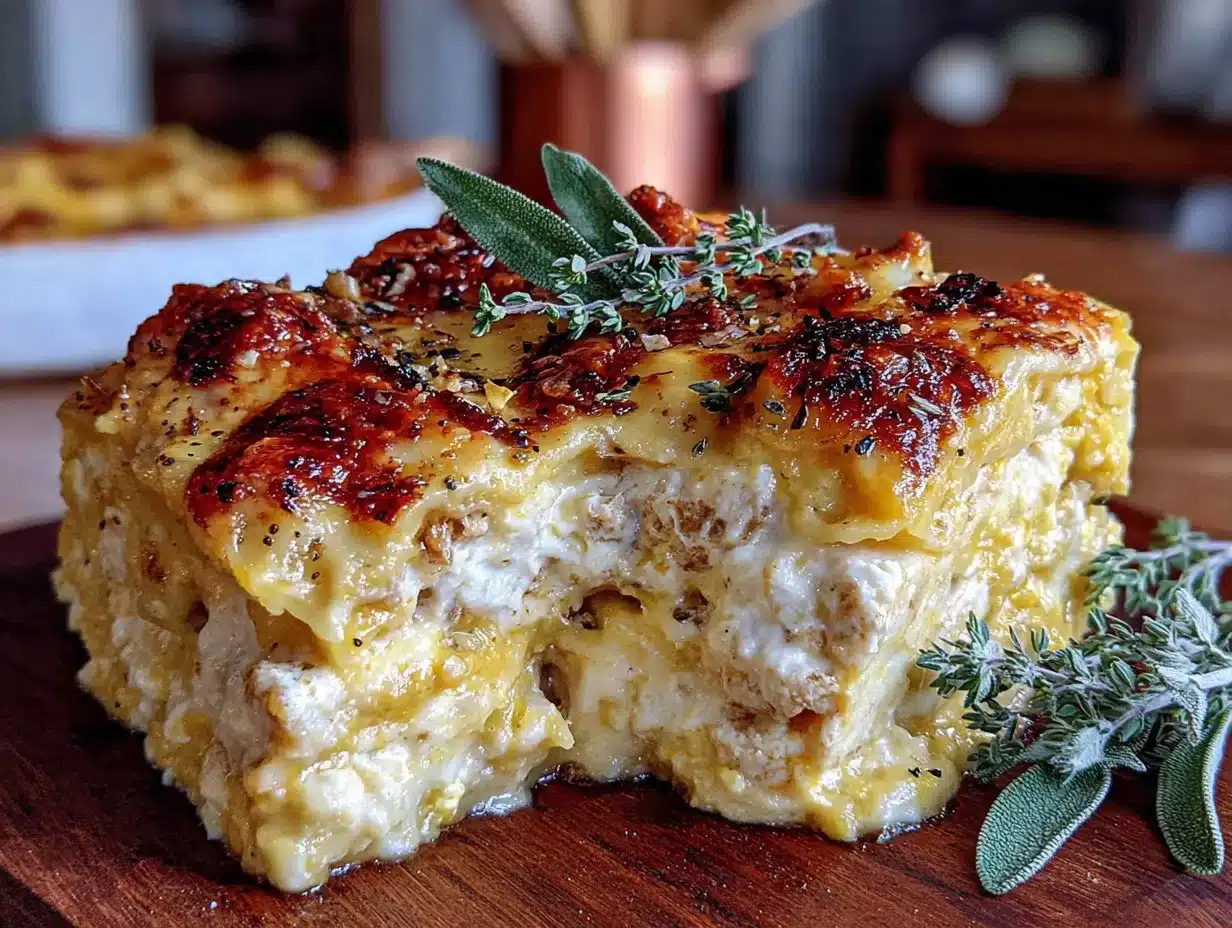
Visual Cue: At this point, your lasagna should look like a beautiful, layered masterpiece. The sauce should be visible at the edges, and the cheese should be piled high—it’ll settle as it bakes.
Step 5: Bake the Lasagna (40-45 minutes)
Cover the baking dish tightly with aluminum foil. Bake for 30 minutes, then remove the foil and bake for another 10-15 minutes, until the cheese is bubbly and golden brown, and the edges are slightly crispy. Let the lasagna rest for 10 minutes before slicing—this is crucial for clean layers. I know it’s hard to wait, but trust me, it’s worth it.
Warning: The dish will be extremely hot! Use oven mitts. And if the top is browning too quickly, loosely tent it with foil for the last 10 minutes.
Cooking Tips & Techniques
Over the years, I’ve learned a few tricks that make this lasagna foolproof. Here are my favorites:
- Don’t skip browning the butter. This is where the magic happens. The nutty, toasty flavor is what makes the sauce so addictive. Just watch it like a hawk—burnt butter tastes bitter and ruins the whole dish. I once got distracted by a phone call and had to start over. Learn from my mistake!
- Use room-temperature ingredients. Cold milk can seize the roux and create lumps. Warm it in the microwave for 30 seconds before adding it to the butter-flour mixture. Same goes for the ricotta—let it sit out for 15 minutes before mixing.
- Don’t overmix the ricotta. A few small lumps are fine. Overmixing can make it watery, which leads to a soggy lasagna. Just stir until combined.
- Let the lasagna rest. I know it’s tempting to dive in right away, but resting allows the layers to set. If you cut too soon, you’ll end up with a soupy mess. Ten minutes is non-negotiable.
- Toast the sage for extra flavor. After browning the butter, fry the sage leaves for 15-20 seconds until they’re crisp. This adds a lovely texture and intensifies the herb’s aroma. Just be careful not to burn them—they go from crispy to acrid quickly.
- Use a sharp knife for slicing. A dull blade will squish the layers. Run it under hot water before each cut for cleaner slices. This is a restaurant trick I picked up, and it makes a huge difference.
Variations & Adaptations
This recipe is wonderfully versatile. Here are some ways to make it your own:
- Make it gluten-free: Use gluten-free no-boil lasagna noodles (I like Jovial’s brown rice version) and a gluten-free 1:1 flour blend for the sauce. The texture is slightly different but still delicious.
- Add protein: Layer in cooked Italian sausage (casings removed), shredded rotisserie chicken, or sautéed mushrooms for a heartier meal. I’ve added crumbled bacon before, and it was amazing.
- Swap the squash: Try roasted sweet potatoes, pumpkin, or even carrots for a different flavor profile. Each brings its own sweetness and texture. Pumpkin is especially good in the fall.
- Go vegan: Use vegan butter, unsweetened oat milk, dairy-free ricotta (Kite Hill is my go-to), and vegan mozzarella. Nutritional yeast can replace the Parmesan for a cheesy flavor. I’ve made this for vegan friends, and they couldn’t tell the difference.
- Add greens: Layer in sautéed spinach, kale, or Swiss chard between the squash and ricotta for extra nutrients and color. Wilt the greens first to remove excess moisture.
- Spice it up: Add red pepper flakes to the sauce or a pinch of smoked paprika to the squash for a smoky kick. A little goes a long way.
Personal Variation: My favorite twist is adding a layer of caramelized onions between the squash and ricotta. The sweetness pairs beautifully with the sage and brown butter. I just slice two onions, cook them low and slow for about 30 minutes, and layer them in. It adds a whole new dimension of flavor.
Serving & Storage Suggestions
This lasagna is best served warm, straight from the oven, but it’s almost as good the next day. Here’s how to make the most of it:
- Serving Temperature: Let the lasagna rest for 10 minutes after baking, then slice and serve. It should be warm and gooey, with the cheese slightly stretchy. A sprinkle of fresh sage leaves or parsley on top adds a pop of color.
- Presentation: Serve on a large platter or individual plates. A side of crusty bread or a simple green salad with lemon vinaigrette balances the richness. For holidays, I like to garnish with pomegranate seeds for a festive touch.
- Complementary Dishes: Pair with roasted Brussels sprouts, arugula salad with shaved Parmesan, or garlic bread. A glass of Chardonnay or a light red like Pinot Noir works beautifully.
- Storage: Store leftovers in an airtight container in the refrigerator for up to 4 days. The flavors meld and deepen overnight, so it might even taste better the next day. To freeze, wrap the cooled lasagna tightly in plastic wrap, then foil, and freeze for up to 3 months. Thaw overnight in the fridge before reheating.
- Reheating: For best results, reheat individual portions in a 350°F oven for 10-15 minutes, or in the microwave for 2-3 minutes. If the lasagna seems dry, add a splash of milk or broth before reheating. I’ve also reheated slices in a skillet with a little butter—it crisps up the edges nicely.
Note on Flavors: The sage brown butter sauce continues to develop as it sits, so leftovers often taste even more complex. Don’t be surprised if you find yourself looking forward to lunch the next day!
Nutritional Information & Benefits
While this lasagna is undeniably indulgent, it also packs some surprising nutritional benefits. Here’s a rough estimate per serving (based on 8 servings):
- Calories: Approximately 450-500 calories per serving
- Protein: 18-20 grams (from ricotta, mozzarella, and eggs)
- Carbohydrates: 45-50 grams (mostly from noodles and squash)
- Fat: 25-30 grams (from butter, cheese, and olive oil)
- Fiber: 5-7 grams (thanks to the butternut squash)
- Vitamin A: Over 200% of the daily value (butternut squash is loaded with beta-carotene)
- Calcium: 30-35% of the daily value (from the cheese and milk)
Health Benefits: Butternut squash is a powerhouse of vitamins A and C, which support immune health and vision. The sage in the brown butter has anti-inflammatory properties and is known to aid digestion. Plus, the fiber from the squash helps keep you full and satisfied. While this isn’t a low-calorie dish, it’s made with whole, real ingredients—no processed shortcuts. I love that I can serve it to my family knowing it’s both comforting and nourishing.
Dietary Considerations: This recipe is vegetarian and can be made gluten-free or vegan with the substitutions mentioned above. It contains dairy and gluten in its standard form, so be mindful of allergies. For a lower-carb option, swap the lasagna noodles for thinly sliced zucchini or eggplant—just salt them first to draw out moisture.
Conclusion
This cozy butternut squash lasagna with sage brown butter has become a staple in my kitchen, and I have a feeling it will become one in yours too. It’s the kind of dish that turns an ordinary evening into something special—whether you’re cooking for a crowd or just treating yourself after a long week. The combination of sweet roasted squash, nutty brown butter, and creamy ricotta is pure comfort, and the best part is how forgiving it is. You can tweak it, adapt it, and make it your own without losing that soul-soothing magic.
I love that this recipe came from a chance encounter at a rummage sale, scribbled on a faded receipt. It reminds me that the best things in life often come from unexpected places. So go ahead—give it a try. Maybe you’ll discover your own little twist, like adding caramelized onions or swapping in sweet potatoes. And when you do, I’d love to hear about it. Drop a comment below, share your photos, or tag me on social media. Let’s keep this cozy tradition alive, one layer at a time.
Happy cooking, and here’s to warm kitchens and full hearts!
Frequently Asked Questions
Can I use pre-cut butternut squash from the store?
Absolutely! Pre-cut squash saves time and works perfectly. Just make sure the pieces are roughly the same size for even roasting. Pat them dry with a paper towel if they seem wet—excess moisture can make the squash steam instead of caramelize.
Do I really need to use no-boil noodles?
No-boil noodles are convenient, but you can use regular lasagna noodles if you prefer. Just boil them according to the package directions until al dente, then drain and lay them flat on a baking sheet to prevent sticking. Reduce the baking time by about 5 minutes since the noodles are already cooked.
Can I make this lasagna ahead of time?
Yes! Assemble the lasagna completely, cover it tightly with foil, and refrigerate for up to 24 hours before baking. You may need to add 10-15 minutes to the baking time since it’s starting cold. This is a great option for busy weeknights or holiday entertaining.
Why did my sauce turn out lumpy?
Lumps usually happen when the milk is added too quickly or is too cold. Always warm your milk before adding it to the roux, and whisk constantly as you pour. If lumps do form, don’t worry—just whisk vigorously, or use an immersion blender to smooth it out. I’ve done this many times!
Can I freeze the leftovers?
Definitely! Let the lasagna cool completely, then cut it into individual portions. Wrap each piece tightly in plastic wrap, then foil, and freeze for up to 3 months. To reheat, thaw in the fridge overnight and warm in a 350°F oven for 15-20 minutes. The texture holds up beautifully.
Pin This Recipe!
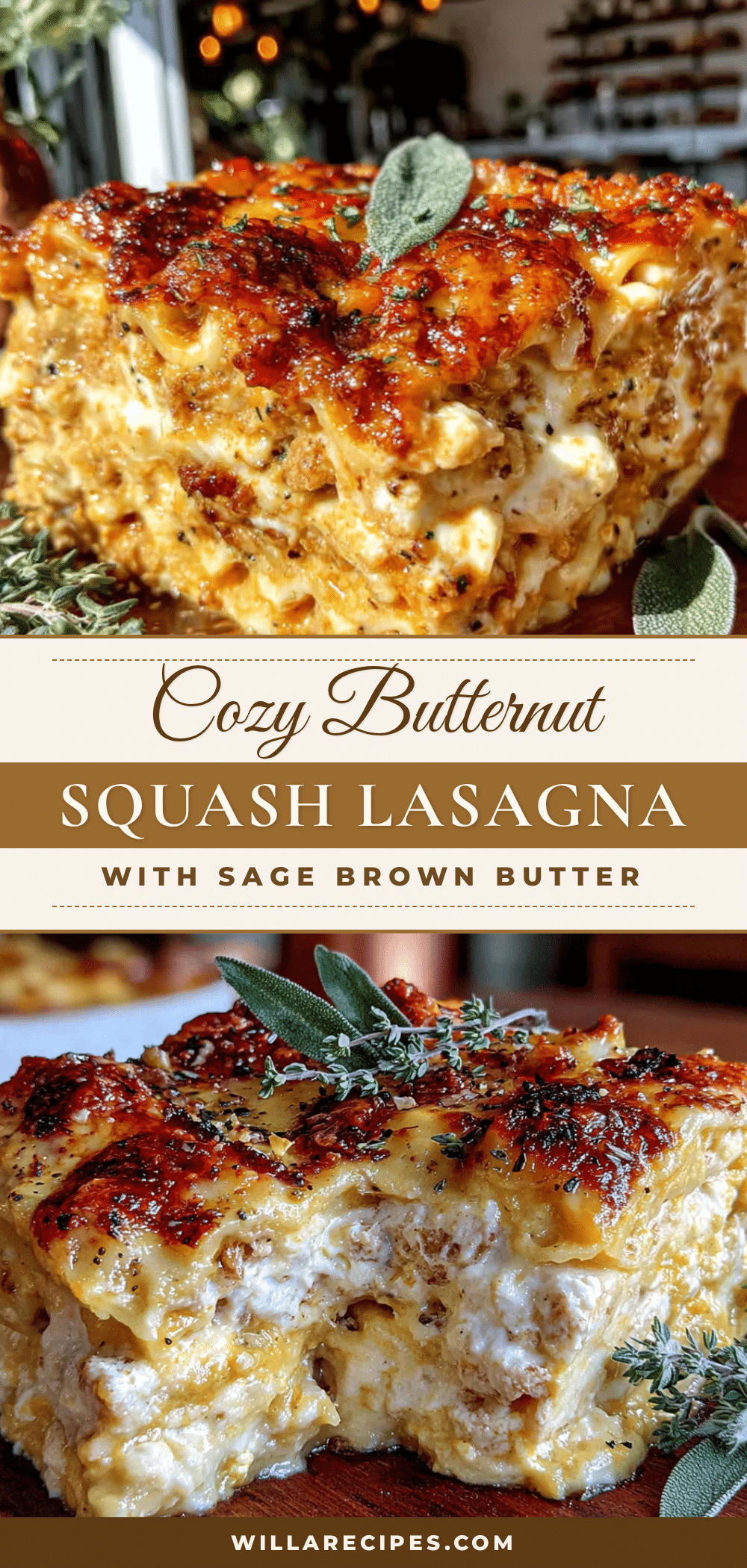
Cozy Butternut Squash Lasagna with Sage Brown Butter
A soul-warming lasagna featuring sweet roasted butternut squash, creamy ricotta, and a nutty sage brown butter sauce. This vegetarian comfort food is perfect for chilly evenings and holiday gatherings.
- Prep Time: 15 minutes
- Cook Time: 45 minutes
- Total Time: 1 hour
- Yield: 8 servings 1x
- Category: Main Course
- Cuisine: American
Ingredients
- 1 medium butternut squash (about 2–3 pounds), peeled, seeded, and cut into 1-inch cubes
- 2 tablespoons olive oil
- 1/2 teaspoon salt
- 1/4 teaspoon black pepper
- 1/4 teaspoon ground nutmeg
- 1/2 cup unsalted butter
- 10–12 fresh sage leaves, roughly chopped
- 3 cloves garlic, minced
- 1/4 cup all-purpose flour
- 2 cups whole milk, warmed
- 1 cup vegetable broth, low-sodium
- 1/2 teaspoon salt
- 1/4 teaspoon black pepper
- Pinch of cayenne pepper (optional)
- 9 no-boil lasagna noodles
- 2 cups whole-milk ricotta cheese
- 1 large egg, lightly beaten
- 1/2 cup grated Parmesan cheese, divided
- 2 cups shredded mozzarella cheese, low-moisture part-skim
- 1/2 cup chopped fresh parsley
Instructions
- Preheat oven to 400°F (200°C). Line a large baking sheet with parchment paper. Toss cubed squash with olive oil, salt, pepper, and nutmeg. Spread in a single layer on the baking sheet. Roast for 25-30 minutes, flipping halfway, until tender and caramelized. Let cool slightly, then mash about half with a fork, leaving the rest in chunks. Set aside.
- While squash roasts, make the sauce. In a medium saucepan over medium heat, melt butter. Swirl occasionally. After 3-4 minutes, when butter foams and turns golden with brown specks and smells nutty, add chopped sage. Stir for 30 seconds, then add minced garlic and cook 30 seconds more.
- Whisk in flour to form a roux. Cook 1-2 minutes, stirring constantly, until smooth and golden. Slowly pour in warm milk while whisking vigorously. Add vegetable broth, salt, pepper, and cayenne (if using). Continue whisking until sauce thickens, about 3-4 minutes. Remove from heat.
- In a medium bowl, combine ricotta, beaten egg, 1/4 cup Parmesan, and parsley. Mix until combined. Season with a pinch of salt and pepper.
- Lower oven temperature to 375°F (190°C). Lightly grease a 9×13-inch baking dish. Spread about 1/2 cup of the sage brown butter sauce over the bottom.
- Layer: 3 no-boil lasagna noodles, half of the roasted squash, half of the ricotta mixture, 1/3 of the mozzarella, and 1/3 of the remaining sauce. Repeat layers: noodles, remaining squash, remaining ricotta, another 1/3 of mozzarella, and another 1/3 of sauce. Top with final 3 noodles, remaining sauce, remaining mozzarella, and remaining 1/4 cup Parmesan.
- Cover tightly with aluminum foil. Bake for 30 minutes. Remove foil and bake for another 10-15 minutes, until cheese is bubbly and golden brown. Let rest for 10 minutes before slicing.
Notes
For best results, don’t skip browning the butter—watch it closely to avoid burning. Use room-temperature ingredients to prevent lumps. Let the lasagna rest for 10 minutes before slicing to ensure clean layers. Leftovers can be stored in the refrigerator for up to 4 days or frozen for up to 3 months.
Nutrition
- Serving Size: 1 slice (1/8 of lasa
- Calories: 475
- Sugar: 8
- Sodium: 680
- Fat: 28
- Saturated Fat: 16
- Carbohydrates: 47
- Fiber: 6
- Protein: 19
Keywords: butternut squash lasagna, sage brown butter, vegetarian lasagna, fall recipe, comfort food, holiday lasagna