Laura wasn’t trying to show off. I’d stopped by her place on a random Tuesday afternoon to grab a book I’d loaned her months ago, and the smell hit me before I even got through the front door. Something warm and sweet and a little bit savory—like autumn had been slow-roasted in her kitchen. She was standing at the stove in sweatpants, stirring a pot with one hand and scrolling through her phone with the other, completely unbothered by the fact that she was making what would become my absolute favorite soup of all time.
“Oh, that’s just the squash soup I throw together when I have too many acorn squash from the farmer’s market,” she said when I asked. Just the squash soup. Like it was nothing. Like she hadn’t just created something that made me forget why I’d even come over. I stood there hovering near the stove, trying to look casual while inhaling deeply every few seconds, and she finally laughed and ladled some into a mug for me. That first sip—silky, slightly sweet, with this incredible nutty crunch on top—honestly stopped me mid-conversation.
I asked for the recipe three times before she finally texted it to me, and even then, her instructions were maddeningly casual: “Roast the squash. Blend it with stuff. Top with seeds.” It took me weeks of trial and error to recreate that exact magic, but let me tell you—once I nailed it, I understood why she was so nonchalant. This soup doesn’t need fancy footnotes or complicated techniques. It’s the kind of recipe that lets you look like a kitchen rockstar with almost no effort at all.
Maybe you’ve been there—standing in someone else’s kitchen, watching them throw together something extraordinary while acting like it’s no big deal. That’s this soup. It’s the dish you’ll make for guests who’ll swear you spent hours on it, while you sip wine and stir a single pot. And honestly? That’s the best kind of recipe to have in your back pocket.
Why You’ll Love This Recipe
This isn’t just another squash soup recipe. After testing this about six different ways (and yes, I burned a few batches learning the hard way), I can tell you this version is the one that wins every time. Here’s why this particular acorn squash soup deserves a permanent spot in your hosting rotation:
- Incredibly Easy : You only need about 15 minutes of active prep time. The oven does most of the heavy lifting, which means you can actually enjoy your own party instead of sweating over the stove.
- Simple Ingredients : Everything is available at any grocery store. No hunting down specialty items or obscure spices—just good, honest ingredients that work together beautifully.
- Perfect for Entertaining : This is the soup you make when guests are coming over and you want to serve something impressive without stress. It looks gorgeous in a bowl with those toasted pepitas on top, and it scales up easily for bigger crowds.
- Crowd-Pleaser : I’ve served this to everyone from picky kids to serious foodie friends, and it disappears every single time. The flavor is approachable but sophisticated—sweet from the roasted squash, savory from the aromatics, with that lovely nutty crunch from the pepitas.
- Make-Ahead Friendly : This soup actually gets better after a day in the fridge. Make it a day before your gathering, and you’ll have one less thing to worry about when the doorbell starts ringing.
What makes this recipe different from all the other squash soups out there? Two things: the roasting method and the topping. I roast the acorn squash with a touch of maple syrup and cinnamon before blending, which concentrates the natural sweetness and adds this incredible depth of flavor you just can’t get from boiling. And those toasted pepitas? They’re not just a garnish—they’re the textural counterpoint that makes every spoonful interesting. You get the velvety smooth soup and then this little pop of crunch that keeps you coming back for more.
This is the kind of soup that makes people close their eyes after the first bite. It’s comfort food that feels special enough for a dinner party but easy enough for a random Tuesday. And when you serve it to your guests, they’ll think you worked way harder than you actually did—which is honestly the sweet spot of hosting, isn’t it?
What Ingredients You Will Need
This recipe uses simple, wholesome ingredients to create something that tastes far more complex than it is. Most of these are pantry staples or easy to find at any grocery store, especially during fall and winter when squash is at its peak.
For the Soup
- 3 medium acorn squash (about 2½ to 3 pounds total) — Look for squash that feels heavy for its size with firm, unblemished skin. The orange-fleshed varieties tend to be sweeter, but any acorn squash will work beautifully.
- 2 tablespoons olive oil — Use a good quality extra virgin olive oil for roasting. I prefer California Olive Ranch for its balanced flavor.
- 2 tablespoons maple syrup — Real maple syrup, not pancake syrup. The grade A dark amber works especially well here, adding a deep sweetness that complements the squash.
- 1 teaspoon ground cinnamon — This adds warmth without overwhelming the squash. Fresh cinnamon makes a noticeable difference if you have it.
- ½ teaspoon ground nutmeg — Freshly grated is ideal, but pre-ground works fine in a pinch.
- ½ teaspoon salt — I use fine sea salt for cooking. Adjust to taste at the end.
- ¼ teaspoon black pepper — Freshly ground, please. It makes a difference.
- 1 medium yellow onion, diced — About 1½ cups. The onion provides the savory backbone of the soup.
- 3 cloves garlic, minced — Fresh garlic is non-negotiable here. Don’t use the jarred stuff.
- 4 cups vegetable broth — Use a good quality broth. I recommend Pacific Foods or Swanson vegetable broth for consistent flavor. You can also use chicken broth if you’re not keeping it vegetarian.
- ½ cup full-fat coconut milk — This adds incredible creaminess without dairy. Shake the can well before measuring. You can substitute heavy cream if preferred.
For the Toasted Pepitas

- ½ cup raw pepitas (pumpkin seeds) — Look for hulled pepitas, which are the green seeds without the white shell. They toast more evenly and have a better texture.
- 1 teaspoon olive oil
- ¼ teaspoon salt
- ⅛ teaspoon smoked paprika — Optional, but highly recommended. It adds a subtle smoky flavor that pairs beautifully with the sweet soup.
For Garnish (Optional but Recommended)
- Additional coconut milk or heavy cream — For drizzling on top
- Fresh thyme or sage leaves — A few leaves add a beautiful pop of green and herbal freshness
- Extra maple syrup drizzle — For those who like it sweeter
Substitution Notes: If you can’t find acorn squash, butternut squash or sugar pumpkin work well as substitutes—just note that the cooking time may vary slightly. For a dairy-free version, use coconut milk or any plant-based cream. For a lower-fat option, you can skip the coconut milk entirely and the soup will still be delicious, just slightly less creamy. The pepitas can be replaced with toasted walnuts or sunflower seeds if you have an allergy concern.
Equipment Needed
You don’t need a fancy kitchen to make this soup shine. Here’s what you’ll need:
- Large baking sheet — A rimmed baking sheet works best to catch any juices from the roasting squash. I use my trusty Nordic Ware half-sheet pan for everything.
- Sharp chef’s knife — Acorn squash can be tough to cut through. A sharp knife makes the job safer and easier.
- Large soup pot or Dutch oven — A 5- to 6-quart pot is ideal. I love my Lodge enameled Dutch oven for this—it distributes heat evenly and looks nice enough to bring to the table.
- Immersion blender — This is my preferred method for blending hot soup. It’s safer and creates less mess than transferring to a countertop blender. I use a Cuisinart immersion blender that’s held up for years. If you don’t have one, a regular blender works—just be careful with the hot liquid.
- Small skillet — For toasting the pepitas. Any non-stick or stainless steel pan will work.
- Measuring cups and spoons
- Wooden spoon or spatula
- Vegetable peeler — Actually, you won’t need this for acorn squash since we’re roasting it with the skin on. One less thing to wash!
Budget-friendly tip: If you don’t own an immersion blender, a standard countertop blender works perfectly. Just let the soup cool for 10 minutes before blending, and blend in batches, filling the blender no more than halfway. Hold the lid down with a kitchen towel to prevent any hot soup from escaping.
Preparation Method
Let me walk you through this step by step. Trust me, once you’ve made it once, you’ll have it memorized.
- Preheat your oven to 400°F (200°C). Line a large baking sheet with parchment paper for easy cleanup. This is one of those small steps that makes a big difference when you’re entertaining—less scrubbing means more time with your guests.
- Prepare the acorn squash. Using a sharp chef’s knife, carefully cut each acorn squash in half from stem to tip. Scoop out the seeds and stringy pulp with a spoon—save the seeds if you want to roast them separately as an extra snack! Cut each half into 1-inch thick wedges or chunks. Don’t bother peeling them; the skin softens during roasting and gets blended right in, adding fiber and nutrients.
- Season the squash. Place the squash pieces on the prepared baking sheet. Drizzle with 2 tablespoons olive oil and 2 tablespoons maple syrup. Sprinkle with 1 teaspoon cinnamon, ½ teaspoon nutmeg, ½ teaspoon salt, and ¼ teaspoon pepper. Toss everything with your hands until the squash is evenly coated. Spread the pieces in a single layer—crowding them will cause steaming instead of roasting, and we want those lovely caramelized edges.
- Roast the squash. Roast for 35-40 minutes, flipping the pieces halfway through. You’ll know it’s done when the squash is fork-tender and the edges have started to caramelize and turn golden brown. The kitchen will smell absolutely incredible at this point—like autumn in a pan.
- Toast the pepitas while the squash roasts. In a small skillet over medium heat, combine ½ cup raw pepitas, 1 teaspoon olive oil, ¼ teaspoon salt, and ⅛ teaspoon smoked paprika (if using). Cook, stirring frequently, for 3-4 minutes until the pepitas are fragrant and starting to pop. You’ll hear them start to make little popping sounds—that’s your cue to remove them from the heat immediately. They can burn quickly, so don’t walk away from the pan. Transfer to a small bowl and set aside.
- Sauté the aromatics. While the squash finishes roasting, heat a drizzle of olive oil in your large soup pot over medium heat. Add the diced onion and cook for 5-6 minutes until translucent and starting to soften. Add the minced garlic and cook for another minute until fragrant. Stir frequently so the garlic doesn’t burn.
- Combine and simmer. Add the roasted squash pieces (including any caramelized bits from the baking sheet—that’s pure flavor) to the pot with the onions and garlic. Pour in 4 cups of vegetable broth. Bring everything to a boil, then reduce the heat to low and let it simmer for 10 minutes. This allows all the flavors to meld together beautifully.
- Blend until smooth. Remove the pot from the heat. Using an immersion blender, blend the soup until completely smooth and velvety. If using a countertop blender, work in batches and be careful with the hot liquid—fill the blender no more than halfway, hold the lid down with a towel, and blend on low speed to start. Return the blended soup to the pot.
- Add the coconut milk. Stir in ½ cup full-fat coconut milk until fully incorporated. Taste and adjust seasoning—you might want a pinch more salt or a drizzle of maple syrup depending on your preference. If the soup seems too thick, add a splash more broth or water until it reaches your desired consistency.
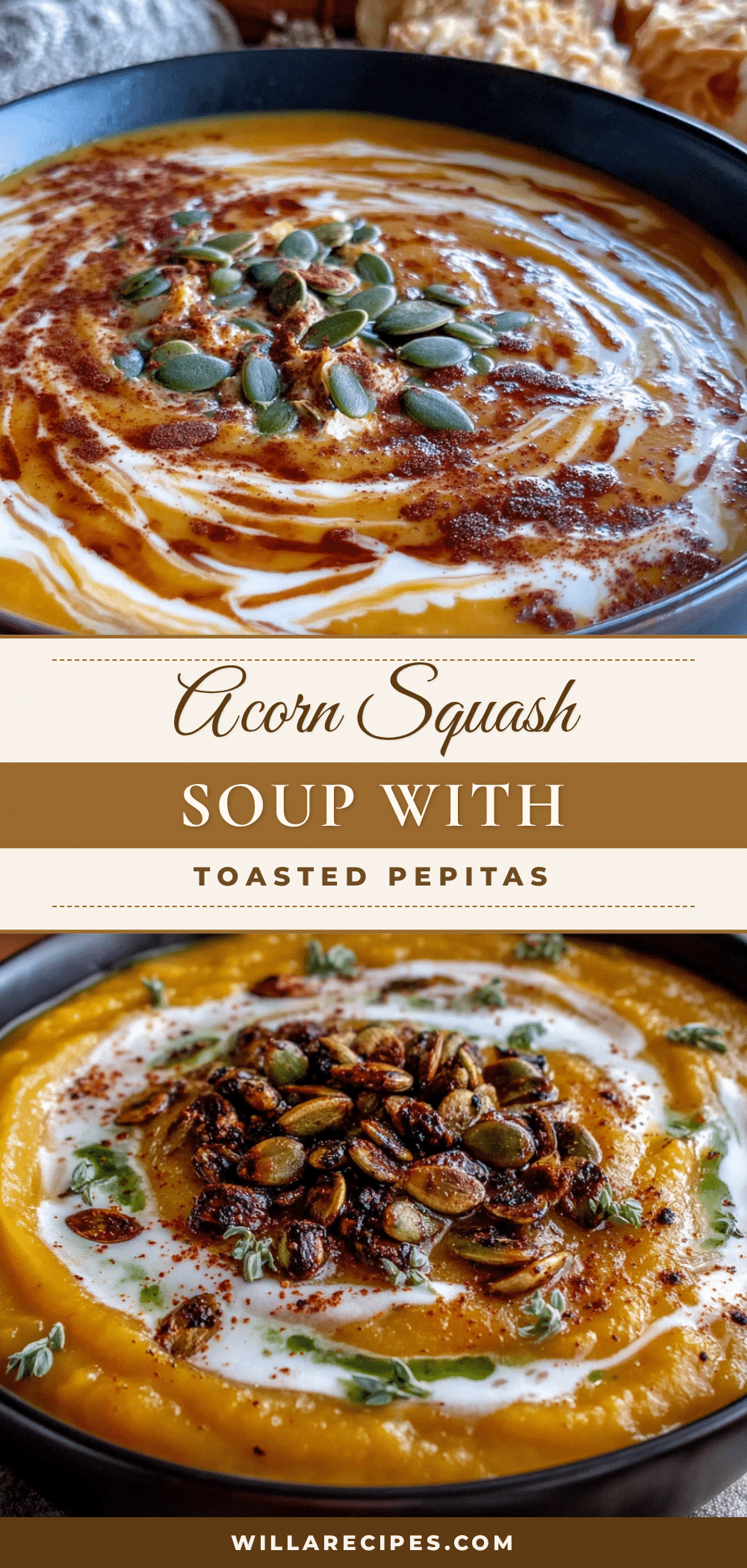
- Serve and garnish. Ladle the soup into bowls. Drizzle a little extra coconut milk or cream on top in a swirl pattern. Sprinkle generously with the toasted pepitas. Add a few fresh thyme leaves or a small sage leaf for color. Serve immediately while warm.
Prep ahead tip for hosts: You can complete steps 1 through 8 up to two days before your gathering. Store the blended soup (without the coconut milk) in the refrigerator. When you’re ready to serve, gently reheat the soup, then stir in the coconut milk and prepare the pepitas fresh. The pepitas lose their crunch after a day, so toast them right before serving for the best texture.
Cooking Tips & Techniques
After making this soup more times than I can count (including one memorable disaster where I forgot the maple syrup entirely—don’t recommend it), I’ve picked up a few tricks that make a real difference.
Don’t skip the roasting step. I know it’s tempting to just boil the squash to save time, but roasting is where the magic happens. The high heat caramelizes the natural sugars in the squash, creating this deep, almost buttery flavor that you simply can’t achieve any other way. Plus, those slightly charred edges add a subtle smokiness that makes the soup taste like it simmered for hours.
Watch your pepitas like a hawk. I learned this one the hard way. Pepitas go from perfectly toasted to burnt in about 30 seconds. The moment you hear them start to pop and they turn a shade darker, get them out of the pan. Burnt pepitas have a bitter, acrid flavor that can ruin the whole soup experience. If you’re multitasking while hosting, set a timer for 3 minutes and don’t wander off.
Temperature matters for serving. This soup is best served piping hot—not lukewarm. When you’re hosting, it’s easy to let soup sit while you’re greeting guests or finishing other dishes. If the soup cools down, reheat it gently over medium-low heat, stirring occasionally. The coconut milk can separate if you boil it aggressively, so take it slow.
Texture troubleshooting. If your soup comes out too thick, thin it with additional broth or water a little at a time until it reaches your preferred consistency. If it’s too thin, let it simmer uncovered for 5-10 minutes to reduce and concentrate the flavors. The perfect consistency should coat the back of a spoon but still pour easily.
Scale confidently for crowds. This recipe doubles beautifully. If you’re hosting a larger gathering, simply double all ingredients and use two baking sheets for roasting (rotate them halfway through). You’ll need a larger pot—a 10- to 12-quart stockpot works well. The blending might need to be done in batches, but everything else scales without any adjustments.
Variations & Adaptations
One of the things I love most about this soup is how adaptable it is. Here are some variations I’ve tried and loved:
Spicy version. Add ½ teaspoon of red pepper flakes or a diced jalapeño (seeds removed) when sautéing the onions. The heat cuts through the sweetness beautifully and adds a lovely warmth that lingers. I made this version for a chili-loving friend and she demanded the recipe on the spot.
Curried acorn squash soup. Swap the cinnamon and nutmeg for 2 teaspoons of curry powder and ½ teaspoon of ground ginger. Add a tablespoon of tomato paste with the garlic for extra depth. The curry version has become my go-to for fall dinner parties—it feels unexpected and sophisticated.
Apple-squash blend. Add one peeled and chopped apple (Granny Smith or Honeycrisp work well) to the roasting sheet with the squash. The apple adds a bright, fruity note that complements the squash perfectly. This version is especially good if you’re serving the soup as a starter for a Thanksgiving-style meal.
Dairy-free and vegan. This recipe is already dairy-free and vegan as written, thanks to the coconut milk. For a nut-free version, simply skip the pepitas and top with toasted sunflower seeds or crispy chickpeas instead.
Slow cooker adaptation. If you want to free up oven space for other dishes (a common challenge when hosting), you can make this in a slow cooker. Roast the squash as directed, then transfer everything to the slow cooker with the broth and aromatics. Cook on low for 4-6 hours or high for 2-3 hours, then blend and stir in the coconut milk before serving.
Personal variation I love: I once added a tablespoon of white miso paste when blending the soup, and it added this incredible savory depth (umami, as the foodies say) that made the soup even more addictive. Just dissolve the miso in a few tablespoons of hot broth before adding it to the pot. It’s subtle, but it makes people go, “What’s in this? It’s amazing.”
Serving & Storage Suggestions
This soup is beautiful served in shallow bowls with the toasted pepitas arranged in a little pile in the center, then drizzled with coconut milk in a swirl pattern around them. A few fresh thyme leaves or a single sage leaf on top adds that restaurant-quality touch that makes guests feel special.
What to serve alongside: This soup pairs beautifully with a crusty sourdough bread or warm dinner rolls for sopping up every last drop. For a heartier meal, serve it alongside a simple green salad with a tangy vinaigrette (the acidity cuts through the richness of the soup perfectly). If you’re hosting a full dinner party, this makes an excellent first course followed by roasted chicken or a hearty grain bowl.
Beverage pairings: A crisp white wine like Sauvignon Blanc or a dry Riesling complements the sweetness of the soup beautifully. For non-alcoholic options, sparkling apple cider or a warm chai tea are lovely choices that fit the autumn theme.
Storage instructions: Store leftover soup in an airtight container in the refrigerator for up to 5 days. The flavors actually deepen and meld together overnight, so day-old soup often tastes even better. The toasted pepitas should be stored separately in a small container at room temperature—they’ll stay crunchy for about 3 days.
Freezing instructions: This soup freezes beautifully. Let it cool completely, then transfer to freezer-safe containers or zip-top bags. Leave about an inch of headspace for expansion. Freeze for up to 3 months. Thaw overnight in the refrigerator and reheat gently on the stovetop. Add the coconut milk and fresh pepitas after thawing for the best texture.
Reheating tips: Reheat the soup over medium-low heat, stirring occasionally. If it’s too thick after refrigeration, add a splash of broth or water to thin it out. Avoid boiling, as this can cause the coconut milk to separate and create a grainy texture. Microwave reheating works in a pinch—use 50% power and stir every 30 seconds for even heating.
Nutritional Information & Benefits
This soup isn’t just delicious—it’s genuinely good for you, which makes it even easier to feel great about serving it to guests.
| Nutrient | Amount Per Serving (1½ cups) |
|---|---|
| Calories | 245 |
| Total Fat | 14g |
| Saturated Fat | 5g |
| Carbohydrates | 28g |
| Fiber | 6g |
| Sugar | 12g |
| Protein | 6g |
| Vitamin A | 180% DV |
| Vitamin C | 35% DV |
| Potassium | 820mg |
Acorn squash is packed with vitamin A (in the form of beta-carotene), which supports healthy vision and immune function. It’s also a great source of fiber, which aids digestion and helps you feel full and satisfied. The pepitas add a boost of healthy fats, magnesium, and zinc—perfect for supporting energy levels during those long hosting sessions. The coconut milk provides medium-chain triglycerides (MCTs), which are easily digestible fats that can provide quick energy.
Dietary considerations: This recipe is naturally gluten-free, dairy-free, vegan, and nut-free (as written). It’s also relatively low in calories for such a satisfying dish, making it a great option for lighter entertaining. If you’re watching your sodium intake, use low-sodium vegetable broth and adjust the added salt to taste.
I love that I can serve this soup to guests with various dietary restrictions without having to make multiple versions. It’s one of those rare recipes that pleases everyone at the table, regardless of their eating preferences.
Conclusion
This acorn squash soup with toasted pepitas has become my secret weapon for hosting. It’s the dish I make when I want to impress without stress, when I want to serve something that feels special but doesn’t keep me stuck in the kitchen while my guests are having fun. It’s the soup that makes people ask for the recipe, the one that gets scraped clean from the pot, the one that tastes like autumn in a bowl.
What I love most about this recipe is how it lets you be a relaxed, present host. You can make it ahead, reheat it effortlessly, and spend your time actually enjoying your company instead of fussing over the stove. And when you bring that bowl to the table with those gorgeous toasted pepitas glistening on top, your guests will think you pulled off something extraordinary—which, honestly, you did. You just did it without breaking a sweat.
I’d love to hear how this soup turns out for you! Have you tried any fun variations? Do you have a favorite fall soup that’s become your go-to for entertaining? Drop a comment below and share your experience. And if you serve this at your next gathering, tag me in your photos—I want to see those beautiful bowls of autumn goodness!
Until next time, happy cooking and happy hosting!
Frequently Asked Questions
Can I use butternut squash instead of acorn squash?
Absolutely! Butternut squash works beautifully in this recipe. It’s slightly sweeter and creamier than acorn squash, so the soup will be a touch richer. The roasting time may be similar, but keep an eye on it—butternut squash can cook a little faster depending on how you cut it.
Do I have to peel the acorn squash before roasting?
Nope! The skin of acorn squash becomes tender during roasting and blends completely smooth. It’s actually a great source of fiber, so leaving it on adds nutritional value and saves you a tedious step. Just wash the squash well before cutting.
Can I make this soup ahead of time for a party?
Yes, and I actually recommend it! Make the soup (without the coconut milk) up to two days in advance. Store it in the refrigerator, then reheat gently and stir in the coconut milk just before serving. Toast the pepitas fresh on the day of your gathering for the best crunch.
How do I make this soup thicker or thinner?
For a thicker soup, use less broth or let the soup simmer uncovered for 10-15 minutes to reduce. For a thinner soup, add more broth or water a little at a time until you reach your desired consistency. Remember that the soup will thicken slightly as it cools.
Can I freeze the leftover soup?
Yes! This soup freezes beautifully for up to 3 months. Let it cool completely, then transfer to freezer-safe containers. Thaw overnight in the refrigerator and reheat gently. Add fresh coconut milk and toasted pepitas after thawing for the best texture and flavor.
Pin This Recipe!
Best Easy Acorn Squash Soup with Toasted Pepitas

This silky, slightly sweet acorn squash soup with a nutty crunch from toasted pepitas is the perfect easy yet impressive dish for fall entertaining. Made with simple ingredients and minimal active prep time, it’s a crowd-pleaser that can be made ahead.
- Prep Time: 15 minutes
- Cook Time: 45 minutes
- Total Time: 1 hour
- Yield: 6 servings 1x
- Category: Soup
- Cuisine: American
Ingredients
- 3 medium acorn squash (about 2½ to 3 pounds total)
- 2 tablespoons olive oil
- 2 tablespoons maple syrup
- 1 teaspoon ground cinnamon
- ½ teaspoon ground nutmeg
- ½ teaspoon salt
- ¼ teaspoon black pepper
- 1 medium yellow onion, diced
- 3 cloves garlic, minced
- 4 cups vegetable broth
- ½ cup full-fat coconut milk
- ½ cup raw pepitas
- 1 teaspoon olive oil (for pepitas)
- ¼ teaspoon salt (for pepitas)
- ⅛ teaspoon smoked paprika (optional, for pepitas)
- Additional coconut milk or heavy cream for garnish (optional)
- Fresh thyme or sage leaves for garnish (optional)
- Extra maple syrup drizzle for garnish (optional)
Instructions
- Preheat your oven to 400°F (200°C). Line a large baking sheet with parchment paper.
- Prepare the acorn squash: cut each squash in half from stem to tip, scoop out seeds and stringy pulp, then cut each half into 1-inch thick wedges or chunks. Do not peel.
- Place squash pieces on the prepared baking sheet. Drizzle with 2 tablespoons olive oil and 2 tablespoons maple syrup. Sprinkle with 1 teaspoon cinnamon, ½ teaspoon nutmeg, ½ teaspoon salt, and ¼ teaspoon pepper. Toss to coat evenly and spread in a single layer.
- Roast for 35-40 minutes, flipping halfway through, until fork-tender and edges are caramelized and golden brown.
- While squash roasts, toast the pepitas: in a small skillet over medium heat, combine ½ cup raw pepitas, 1 teaspoon olive oil, ¼ teaspoon salt, and ⅛ teaspoon smoked paprika (if using). Cook, stirring frequently, for 3-4 minutes until fragrant and starting to pop. Remove from heat immediately and transfer to a small bowl.
- In a large soup pot, heat a drizzle of olive oil over medium heat. Add diced onion and cook for 5-6 minutes until translucent. Add minced garlic and cook for 1 minute until fragrant.
- Add roasted squash pieces (including any caramelized bits from the baking sheet) to the pot. Pour in 4 cups vegetable broth. Bring to a boil, then reduce heat to low and simmer for 10 minutes.
- Remove pot from heat. Using an immersion blender, blend soup until completely smooth. (If using a countertop blender, work in batches, filling no more than halfway, and hold lid down with a towel.)
- Stir in ½ cup full-fat coconut milk until fully incorporated. Taste and adjust seasoning, adding more salt or maple syrup if desired. If too thick, add more broth or water to reach desired consistency.
- Ladle soup into bowls. Drizzle extra coconut milk or cream on top in a swirl pattern. Sprinkle generously with toasted pepitas. Garnish with fresh thyme or sage leaves if desired. Serve immediately.
Notes
For make-ahead: complete steps 1-8 up to two days before serving. Store blended soup (without coconut milk) in the refrigerator. Reheat gently, then stir in coconut milk and toast pepitas fresh just before serving. Pepitas burn quickly—watch them closely. For a thicker soup, use less broth or simmer uncovered to reduce. For a thinner soup, add more broth or water. The soup freezes well for up to 3 months.
Nutrition
- Serving Size: 1½ cups
- Calories: 245
- Sugar: 12
- Sodium: 820
- Fat: 14
- Saturated Fat: 5
- Carbohydrates: 28
- Fiber: 6
- Protein: 6
Keywords: acorn squash soup, fall soup, easy soup, vegan soup, gluten-free soup, entertaining recipe, roasted squash soup