My younger brother asked me last Tuesday why I couldn’t just roast the butternut squash with the skin on. He was standing in my kitchen, holding a vegetable peeler like it was some kind of medieval torture device, watching me wrestle with a particularly stubborn squash. I started to explain why that wouldn’t work — then stopped. Honestly? I had no good reason. I’d just always done it that way because some recipe blog told me to ten years ago.
So I tried it his way. I scrubbed the squash clean, chopped it into cubes with the skin still on, tossed it with oil and salt, and roasted it. And let me tell you — I was wrong. Dead wrong. The skin crisped up beautifully in the oven, held the cubes together instead of letting them get mushy, and added this subtle earthiness I’d been missing all along. My brother didn’t even gloat. Much.
That night, I threw together this easy roasted butternut squash with pomegranate seeds as a sort of apology to all the squash I’d unnecessarily peeled over the years. The sweetness of the roasted squash against those tart, juicy pomegranate arils — it was one of those accidental combinations that makes you wonder why you never thought of it before. I’ve been making it every week since, and it’s become my go-to fall side dish for busy weeknights when I need something impressive but have exactly zero energy left.
Why You’ll Love This Recipe
This isn’t just another roasted vegetable recipe. This is the one that’ll make you actually look forward to squash season. Here’s why it works so well for real life:
- Quick & Easy : From cutting board to table in about 35 minutes, with only 10 minutes of active prep. No peeling required — I tested that for you.
- Simple Ingredients : You need exactly six main ingredients, and four of them are probably in your kitchen right now. The pomegranate adds a fancy touch without being fussy.
- Perfect for Fall Weeknights : It’s cozy enough for a Tuesday dinner but pretty enough for Thanksgiving. I’ve brought it to both.
- Crowd-Pleaser : My picky nephew ate two servings. My health-conscious sister asked for the recipe. The pomegranate seeds win everyone over.
- Unbelievably Delicious : The caramelized edges of the squash, the pop of tart fruit, the little hit of fresh herbs — it’s the kind of side dish that steals the show from whatever main course you’re serving.
What makes this version different is the no-peel shortcut and the balance of flavors. Most recipes have you peeling and cubing and crying over a butternut squash for twenty minutes. Not this one. The skin becomes edible and delicious, and the pomegranate seeds add this bright acidity that cuts through the sweetness perfectly. It’s comfort food that feels light and bright — faster, easier, but with all the soul-soothing satisfaction of a classic fall dish.
What Ingredients You Will Need
This recipe uses simple, wholesome ingredients that come together to create something genuinely special. Most of these are pantry staples during fall, and the few special ones are worth tracking down.
- Butternut squash — 1 medium (about 2.5 to 3 pounds). Look for one that feels heavy for its size with firm, unblemished skin. The neck should be thick and even for easier cutting. I usually grab mine from the farmers market when they’re in season — they’re sweeter and denser than the supermarket ones.
- Olive oil — 3 tablespoons, good quality. You want something that can handle high heat without burning. I use California Olive Ranch for everyday cooking — it’s reliable without being expensive.
- Salt — 1 teaspoon kosher salt (use half that if you’re using table salt). Diamond Crystal is my go-to because the flakes are consistent and not too salty.
- Black pepper — ½ teaspoon, freshly ground. Pre-ground works in a pinch, but fresh makes a difference here.
- Pomegranate seeds — ½ cup (about the seeds from one medium pomegranate). You can buy them pre-seeded in the produce section if you’re in a hurry, but fresh ones taste noticeably better. Look for bright, firm seeds without any browning.
- Fresh thyme — 4 to 5 sprigs (or 1 teaspoon dried if that’s what you have). The fresh stuff adds a woodsy note that pairs beautifully with the squash.
- Maple syrup — 1 tablespoon, pure (not pancake syrup). Grade A dark amber works great here. It enhances the natural sweetness of the squash without making things cloying.
- Optional garnish — 2 tablespoons fresh parsley, chopped, and a sprinkle of flaky sea salt like Maldon. Not necessary but nice for presentation.
Substitution note: If pomegranates aren’t in season, dried cranberries work surprisingly well. They’re less juicy but still give you that tart-sweet pop. For a lower-sugar option, skip the maple syrup entirely — the squash is sweet enough on its own.
Equipment Needed
You don’t need much for this recipe, which is exactly how I like my weeknight cooking. Here’s what you’ll need:
- Large baking sheet — 18×13 inches or similar. A rimmed sheet pan is best so nothing slides off. I’ve been using the same Nordic Ware sheet for five years and it’s never let me down. If you only have a smaller pan, use two — overcrowding makes the squash steam instead of roast.
- Chef’s knife — An 8-inch knife is ideal. A sharp one makes cutting through butternut squash much safer and easier. Dull knives are actually more dangerous — they slip.
- Cutting board — A sturdy wooden or plastic board. Put a damp paper towel under it to stop it from sliding around while you’re cutting.
- Large mixing bowl — For tossing the squash with oil and seasonings. Any medium-to-large bowl works.
- Spatula or wooden spoon — For stirring the squash halfway through roasting. A thin metal spatula works best for flipping the pieces.
- Measuring spoons — For the oil, maple syrup, and seasonings. Eyeballing is fine once you’ve made this a few times.
That’s it. No food processor, no mandoline, no special equipment. If you have a half-sheet pan and a decent knife, you’re all set. Budget-friendly tip: You can find perfectly good baking sheets at restaurant supply stores for under fifteen bucks, and they’ll last forever.
Preparation Method
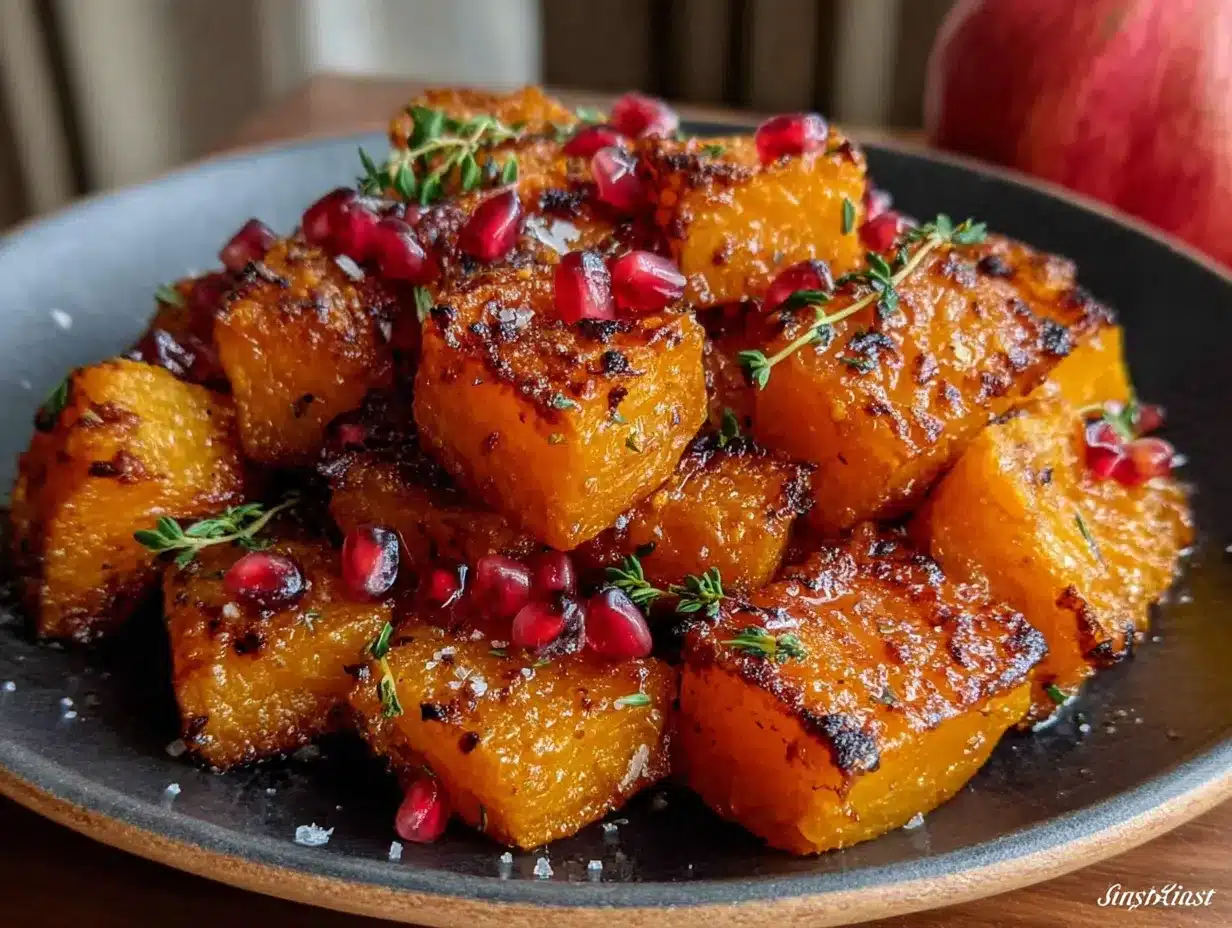
Preheat your oven to 425°F (220°C). Put the rack in the middle position — not too high or low. This temperature is hot enough to caramelize the squash without burning the edges.
- Prep the squash — Wash the butternut squash thoroughly under running water, scrubbing the skin with a vegetable brush if you have one. Cut off the stem end and the bottom tip, then slice the squash in half right where the narrow neck meets the round bulb. Stand each piece upright on your cutting board and cut them in half lengthwise. Scoop out the seeds and stringy bits from the bulb section with a spoon — save the seeds for roasting if you’re feeling ambitious. Cut everything into 1-inch cubes. The skin will soften during roasting, so don’t worry about peeling. You should have about 5 to 6 cups of cubes.
- Season the squash — In your large mixing bowl, combine the squash cubes with the olive oil, salt, pepper, and maple syrup. Toss everything together with your hands or a spatula until every piece is evenly coated. The maple syrup might clump a little — that’s fine, it’ll caramelize beautifully. Strip the thyme leaves from their stems and sprinkle them over the squash, then toss once more.
- Arrange on the baking sheet — Spread the squash cubes in a single layer on your baking sheet. Make sure they’re not touching too much — give them breathing room so they roast instead of steam. If they’re crowded, use two sheets. Tuck a few extra thyme sprigs between the cubes if you want extra flavor.
- Roast for 20 minutes — Place the sheet in the oven and set a timer. Don’t peek for the first 15 minutes — every time you open the oven door, heat escapes and your squash takes longer to caramelize.
- Flip and continue roasting — After 20 minutes, pull the sheet out and flip each piece with your spatula. The bottoms should be golden brown and starting to caramelize. Return the sheet to the oven and roast for another 10 to 15 minutes. The squash is done when the pieces are tender enough to pierce easily with a fork and the edges are deeply browned and crispy. Some pieces will be darker than others — that’s a good thing.
- Add the pomegranate seeds — Transfer the hot squash to a serving platter or bowl. Sprinkle the pomegranate seeds over the top while the squash is still warm — the heat will slightly soften the seeds and release their juice. Toss gently to distribute. Taste and adjust seasoning with a little more salt if needed.
- Garnish and serve — If you’re using parsley, scatter it over the top along with a pinch of flaky sea salt. Serve warm or at room temperature. The squash will hold its texture for about 30 minutes after coming out of the oven.
A few notes from experience: If your squash cubes are different sizes (and they will be), the smaller ones will cook faster. That’s okay — just pull them out early if they’re getting too dark. And if you forget to flip them halfway through, don’t panic. They’ll still be delicious, just less evenly browned. I’ve done both.
Cooking Tips & Techniques
After making this easy roasted butternut squash with pomegranate seeds about a dozen times, I’ve picked up some tricks that make a real difference. Here’s what I wish someone had told me:
Don’t skip the hot oven. I know 425°F seems high, but that’s the sweet spot for getting caramelized edges without burning the outsides before the insides cook through. I tried 400°F once because I was worried about burning — the squash came out pale and sad. Learn from my mistake.
Cut evenly. This is the single most important thing for consistent results. If some pieces are twice the size of others, the small ones will burn while the big ones stay raw. Aim for 1-inch cubes — about the size of your thumb from the first knuckle to the tip. Take your time with this step. It matters.
Give them space. Overcrowding is the enemy of roasted vegetables. If your cubes are piled on top of each other, they’ll steam in their own moisture and never develop those crispy edges. When in doubt, use two baking sheets or roast in batches. The extra five minutes of cleanup is worth it.
Hot sheet, better results. For extra-crispy squash, pop your baking sheet in the oven while it preheats, then carefully add the seasoned squash to the hot pan. You’ll hear a satisfying sizzle, and the bottoms will start browning immediately. Just be careful not to burn yourself — I’ve done that too.
Add pomegranate at the end. This seems obvious, but I’ve seen recipes that roast the seeds with the squash. Don’t do it — they turn into sad, shriveled little things. Fresh pomegranate seeds are meant to be a bright, juicy contrast to the warm roasted squash. Add them right before serving for the best texture and flavor.
Make extra. This recipe doubles beautifully, and leftovers are fantastic. I often make a double batch on Sunday and use the extra throughout the week — on salads, in grain bowls, or just eaten cold from the fridge as a snack. Don’t judge.
Variations & Adaptations
This recipe is forgiving and adaptable, which is exactly what you need on a busy weeknight. Here are some ways to change it up:
Spicy version — Add ½ teaspoon of red pepper flakes or a pinch of cayenne pepper along with the salt and pepper before roasting. The heat plays beautifully against the sweet squash and tart pomegranate. I tried this after a friend suggested it, and now it’s my preferred version for fall dinners with a little kick.
Herb swap — Don’t have thyme? Rosemary works wonderfully — use 1 teaspoon of fresh chopped rosemary or ½ teaspoon dried. Sage is another excellent option, especially if you’re making this for a Thanksgiving-style meal. Just go easy — sage can overpower if you use too much.
Maple alternative — Honey or brown sugar both work in place of maple syrup. Honey gives a slightly floral note, while brown sugar adds deeper caramelization. If you’re watching sugar intake, leave the sweetener out entirely — the squash is naturally sweet enough, especially if you choose a good one.
Add some crunch — Sprinkle toasted pecans or walnuts over the finished dish along with the pomegranate seeds. The nutty crunch adds another layer of texture that makes this feel more substantial. Toast the nuts in a dry pan for 3 to 4 minutes until fragrant before adding them.
Make it a meal — Toss the finished squash with cooked farro or quinoa, some crumbled feta cheese, and extra pomegranate seeds for a hearty fall grain bowl. Add a handful of baby spinach and you’ve got dinner in under 30 minutes.
Dairy-free and vegan — This recipe is already both, as long as you use pure maple syrup. No substitutions needed. It’s naturally plant-based and delicious.
Serving & Storage Suggestions
This easy roasted butternut squash with pomegranate seeds is versatile enough for any occasion. Here’s how to serve and store it:
Serving temperature — Serve warm, right out of the oven, for the best texture. The squash edges will be crispy and the pomegranate seeds will be bright and cold. It’s also delicious at room temperature — I’ve served it at potlucks and buffets where it sat out for an hour and was still fantastic.
What to serve with it — This pairs beautifully with roasted chicken, grilled pork chops, or a simple seared salmon. For vegetarian meals, serve it alongside lentil soup or a hearty grain salad. It’s also a natural fit for holiday tables — I’ve brought it to both Thanksgiving and Christmas dinners, and it disappears every time.
Storage — Store leftovers in an airtight container in the refrigerator for up to 4 days. The pomegranate seeds will soften slightly over time, but the flavor remains excellent. Don’t freeze this dish — the squash turns mushy when thawed.
Reheating — The best way to reheat is in a 350°F oven for 5 to 7 minutes, spread out on a baking sheet. This restores some of the crispy edges. The microwave works in a pinch (about 1 minute), but the texture won’t be as good. For cold leftovers, I actually love tossing them into salads — the squash softens and sweetens the greens.
Make ahead — You can roast the squash up to 2 days in advance and store it in the fridge. When you’re ready to serve, reheat it in the oven, then add the pomegranate seeds and garnish fresh. This is a lifesaver for holiday meal prep.
Nutritional Information & Benefits
This dish is as good for you as it is delicious. Here’s a rough breakdown per serving (about 1 cup):
- Calories : Approximately 180
- Fat : 9g (mostly from heart-healthy olive oil)
- Carbohydrates : 26g
- Fiber : 5g
- Sugar : 12g (naturally occurring from squash and pomegranate)
- Protein : 3g
- Vitamin A : Over 200% of your daily needs (from the butternut squash)
- Vitamin C : 35% of your daily needs
Health benefits — Butternut squash is packed with beta-carotene, which your body converts to vitamin A for healthy vision and immune function. It’s also rich in fiber, which supports digestion and keeps you full. Pomegranate seeds are loaded with antioxidants called punicalagins — these are the compounds that give pomegranates their deep red color and their anti-inflammatory properties. Together, this dish is a powerhouse of vitamins and plant compounds that support overall health.
Dietary considerations — This recipe is naturally gluten-free, dairy-free, vegan, and nut-free. It’s also relatively low in added sugar — just one tablespoon of maple syrup for the whole batch. If you’re watching sodium, use less salt or skip the flaky sea salt garnish.
Potential allergens — None of the common allergens are present in this recipe. As always, check your specific ingredient labels if you have severe allergies.
Conclusion
This easy roasted butternut squash with pomegranate seeds has become my fall survival recipe — the one I make when I need something beautiful on the table but don’t have the energy for anything complicated. It taught me that sometimes the best cooking lessons come from being wrong, and that shortcuts aren’t always a compromise. Sometimes they’re an improvement.
I hope you’ll try it your own way — swap the herbs, add some heat, throw in whatever nuts you have in the pantry. The basic formula is forgiving, and the result is always delicious. If you make it, I’d love to hear how it turned out. Drop a comment below and let me know what variations you tried, or tag me in your photos if you share them online.
Here’s to busy weeknights, humble pie, and the joy of being proven wrong by a younger brother with a good idea. Happy cooking!
Frequently Asked Questions
Can I use frozen butternut squash for this recipe?
You can, but the texture won’t be as good. Frozen squash releases a lot of water as it thaws, which makes it steam rather than roast. If you’re in a pinch, thaw the squash completely and pat it very dry with paper towels before seasoning. The roasting time will be slightly longer, and the edges won’t get as crispy.
How do I cut a butternut squash safely?
Start by cutting off a thin slice from the bottom so it sits flat on your cutting board. Use a sharp chef’s knife — dull knives are more dangerous because they slip. Cut the squash in half where the narrow neck meets the round bulb, then stand each piece upright and cut down through the center. A vegetable peeler works for the skin if you prefer to peel it, but try keeping the skin on — you might be surprised.
Can I prepare the pomegranate seeds ahead of time?
Absolutely. Pomegranate seeds keep well in an airtight container in the refrigerator for up to 5 days. To seed a pomegranate easily, cut it in half horizontally, hold it cut-side down over a bowl, and whack the back with a wooden spoon. The seeds fall out easily, and the white pith stays behind. It’s messy but effective.
What can I use instead of pomegranate seeds?
Dried cranberries are the best substitute — they offer a similar tart-sweet pop. Fresh cranberries work too, but they’re much more tart, so add a little extra maple syrup to balance them. Dried cherries or chopped dried apricots are also good options in a pinch.
How do I know when the squash is fully roasted?
The squash is done when a fork slides into the thickest piece with little resistance. The edges should be deep golden brown and slightly crispy, and the pieces should look caramelized rather than pale. If you’re unsure, pull out one piece and taste it — it should be tender all the way through with no hard or raw centers.
Pin This Recipe!
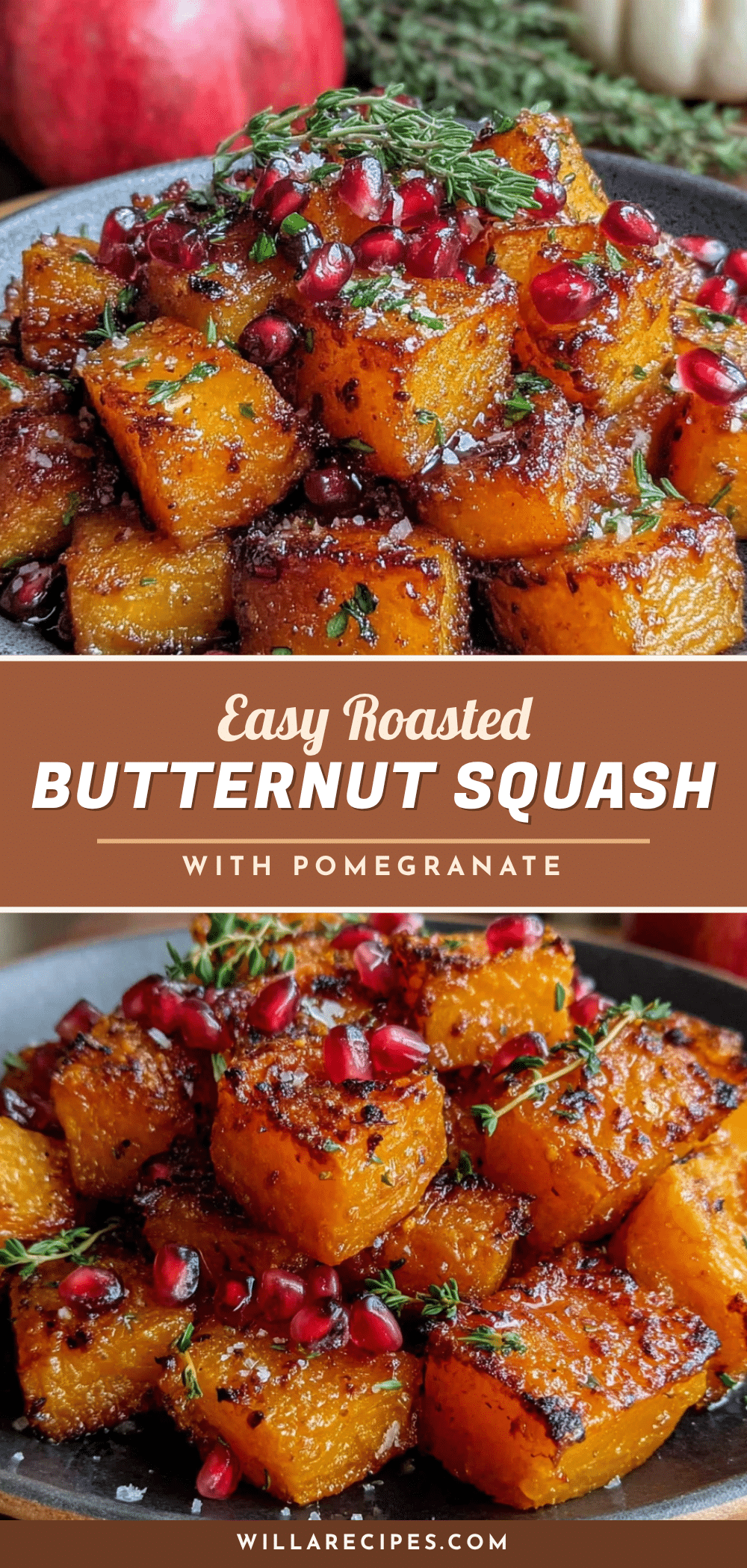
Easy Roasted Butternut Squash with Pomegranate: Best Fall Side
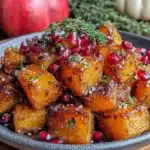
This easy roasted butternut squash with pomegranate seeds is a quick and delicious fall side dish, featuring caramelized squash with a no-peel shortcut and bright, tart pomegranate arils. Ready in about 35 minutes, it’s perfect for busy weeknights or holiday gatherings.
- Prep Time: 10 minutes
- Cook Time: 30 minutes
- Total Time: 40 minutes
- Yield: 4 servings 1x
- Category: Side Dish
- Cuisine: American
Ingredients
- 1 medium butternut squash (about 2.5 to 3 pounds)
- 3 tablespoons olive oil
- 1 teaspoon kosher salt (or 1/2 teaspoon table salt)
- 1/2 teaspoon freshly ground black pepper
- 1/2 cup pomegranate seeds (from 1 medium pomegranate)
- 4 to 5 sprigs fresh thyme (or 1 teaspoon dried)
- 1 tablespoon pure maple syrup
- 2 tablespoons fresh parsley, chopped (optional garnish)
- Flaky sea salt (optional garnish)
Instructions
- Preheat oven to 425°F (220°C). Place rack in the middle position.
- Wash butternut squash thoroughly, scrubbing skin with a vegetable brush. Cut off stem end and bottom tip, then slice squash in half where the narrow neck meets the round bulb. Stand each piece upright and cut in half lengthwise. Scoop out seeds and stringy bits from the bulb section. Cut everything into 1-inch cubes (about 5 to 6 cups).
- In a large mixing bowl, combine squash cubes with olive oil, salt, pepper, and maple syrup. Toss until evenly coated. Strip thyme leaves from stems and sprinkle over squash, then toss once more.
- Spread squash cubes in a single layer on a large baking sheet (18×13 inches or similar), ensuring they are not overcrowded. Tuck a few extra thyme sprigs between cubes if desired.
- Roast for 20 minutes. Do not open the oven for the first 15 minutes.
- After 20 minutes, remove sheet from oven and flip each piece with a spatula. Return to oven and roast for another 10 to 15 minutes, until squash is tender and edges are deeply browned and crispy.
- Transfer hot squash to a serving platter or bowl. Sprinkle pomegranate seeds over the top while squash is still warm. Toss gently to distribute. Taste and adjust seasoning with more salt if needed.
- If using, garnish with chopped parsley and a pinch of flaky sea salt. Serve warm or at room temperature.
Notes
If squash cubes are different sizes, smaller ones will cook faster; pull them out early if needed. For extra-crispy squash, preheat the baking sheet in the oven before adding the squash. Add pomegranate seeds at the end to maintain their texture. Leftovers can be stored in an airtight container in the refrigerator for up to 4 days; reheat in a 350°F oven for 5-7 minutes.
Nutrition
- Serving Size: 1 cup
- Calories: 180
- Sugar: 12
- Sodium: 300
- Fat: 9
- Saturated Fat: 1.5
- Carbohydrates: 26
- Fiber: 5
- Protein: 3
Keywords: roasted butternut squash, pomegranate, fall side dish, easy, no peel, vegan, gluten-free, healthy