My neighbor Sarah wasn’t trying to impress anyone. I’d stopped by to borrow a bag of flour—typical last-minute Thanksgiving panic, you know—and the smell hit me before I even made it past her screen door. It was warm and yeasty, but not in that heavy bread-bowl way. There was something herbal going on too, like rosemary and maybe a hint of garlic, but gentle. She was pulling this golden, craggy sheet pan of bread out of her oven, completely nonchalant, like she hadn’t just created the most beautiful thing I’d seen all week.
“Oh, that’s just my focaccia,” she said, wiping her hands on her jeans. “I make it every year for the big day. Keeps people from picking at the turkey before dinner.” She laughed, but I was already staring at those dimpled little wells across the top, the way the olive oil had pooled in each one like tiny mirrors. Honestly, I forgot why I even needed the flour. I just stood there in her kitchen, watching her slide that pan onto a cooling rack, and I knew I had to figure out how she did it.
Here’s the thing about Sarah’s focaccia—she made it sound like nothing. “It’s the no-knead kind,” she shrugged. “You just mix it the night before and forget about it.” Forget about it? I couldn’t forget about it. I dreamt about that bread. And when I finally got her to scribble down the rough version of the recipe on a torn piece of mail, I realized she was right. No kneading. No stand mixer. Just time and a little patience. Maybe you’ve been there—falling in love with a dish that someone else made look effortless, then spending weeks trying to recreate it in your own kitchen. That was me and this focaccia.
Now, years later, this cozy no-knead sourdough focaccia has become my official Thanksgiving contribution. It’s the bread that keeps everyone happy while the turkey rests, the one that soaks up gravy like a dream, and the one that somehow makes even the most chaotic holiday kitchen feel calm. I tweaked Sarah’s original to use my sourdough starter (because why waste that bubbly goodness?), and honestly, it turned out even better. Let me tell you, there’s something so satisfying about pulling this bread out of the oven on Thanksgiving morning, the kitchen already warm, the coffee brewing, and knowing you’ve got this one thing completely handled.
Why You’ll Love This Recipe
I’ve tested this recipe more times than I care to count—through sticky summer days and cold winter mornings, with overfed starters and lazy ones that needed a nudge. What I’ve landed on is a focaccia that delivers every single time, and here’s why it’s become my go-to for Thanksgiving and honestly, any day I need a little comfort.
- No Kneading Required: This is the kind of bread that lets you have a life. You mix the dough in about ten minutes, let it do its thing overnight, and bake it the next day. No sore arms, no flour-covered countertops, no stress.
- Simple Pantry Ingredients: Flour, water, olive oil, salt, and your sourdough starter. That’s it. No fancy equipment, no trips to specialty stores. You probably have everything already.
- Perfect for Thanksgiving: This bread is a natural fit for the holiday table. It’s sturdy enough to hold up to gravy and cranberry sauce, but light and airy enough that everyone goes back for seconds. Plus, it makes your kitchen smell incredible.
- Crowd-Pleaser: I’ve brought this to Friendsgivings, potlucks, and family dinners, and it always gets the same reaction—people hovering around the bread basket, sneaking pieces before dinner even starts. Kids love it. Adults love it. Even the picky eaters.
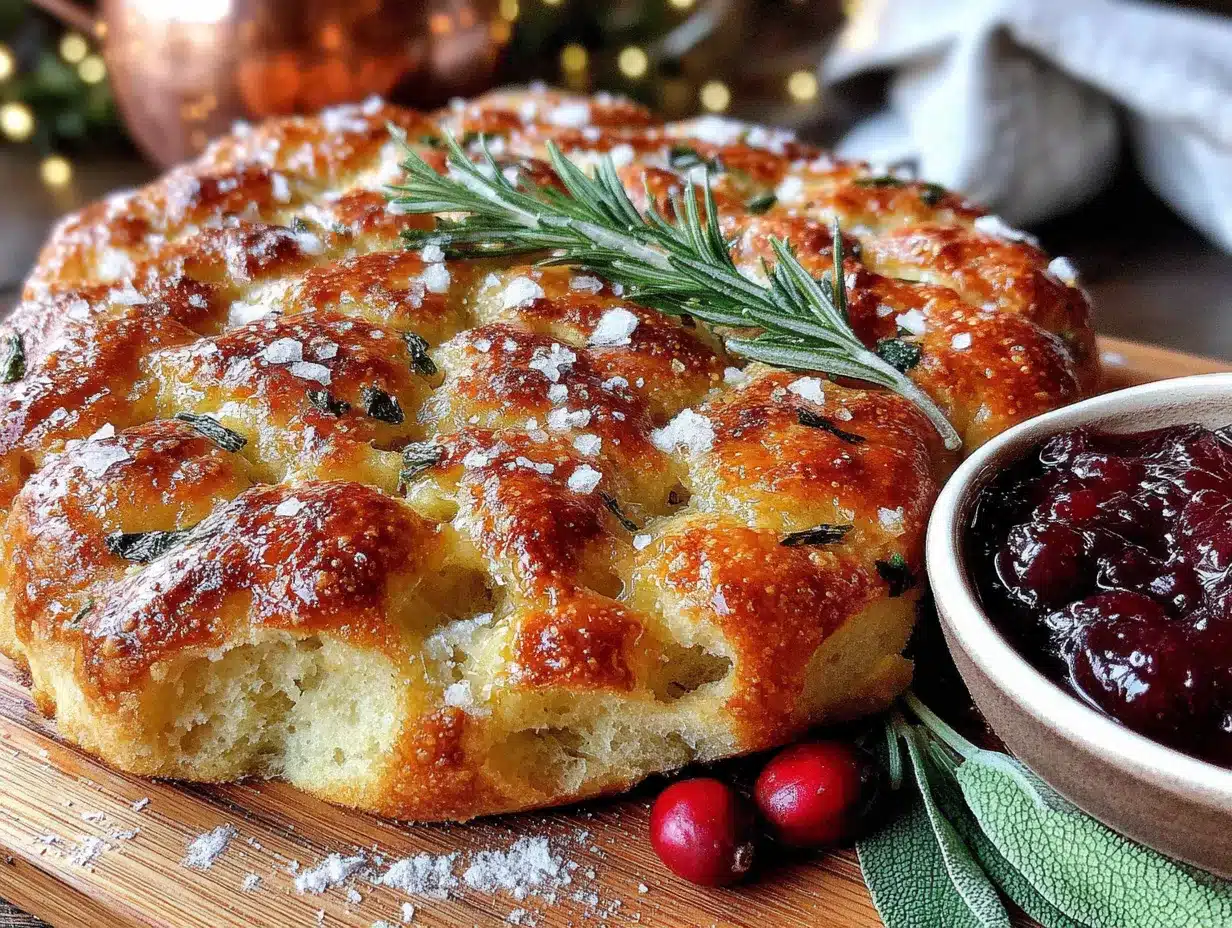
- Unbelievably Delicious: The texture is what gets me every time. That crispy, golden crust gives way to a soft, airy interior with those signature irregular holes. The olive oil seeps into every crevice, and the flaky salt on top adds just the right crunch. It’s comfort food in its purest form.
What makes this recipe different from other focaccias is the sourdough starter. It adds a subtle tang that balances the richness of the olive oil, and it gives the bread a complexity you just can’t get from commercial yeast alone. I’ve tested this with both active starter and discard, and honestly, both work beautifully. The texture stays light and airy, the flavor develops overnight, and the result is a focaccia that tastes like it came from a rustic Italian bakery—except you made it in your own kitchen, in your pajamas, while drinking coffee.
This isn’t just good bread. It’s the kind that makes you close your eyes after the first bite. It’s Thanksgiving comfort reimagined—simpler, slower, but with the same soul-soothing satisfaction that makes the holiday feel special.
What Ingredients You Will Need
This cozy no-knead sourdough focaccia uses simple, wholesome ingredients that work together to create something truly special. You don’t need a long grocery list or hard-to-find items—just a few staples that you probably already have in your pantry. Let me walk you through each one and share a few tips I’ve picked up along the way.
For the Dough
- Bread flour, 4 cups (500g) – I prefer King Arthur for its consistent protein content, but any good bread flour works. The higher protein helps develop that chewy, airy structure. (Avoid all-purpose here if you can—bread flour gives a better rise and texture.)
- Water, 1 ½ cups (360g), lukewarm – Tap water is fine, just make sure it’s not too hot or it’ll kill the good bacteria in your starter. Aim for body temperature, like bath water.
- Active sourdough starter, 1 cup (240g), bubbly and fed – This is the heart of the recipe. I feed my starter the night before, and by morning it’s doubled and full of bubbles. If your starter is sluggish, give it an extra feeding 12 hours before you plan to mix. (You can also use unfed discard in a pinch—the rise will just be a little slower.)
- Olive oil, ¼ cup (60ml), plus more for the pan – Use a good-quality extra virgin olive oil here. It’s a key flavor, so don’t skimp. I like California Olive Ranch for everyday baking.
- Fine sea salt, 2 teaspoons (10g) – Table salt works too, but sea salt dissolves more evenly. Skip the coarse stuff for the dough—it won’t distribute properly.
- Honey or maple syrup, 1 teaspoon (optional) – This tiny bit of sugar helps the fermentation and adds a whisper of sweetness. Totally optional, but I find it rounds out the sourdough tang nicely.
For the Topping
- Extra virgin olive oil, 2-3 tablespoons – This gets drizzled on top before baking. Don’t be shy—it’s what creates that crispy, golden crust.
- Flaky sea salt, 1 teaspoon (like Maldon) – This is non-negotiable for me. The big, crunchy salt crystals on top make every bite pop. (If you only have fine salt, use half the amount.)
- Fresh rosemary, 2 tablespoons, finely chopped – Rosemary and focaccia are a classic combo, especially for Thanksgiving. It adds that earthy, piney aroma that pairs so well with turkey and gravy.
- Garlic cloves, 3-4, thinly sliced (optional) – I tuck these into the dimples before baking. They roast into soft, sweet little gems that are absolutely addictive.
Ingredient Tips and Substitutions
I’ve made this focaccia with all-purpose flour when I ran out of bread flour, and it still turned out great—just a little less chewy. For a whole wheat version, swap 1 cup of the bread flour for whole wheat flour. The texture will be denser, but the flavor gets this lovely nuttiness that’s perfect for fall.
If you’re gluten-sensitive, I’ve had good luck with a 1:1 gluten-free flour blend (I like Bob’s Red Mill), but the dough will be stickier and the rise won’t be as dramatic. Still delicious, just different.
For the rosemary, fresh is best, but dried works in a pinch—use about 1 teaspoon and crush it between your fingers to release the oils. And if you’re not a garlic fan, leave it out. The focaccia is still fantastic on its own.
One last thing: your sourdough starter should be at its peak—bubbly, doubled in size, and smelling pleasantly tangy. If it’s been sitting in the fridge for a while, give it a couple of feedings before using. Trust me, the flavor payoff is worth the extra day of planning.
Equipment Needed
One of the best things about this cozy no-knead sourdough focaccia is that you don’t need a bakery’s worth of equipment. Here’s what you’ll need, along with a few tips from my own kitchen.
- Large mixing bowl – Any bowl works, but I prefer a wide ceramic or glass one. It makes mixing easier and lets you see the dough’s progress. (I use a 4-quart bowl and it’s perfect.)
- Measuring cups and scale – A kitchen scale is your best friend for consistent results. I use mine for flour and water especially. If you don’t have one, fluff your flour with a spoon before scooping to avoid packing it down.
- Wooden spoon or dough whisk – A sturdy spoon is all you need to mix this dough. I’ve used a rubber spatula in a pinch too.
- Plastic wrap or a clean kitchen towel – To cover the dough while it rises. I prefer a damp towel in dry climates to prevent a skin from forming on top.
- 9×13-inch baking pan – This is the standard size for focaccia. A metal pan gives the crispiest bottom crust. (Glass or ceramic works too, but you might need to bake a few minutes longer.)
- Measuring spoons – For the salt, honey, and flaky salt topping.
- Small bowl – For mixing the topping oil and herbs.
- Cooling rack – Essential for keeping the bottom crust crispy. If you don’t have one, you can tilt the bread on its edge in the pan.
- Pastry brush (optional) – For brushing oil on the dough before the final rise. I sometimes just use my fingers—it’s messier but works fine.
- Bench scraper (optional) – Helpful for transferring the sticky dough, but not required.
Budget-friendly tip: if you don’t have a 9×13 pan, a cast iron skillet works beautifully. The bread will be round and slightly thicker, but the crust gets extra crispy from the hot pan. I’ve also used a rimmed baking sheet with success—just spread the dough a little thinner and reduce the bake time by 5-10 minutes.
Preparation Method
This is where the magic happens. The process is simple, but each step matters. I’ll walk you through it with the exact timing and all the little cues I’ve learned from making this bread dozens of times.
Step 1: Mix the Dough (Day Before, Evening)
In your large mixing bowl, combine the lukewarm water and active sourdough starter. Stir with your wooden spoon until the starter is mostly dissolved—it doesn’t have to be perfect, just well distributed. Add the olive oil, honey (if using), and fine sea salt. Stir again.
Now add the bread flour, one cup at a time, stirring after each addition. The dough will be shaggy and sticky—that’s exactly what you want. Don’t be tempted to add more flour. Keep stirring until no dry bits remain, about 2 minutes. The dough should look rough and feel quite wet, almost like a thick batter.
Cover the bowl tightly with plastic wrap and let it rest at room temperature for 30 minutes. This is called the autolyse, and it lets the flour fully absorb the water, making the dough easier to handle later.
Step 2: The Stretch and Fold (First Hour)
After the 30-minute rest, it’s time for the stretch and fold. Wet your hands slightly to prevent sticking. Grab one side of the dough, stretch it up as high as it will go without tearing, and fold it over the top. Rotate the bowl a quarter turn and repeat. Do this four times total, once for each side. The dough will feel alive and stretchy.
Cover the bowl again and let it rest for 30 minutes. Repeat the stretch and fold process two more times, for a total of three rounds. By the third round, you’ll notice the dough is smoother, more elastic, and holds its shape better. It’s starting to look like real bread dough.
Step 3: Bulk Fermentation (Overnight)
After the final stretch and fold, cover the bowl tightly and let it sit at room temperature overnight, about 10-12 hours. The dough should double in size and look bubbly and domed on top. If your kitchen is cold (below 68°F), it might take longer—give it up to 14 hours. If it’s warm (above 75°F), check it at 8 hours.
Here’s what to look for: the dough should feel puffy and alive, with visible bubbles on the surface and a slightly domed top. It should smell pleasantly sour and yeasty. If it looks deflated or smells like nail polish remover, it’s overproofed—still usable, just less airy.
Step 4: Prepare the Pan (Thanksgiving Morning)
Generously coat your 9×13-inch baking pan with olive oil. I use about 2 tablespoons, making sure the bottom and sides are fully covered. Pour the bubbly dough into the pan. It will be very sticky and wobbly—don’t worry. Use your oiled fingers to gently coax it toward the edges. If it resists, let it rest for 15 minutes and try again.
Cover the pan loosely with plastic wrap or a damp towel and let it rise for another 2-3 hours, until the dough is puffy and has doubled in height. It should feel soft and pillowy when you gently poke it.
Step 5: Dimple and Top (30 Minutes Before Baking)
About 30 minutes before baking, preheat your oven to 425°F (220°C). Uncover the dough and drizzle the remaining 2-3 tablespoons of olive oil over the top. Now for the fun part—use your fingertips to press deep dimples all over the dough, right down to the bottom of the pan. Don’t be shy. These dimples are what make focaccia focaccia. They catch the oil and create those crispy, golden pockets.
Sprinkle the flaky sea salt evenly over the top, followed by the chopped rosemary and garlic slices (if using). Press the toppings gently into the dimples so they stay put during baking.
Step 6: Bake (25-30 Minutes)
Place the pan on the middle rack of your preheated oven. Bake for 25-30 minutes, until the top is deep golden brown and the edges look crispy. The bottom should sound hollow when you tap it. If you have an instant-read thermometer, the internal temperature should be around 200°F (93°C).
Let the focaccia cool in the pan for 5 minutes, then transfer it to a cooling rack. Don’t skip this step—it keeps the bottom from getting soggy. Let it cool for at least 15 minutes before slicing. I know it’s hard to wait, but the texture really sets during this time.
Cooking Tips & Techniques
I’ve made this cozy no-knead sourdough focaccia at least fifty times, and I’ve learned a few things the hard way. Here are my best tips to help you avoid my mistakes.
Don’t skip the stretch and fold. I know it seems like an extra step, but it’s what builds the gluten structure without kneading. The first time I made this, I got lazy and only did one round. The bread was flat and dense—still tasty, but not the airy focaccia I was after. Those three rounds make a real difference.
Watch the dough, not the clock. Fermentation times vary wildly depending on your kitchen temperature, your starter’s activity, and even the humidity. I’ve had dough that was ready in 8 hours on a warm summer day, and one that took 14 hours in my chilly winter kitchen. Look for visual cues: doubled in size, bubbly on top, and a slightly domed surface. That’s your green light.
Use plenty of oil. Focaccia is an oil-based bread, and skimping on it leads to a dry, tough crust. I use a generous amount in the pan and on top. The oil isn’t just for flavor—it helps create that crispy, golden crust and keeps the inside tender. Don’t be afraid of it.
Dimple with confidence. The first time I made focaccia, I barely pressed my fingers in, afraid I’d deflate the dough. The result was a flat bread with no character. Now I press all the way down to the pan, making deep wells that fill with oil and toppings. The dough is resilient—it won’t collapse.
Let it cool properly. I know the smell is intoxicating and you want to tear into it immediately, but cutting focaccia while it’s hot will give you a gummy interior. Let it rest on the cooling rack for at least 15-20 minutes. The steam needs to escape so the crumb sets. Trust me, it’s worth the wait.
Multitask strategically. This bread is perfect for Thanksgiving because it works around your schedule. Mix the dough the night before while you’re cleaning up dinner. Do the stretch and folds while you’re making tea. Bake it in the morning while the turkey rests. The hands-on time is minimal, so you can focus on other dishes.
Variations & Adaptations
One of the things I love about this cozy no-knead sourdough focaccia is how versatile it is. Over the years, I’ve played around with different flavors and techniques, and here are some of my favorite variations.
Herb and Garlic Lover’s Focaccia
This is my go-to for Thanksgiving. Along with the rosemary, I add 1 teaspoon of dried thyme and ½ teaspoon of dried oregano to the topping oil. I also tuck in thin slices of garlic (about 4 cloves) into the dimples. The garlic roasts into sweet, buttery little morsels that everyone fights over. I once made this for a Friendsgiving and someone asked if they could take the leftovers home. I said yes, but I regretted it immediately.
Everything Bagel Focaccia
For a fun twist, skip the rosemary and sprinkle the top with everything bagel seasoning (about 2 tablespoons) before baking. The sesame seeds, poppy seeds, garlic, and onion flakes toast up beautifully. This version is amazing alongside a bowl of soup or as a base for sandwiches the next day. I’ve even used it for Thanksgiving leftover sandwiches—turkey, cranberry, and a slice of this focaccia? Unbeatable.
Rosemary and Sea Salt Focaccia (Classic)
Sometimes simple is best. Just the rosemary and flaky salt, nothing else. This is the version that started it all for me, and it’s still the one I make most often. The flavors are clean and let the sourdough tang shine through. It pairs with literally everything.
Gluten-Free Adaptation
I’ve tested this with a 1:1 gluten-free flour blend (Bob’s Red Mill works well) and it turns out surprisingly good. The dough is stickier and doesn’t rise as much, but the flavor is there. Add an extra tablespoon of olive oil to the dough and let it rest for 30 minutes before the final rise. The texture is more cakey than airy, but it’s still delicious and nobody will complain.
Sweet Focaccia Variation
For a dessert-style focaccia, skip the salt and rosemary. Instead, sprinkle the top with 2 tablespoons of brown sugar and 1 teaspoon of cinnamon before baking. Drizzle with a little extra olive oil and bake as directed. The result is a sweet, crispy bread that’s amazing with coffee or as a simple dessert. I made this once for a brunch and it disappeared faster than the savory version.
Serving & Storage Suggestions
This cozy no-knead sourdough focaccia is at its best served warm, but it’s also fantastic at room temperature. Here’s how I like to serve it and how to keep it fresh.
Serving Temperature: I prefer it warm from the oven, but if you’re making it ahead, reheat it in a 350°F oven for 5-7 minutes. The crust gets crispy again and the inside softens up. Avoid the microwave—it makes the bread chewy and sad.
Presentation: Serve the focaccia on a wooden board or a large platter, cut into squares or rectangles. I like to drizzle a little extra olive oil on top just before serving and sprinkle with a pinch of flaky salt. It looks beautiful and tastes even better.
What to Serve With It: This bread is a natural partner for Thanksgiving dinner. Use it to soak up gravy, cranberry sauce, or the juices from roasted vegetables. It’s also amazing with a bowl of soup, a simple salad, or as the base for bruschetta. For a non-Thanksgiving meal, I love it with a bowl of tomato soup or a hearty chili.
Storage: Store leftover focaccia in an airtight container at room temperature for up to 3 days. Do not refrigerate—it will dry out. If you need to keep it longer, wrap it tightly in plastic wrap and freeze for up to 3 months. To thaw, leave it at room temperature for an hour, then reheat in the oven.
Reheating: The best way to reheat focaccia is in a 350°F oven for 5-7 minutes. If you’re in a hurry, you can toast slices in a toaster or under the broiler for 1-2 minutes. The crust will be crispy and the inside will be soft and warm.
Flavor Development: Here’s a little secret—this focaccia actually tastes better the next day. The flavors meld and deepen overnight. I’ve been known to make it a day ahead of Thanksgiving just so it’s one less thing to worry about on the big day. Just cool it completely, wrap it well, and reheat before serving.
Nutritional Information & Benefits
While I wouldn’t call focaccia a health food, it does have some redeeming qualities—especially when made with sourdough. Here’s a rough breakdown per serving (based on 12 servings per recipe).
| Nutrient | Amount Per Serving |
|---|---|
| Calories | 220-250 |
| Total Fat | 10-12g |
| Saturated Fat | 1.5-2g |
| Carbohydrates | 28-32g |
| Fiber | 1-2g |
| Protein | 5-6g |
| Sodium | 400-500mg |
Health Benefits of Sourdough: The fermentation process breaks down some of the gluten and phytic acid in the flour, making the nutrients more bioavailable. This means your body can absorb more of the minerals like iron, zinc, and magnesium. Sourdough also has a lower glycemic index than regular bread, so it won’t spike your blood sugar as much.
Olive Oil Benefits: Extra virgin olive oil is rich in healthy monounsaturated fats and antioxidants. It’s good for your heart and has anti-inflammatory properties. Plus, it makes the focaccia taste incredible.
Dietary Considerations: This recipe is vegetarian and can be made vegan by skipping the honey (use maple syrup instead). For a gluten-free version, use a 1:1 gluten-free flour blend. It’s also naturally dairy-free. The main allergens are wheat (gluten) and, if you add garlic, it may be an issue for some people with IBS.
My Personal Take: I believe in balance. This focaccia is a treat, not an everyday food, and that’s okay. Sharing a warm, homemade bread with the people you love is good for the soul, and that counts for something too.
Conclusion
This cozy no-knead sourdough focaccia has become more than just a recipe in my kitchen—it’s a tradition. Every Thanksgiving morning, I mix the dough the night before, wake up to the smell of fermentation, and spend a quiet hour dimpling and topping while the rest of the house sleeps. It’s my calm before the holiday storm, and it always delivers.
What I love most about this bread is how forgiving it is. It doesn’t demand perfection. It doesn’t care if your starter is a little sluggish or if you forgot to do the third stretch and fold. It just wants time and a little patience, and in return, it gives you something truly special—a golden, crispy, airy focaccia that makes everyone at the table smile.
I hope you’ll give it a try, whether for Thanksgiving or just a random Tuesday that needs a little comfort. Customize it with your favorite herbs, play with the toppings, and make it your own. That’s the beauty of bread—it’s meant to be shared and adapted.
If you make this cozy no-knead sourdough focaccia, I’d love to hear about it. Drop a comment below, share your photos, or tell me about your favorite variation. And if you have any questions, ask away—I’m always happy to help. Happy baking, and have a wonderful Thanksgiving!
Frequently Asked Questions
Can I use sourdough discard instead of active starter?
Yes, you can! Unfed discard will work, but the rise will be slower and less dramatic. Expect the bulk fermentation to take closer to 14-16 hours instead of 10-12. The flavor will be tangier and the texture slightly denser, but it’s still delicious.
Why is my focaccia flat and dense?
This usually happens for one of three reasons: your starter wasn’t active enough, the dough didn’t ferment long enough, or you pressed too hard during the dimpling step. Make sure your starter is bubbly and doubled before using, and look for visual cues (doubled in size, domed top) rather than strictly following the clock.
Can I make this recipe without a sourdough starter?
Absolutely. Substitute the 1 cup of sourdough starter with ½ cup of water and 1 ½ teaspoons of active dry yeast. Mix the yeast with the lukewarm water and let it sit for 5 minutes until frothy, then proceed with the recipe. The fermentation time will be shorter—about 4-6 hours at room temperature.
How do I get those big, irregular holes in my focaccia?
The key is a high-hydration dough (wet dough) and gentle handling. Don’t overmix, and be careful during the stretch and fold. When you transfer the dough to the pan, handle it as little as possible. The bubbles that form during fermentation are what create those beautiful holes.
Can I freeze the baked focaccia?
Yes! Cool the focaccia completely, wrap it tightly in plastic wrap, then in aluminum foil, and freeze for up to 3 months. To serve, thaw at room temperature for an hour, then reheat in a 350°F oven for 5-7 minutes. The crust will be just as crispy as the day you baked it.
Pin This Recipe!

Cozy No-Knead Sourdough Focaccia: Perfect Thanksgiving Bread

A golden, crispy, and airy no-knead sourdough focaccia with a subtle tang, perfect for Thanksgiving or any cozy occasion. Made with simple pantry ingredients and minimal hands-on time, this bread is a crowd-pleaser that soaks up gravy beautifully.
- Prep Time: 15 minutes
- Cook Time: 25-30 minutes
- Total Time: 12-14 hours (includes overnight fermentation)
- Yield: 12 servings 1x
- Category: Bread
- Cuisine: Italian
Ingredients
- 4 cups (500g) bread flour
- 1 ½ cups (360g) lukewarm water
- 1 cup (240g) active sourdough starter, bubbly and fed
- ¼ cup (60ml) olive oil, plus more for the pan
- 2 teaspoons (10g) fine sea salt
- 1 teaspoon honey or maple syrup (optional)
- 2–3 tablespoons extra virgin olive oil (for topping)
- 1 teaspoon flaky sea salt (like Maldon)
- 2 tablespoons fresh rosemary, finely chopped
- 3–4 garlic cloves, thinly sliced (optional)
Instructions
- Mix the Dough (Day Before, Evening): In a large mixing bowl, combine lukewarm water and active sourdough starter. Stir until mostly dissolved. Add olive oil, honey (if using), and fine sea salt. Stir again. Add bread flour one cup at a time, stirring after each addition, until no dry bits remain (about 2 minutes). The dough will be shaggy and sticky. Cover tightly with plastic wrap and let rest at room temperature for 30 minutes.
- Stretch and Fold (First Hour): After the 30-minute rest, wet your hands slightly. Grab one side of the dough, stretch it up as high as it will go without tearing, and fold it over the top. Rotate the bowl a quarter turn and repeat. Do this four times total. Cover and let rest for 30 minutes. Repeat the stretch and fold process two more times (total of three rounds).
- Bulk Fermentation (Overnight): After the final stretch and fold, cover the bowl tightly and let sit at room temperature for 10-12 hours, until doubled in size, bubbly, and domed on top.
- Prepare the Pan (Thanksgiving Morning): Generously coat a 9×13-inch baking pan with olive oil (about 2 tablespoons). Pour the bubbly dough into the pan. Use oiled fingers to gently coax it toward the edges. If it resists, let rest for 15 minutes and try again. Cover loosely with plastic wrap or a damp towel and let rise for 2-3 hours, until puffy and doubled in height.
- Dimple and Top (30 Minutes Before Baking): Preheat oven to 425°F (220°C). Uncover the dough and drizzle remaining 2-3 tablespoons olive oil over the top. Use fingertips to press deep dimples all over the dough, down to the bottom of the pan. Sprinkle flaky sea salt, chopped rosemary, and garlic slices (if using) evenly over the top. Press toppings gently into dimples.
- Bake: Place pan on middle rack and bake for 25-30 minutes, until deep golden brown and edges are crispy. Internal temperature should be around 200°F (93°C). Let cool in pan for 5 minutes, then transfer to a cooling rack. Cool for at least 15 minutes before slicing.
Notes
For best results, use a bubbly, active sourdough starter. The dough is very sticky—do not add extra flour. Fermentation times vary; look for visual cues (doubled in size, bubbly top). Use plenty of olive oil for a crispy crust. Let cool completely before slicing to avoid a gummy texture. Focaccia tastes even better the next day.
Nutrition
- Serving Size: 1 square (1/12 of re
- Calories: 235
- Sugar: 1
- Sodium: 450
- Fat: 11
- Saturated Fat: 1.75
- Carbohydrates: 30
- Fiber: 1.5
- Protein: 5.5
Keywords: sourdough focaccia, no-knead bread, Thanksgiving bread, rosemary focaccia, easy focaccia, sourdough starter recipe