I was standing in the middle of the party supply aisle at our local grocery store last October, staring at a display of plastic spider rings, when the smell of artificial grape candy hit me — and suddenly I was seven years old at my Aunt Carol’s kitchen table, watching her arrange black olives into a perfect spider shape on a platter of cheese cubes. She wasn’t trying to be fancy. She was trying to get my cousin Mikey to eat something that wasn’t a chicken nugget. And honestly? It worked. That memory hit me so hard I almost laughed out loud right there next to the paper plates. My own kids were at home, my wallet was feeling the end-of-month squeeze, and I needed something — anything — that would make our family Halloween gathering feel special without requiring a second mortgage. That’s when it clicked. Why not build an entire meal around that same silly, brilliant trick? Why not make a spiderweb charcuterie board that feeds a crowd, costs less than takeout, and actually gets kids excited about things like pepperoni and cheese? Let me tell you, it worked better than I ever expected.
Why You’ll Love This Recipe
This isn’t just another snack platter. This spiderweb charcuterie board is the kind of thing that makes people stop and take pictures before they even grab a cracker. I’ve tested this setup at three different family gatherings now, and every single time, the kids dive in before the adults can even sit down.
- Quick & Easy : You can put this whole board together in under 20 minutes. No cooking, no complicated steps, just smart arranging.
- Simple Ingredients : Everything on this board comes from a regular grocery store. No fancy cheese shops or specialty meat counters required.
- Perfect for Halloween Parties : Whether it’s a classroom celebration, a family movie night, or a neighborhood gathering, this board fits right in.
- Crowd-Pleaser : I’ve watched picky eaters and foodie adults both go back for seconds. The visual appeal does something magical to appetites.
- Unbelievably Delicious : The combination of salty meats, creamy cheeses, crunchy crackers, and sweet fruit hits every single craving at once.
What makes this different from every other charcuterie board you’ve seen? It’s designed specifically for small hands and big appetites. The spiderweb pattern isn’t just for looks — it creates natural sections that keep ingredients separate, which matters when you’re feeding kids who don’t want their crackers touching their grapes. I’ve tweaked the layout over three iterations to make sure everything stays fresh and accessible. This is comfort food reimagined for a crowd, and it delivers every single time.
What Ingredients You Will Need
This spiderweb charcuterie board uses simple, crowd-friendly ingredients that won’t break the bank. I’ve kept everything practical and easy to find, because the last thing you need before a party is a frantic search for obscure crackers.
- For the Meats:
- Pepperoni slices, about 8 ounces (use your favorite brand, I like Hormel for consistent texture)
- Salami slices, about 6 ounces (Genoa salami works great, ask for it sliced thick at the deli counter)
- Turkey roll-ups or ham slices, about 4 ounces (optional, great for kids who prefer milder flavors)
- For the Cheeses:
- Cheddar cheese block, 8 ounces (cut into cubes, about 1-inch pieces)
- Mozzarella string cheese, 6 sticks (cut each into 4 pieces for easy grabbing)
- Colby Jack cheese slices, 6 ounces (cut into triangles or use cookie cutters for fun shapes)
- For the Spiderweb Design:
- Black olives, one 6-ounce can (drained, these become the spider bodies)
- Pretzel sticks, about 1 cup (these form the web lines)
- Red grapes, about 1 cup (washed and separated into small clusters)
- Green grapes, about 1 cup (washed and separated)
- For the Dippers and Fillers:
- Mini crackers or pretzel twists, about 2 cups (I recommend Ritz minis or Annie’s bunny crackers)
- Baby carrots, about 1 cup (washed, can leave whole or cut in half lengthwise)
- Cherry tomatoes, about 1 cup (washed, leave whole)
- Hummus or ranch dip, about 1/2 cup (place in a small bowl in the center)
- Optional Extras:
- Edible eyeballs (found at party supply stores, these are totally optional but kids lose their minds over them)
- Orange bell pepper, sliced into strips (adds color and crunch)
- Dark chocolate squares, about 4 ounces (for the sweet finish)
I always grab an extra bag of pretzel sticks and an extra pack of string cheese. Trust me, someone will snack on them before you even start building the board. If you’re feeding a really big crowd — like 12 or more people — just double everything except the olives. One can is plenty for the spider design.
Equipment Needed
You don’t need anything fancy for this spiderweb charcuterie board. I’ve made this on everything from a wooden cutting board to a clean baking sheet, and it works perfectly every time.
- Large round or rectangular serving board or platter (at least 16 inches across, a clean pizza pan works great)
- Small bowl or ramekin for the dip (about 4 inches wide)
- Cheese knife or small paring knife for cutting cubes
- Cutting board for prep work
- Paper towels for drying grapes and olives
- Small cookie cutters in Halloween shapes (optional, but fun for cheese slices)
If you don’t have a large board, no worries at all. I’ve used a clean cookie sheet lined with parchment paper, and it looked just as good. The key is having enough flat surface space to spread everything out. I found my favorite board at a thrift store for three dollars, so keep an eye out for bargains.
Preparation Method
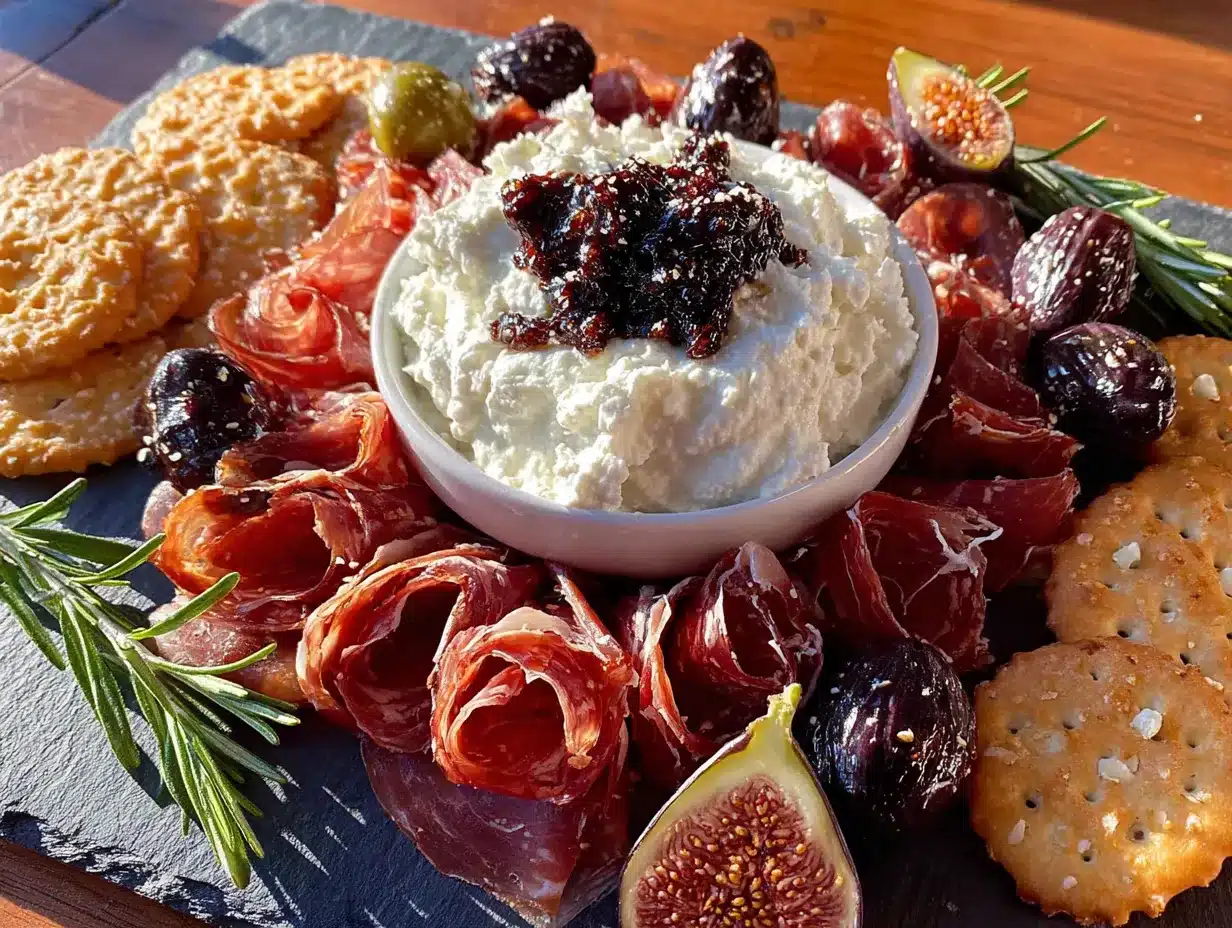
Let me walk you through exactly how I put this spiderweb charcuterie board together. I’ve timed myself, and the whole process takes about 18 minutes once everything is prepped.
- Wash and dry all produce. Rinse the grapes, cherry tomatoes, and baby carrots, then pat them completely dry with paper towels. Wet fruit makes crackers soggy, and nobody wants that. This takes about 2 minutes.
- Cut the cheeses. Slice the cheddar block into 1-inch cubes. Cut each string cheese stick into 4 even pieces. Use your small cookie cutters to cut the Colby Jack slices into bat or pumpkin shapes if you’re feeling extra. If not, triangles work just fine. This takes about 4 minutes.
- Prepare the meats. Lay out your pepperoni and salami slices on a plate. If you want to get fancy, fold some of the salami slices into quarters for a different texture. Leave the turkey roll-ups flat. This takes about 2 minutes.
- Drain the olives. Open the can of black olives and drain them well. Pat them dry with a paper towel. You want them dry so they don’t make the pretzel sticks soggy. This takes about 1 minute.
- Place the dip bowl. Put your small bowl of hummus or ranch dip right in the center of your serving board. This is the anchor point for your entire spiderweb design.
- Build the web lines. Starting from the center dip bowl, arrange pretzel sticks in straight lines radiating outward like spokes on a wheel. Space them about 2 inches apart at the edges. I use 8 to 10 pretzel sticks for a full web effect.
- Create the web rings. Using smaller pieces of pretzel stick or broken cracker pieces, create curved lines that connect the spokes. Think of drawing a spiderweb — you want concentric rings that get wider as they go outward. Don’t stress about perfection. Imperfect webs look more natural.
- Fill the sections. Working in the spaces between your web lines, start adding your ingredients. Place cheese cubes in one section, grapes in another, pepperoni in another. Keep similar items together for visual impact. I like to alternate colors — green grapes next to orange cheddar, red grapes near the salami.
- Add the spiders. Take two black olives and place them together to form a spider body. Use small pieces of pretzel stick for legs — break them into 1-inch pieces and arrange 4 on each side of the olive body. Make 3 or 4 of these little spiders and place them crawling along your web lines.
- Fill in the gaps. Sprinkle mini crackers, baby carrots, and cherry tomatoes into any empty spaces. You want the board to look full and abundant. Add the edible eyeballs if you have them, tucking them into the cheese cubes or near the spiders.
- Final check. Step back and look at your board. Move things around until it feels balanced. I always end up shifting a few grapes and adding more crackers to fill a bare spot.
One thing I learned the hard way — don’t put the pretzel sticks in too early if your house is humid. They can get soft after an hour or so. If you’re making this ahead, build the web right before serving and keep the pretzels in a sealed bag until the last minute.
Cooking Tips & Techniques
I’ve made this spiderweb charcuterie board about seven times now, and I’ve picked up a few tricks that make a real difference.
First, temperature matters more than you think. Take your cheeses out of the fridge about 20 minutes before you start building. Cold cheese doesn’t have as much flavor, and it’s harder to cut clean cubes. I forgot this once and ended up with crumbly cheddar everywhere. Learn from my mistake.
Second, think about how people actually eat from a board. Kids especially will grab whatever is closest to them, so spread the popular items — pepperoni, string cheese, grapes — around the whole board instead of clustering them in one spot. This prevents traffic jams and arguments.
Third, the spiderweb design works best when you build it in layers. Start with the big visual elements (the web lines and spiders), then fill in with medium items (cheese cubes, salami), and finish with the small stuff (crackers, cherry tomatoes). This keeps everything visible and prevents the web from getting buried.
I also learned to keep a small bowl of extra pretzel sticks nearby. Kids love to snack on them while they walk around, and having backups means your web stays intact for photos. Speaking of photos, take your picture before anyone starts eating. I say this from experience — my best board got demolished before I even pulled out my phone.
Variations & Adaptations
This spiderweb charcuterie board is incredibly flexible. Here are some ways I’ve adapted it for different situations.
Dietary Variations: For a gluten-free version, swap the pretzel sticks for gluten-free pretzels or use carrot and celery sticks to build your web lines. For a dairy-free option, use vegan cheese cubes and dairy-free dip. I made this for a friend with celiac disease, and she said the carrot stick web actually looked more realistic.
Seasonal Twists: In the fall, I add sliced apples and a small bowl of caramel dip. In the summer, fresh berries and melon balls work beautifully. For a Christmas version, use red and green grapes with star-shaped cheese cutouts. The basic spiderweb structure works year-round with just a few ingredient swaps.
Flavor Variations: If your crowd likes spicy food, add some jalapeno cheddar cubes and spicy salami. For a sweeter board, include chocolate-covered pretzels and dried fruit. I once made a breakfast version with mini pancakes, yogurt dip, and fruit — the kids called it the morning spiderweb and it was a huge hit.
Budget-Friendly Tips: Store-brand cheeses and meats work perfectly fine. I’ve used generic pepperoni and nobody noticed. You can also skip the salami entirely and just double up on ham or turkey roll-ups. The visual impact comes from the arrangement, not the price tag.
Serving & Storage Suggestions
This spiderweb charcuterie board is best served at room temperature, so let it sit out for about 15 minutes after you finish building it. The flavors are more pronounced and the cheeses are softer and creamier.
For presentation, I like to place the board on a low coffee table or kitchen island where kids can reach all sides. Put out small plates and napkins, but honestly, most people will just grab and go. I always set out a few extra bowls for olive pits and grape stems.
If you have leftovers — which honestly doesn’t happen often with this board — here’s what to do. Separate the wet ingredients (grapes, tomatoes, carrots) from the dry ones (crackers, pretzels). Store cheeses and meats in separate airtight containers in the fridge. The pretzel sticks will get soft if you leave them out overnight, so either eat them all or toss them. The olives keep fine in a sealed container for a few days.
For reheating, you don’t really need to reheat anything. Just let the cheese come back to room temperature before serving again. The grapes and cherry tomatoes are best cold, so keep them in the fridge until you’re ready to rebuild the board.
One thing I love about this board is that the flavors actually improve after a few hours. The cheeses and meats mingle together, and the grapes add a subtle sweetness to everything nearby. If you’re making this for a party that spans several hours, just refresh the crackers and pretzels halfway through.
Nutritional Information & Benefits
While I’m not a nutritionist, I can share some general information about what’s in this spiderweb charcuterie board. The exact values depend on your specific ingredients and portion sizes.
A typical serving (about 1/8 of the board) contains approximately 300-350 calories, 18-22 grams of protein, 20-25 grams of fat, and 15-20 grams of carbohydrates. The protein comes mainly from the cheeses and meats, which also provide calcium and iron. The grapes and vegetables add fiber, vitamins, and antioxidants.
This board is naturally gluten-free if you use gluten-free crackers and pretzels. It’s also easy to make vegetarian by skipping the meats and adding more cheese and vegetables. The main allergens to watch for are dairy (cheese) and wheat (crackers, pretzels), so label them clearly if you’re serving a mixed crowd.
From my personal perspective, I love that this board lets kids graze throughout a party instead of sitting down for a formal meal. They eat what they want, when they want, and they actually try new things because everything looks fun and approachable. That’s a win in my book.
Conclusion
This spiderweb charcuterie board has become my go-to for every Halloween gathering, and I honestly think it works for any party where you want to feed a crowd without stress. It’s affordable, it’s fast, and it makes people smile. That combination is hard to beat.
I hope you try this and make it your own. Add your favorite ingredients, change the colors to match your party theme, or let your kids help arrange the spiders. The best part of this recipe is how forgiving it is — you really can’t mess it up. And if your web lines aren’t perfectly straight? Good. Real spiderwebs aren’t either.
If you make this spiderweb charcuterie board, I’d love to hear about it. Drop a comment below with your favorite ingredient swap or tag me in your photos. Happy Halloween, and happy snacking!
Frequently Asked Questions
How far in advance can I make this spiderweb charcuterie board?
You can prep all the ingredients up to 24 hours in advance. Wash and cut everything, store them in separate containers in the fridge, and assemble the board about 30 minutes before serving. The pretzel web should be added right before serving to keep it crisp.
Can I make this board for a classroom party?
Absolutely. Just check with the teacher about any food allergies in the class. You can easily swap out common allergens — use nut-free crackers, dairy-free cheese, and fruit instead of meat. The spiderweb design works with any ingredients.
How many people does this board feed?
This recipe feeds about 8 to 10 people as a snack or appetizer. If you’re serving it as a main meal for kids, it feeds about 6 to 8. For a big crowd of 15 or more, double the ingredients and use a larger board or two separate boards.
What can I use instead of olives for the spiders?
If your kids don’t like olives, you can use large grapes, cherry tomatoes, or even chocolate truffles for the spider bodies. For a fun twist, use round cheese balls with pretzel stick legs. The spiders are mostly for decoration, so use whatever your family enjoys eating.
How do I keep the pretzel web from getting soggy?
Keep the pretzel sticks in a sealed bag until you’re ready to build the web. Make sure all your fruits and vegetables are completely dry before arranging them. If your board will sit out for more than an hour, plan to refresh the pretzel sticks halfway through the party.
Pin This Recipe!
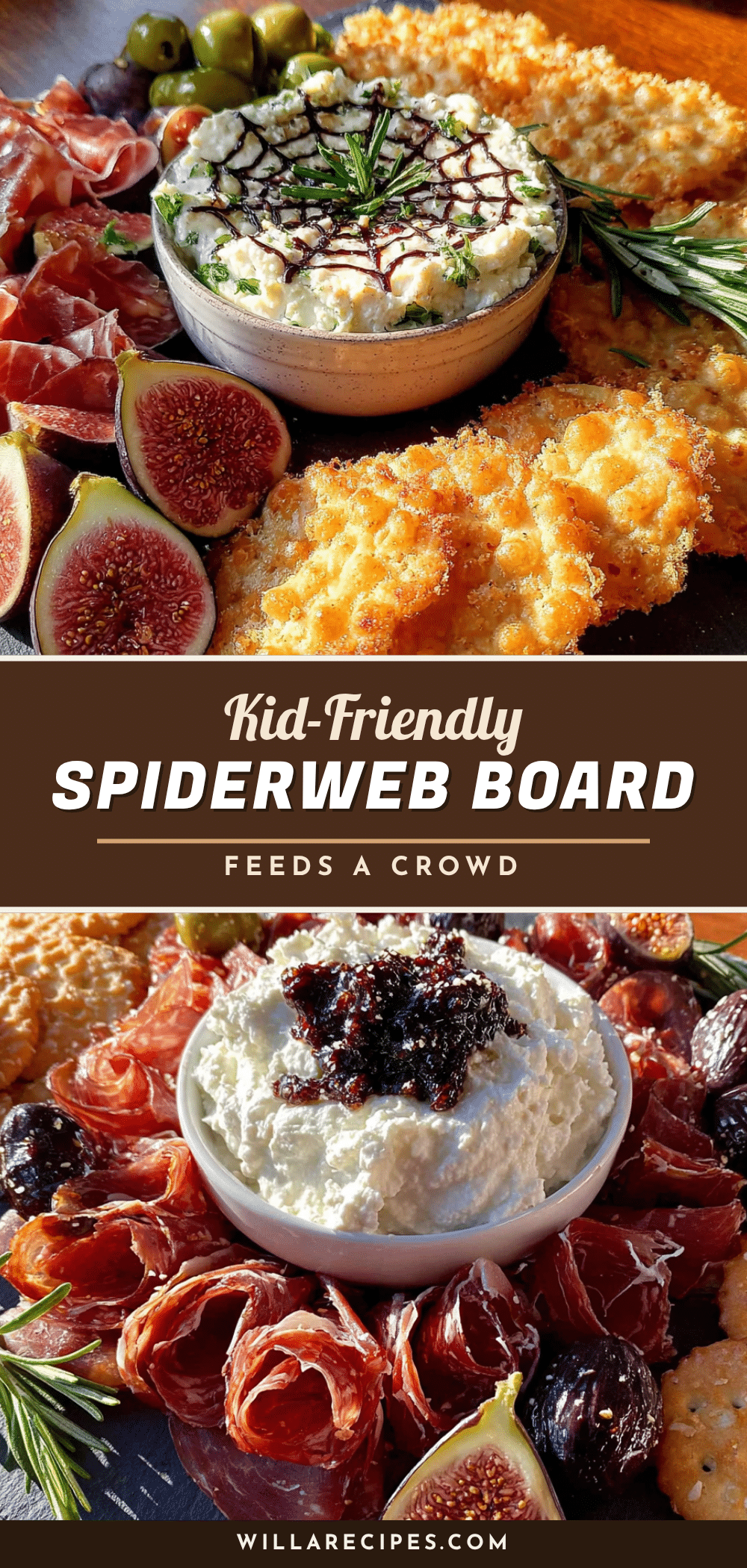
Best Spiderweb Charcuterie Board: Easy Kid-Friendly Crowd-Pleaser
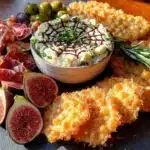
A fun and affordable spiderweb charcuterie board perfect for Halloween parties. This no-cook, kid-friendly platter features a spiderweb design made with pretzel sticks, black olive spiders, and a variety of meats, cheeses, fruits, and veggies that will delight both kids and adults.
- Prep Time: 18 minutes
- Cook Time: 0 minutes
- Total Time: 18 minutes
- Yield: 8-10 servings
- Category: Appetizer
- Cuisine: American
Ingredients
- Pepperoni slices, about 8 ounces
- Salami slices, about 6 ounces (Genoa salami recommended)
- Turkey roll-ups or ham slices, about 4 ounces (optional)
- Cheddar cheese block, 8 ounces (cut into 1-inch cubes)
- Mozzarella string cheese, 6 sticks (each cut into 4 pieces)
- Colby Jack cheese slices, 6 ounces (cut into triangles or shapes)
- Black olives, one 6-ounce can (drained)
- Pretzel sticks, about 1 cup
- Red grapes, about 1 cup (washed, in small clusters)
- Green grapes, about 1 cup (washed, in small clusters)
- Mini crackers or pretzel twists, about 2 cups
- Baby carrots, about 1 cup (washed)
- Cherry tomatoes, about 1 cup (washed)
- Hummus or ranch dip, about 1/2 cup
- Edible eyeballs (optional)
- Orange bell pepper, sliced into strips (optional)
- Dark chocolate squares, about 4 ounces (optional)
Instructions
- Wash and dry all produce. Rinse the grapes, cherry tomatoes, and baby carrots, then pat them completely dry with paper towels.
- Cut the cheeses. Slice the cheddar block into 1-inch cubes. Cut each string cheese stick into 4 even pieces. Use small cookie cutters to cut the Colby Jack slices into shapes if desired, or cut into triangles.
- Prepare the meats. Lay out pepperoni and salami slices on a plate. Optionally fold some salami slices into quarters. Leave turkey roll-ups flat.
- Drain the olives. Open the can of black olives and drain well. Pat dry with a paper towel.
- Place the dip bowl. Put the small bowl of hummus or ranch dip in the center of the serving board.
- Build the web lines. Starting from the center dip bowl, arrange pretzel sticks in straight lines radiating outward like spokes on a wheel, spaced about 2 inches apart at the edges. Use 8 to 10 pretzel sticks.
- Create the web rings. Using smaller pieces of pretzel stick or broken cracker pieces, create curved lines connecting the spokes to form concentric rings that get wider as they go outward.
- Fill the sections. Working in the spaces between web lines, add ingredients. Place cheese cubes in one section, grapes in another, pepperoni in another. Alternate colors for visual impact.
- Add the spiders. Take two black olives and place them together to form a spider body. Use small pieces of pretzel stick for legs (break into 1-inch pieces, arrange 4 on each side). Make 3-4 spiders and place them along web lines.
- Fill in the gaps. Sprinkle mini crackers, baby carrots, and cherry tomatoes into empty spaces. Add edible eyeballs if using, tucking them into cheese cubes or near spiders.
- Final check. Step back and look at the board. Move items around until balanced. Add more crackers to fill bare spots.
Notes
Keep pretzel sticks in a sealed bag until ready to build the web to prevent sogginess. Take cheeses out of fridge 20 minutes before starting for easier cutting and better flavor. Spread popular items around the board to prevent crowding. Take photos before serving. For humid environments, build the web right before serving.
Nutrition
- Serving Size: 1/8 of the board
- Calories: 300350
- Sugar: 810
- Sodium: 600800
- Fat: 2025
- Saturated Fat: 1012
- Carbohydrates: 1520
- Fiber: 23
- Protein: 1822
Keywords: spiderweb charcuterie board, Halloween charcuterie, kid-friendly charcuterie, easy Halloween appetizer, no-cook party platter, spiderweb snack board