My cousin Mark had refused cranberry sauce for thirty-seven years. That’s not an exaggeration or a funny story exaggeration—I checked with his wife, and she confirmed it with the weary certainty of someone who has watched a grown man side-eye a jiggling can of jelly for nearly four decades. “He won’t touch the stuff,” she said, and I believed her. Mark is the kind of person who commits to a position and stays there, like it’s a matter of principle. So last Thanksgiving, I wasn’t even thinking about him when I pulled this Homemade Cranberry Orange Sauce with Rosemary off the stove. I was thinking about how the color had turned exactly right—that deep, jewel-toned ruby that catches the light like stained glass. I was thinking about how the rosemary sprig had released its perfume into the steam, mixing with the bright citrus scent until the whole kitchen smelled like a winter forest had somehow collided with a citrus grove. I set the bowl on the counter and walked away to check on the turkey. When I came back ten minutes later, Mark was standing there with a spoon in his hand, looking caught. The bowl had a noticeable dent in it. “This isn’t cranberry sauce,” he said, like he was trying to convince himself. “This is different.” And honestly? He wasn’t wrong. This recipe is different. It’s the one that converts people, sometimes against their will. Maybe you’ve been on the other side of that can-shaped sauce, wondering what the fuss is about. I get it. Let me tell you why this version changed everything for me—and for my cousin Mark.
Why You’ll Love This Recipe
This isn’t just another cranberry sauce recipe that ends up forgotten on the back of the fridge. This is the kind of condiment that earns its place at the table—and I say that as someone who has tested more cranberry sauce variations than I care to count. Let me break down why this one works so well.
- Quick & Easy : Comes together in under 20 minutes, start to finish. No complicated techniques, no special equipment, and absolutely zero stress. Perfect for Thanksgiving morning when the oven is already full and you need something that works on the stovetop.
- Simple Ingredients : You probably already have most of these in your kitchen right now. Fresh or frozen cranberries, an orange, some sugar, and a sprig of rosemary. That’s it. No fancy grocery trips required.
- Perfect for Holiday Gatherings : This sauce is made for Thanksgiving, Christmas, or any cold-weather feast. It pairs beautifully with turkey, ham, roasted chicken, or even baked brie if you’re feeling fancy.
- Crowd-Pleaser : I’ve watched people who “don’t like cranberry sauce” go back for seconds. The rosemary adds this unexpected savory note that balances the sweetness, and the orange zest brightens everything up. It’s approachable but interesting.
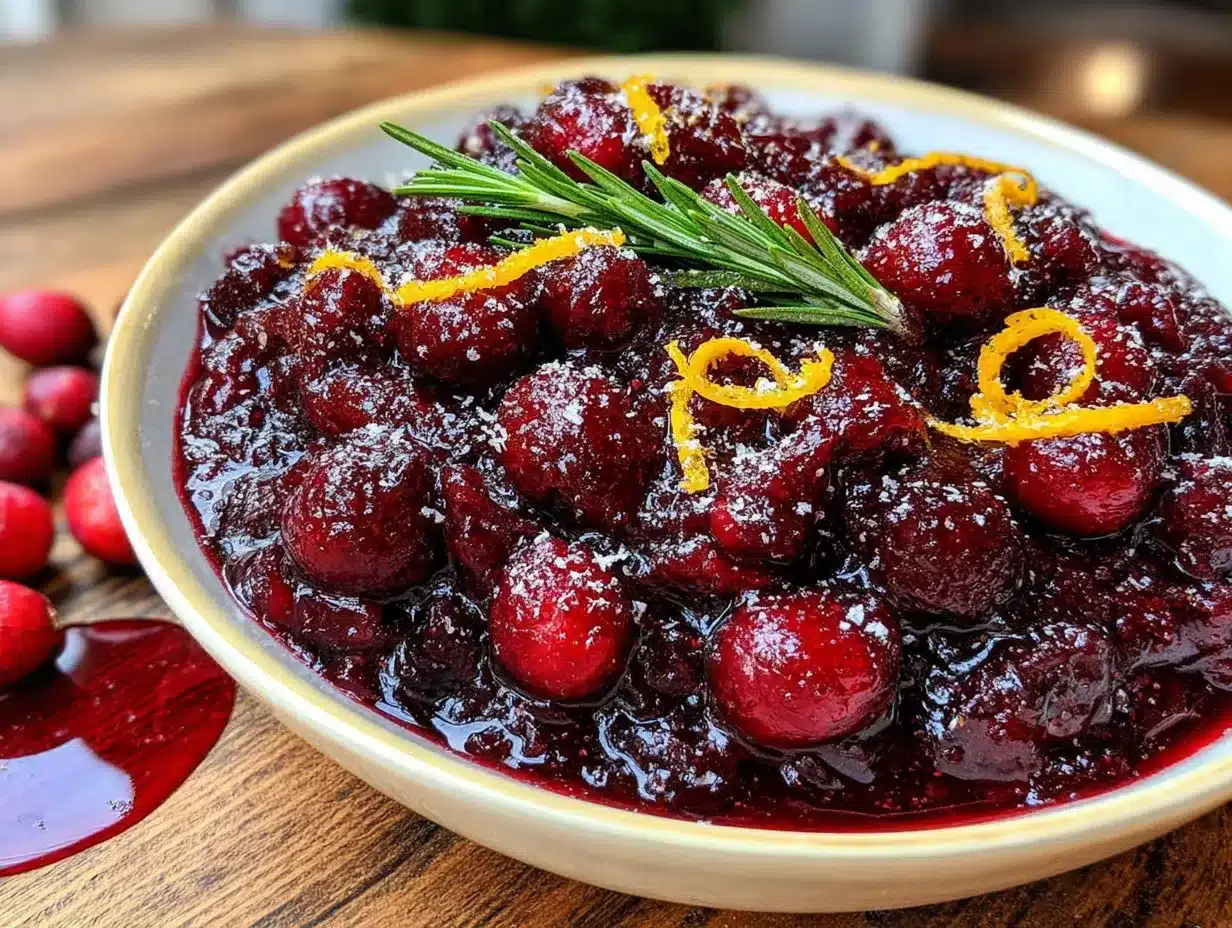
- Unbelievably Delicious : The texture is where this recipe really shines. You get whole berries that have softened but still hold their shape, suspended in this gorgeous, syrupy gel that’s not too thick and not too runny. The flavor is tart, sweet, herbaceous, and citrusy all at once.
What makes this different from every other cranberry sauce recipe out there is the technique. Most recipes just dump everything in a pot and boil it until it breaks down. But this method—starting the sugar and orange juice together before adding the cranberries, then finishing with fresh rosemary—creates a more layered flavor profile. The rosemary doesn’t overpower the cranberries; it just whispers in the background, making everything taste more complex. It’s the kind of subtle touch that makes people ask, “What’s in this? It’s really good.”
This recipe is comfort food reimagined. It’s familiar enough to feel like tradition, but fresh enough to surprise you. And honestly? It’s the kind of sauce that makes you close your eyes after the first bite. That’s not an exaggeration either.
What Ingredients You Will Need
This recipe uses simple, wholesome ingredients to deliver bold flavor and satisfying texture without any fuss. Most of these are pantry staples, especially during the holiday season, and they all work together to create something that tastes much more complex than it really is.
- Fresh or frozen cranberries, 12 ounces (340 grams) — Look for berries that are firm and bright red. If you’re using frozen, don’t bother thawing them first; they cook perfectly straight from the freezer. I prefer fresh when they’re in season, but frozen work beautifully and are available year-round.
- Granulated sugar, ¾ cup (150 grams) — This is the sweetener that balances the cranberries’ natural tartness. You can adjust this up or down depending on your preference, but I find ¾ cup hits the sweet spot—sweet enough to be pleasant, but tart enough to still taste like cranberries. If you prefer a less sweet sauce, start with ½ cup and add more to taste.
- Fresh orange juice, ½ cup (120 ml) — Use freshly squeezed juice from about 1 large orange. The bottled stuff works in a pinch, but fresh juice has a brightness that really makes a difference here. I recommend using a navel orange or a Valencia orange for the best flavor.
- Orange zest, 1 tablespoon (from about 1 orange) — This is where the real citrus magic happens. The zest contains essential oils that give you that intense orange aroma and flavor that juice alone can’t provide. Make sure you zest the orange before you juice it—trust me on this one, I’ve learned that lesson the hard way.
- Fresh rosemary, 1 large sprig (about 4-5 inches long) — Use the whole sprig, not chopped leaves. The rosemary infuses the sauce while it cooks, and then you remove the sprig before serving. This gives you all the flavor without the unpleasant texture of biting into a pine needle. I recommend using a sturdy, fragrant sprig from the top of the plant.
- Water, ¼ cup (60 ml) — Just enough liquid to help the sugar dissolve and the cranberries start cooking without burning. Tap water is fine, but filtered water is better if you have it.
- Pinch of salt — This might seem optional, but it’s not. A tiny pinch of salt enhances all the other flavors and balances the sweetness. Don’t skip it.
For the best results, I recommend using fresh rosemary from the produce section rather than the dried stuff in a jar. Dried rosemary won’t infuse the same way, and it can leave behind woody bits that are unpleasant to eat. If rosemary isn’t your thing, you can substitute a cinnamon stick or a few strips of orange peel for a different flavor profile.
One more thing about the cranberries: don’t worry if you see a few white or pale berries in the bag. They’ll turn red as they cook, and they’ll taste just as good as the darker ones. Just pick out any that are shriveled or mushy before you start.
Equipment Needed
You don’t need a fancy kitchen to make this sauce. In fact, you probably already own everything you need. Here’s what you’ll need:
- Medium saucepan (2-3 quart capacity) — A heavy-bottomed saucepan works best because it distributes heat evenly and prevents the sugar from burning. I use my trusty stainless steel All-Clad for this, but any good-quality saucepan will do.
- Wooden spoon or silicone spatula — You’ll need something to stir with. Wooden spoons are great because they don’t conduct heat and they won’t scratch your cookware. Silicone spatulas work too, especially if you want to scrape every last bit of sauce out of the pan.
- Microplane or fine zester — For zesting the orange. A box grater works in a pinch, but a Microplane gives you those fine, fluffy strands of zest that dissolve into the sauce beautifully. They’re relatively inexpensive and worth the investment.
- Citrus juicer or reamer — Not strictly necessary, but it makes juicing the orange much easier and less messy. You can also just squeeze the orange by hand if you’re feeling strong.
- Measuring cups and spoons — For accurate measurements. I know some people like to eyeball things, but for this recipe, the sugar-to-cranberry ratio matters.
- Fine-mesh strainer (optional) — If you prefer a smoother sauce without the rosemary sprig or any stray bits of zest, you can strain the finished sauce. I don’t usually bother, but it’s an option.
- Glass jar or airtight container — For storing leftovers. This sauce keeps beautifully in the fridge for up to two weeks, so you’ll want something with a tight-fitting lid.
One tip: if you don’t have a Microplane, you can use a vegetable peeler to remove strips of orange peel (avoiding the white pith) and cook those strips along with the rosemary. It’s not quite the same, but it works in a pinch.
Preparation Method
This recipe is incredibly straightforward, but there are a few small details that make a big difference. Follow these steps, and you’ll have perfect cranberry sauce every single time.
- Prep your ingredients first. Before you turn on the heat, zest and juice your orange. Measure out your sugar and water. Rinse your cranberries and pick out any that are shriveled or mushy. Have your rosemary sprig ready. This whole process moves quickly once you start, so having everything prepped makes it much less stressful.
- Combine the sugar, orange juice, and water in your saucepan. Place the pan over medium heat and stir gently until the sugar dissolves completely. This should take about 2-3 minutes. You’re looking for a clear, syrupy liquid with no graininess at the bottom of the pan. Don’t rush this step—undissolved sugar can burn and give your sauce a bitter taste.
- Add the cranberries and the rosemary sprig. Stir everything together gently. You’ll hear the cranberries start to pop almost immediately—that’s the sound of them releasing their natural pectin, which is what gives the sauce its structure. Reduce the heat to medium-low once the mixture comes to a gentle boil.
- Cook for 10-12 minutes, stirring occasionally. This is where the magic happens. The cranberries will start to burst and soften, releasing their natural pectin and creating that gorgeous ruby-red gel. You’ll see the sauce thicken noticeably as it cooks. The rosemary sprig will infuse the sauce with its subtle, piney aroma. Stir gently every few minutes to prevent sticking, but don’t over-stir—you want some berries to remain whole for texture.
- Test for doneness. After about 10 minutes, the sauce should be thick enough to coat the back of a spoon. Most of the cranberries should have burst, but you’ll still see a few whole berries floating in the mix. If you prefer a smoother sauce, cook for another 2-3 minutes and mash gently with the back of your spoon. If you prefer a chunkier sauce, remove it from the heat sooner.
- Remove the rosemary sprig. Use tongs or a slotted spoon to fish out the rosemary sprig. Be thorough—you don’t want anyone biting into a woody stem at the dinner table. Discard the sprig.
- Stir in the orange zest. Add the zest after the sauce has finished cooking, not before. Adding it early can make the zest lose its bright flavor and become bitter. Stir it in gently, and you’ll immediately smell that fresh citrus aroma bloom.
- Let the sauce cool completely. Transfer the sauce to a heat-safe bowl or glass jar and let it cool to room temperature. The sauce will continue to thicken as it cools, so don’t worry if it looks a little loose while it’s still warm. This usually takes about 30-45 minutes.
- Refrigerate until ready to serve. Once the sauce has cooled, cover it and refrigerate for at least 2 hours before serving. This allows the flavors to meld and the texture to set properly. The sauce can be made up to 2 weeks in advance and stored in the refrigerator.
One thing I learned the hard way: don’t walk away from the pan during the cooking process. Cranberry sauce can go from perfectly cooked to scorched in about 30 seconds if you’re not paying attention. I lost a batch last year because I stepped away to answer the phone, and the sugar burned on the bottom of the pan. The whole batch tasted like regret. So stay close, keep an eye on it, and stir occasionally.
Cooking Tips & Techniques
Over the years, I’ve made this recipe more times than I can count, and I’ve picked up a few tricks along the way. Here are the things I wish someone had told me when I first started making cranberry sauce.
Don’t skip the salt. I know it sounds weird to add salt to a sweet fruit sauce, but trust me on this one. A tiny pinch of salt doesn’t make the sauce taste salty—it makes everything else taste more like itself. It balances the sweetness, brightens the citrus, and deepens the rosemary flavor. I forgot to add it once, and the sauce tasted flat and one-dimensional. Never again.
Use whole rosemary sprigs, not chopped leaves. I made this mistake exactly one time. Chopped rosemary leaves look pretty, but they turn into tiny, woody needles that get stuck in your teeth and ruin the texture of the sauce. Whole sprigs infuse the same flavor without the unpleasant mouthfeel. Just remember to fish them out before serving.
Adjust the sweetness to your taste. Some people like their cranberry sauce tart enough to make your cheeks pucker. Others want it sweet enough to eat with a spoon for dessert. The ¾ cup of sugar in this recipe is a happy medium, but feel free to adjust. Start with ½ cup, taste the sauce after it’s cooked, and add more sugar a tablespoon at a time until it tastes right to you.
Make it ahead of time. This is my number one Thanksgiving tip: make the cranberry sauce at least a day ahead. The flavors develop and deepen as it sits in the refrigerator, and it’s one less thing to worry about on the big day. Plus, cold cranberry sauce is easier to slice and serve neatly.
Don’t overcook it. Cranberries contain natural pectin, which thickens the sauce as it cools. If you cook the sauce until it’s as thick as you want it while it’s still hot, it will turn into a solid, jelly-like block once it cools. Cook it until it’s slightly looser than you think it should be, and trust that it will firm up in the fridge.
One more thing: if your sauce turns out too thick, don’t panic. Just stir in a tablespoon of warm water or orange juice at a time until it reaches the consistency you want. If it’s too thin, simmer it for a few more minutes to evaporate some of the liquid. Cranberry sauce is forgiving that way.
Variations & Adaptations
This recipe is a great starting point, but don’t be afraid to make it your own. Here are some variations I’ve tried and loved over the years.
Spiced Cranberry Orange Sauce : Add a cinnamon stick, 2 whole cloves, and a star anise to the pot along with the cranberries. Remove them along with the rosemary sprig before serving. The warm spices add a cozy, holiday feel that pairs beautifully with roasted meats.
Maple-Rosemary Cranberry Sauce : Replace half the granulated sugar with pure maple syrup. Use ⅓ cup sugar and ⅓ cup maple syrup instead of the full ¾ cup sugar. The maple adds a deep, woodsy sweetness that complements the rosemary perfectly. This version is my personal favorite for Christmas dinner.
Bourbon-Orange Cranberry Sauce : Add 2 tablespoons of bourbon or whiskey along with the orange juice. The alcohol cooks off, leaving behind a warm, smoky flavor that’s absolutely incredible with roasted turkey or ham. I first tried this version at a friend’s Friendsgiving, and I’ve been making it ever since.
Low-Sugar Version : Reduce the sugar to ½ cup and add 2 tablespoons of honey or agave syrup instead. You can also use a sugar substitute like monk fruit sweetener or erythritol, but keep in mind that the texture might be slightly different since sugar contributes to the gel structure.
Ginger-Cranberry Sauce : Add a 2-inch piece of fresh ginger, peeled and sliced into thin coins, along with the cranberries. Remove the ginger pieces along with the rosemary before serving. The ginger adds a bright, spicy kick that cuts through the richness of holiday meals.
Slow Cooker Version : Combine all the ingredients in a slow cooker and cook on low for 2-3 hours, stirring once halfway through. This is great if your stovetop is already crowded with other dishes. The sauce will be slightly more uniform in texture since the gentle heat breaks down the berries more evenly.
One variation I tried last year that I wasn’t crazy about: adding dried cranberries along with the fresh ones. It sounded good in theory, but the dried cranberries rehydrated unevenly and created weird chewy pockets in the sauce. Stick with fresh or frozen for the best texture.
Serving & Storage Suggestions
This sauce is incredibly versatile, and I’ve found that it works beautifully in so many different contexts. Here’s how to serve it and store it for the best results.
Serving Temperature : This sauce is traditionally served cold or at room temperature. I prefer it chilled because it slices neatly and holds its shape on the plate. But honestly, it’s delicious at any temperature. If you’re serving it warm, just remember that it will be looser and more liquid than you might expect.
Presentation Ideas : Transfer the sauce to a beautiful serving bowl and garnish with a fresh rosemary sprig and a few thin curls of orange zest. The bright red color against the green rosemary makes for a stunning presentation. For individual servings, you can spoon the sauce into small ramekins or even mini mason jars for a rustic look.
What to Serve It With : This sauce is a natural partner for roasted turkey, of course, but don’t stop there. It’s incredible on roast chicken, pork chops, baked ham, or even grilled salmon. I’ve also used it as a topping for brie or goat cheese crostini, stirred it into yogurt for breakfast, and spread it on leftover turkey sandwiches. The possibilities are endless.
Storage Instructions : Store the sauce in an airtight container in the refrigerator for up to 2 weeks. The flavors actually improve over the first few days as the rosemary and orange meld together. I like to make a double batch and keep one jar in the fridge for impromptu holiday meals and sandwiches.
Freezer Instructions : This sauce freezes beautifully for up to 3 months. Transfer it to a freezer-safe container or zip-top bag, leaving about ½ inch of headroom for expansion. Thaw it overnight in the refrigerator before serving. The texture might be slightly softer after freezing, but the flavor will be just as good.
Reheating Tips : If you prefer your sauce warm, transfer it to a small saucepan and heat it gently over low heat, stirring occasionally. Add a splash of water or orange juice if it seems too thick. You can also microwave it in 30-second bursts, stirring between each interval. Just be careful not to overheat it, or the texture can become gummy.
One thing I’ve noticed: this sauce develops a more complex flavor after a day or two in the fridge. The rosemary becomes more subtle, the orange brightens, and everything comes together in a way that’s hard to describe but impossible to miss. So don’t be afraid to make it ahead of time—it only gets better.
Nutritional Information & Benefits
I’m not a nutritionist, but I can tell you that this sauce is surprisingly good for you—especially compared to the canned stuff. Here’s a rough breakdown per 2-tablespoon serving:
- Calories : Approximately 60-70
- Total Fat : 0g
- Sodium : 5mg
- Total Carbohydrates : 16g
- Sugars : 14g
- Fiber : 1g
- Vitamin C : 4% of the Daily Value
Cranberries are packed with antioxidants, particularly proanthocyanidins, which are known for their anti-inflammatory properties and their ability to support urinary tract health. They’re also a good source of vitamin C and fiber, which supports digestive health.
The orange juice and zest add another boost of vitamin C, along with flavonoids that support immune function and skin health. And rosemary? It’s more than just a pretty garnish. Rosemary contains compounds like rosmarinic acid and carnosic acid, which have antioxidant and anti-inflammatory properties. Some studies suggest that rosemary may even support memory and concentration.
Of course, this sauce does contain sugar, so it’s not something you’d want to eat by the bowlful every day. But as a condiment served in reasonable portions, it’s a perfectly healthy addition to your holiday meal. If you’re watching your sugar intake, try the low-sugar variation I mentioned earlier.
One note about allergens: this recipe is naturally gluten-free, dairy-free, nut-free, and egg-free. It’s suitable for most dietary restrictions, but always check your ingredient labels if you’re serving someone with severe allergies.
Conclusion
This Homemade Cranberry Orange Sauce with Rosemary is the kind of recipe that changes minds. I’ve seen it happen more times than I can count—people who swore they hated cranberry sauce, people who would rather eat plain turkey than touch the canned stuff, people like my cousin Mark. There’s something about the combination of tart cranberries, bright orange, and earthy rosemary that just works. It’s familiar enough to feel like tradition, but fresh enough to surprise you.
I love this recipe because it’s simple without being boring. It’s elegant without being fussy. And honestly? It makes me look like a much better cook than I actually am. I can whip it up in 20 minutes with my eyes half-closed, and people act like I’ve performed some kind of culinary miracle. That’s the power of a really good recipe—it does the work for you.
I’d love to hear how this sauce turns out for you. Did you try any of the variations? Did you serve it with something unexpected? Did you convert any cranberry sauce skeptics at your table? Drop a comment below and let me know. And if you loved this recipe, share it with a friend who needs a little convincing. Trust me—it works.
Happy cooking, and here’s to finding the recipes that change everything.
Frequently Asked Questions
Can I use frozen cranberries instead of fresh?
Absolutely. Frozen cranberries work perfectly in this recipe, and you don’t even need to thaw them first. Just add them straight from the freezer and increase the cooking time by about 2-3 minutes. The texture will be slightly softer, but the flavor will be just as good.
How do I know when the sauce is done cooking?
The sauce is done when most of the cranberries have burst and the liquid has thickened enough to coat the back of a spoon. It should look slightly looser than you want it to be because it will continue to thicken as it cools. This usually takes about 10-12 minutes of simmering.
Can I use dried rosemary instead of fresh?
I don’t recommend it. Dried rosemary doesn’t infuse the same way as fresh, and it can leave behind woody bits that are unpleasant to eat. If fresh rosemary isn’t available, try using a cinnamon stick or a few strips of orange peel instead for a different but equally delicious flavor profile.
How long does homemade cranberry sauce last in the fridge?
Stored in an airtight container, this sauce will keep in the refrigerator for up to 2 weeks. The flavors actually improve over the first few days as the rosemary and orange meld together. You can also freeze it for up to 3 months.
Can I reduce the sugar in this recipe?
Yes, you can reduce the sugar to ½ cup if you prefer a tarter sauce. You can also substitute some of the sugar with honey, maple syrup, or a sugar substitute like monk fruit sweetener. Just keep in mind that the texture might be slightly different since sugar contributes to the gel structure of the sauce.
Pin This Recipe!
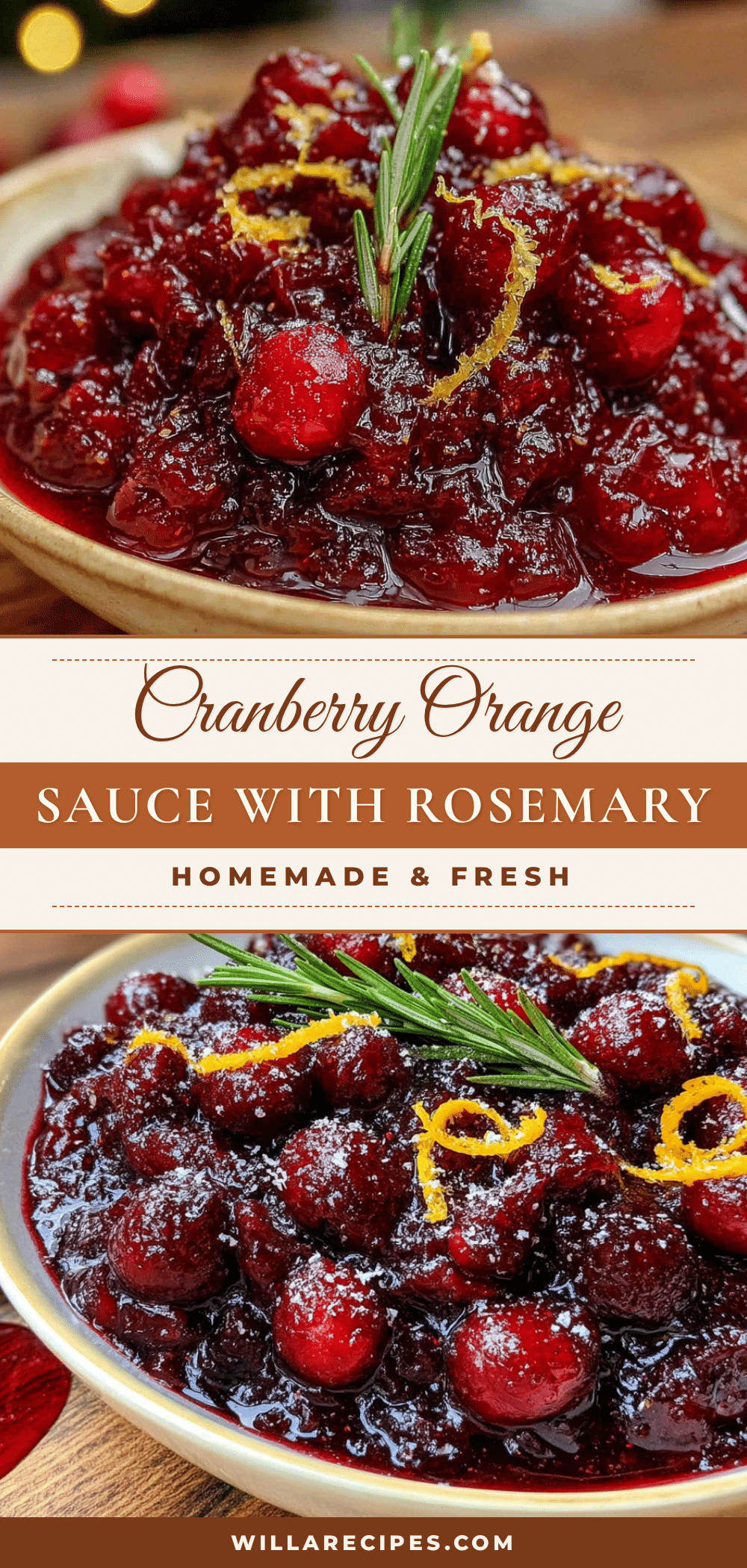
Best Homemade Cranberry Orange Sauce with Rosemary (Easy Recipe)

This homemade cranberry orange sauce with rosemary is a game-changer for holiday meals. It’s quick, easy, and converts even the most stubborn cranberry sauce skeptics with its perfect balance of tart, sweet, herbaceous, and citrusy flavors.
- Prep Time: 5 minutes
- Cook Time: 15 minutes
- Total Time: 20 minutes
- Yield: 8 servings 1x
- Category: Condiment
- Cuisine: American
Ingredients
- 12 ounces (340 grams) fresh or frozen cranberries
- ¾ cup (150 grams) granulated sugar
- ½ cup (120 ml) fresh orange juice
- 1 tablespoon orange zest (from about 1 orange)
- 1 large sprig fresh rosemary (about 4–5 inches long)
- ¼ cup (60 ml) water
- Pinch of salt
Instructions
- Prep your ingredients first: zest and juice the orange, measure sugar and water, rinse cranberries and pick out any shriveled or mushy ones, and have the rosemary sprig ready.
- Combine the sugar, orange juice, and water in a medium saucepan. Place over medium heat and stir gently until the sugar dissolves completely, about 2-3 minutes.
- Add the cranberries and the rosemary sprig. Stir gently. Reduce heat to medium-low once the mixture comes to a gentle boil.
- Cook for 10-12 minutes, stirring occasionally, until the cranberries burst and the sauce thickens. Most berries should have burst, but some whole berries may remain.
- Test for doneness: the sauce should be thick enough to coat the back of a spoon. For smoother sauce, cook 2-3 more minutes and mash gently; for chunkier, remove from heat sooner.
- Remove the rosemary sprig using tongs or a slotted spoon. Discard the sprig.
- Stir in the orange zest after the sauce has finished cooking.
- Let the sauce cool completely in a heat-safe bowl or glass jar (about 30-45 minutes). It will continue to thicken as it cools.
- Refrigerate for at least 2 hours before serving. The sauce can be made up to 2 weeks in advance.
Notes
Don’t skip the salt—it balances the sweetness and brightens the flavors. Use whole rosemary sprigs, not chopped leaves, to avoid woody bits. Adjust sweetness to taste by starting with ½ cup sugar and adding more. Make ahead for best flavor. Don’t overcook; the sauce will thicken as it cools. If too thick, stir in a tablespoon of warm water or orange juice. If too thin, simmer a few more minutes.
Nutrition
- Serving Size: 2 tablespoons
- Calories: 65
- Sugar: 14
- Sodium: 5
- Carbohydrates: 16
- Fiber: 1
Keywords: cranberry sauce, homemade cranberry sauce, cranberry orange sauce, rosemary cranberry sauce, Thanksgiving cranberry sauce, easy cranberry sauce, holiday cranberry sauce