I was elbow-deep in a pile of vintage linens at an estate sale last October when the woman running the cash box—a retired schoolteacher named Edna with silver hair and the most no-nonsense glasses I’ve ever seen—started talking about cookies. Not just any cookies, mind you. She was describing these soft gingerbread cookies with molasses icing that her grandmother used to make for the county fair every single year. I wasn’t looking for a recipe. Honestly, I was trying to find a set of linen napkins that didn’t have stains. But there I was, holding a slightly musty tablecloth, completely captivated by Edna’s description of how the cookies “puffed up like little pillows” and how the icing “had to be thin enough to drip, but thick enough to stay put.”
She didn’t write it down for me. Edna just told me, right there between transactions, how her grandmother would mix the dough in a blue ceramic bowl that had a chip on the rim, and how she always let the cookies rest on the counter for exactly ten minutes before baking. I scribbled her words on the back of a receipt. Let me tell you, I went home that afternoon and tried to recreate them from memory. The first batch? Too hard. The second batch? Too flat. But the third batch—the one where I finally listened to Edna’s voice in my head saying “don’t overmix, honey, just until it comes together”—that was it.
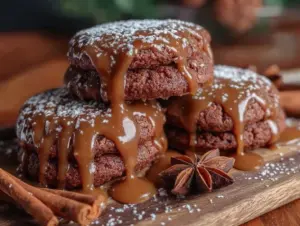
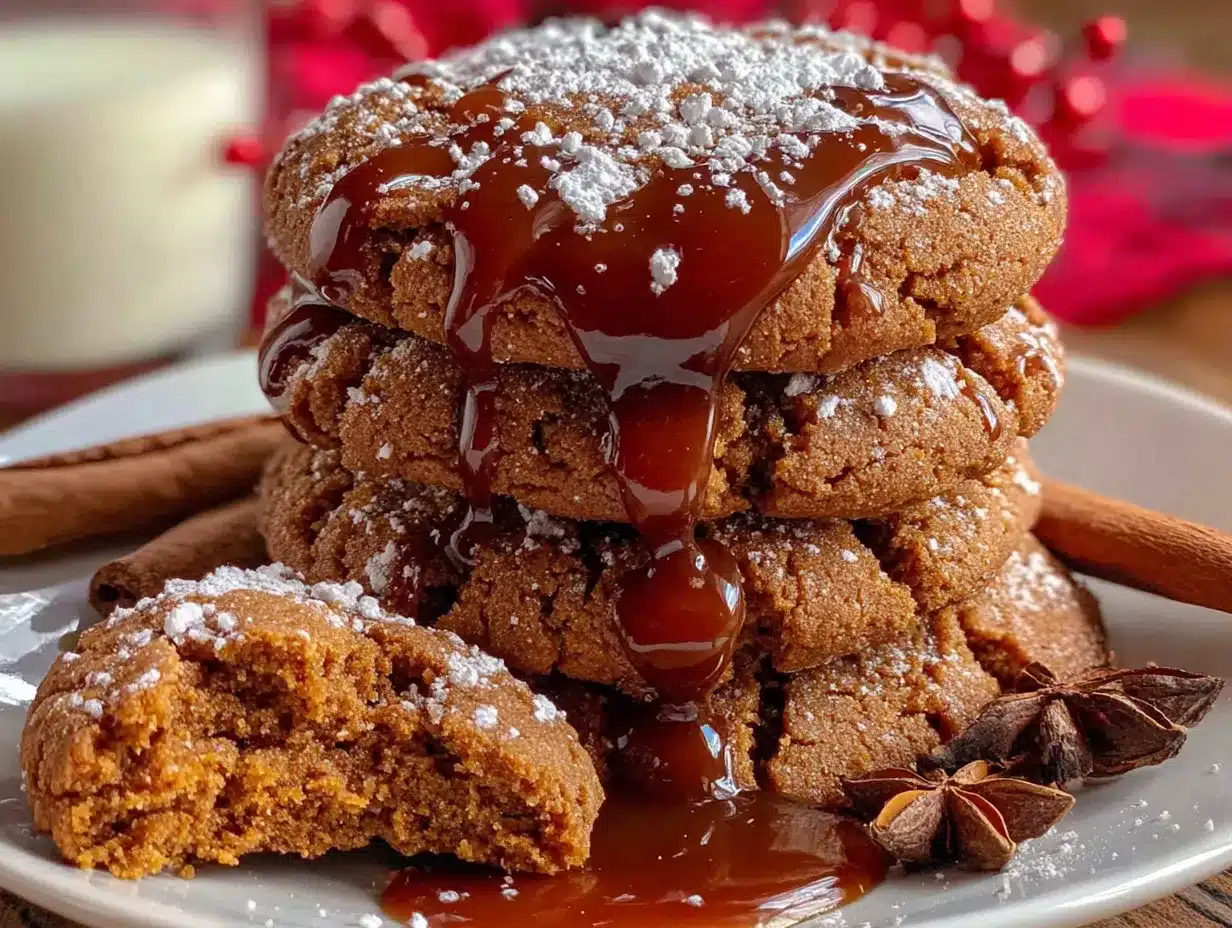
These wholesome soft gingerbread cookies with molasses icing have become my December tradition. They are everything Edna described: pillowy, spiced just right, and that molasses icing sets up with a crackly sheen that makes them look like they came from a bakery window. Maybe you’ve had those rock-hard gingerbread cookies that break your tooth on the first bite. These are the opposite. They are the cookie you reach for with a cup of tea, the one that makes the whole kitchen smell like Christmas morning. I’ve been making them for three years now, and I still think about that estate sale and Edna every single time.
Why You’ll Love This Recipe
I have tested this recipe more times than I care to admit. There were batches that spread into one giant cookie pancake, batches that tasted like straight baking soda, and one particularly sad batch where I forgot the molasses entirely. Through all those trials, I landed on a version that works every single time, and here is why it deserves a spot in your kitchen.
- Quick & Easy: From start to finish, these cookies come together in about 30 minutes. The dough mixes in one bowl, and there is no chilling required. That is right—no waiting around for the dough to firm up. You can have warm cookies in under half an hour.
- Simple Ingredients: You probably have most of these in your pantry right now. No weird extracts, no specialty flours. Just butter, sugar, molasses, flour, and spices that smell like the holidays.
- Perfect for Holiday Baking: Whether you are making cookie plates for neighbors, hosting a cookie exchange, or just want something cozy for a snowy afternoon, these fit right in. They travel well and stay soft for days.
- Crowd-Pleaser: I have brought these to three different holiday parties, and every single time, someone asks for the recipe. Kids love them because they are soft. Adults love them because the spice blend is warm without being overpowering.
- Unbelievably Delicious: The texture is what gets everyone. These cookies are genuinely soft—almost cake-like—with that deep, rich molasses flavor that lingers. The icing adds a sweetness that balances the warm ginger and cinnamon perfectly.
What makes these different from the rest is the technique. Most gingerbread cookies are rolled out and cut into shapes, which makes them dense and prone to drying out. These are drop cookies, which means the dough stays tender and puffy. The molasses icing is brushed on while the cookies are still warm, so it seeps into the cracks and creates that gorgeous glossy finish. This is not just another version of gingerbread. This is the one that will ruin you for all others.
What Ingredients You Will Need
This recipe uses simple, wholesome ingredients to create cookies that are soft, flavorful, and just sweet enough. Most of these are pantry staples, which makes this an easy last-minute bake when the craving hits.
- Unsalted butter, softened – ½ cup (1 stick, 113 grams). Make sure it is truly at room temperature—soft enough that a finger leaves an indent. I prefer Kerrygold for its richness, but any good unsalted butter works.
- Brown sugar, packed – ½ cup (100 grams). Light or dark brown sugar both work here. Dark brown sugar will give a deeper molasses flavor, while light keeps it milder. Pack it firmly into the measuring cup.
- Molasses – ½ cup (170 grams). This is the star of the show. Use unsulphured molasses, not blackstrap. Blackstrap is too bitter and will make your cookies taste harsh. Grandma’s or Brer Rabbit are my go-to brands.
- Large egg – 1, at room temperature. If you forgot to take it out of the fridge, place it in a bowl of warm water for five minutes.
- Vanilla extract – 1 teaspoon. Pure vanilla extract is worth the splurge here. It rounds out the spices beautifully.
- All-purpose flour – 2 ¼ cups (280 grams). Spoon and level your flour—don’t scoop directly from the bag or you will end up with dry cookies.
- Baking soda – 1 teaspoon. This helps the cookies puff up and stay soft.
- Ground ginger – 1 ½ teaspoons. Freshly ground ginger from a spice shop is amazing, but standard grocery store ground ginger works perfectly.
- Ground cinnamon – 1 teaspoon. I use Ceylon cinnamon for its milder, sweeter flavor, but Cassia works too.
- Ground cloves – ½ teaspoon. A little goes a long way. Cloves add that classic holiday warmth.
- Salt – ¼ teaspoon. Fine sea salt is best. It balances the sweetness and enhances the spices.
For the Molasses Icing:
- Powdered sugar – 1 cup (120 grams), sifted if it is lumpy.
- Molasses – 2 tablespoons (30 grams). Same unsulphured kind as above.
- Milk – 2 to 3 tablespoons (30 to 45 ml). Whole milk gives the creamiest result, but any milk works. Start with 2 tablespoons and add more if needed.
- Vanilla extract – ½ teaspoon.
Substitution Guidance: If you need a dairy-free option, use vegan butter and oat milk. The texture will be slightly different but still delicious. For a gluten-free version, swap the all-purpose flour with a 1:1 gluten-free baking flour blend that contains xanthan gum. I have tested this with King Arthur’s Measure for Measure, and it works beautifully.
Equipment Needed
You do not need fancy equipment for these cookies, which is part of their charm. Here is what you will need:
- Large mixing bowl – Any bowl works, but a wide one makes mixing easier. I use a ceramic bowl that belonged to my grandmother, which feels appropriate.
- Electric hand mixer or stand mixer – You can absolutely mix these by hand with a wooden spoon, but a mixer makes creaming the butter and sugar much faster. I have done both, and honestly, hand-mixing gives you more control over not overmixing.
- Measuring cups and spoons – Accurate measurements matter in baking. Use dry measuring cups for flour and sugar, and a liquid measuring cup for molasses.
- Baking sheets – Two standard half-sheet pans work perfectly. Line them with parchment paper or a silicone baking mat for easy cleanup.
- Cookie scoop or tablespoon – A 1.5-tablespoon cookie scoop ensures even-sized cookies. If you don’t have one, use a regular tablespoon and level it off.
- Cooling rack – A wire rack allows air to circulate around the cookies so they cool evenly. If you don’t have one, a clean kitchen towel works in a pinch.
- Pastry brush – This is for applying the icing. A silicone brush is easiest to clean, but a regular bristle brush works too. In a pinch, you can use the back of a spoon.
Budget-Friendly Tip: If you are just starting out, skip the stand mixer. A hand mixer costs a fraction of the price and does everything you need. I used a $15 hand mixer for years before upgrading.
Preparation Method
Preheat your oven to 350°F (175°C). Line two baking sheets with parchment paper and set them aside.
- Cream the butter and sugar. In a large mixing bowl, beat the softened butter and packed brown sugar together until light and fluffy, about 2 to 3 minutes. You want the mixture to look pale and airy. Scrape down the sides of the bowl with a spatula halfway through. If you are using a hand mixer, medium speed works perfectly.
- Add the wet ingredients. Pour in the molasses, crack in the egg, and add the vanilla extract. Beat on low speed until everything is combined. The mixture will look a little separated at this point—that is normal. Do not panic. Scrape the bowl again to make sure the molasses is fully incorporated.
- Mix the dry ingredients. In a separate medium bowl, whisk together the flour, baking soda, ground ginger, cinnamon, cloves, and salt. Whisking ensures the spices are evenly distributed so you don’t get one cookie that tastes like straight cloves.
- Combine wet and dry. Gradually add the dry ingredients to the wet mixture, mixing on low speed or stirring with a wooden spoon. Stop as soon as the flour disappears. Overmixing at this stage develops gluten, which makes cookies tough. You want to see a few streaks of flour still visible—those will disappear when you scoop the dough.
- Scoop the dough. Using a 1.5-tablespoon cookie scoop or a regular tablespoon, drop rounded balls of dough onto the prepared baking sheets. Space them about 2 inches apart. These cookies spread a little, so give them room to breathe. You should get about 24 cookies.
- Bake. Place one baking sheet on the center rack of the oven. Bake for 8 to 10 minutes. The cookies will look puffed and set around the edges but still soft in the center. They should not be browned on the edges—that is a sign they are overbaked. The tops might look slightly cracked, which is exactly what you want.
- Cool briefly. Let the cookies rest on the baking sheet for 2 minutes. This allows them to set up enough to transfer without breaking. After 2 minutes, move them to a wire cooling rack using a thin spatula.
- Make the icing while the cookies cool. In a small bowl, whisk together the powdered sugar, 2 tablespoons of molasses, ½ teaspoon of vanilla extract, and 2 tablespoons of milk. Whisk until smooth. The icing should be thick but pourable—think the consistency of heavy cream. If it is too thick, add another tablespoon of milk. If it is too thin, add a little more powdered sugar.
- Ice the cookies. While the cookies are still warm (but not hot), use a pastry brush to lightly coat the tops with the molasses icing. The warmth helps the icing set into a shiny, crackly glaze. Do not drown them—a thin, even layer is all you need. Let the iced cookies cool completely on the rack so the icing can set.
Sensory Cue: When the cookies are done, your kitchen will smell like a holiday candle factory. The tops should look dry and matte, and when you gently press the center with a finger, it should spring back slightly. If your finger leaves a dent, they need another minute.
Cooking Tips & Techniques
I have made this recipe more times than I can count, and I have made every mistake in the book. Here is what I learned so you don’t have to.
Room temperature ingredients matter. I know, I know—everyone says this. But here is the thing: cold butter does not cream properly with sugar, which means your cookies will be dense instead of fluffy. Take the butter and egg out of the fridge 30 minutes before you start. If you forget, cut the butter into small cubes and let it sit for 10 minutes. Place the egg in a bowl of warm water for 5 minutes.
Do not overmix the dough. This is the most common mistake I see. Once you add the flour, mix only until it disappears. Overmixing develops gluten, and gluten makes cookies tough. You want these to be soft and tender. A few streaks of flour are fine—they will incorporate when you scoop the dough.
Watch the baking time closely. Ovens vary wildly. My old oven baked these in exactly 8 minutes. My new one takes 9 minutes. Start checking at 8 minutes. The cookies should look puffed and set around the edges but still soft in the center. They will continue to cook on the hot baking sheet after you pull them out, so err on the side of underbaking.
Ice while warm. This is the trick that makes the icing look professional. If you wait until the cookies are completely cool, the icing will sit on top in a thick layer instead of sinking into the cracks. Brush it on when the cookies are still warm to the touch, and you will get that beautiful, glossy, crackled finish.
One batch at a time. Do not try to bake both sheets at once unless you have a convection oven. The heat distribution will be uneven, and one sheet will overbake while the other underbakes. Bake one sheet on the center rack, then swap and bake the second sheet.
Variations & Adaptations
This recipe is wonderfully flexible. Here are some ways to make it your own.
Spice it up. Add ¼ teaspoon of nutmeg or allspice to the flour mixture for an extra layer of warmth. I sometimes add a pinch of black pepper—it sounds weird, but it gives the cookies a subtle heat that plays beautifully with the molasses.
Make them vegan. Substitute the butter with vegan butter (I like Miyoko’s), use a flax egg (1 tablespoon ground flaxseed mixed with 3 tablespoons water, let sit for 5 minutes), and use oat milk in the icing. The texture will be slightly less tender but still delicious.
Add mix-ins. Fold in ½ cup of chopped crystallized ginger for little bursts of spicy sweetness. Or add ½ cup of chopped pecans or walnuts for crunch. White chocolate chips are also incredible—they add a creamy sweetness that contrasts with the molasses.
Change the shape. If you want cut-out cookies, chill the dough for at least 2 hours, then roll it out to ¼-inch thickness on a floured surface. Cut into shapes and bake for 8 to 10 minutes. Note that these will be slightly firmer than the drop version, but they hold their shape beautifully.
Try a different icing. Skip the molasses icing and make a simple lemon glaze instead. Mix 1 cup powdered sugar with 2 tablespoons lemon juice and 1 teaspoon lemon zest. The bright citrus cuts through the warm spices perfectly. I made this version for a spring brunch, and everyone raved about it.
Serving & Storage Suggestions
These cookies are best served at room temperature with a tall glass of cold milk or a steaming cup of chai tea. The soft texture and spiced flavor make them perfect for dunking—just be careful not to leave them in the liquid too long or they will fall apart.
For a holiday cookie platter, arrange them alongside classic sugar cookies and peppermint bark for a beautiful variety of textures and flavors. They also pair wonderfully with a scoop of vanilla bean ice cream for an easy dessert that feels special.
Storage: Place the cookies in an airtight container at room temperature. They will stay soft for up to 5 days. To keep them extra soft, add a slice of bread to the container—the cookies will absorb the moisture from the bread and stay tender. Replace the bread slice every other day.
Freezing: These cookies freeze beautifully. Freeze the baked, un-iced cookies in a single layer on a baking sheet, then transfer them to a freezer-safe bag or container. They will keep for up to 3 months. When you are ready to serve, thaw them at room temperature, then make the icing fresh and brush it on. Do not freeze the iced cookies—the icing will become sticky and lose its shine.
Flavor Development: Here is a secret: these cookies actually taste better the next day. The spices mellow and meld together overnight, creating a more rounded flavor. If you can resist eating them all on day one, you will be rewarded on day two.
Nutritional Information & Benefits
Per cookie (based on 24 cookies): approximately 140 calories, 4g fat, 24g carbohydrates, 2g protein, 1g fiber, 14g sugar. These values are estimates and will vary based on specific ingredients used.
Molasses is the unsung hero here. It is rich in iron, calcium, magnesium, and potassium—nutrients that are often lacking in refined sugar. One tablespoon of molasses contains about 20% of your daily recommended iron intake. It also has a lower glycemic index than white sugar, which means it causes a slower, steadier rise in blood sugar.
The ginger in these cookies is not just for flavor. Ginger has anti-inflammatory properties and can help with digestion and nausea. Cinnamon is packed with antioxidants and has been shown to help regulate blood sugar levels. So while these are still a treat, they pack more nutritional punch than your average cookie.
Dietary Considerations: This recipe is nut-free and can easily be made dairy-free or vegan with the substitutions mentioned above. It contains gluten and eggs in its standard form.
Conclusion
These wholesome soft gingerbread cookies with molasses icing have become my most-requested holiday recipe, and for good reason. They are everything a holiday cookie should be: warm, spiced, soft, and utterly comforting. The recipe came from an unexpected source—a retired schoolteacher at an estate sale—but it has found a permanent home in my kitchen.
I love that these cookies are forgiving enough for a beginner baker but impressive enough to serve at a holiday party. I love that the ingredients are simple and the steps are straightforward. But mostly, I love that every time I make them, I think of Edna and her grandmother and that blue ceramic bowl with the chip on the rim. That is the magic of recipes, isnt it? They carry stories with them.
I encourage you to make these your own. Add extra ginger if you like things spicy. Swap the icing for a lemon glaze. Fold in some chocolate chips. The recipe is a starting point, and your kitchen is the place to play. When you make them—and I hope you do—come back and let me know how they turned out. Did you change anything? Did they disappear as fast as mine always do? Drop a comment below or tag me in your photos. I cannot wait to hear about your gingerbread adventures.
Frequently Asked Questions
Can I use blackstrap molasses instead of unsulphured molasses?
I would not recommend it. Blackstrap molasses is much more bitter and less sweet than regular unsulphured molasses. It will make your cookies taste harsh and dark. Stick with unsulphured molasses for the best flavor and texture.
Why did my cookies turn out hard?
This usually happens for two reasons: overbaking or overmixing. If you bake the cookies even one minute too long, they will lose their softness. Similarly, if you mix the dough too much after adding the flour, the gluten develops and makes the cookies tough. Next time, pull them out when they still look soft in the center, and mix the dough just until the flour disappears.
Can I make the dough ahead of time?
Absolutely. You can prepare the dough, cover it tightly, and refrigerate it for up to 3 days. Let it sit at room temperature for about 15 minutes before scooping and baking, as cold dough is harder to work with. The flavor actually improves after a day in the fridge.
How do I get the icing to set properly?
The key is icing the cookies while they are still warm. The warmth helps the icing set into a shiny, crackly glaze. If your icing is too runny, add a little more powdered sugar. If it is too thick, add a splash of milk. You want it to be thick but pourable, like heavy cream.
Can I freeze these cookies?
Yes, but freeze them before icing. Place the baked, un-iced cookies in a single layer on a baking sheet and freeze until solid. Then transfer them to a freezer-safe bag or container. They will keep for up to 3 months. When you are ready to serve, thaw them at room temperature, make the icing fresh, and brush it on.
Pin This Recipe!
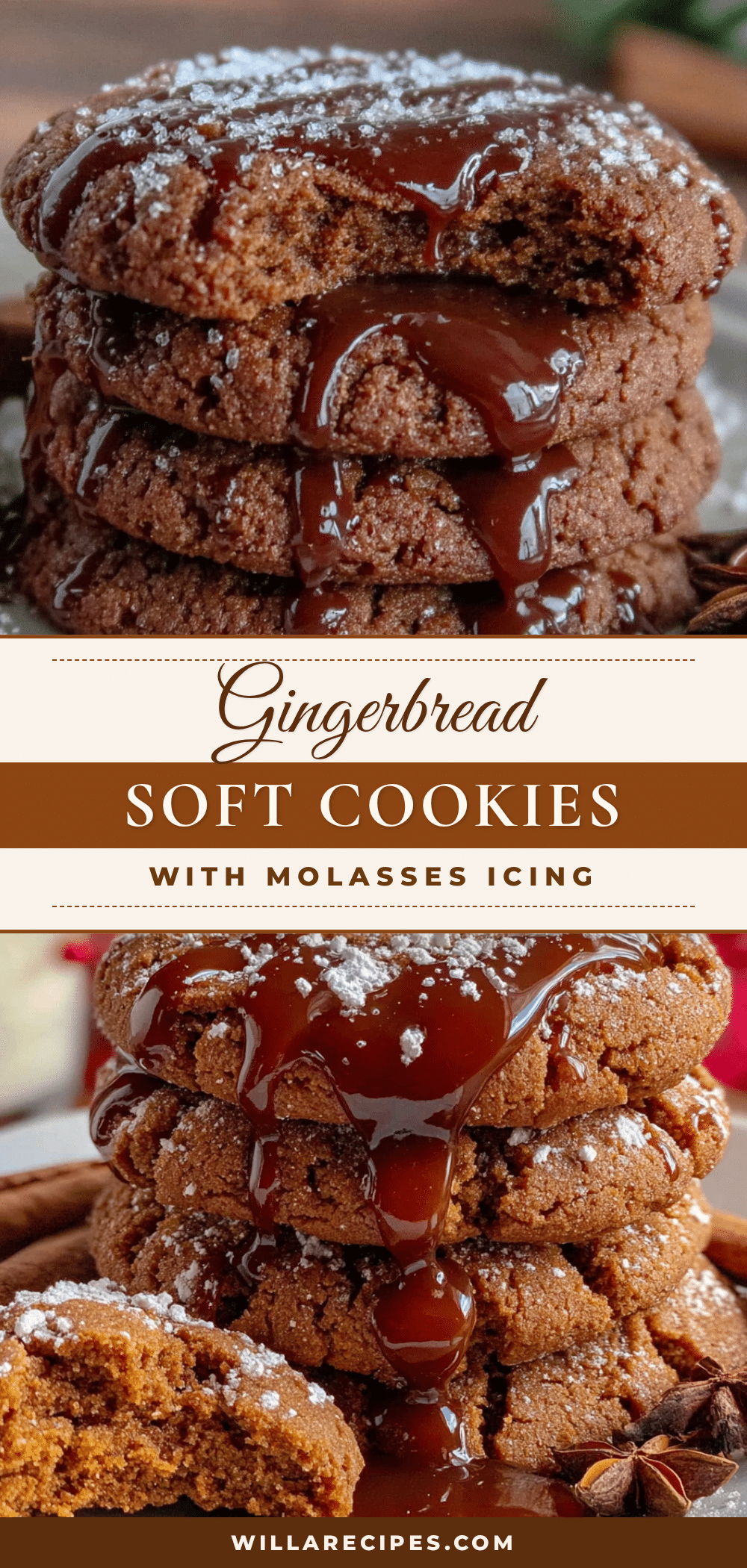
Wholesome Soft Gingerbread Cookies with Molasses Icing
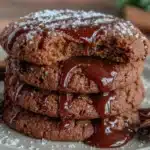
These soft, pillowy gingerbread cookies are spiced with ginger, cinnamon, and cloves, and topped with a glossy molasses icing. They come together in about 30 minutes with no chilling required, making them the perfect holiday treat.
- Prep Time: 15 minutes
- Cook Time: 10 minutes
- Total Time: 25 minutes
- Yield: 24 cookies 1x
- Category: Dessert
- Cuisine: American
Ingredients
- ½ cup (1 stick, 113 grams) unsalted butter, softened
- ½ cup (100 grams) brown sugar, packed
- ½ cup (170 grams) unsulphured molasses
- 1 large egg, at room temperature
- 1 teaspoon vanilla extract
- 2 ¼ cups (280 grams) all-purpose flour
- 1 teaspoon baking soda
- 1 ½ teaspoons ground ginger
- 1 teaspoon ground cinnamon
- ½ teaspoon ground cloves
- ¼ teaspoon fine sea salt
- 1 cup (120 grams) powdered sugar, sifted if lumpy
- 2 tablespoons (30 grams) unsulphured molasses
- 2 to 3 tablespoons (30 to 45 ml) milk
- ½ teaspoon vanilla extract
Instructions
- Preheat oven to 350°F (175°C). Line two baking sheets with parchment paper.
- In a large mixing bowl, beat softened butter and packed brown sugar together until light and fluffy, about 2 to 3 minutes.
- Add molasses, egg, and vanilla extract. Beat on low speed until combined. The mixture may look slightly separated.
- In a separate medium bowl, whisk together flour, baking soda, ground ginger, cinnamon, cloves, and salt.
- Gradually add dry ingredients to wet mixture, mixing on low speed or stirring with a wooden spoon until just combined. Do not overmix.
- Using a 1.5-tablespoon cookie scoop or tablespoon, drop rounded balls of dough onto prepared baking sheets, spacing them about 2 inches apart.
- Bake one sheet at a time on the center rack for 8 to 10 minutes. Cookies should look puffed and set around the edges but still soft in the center.
- Let cookies rest on baking sheet for 2 minutes, then transfer to a wire cooling rack.
- While cookies cool, make the icing: In a small bowl, whisk together powdered sugar, 2 tablespoons molasses, ½ teaspoon vanilla extract, and 2 tablespoons milk until smooth. Add more milk if needed to reach a thick but pourable consistency.
- While cookies are still warm, use a pastry brush to lightly coat the tops with icing. Let iced cookies cool completely on the rack so the icing sets.
Notes
Do not overmix the dough to keep cookies tender. Ice cookies while still warm for a glossy finish. For best flavor, let cookies sit overnight. Store in an airtight container at room temperature for up to 5 days. Freeze un-iced cookies for up to 3 months.
Nutrition
- Serving Size: 1 cookie
- Calories: 140
- Sugar: 14
- Sodium: 95
- Fat: 4
- Saturated Fat: 2.5
- Carbohydrates: 24
- Fiber: 1
- Protein: 2
Keywords: soft gingerbread cookies, molasses icing, holiday cookies, drop cookies, gingerbread, Christmas cookies