I watched the woman at the next stall in the community garden carefully pack ginger cookies into a tin for her granddaughter. She didn’t say anything at first. Then she slid one across the wooden table and said, “This one’s for you. The secret is the molasses—don’t let anyone tell you different.”
Her name was Marta, and she’d been making these cookies for forty years. She told me about the first time she baked them—how she’d forgotten the ginger entirely and had to start over with a neighbor’s last jar. “You remember your mistakes better than your successes,” she laughed. I took that cookie home and honestly, I couldn’t stop thinking about it. The softness, the warmth, the way it practically melted.
But here’s the thing—I wanted a version my kids would actually eat without making a face. You know that moment when you serve something homemade and they push it around their plate? I needed these cookies to disappear. So I tweaked Marta’s recipe. I added a bit more butter for softness, cut back on the molasses bite, and topped it all with cream cheese frosting. The first batch? Gone in ten minutes.
These soft gingerbread cookies with cream cheese frosting became our thing. We make them for snow days, for playdates, for no reason at all. The kitchen smells like Christmas morning, but they’re easy enough for a random Tuesday. Maybe you’ve been there—wanting a treat that feels special but doesn’t demand a whole production. That’s exactly what this is.
I keep making them because of how my youngest looks when she licks the frosting bowl. Some recipes just stay with you, and this one stayed because of a shared cookie and a garden table conversation.
Why You’ll Love This Recipe
I’ve tested this recipe more times than I can count—and that’s the honest truth. I wanted cookies that stay soft for days, that don’t crumble in little hands, and that taste like the holidays without needing a dozen ingredients you’ll never use again. After trial and error (and a few flat batches that shall not be mentioned), this version won every single time.
- Quick & Easy: From start to finish, you’re looking at about 30 minutes of active time. The dough comes together in one bowl, no stand mixer required if you’ve got a sturdy spoon and some arm muscle.
- Simple Ingredients: You probably have most of this already—flour, butter, sugar, eggs, molasses, and spices. No hunting down obscure extracts or specialty flours.
- Perfect for Family Baking: My kids can help with every step. Rolling dough, cutting shapes, spreading frosting—it’s messy and wonderful and exactly what a Saturday afternoon should be.
- Crowd-Pleaser: These cookies disappear at bake sales, classroom parties, and holiday gatherings. Adults love the spice, kids love the frosting, and everyone reaches for seconds.
- Unbelievably Delicious: The texture is what gets you—soft in the middle with just a hint of chewiness at the edges. The cream cheese frosting adds this tangy sweetness that balances the ginger perfectly.
What makes these different from every other gingerbread cookie recipe? It’s the ratio of butter to molasses. Most recipes lean heavy on the molasses for that deep flavor, but too much makes cookies tough and dry. I found the sweet spot—enough molasses for warmth, enough butter for tenderness. Plus, the cream cheese frosting isn’t an afterthought. It’s thick, luscious, and spread generously. This isn’t just another version. It’s the one you’ll come back to.
This recipe is the kind that makes you close your eyes after the first bite. It’s comfort food reimagined—softer, sweeter, but with the same soul-soothing satisfaction. Perfect for impressing guests without stress, or turning a simple afternoon into something memorable.
What Ingredients You Will Need
This recipe uses simple, wholesome ingredients to deliver bold flavor and satisfying texture without the fuss. Most of these are pantry staples, which makes these soft gingerbread cookies perfect for spontaneous baking sessions.
For the Cookies
- 3 cups all-purpose flour (spooned and leveled—don’t scoop directly from the bag or you’ll pack in too much)
- 1 teaspoon baking soda (make sure it’s fresh—test it by dropping a bit in vinegar; if it fizzes, you’re good)
- 2 teaspoons ground ginger (I prefer McCormick for consistent heat, but any brand works)
- 1 teaspoon ground cinnamon (adds warmth without overpowering the ginger)
- ½ teaspoon ground cloves (just a hint—too much and it gets medicinal)
- ½ teaspoon salt (balances sweetness and enhances the spices)
- ¾ cup unsalted butter, softened to room temperature (I use Land O’Lakes—it has a consistent fat content that gives reliable results)
- ¾ cup packed light brown sugar (dark brown works too, but light keeps the flavor milder for kids)
- 1 large egg, room temperature (cold eggs can make the dough seize up)
- ½ cup unsulphured molasses (look for Grandma’s Molasses or Brer Rabbit—avoid blackstrap, which is too bitter for this recipe)
- 1 teaspoon vanilla extract (pure, not imitation—it makes a real difference)
For the Cream Cheese Frosting
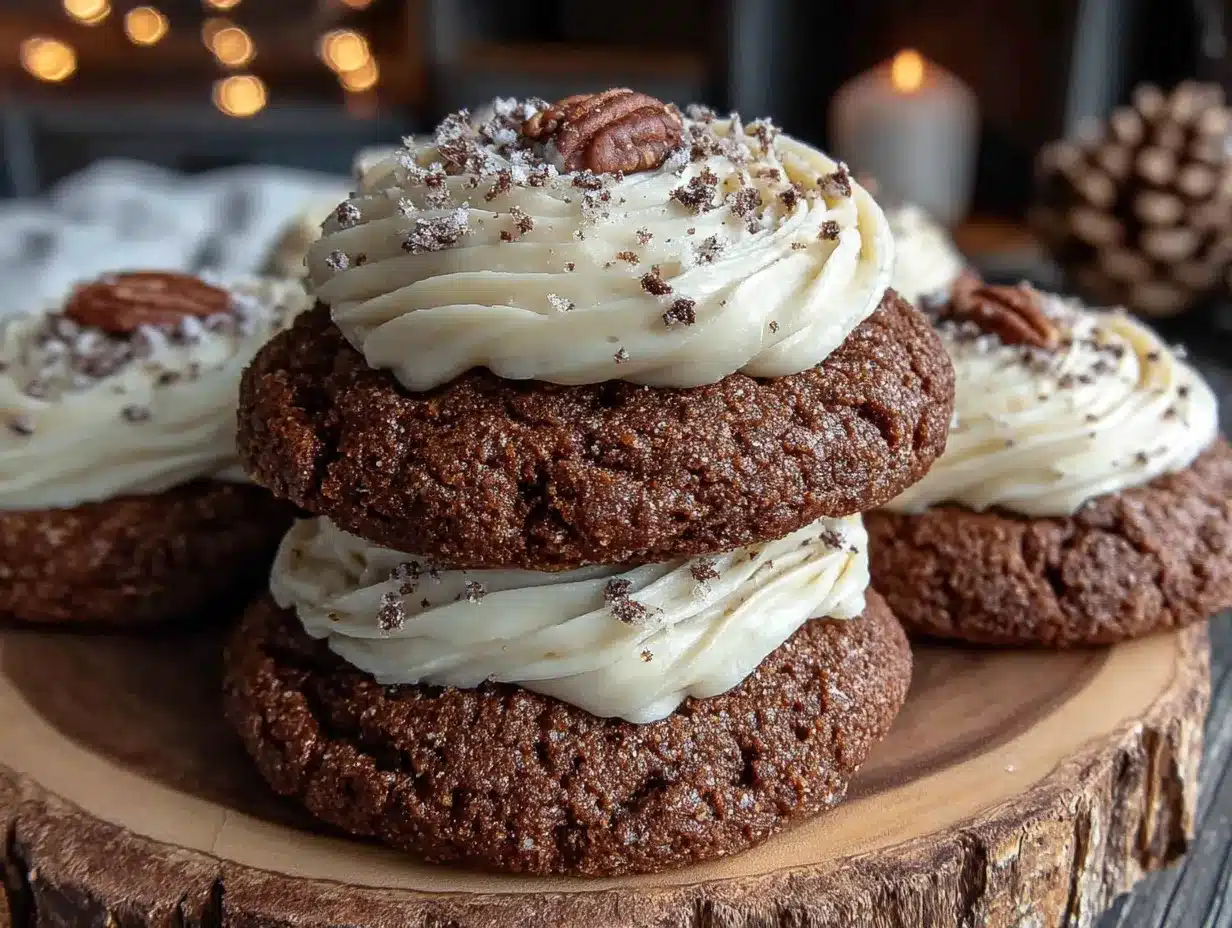
- 4 ounces cream cheese, softened (full-fat gives the best texture—I use Philadelphia)
- ¼ cup unsalted butter, softened
- 1½ cups powdered sugar (sift it if you want extra smooth frosting, though I rarely bother)
- ½ teaspoon vanilla extract
- Pinch of salt (trust me on this—it cuts the sweetness)
For the molasses, unsulphured is key. Sulphured molasses has a harsh, chemical taste that ruins the cookies. Stick with the standard kind you find in the baking aisle. If you’re dairy-free, you can swap the butter with a plant-based stick butter and use dairy-free cream cheese—just know the texture will be slightly softer.
Equipment Needed
You don’t need a fancy kitchen to make these soft gingerbread cookies. Here’s what I use:
- Large mixing bowl (a sturdy ceramic or glass bowl works fine)
- Electric hand mixer or stand mixer (hand mixer is totally fine—I actually prefer it for this dough because it’s easier to scrape down the sides)
- Measuring cups and spoons (metal ones for dry ingredients, glass for liquids)
- Whisk (for combining dry ingredients evenly)
- Rubber spatula (for scraping every last bit of dough—don’t waste a spoonful)
- Baking sheets (I use two Nordic Ware half-sheet pans—they don’t warp in the oven)
- Parchment paper (non-negotiable—it prevents sticking and makes cleanup a breeze)
- Rolling pin (a standard wooden one works; if you don’t have one, a wine bottle does the job in a pinch)
- Cookie cutters (gingerbread men are classic, but circles, stars, or any shape work)
- Cooling rack (wire rack lets air circulate so cookies don’t get soggy bottoms)
- Offset spatula or butter knife (for spreading frosting)
If you’re on a budget, skip the fancy rolling pin and use a clean bottle. My first batch of these cookies was rolled with a kombucha bottle, and they turned out just fine. Also, if you don’t have a cooling rack, transfer cookies to a clean cutting board—just flip them after a minute so they don’t steam.
Preparation Method
- Preheat your oven to 350°F (175°C). Line two baking sheets with parchment paper. I always do this first so the oven is ready when I am. The parchment paper trick—crisp it into a ball first, then flatten it out. It lies flatter on the pan.
- Whisk the dry ingredients together. In a medium bowl, combine the flour, baking soda, ginger, cinnamon, cloves, and salt. Whisk for about 15 seconds until everything is evenly distributed. This step matters—if you skip it, you might get a pocket of baking soda in one cookie and none in another. I learned that the hard way.
- Cream the butter and sugar. In a large bowl, beat the softened butter and brown sugar together with an electric mixer on medium speed until light and fluffy—about 3 minutes. Scrape down the sides halfway through. The mixture should look pale and airy. Don’t rush this step; proper creaming gives the cookies their soft texture.
- Add the wet ingredients. Beat in the egg, molasses, and vanilla extract until combined. The mixture might look slightly separated at this point—that’s normal. It’ll come together once you add the flour. Scrape the bowl again to make sure everything’s incorporated.
- Mix in the dry ingredients. Add the flour mixture to the wet ingredients in two additions, mixing on low speed after each until just combined. Overmixing makes tough cookies, so stop as soon as you don’t see white streaks. The dough will be soft and slightly sticky—that’s perfect.
- Chill the dough. Wrap the dough in plastic wrap and flatten it into a disc. Refrigerate for at least 1 hour, or up to 3 days. Chilling is non-negotiable here. It firms up the butter, prevents spreading, and makes the dough rollable. I’ve skipped this before and ended up with puddles instead of cookies.
- Roll and cut. Lightly flour your work surface and rolling pin. Roll the dough to about ¼-inch thickness. If the dough cracks at the edges, let it sit for 5 minutes to warm slightly. Cut out shapes with your cookie cutters and transfer them to the prepared baking sheets, spacing them about 2 inches apart. Reroll the scraps once—after that, the dough gets tough from too much flour.
- Bake. Bake for 8-10 minutes, rotating the pans halfway through. The cookies are done when the edges are set and the tops look dry. The centers will still look slightly soft—that’s how you keep them tender. Let them cool on the baking sheet for 5 minutes, then transfer to a wire rack to cool completely.
- Make the frosting. While the cookies cool, beat the softened cream cheese and butter together until smooth—about 2 minutes. Gradually add the powdered sugar, vanilla, and salt, beating on low speed until combined. Then increase to medium speed and beat for 2 minutes until fluffy. If the frosting seems too soft, refrigerate it for 15 minutes before spreading.
- Frost the cookies. Once the cookies are completely cool, spread a generous layer of frosting on each one. I use about 1 tablespoon per cookie, but go with your heart. Let the frosting set for about 30 minutes before stacking or storing.
A quick note about timing: if you’re baking with kids, chill the dough the night before. Then the next day, you just roll, cut, bake, and frost. It turns a marathon into a manageable afternoon activity.
Cooking Tips & Techniques
I’ve made plenty of mistakes with gingerbread cookies over the years, so let me save you some trouble.
Don’t overbake. This is the number one issue I see. People want that deep golden color, but by then the cookies are dry. Pull them out when they look barely done. They’ll continue cooking on the hot pan. The first time I made these, I left them in an extra two minutes and ended up with cookies that crumbled like sand. Learn from my failure.
Measure flour correctly. Spoon it into your measuring cup and level it off with a knife. Scooping directly from the bag packs in extra flour, which makes dense cookies. I did this for years until a friend pointed it out, and it changed everything.
Room temperature ingredients matter. Cold butter doesn’t cream properly. Cold egg can make the batter seize. Set everything out 30 minutes before you start. If you forget—and I forget all the time—warm the egg in a bowl of warm water for 5 minutes and cut the butter into small cubes to soften faster.
Chill the dough thoroughly. This isn’t optional. Warm dough spreads into flat, sad cookies. Cold dough holds its shape and bakes up thick and soft. If you’re in a hurry, flatten the dough into a disc and pop it in the freezer for 20 minutes instead of the fridge.
Use parchment paper. Silicone mats work too, but parchment is easier for cleanup and gives slightly crisper edges. Plus, you can slide the parchment directly onto a cooling rack, which saves a step.
Let cookies cool completely before frosting. Warm frosting on warm cookies turns into a melty mess. I know it’s tempting, but patience pays off. If you’re short on time, pop the cookies in the fridge for 10 minutes to speed up cooling.
Variations & Adaptations
These soft gingerbread cookies are forgiving, so feel free to play around. Here are some variations I’ve tried and loved:
Spice it up or down. For a milder version that picky eaters will love, reduce the ginger to 1 teaspoon and skip the cloves entirely. For adults who want more kick, add ¼ teaspoon of black pepper or a pinch of cayenne. I made a batch with extra ginger for a holiday party and they disappeared faster than the regular ones.
Gluten-free option. Swap the all-purpose flour with a 1:1 gluten-free baking flour blend. I’ve used King Arthur Measure for Measure with great results. The texture is slightly more tender, but the flavor is spot on. Add an extra tablespoon of butter to compensate for the dryness of gluten-free flours.
Dairy-free adaptation. Use plant-based butter sticks (not the spreadable kind in tubs) and dairy-free cream cheese. Miyoko’s brand works well for both. The cookies will be slightly less tender, but the frosting still comes out creamy and delicious.
Different shapes and sizes. We’ve made these as mini cookies for lunchbox treats (bake for 6-7 minutes) and as giant cookies for ice cream sandwiches (bake for 12 minutes). For ice cream sandwiches, skip the frosting and sandwich a scoop of vanilla ice cream between two cookies. Freeze for an hour before serving.
Frosting variations. Add a tablespoon of lemon juice to the frosting for a citrus twist. Or swap the vanilla for peppermint extract during the holidays. One year I split the frosting in half and added cocoa powder to one batch—chocolate gingerbread cookies were a huge hit.
Add mix-ins. Fold in ½ cup of white chocolate chips or chopped crystallized ginger before chilling the dough. The little bursts of sweetness or spice make each bite exciting.
Serving & Storage Suggestions
These cookies are best served at room temperature, about an hour after frosting. The frosting sets up nicely while staying soft and creamy. I like to arrange them on a platter with a dusting of powdered sugar or a few fresh cranberries for color during the holidays.
They pair beautifully with a cold glass of milk—my kids insist on this—or a warm mug of chai tea for the adults. If you’re serving them at a party, set them out alongside a bowl of fresh apple slices and some sharp cheddar cheese. The sweet-spicy cookie with salty cheese is an unexpected combination that works.
Storage instructions: Keep the cookies in an airtight container at room temperature for up to 5 days. Layer them with parchment paper between each layer so the frosting doesn’t stick. I use a large glass container with a tight lid, and they stay soft for almost a week.
Freezer instructions: You can freeze the unfrosted cookies for up to 3 months. Wrap them tightly in plastic wrap, then place in a freezer bag. Thaw at room temperature, then frost and serve. The frosted cookies freeze well too, but the frosting can get a bit weepy when thawed. I prefer freezing unfrosted for the best texture.
Reheating tips: If you want that just-baked warmth, pop a cookie in the microwave for 10 seconds. It softens the cookie and warms the frosting without melting it. For a crispier edge, reheat in a 300°F oven for 3-4 minutes.
The flavors actually deepen after a day or two—the ginger and molasses mellow and blend together. So don’t worry if you make them ahead. They might even be better the next day.
Nutritional Information & Benefits
These are a treat, not a health food, but they’re made with real ingredients you can feel good about. Here’s the approximate nutritional breakdown per cookie (based on 24 cookies with frosting):
| Nutrient | Amount per Cookie |
|---|---|
| Calories | 185 |
| Total Fat | 9g |
| Saturated Fat | 5g |
| Cholesterol | 30mg |
| Sodium | 120mg |
| Total Carbohydrates | 25g |
| Sugars | 16g |
| Protein | 2g |
Ginger has natural anti-inflammatory properties and can help settle an upset stomach—which is why these cookies are my go-to after a big holiday meal. Molasses contains iron, calcium, and magnesium, so at least there’s a tiny nutritional boost. The cream cheese adds a bit of protein and calcium too.
If you’re watching your sugar intake, you can reduce the brown sugar to ½ cup and cut the powdered sugar in the frosting to 1 cup. The cookies will be less sweet but still delicious. For a lower-fat option, use Neufchâtel cream cheese instead of full-fat.
These cookies are vegetarian and contain dairy, eggs, and gluten. They’re not suitable for vegan, dairy-free, or gluten-free diets unless you make the substitutions mentioned earlier.
Conclusion
These soft gingerbread cookies with cream cheese frosting are the kind of recipe that becomes a family tradition without you even planning it. They’re forgiving enough for a beginner baker, special enough for holiday gatherings, and simple enough for a random Tuesday afternoon. The spices warm you from the inside out, the frosting is the perfect tangy finish, and the texture stays soft for days—if they last that long.
I hope you make these your own. Add extra ginger if you like heat. Go heavy on the frosting—I won’t judge. Let the kids cut out wonky shapes and call them masterpieces. That’s the beauty of baking from scratch: every batch tells a story.
I’d love to hear how yours turn out. Drop a comment below and tell me about your favorite cookie cutter shape, or tag me in your photos if you share them online. Happy baking, and don’t forget to save a frosted one for yourself before the family gets to them!
Frequently Asked Questions
Can I make the dough ahead of time?
Absolutely. The dough can be refrigerated for up to 3 days or frozen for up to 3 months. If freezing, wrap it tightly in plastic wrap and place in a freezer bag. Thaw overnight in the refrigerator before rolling and cutting. The dough actually develops more flavor as it rests.
Why did my cookies spread too much?
This usually happens when the dough isn’t chilled enough, or the butter was too soft when you creamed it. Make sure your butter is softened but still cool to the touch—not greasy or melty. Also, check that your baking soda is fresh. Old baking soda loses its leavening power and can cause excessive spreading.
Can I use blackstrap molasses?
I wouldn’t recommend it. Blackstrap molasses has a strong, bitter flavor that overwhelms the spices and makes the cookies taste harsh. Stick with unsulphured molasses—it’s milder, sweeter, and gives that classic gingerbread flavor without the bitterness.
How do I keep the cookies soft for days?
The cream cheese frosting actually helps seal in moisture. Store them in an airtight container with a slice of bread—the bread absorbs excess air and releases moisture, keeping the cookies soft. Replace the bread slice every couple of days if the cookies last that long.
Can I make these without a mixer?
Yes, and I’ve done it many times. Use a wooden spoon and some elbow grease to cream the butter and sugar—it takes about 5 minutes of vigorous stirring. The dough will come together just fine by hand. It’s actually a good arm workout and a great way to involve kids who want to help.
Pin This Recipe!
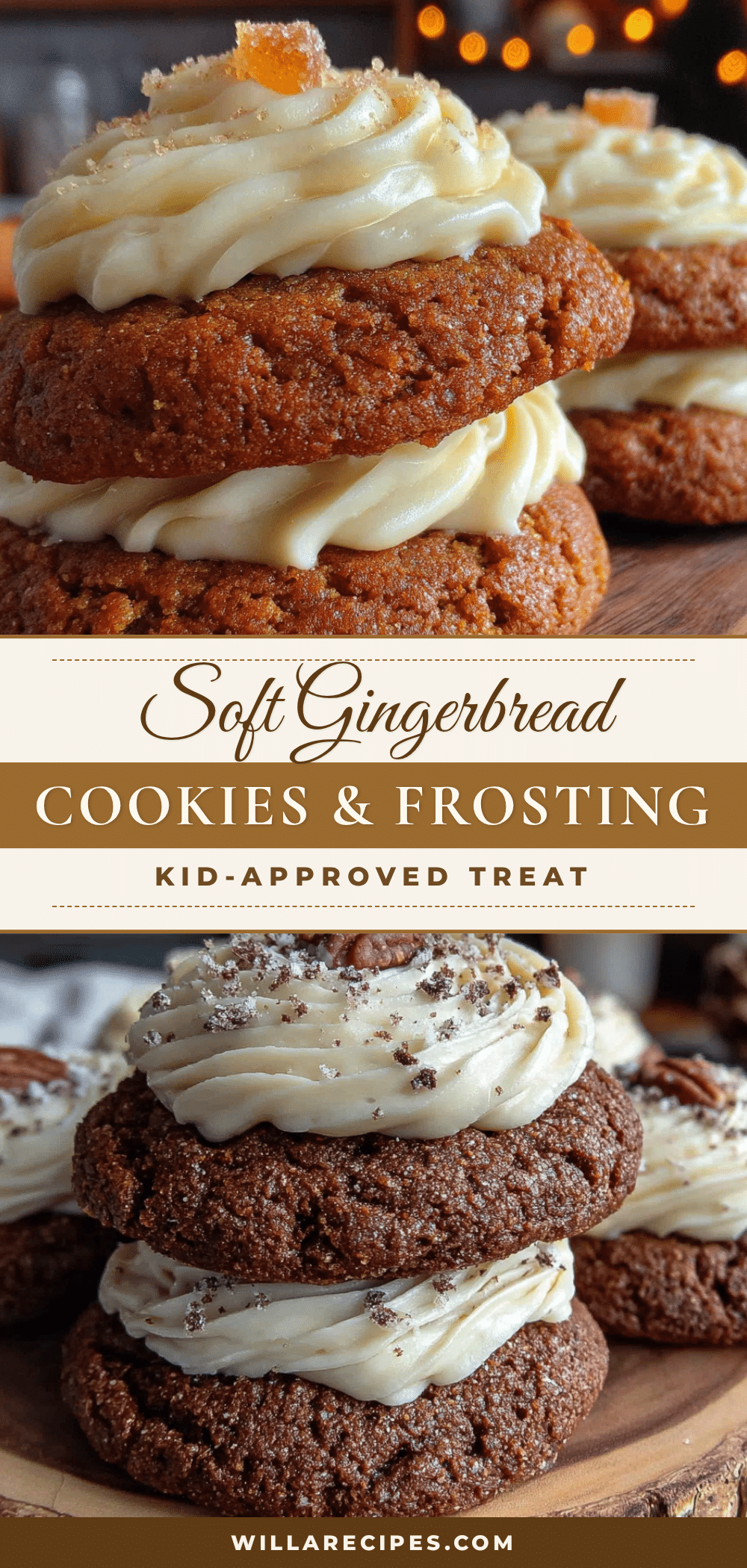
Soft Gingerbread Cookies with Cream Cheese Frosting

These soft gingerbread cookies with cream cheese frosting are the perfect treat for any occasion. They’re easy to make, stay soft for days, and feature a perfect balance of warm spices and tangy-sweet frosting.
- Prep Time: 30 minutes
- Cook Time: 10 minutes
- Total Time: 1 hour 40 minutes (includes chilling time)
- Yield: 24 cookies 1x
- Category: Dessert
- Cuisine: American
Ingredients
- 3 cups all-purpose flour
- 1 teaspoon baking soda
- 2 teaspoons ground ginger
- 1 teaspoon ground cinnamon
- ½ teaspoon ground cloves
- ½ teaspoon salt
- ¾ cup unsalted butter, softened
- ¾ cup packed light brown sugar
- 1 large egg, room temperature
- ½ cup unsulphured molasses
- 1 teaspoon vanilla extract
- 4 ounces cream cheese, softened
- ¼ cup unsalted butter, softened
- 1½ cups powdered sugar
- ½ teaspoon vanilla extract
- Pinch of salt
Instructions
- Preheat your oven to 350°F (175°C). Line two baking sheets with parchment paper.
- Whisk the dry ingredients together: In a medium bowl, combine the flour, baking soda, ginger, cinnamon, cloves, and salt. Whisk for about 15 seconds until evenly distributed.
- Cream the butter and sugar: In a large bowl, beat the softened butter and brown sugar together with an electric mixer on medium speed until light and fluffy—about 3 minutes. Scrape down the sides halfway through.
- Add the wet ingredients: Beat in the egg, molasses, and vanilla extract until combined. The mixture might look slightly separated—that’s normal. Scrape the bowl again.
- Mix in the dry ingredients: Add the flour mixture to the wet ingredients in two additions, mixing on low speed after each until just combined. Do not overmix.
- Chill the dough: Wrap the dough in plastic wrap and flatten it into a disc. Refrigerate for at least 1 hour, or up to 3 days.
- Roll and cut: Lightly flour your work surface and rolling pin. Roll the dough to about ¼-inch thickness. Cut out shapes with cookie cutters and transfer to prepared baking sheets, spacing them about 2 inches apart. Reroll scraps once.
- Bake: Bake for 8-10 minutes, rotating the pans halfway through. Cookies are done when edges are set and tops look dry. Let cool on baking sheet for 5 minutes, then transfer to a wire rack to cool completely.
- Make the frosting: Beat the softened cream cheese and butter together until smooth—about 2 minutes. Gradually add the powdered sugar, vanilla, and salt, beating on low speed until combined. Increase to medium speed and beat for 2 minutes until fluffy.
- Frost the cookies: Once cookies are completely cool, spread a generous layer of frosting on each one. Let frosting set for about 30 minutes before stacking or storing.
Notes
Chill the dough thoroughly to prevent spreading. Don’t overbake—cookies should look barely done when removed from oven. For best texture, use room temperature ingredients. Store in an airtight container with a slice of bread to keep soft for days.
Nutrition
- Serving Size: 1 cookie
- Calories: 185
- Sugar: 16
- Sodium: 120
- Fat: 9
- Saturated Fat: 5
- Carbohydrates: 25
- Protein: 2
Keywords: soft gingerbread cookies, cream cheese frosting, easy gingerbread, holiday cookies, gingerbread recipe