The first time I attempted a whole turkey, I was twenty-four and convinced I had it all figured out. I’d watched enough cooking shows, you know? The bird went into the oven looking hopeful and came out looking… defeated. Dry breast meat, pale skin, and a kitchen that smelled more like anxiety than celebration. My grandmother took one polite bite, set down her fork, and said, “Well, honey, it’s certainly cooked.” That was code for “we’re ordering pizza tomorrow.”
So when my neighbor Carlos—the guy who grows herbs on his fire escape like it’s a small farm—watched me hauling yet another frozen turkey up the stairs last November, he didn’t say anything at first. He just shook his head, smiled, and handed me a crumpled envelope the next morning. Inside was a recipe card so stained and worn it felt like fabric. “My grandmother’s method,” he said. “Butter. Herbs. Patience. No dry bird allowed.”
I almost laughed. A recipe card in 2023? But honestly, that handwritten note changed everything. The herb butter roasted turkey I pulled out of the oven that Thanksgiving was golden, juicy, and actually smelled like something worth gathering around. The breast meat stayed tender. The skin crackled when I carved it. My grandmother asked for seconds. Maybe you’ve been there—standing over a dry turkey, wondering where you went wrong. This recipe is for you. It’s the one that finally worked for me, and it’s never let me down since.
Why You’ll Love This Recipe
Let me be real with you—this isn’t just another turkey recipe floating around the internet. I’ve tested this method across four different ovens, two different turkey sizes, and one very memorable Thanksgiving where the power flickered three times. It works because it’s built on a simple truth: fat carries flavor, and patience carries the day.
- Incredibly Juicy Meat: The herb butter gets worked directly under the skin, so every single bite of breast meat stays moist. No more white meat that needs gravy just to be edible.
- Crispy, Golden Skin: That butter bastes the skin from the inside out, creating a crackling finish that actually looks like the magazine covers.
- Simple, Pantry-Friendly Ingredients: You don’t need a specialty store or a second mortgage. Fresh herbs, good butter, salt, pepper—that’s the backbone of this bird.
- Perfect for Thanksgiving: This turkey was literally built for the big day. It roasts beautifully, carves cleanly, and leaves you looking like a hero without the all-day stress.
- Make-Ahead Friendly: The herb butter can be prepped days in advance. You can season the turkey the night before. The actual oven time is hands-off, giving you space to focus on sides and sanity.
- Crowd-Pleasing Flavor: I’ve served this to everyone from my herb-snob neighbor Carlos to my uncle who “doesn’t do fancy food.” It disappeared both times.
This isn’t just another version of roasted turkey. It’s the version I wish I’d had at twenty-four—the one that makes you close your eyes after that first bite and realize Thanksgiving can actually taste as good as it’s supposed to feel.
What Ingredients You Will Need
This recipe uses simple, whole ingredients that work together to create something genuinely special. Most of these are probably already in your kitchen, which is exactly the point.
For the Herb Butter
- 1 cup (2 sticks) unsalted butter, softened to room temperature (I prefer Kerrygold for its richness, but any good unsalted butter works)
- 3 tablespoons fresh rosemary, finely chopped (stripped from the stem—those little needles pack serious flavor)
- 3 tablespoons fresh sage, finely chopped (adds that classic Thanksgiving aroma)
- 2 tablespoons fresh thyme leaves, stripped from stems (don’t skip this one—it’s subtle but essential)
- 4 cloves garlic, minced or grated on a microplane (grated releases more flavor than chopped)
- 1 tablespoon kosher salt (Diamond Crystal preferred—it’s less salty by volume, so adjust if using Morton’s)
- 1 teaspoon freshly ground black pepper
- 1 teaspoon lemon zest, from about one lemon (adds brightness that cuts through the richness)
For the Turkey
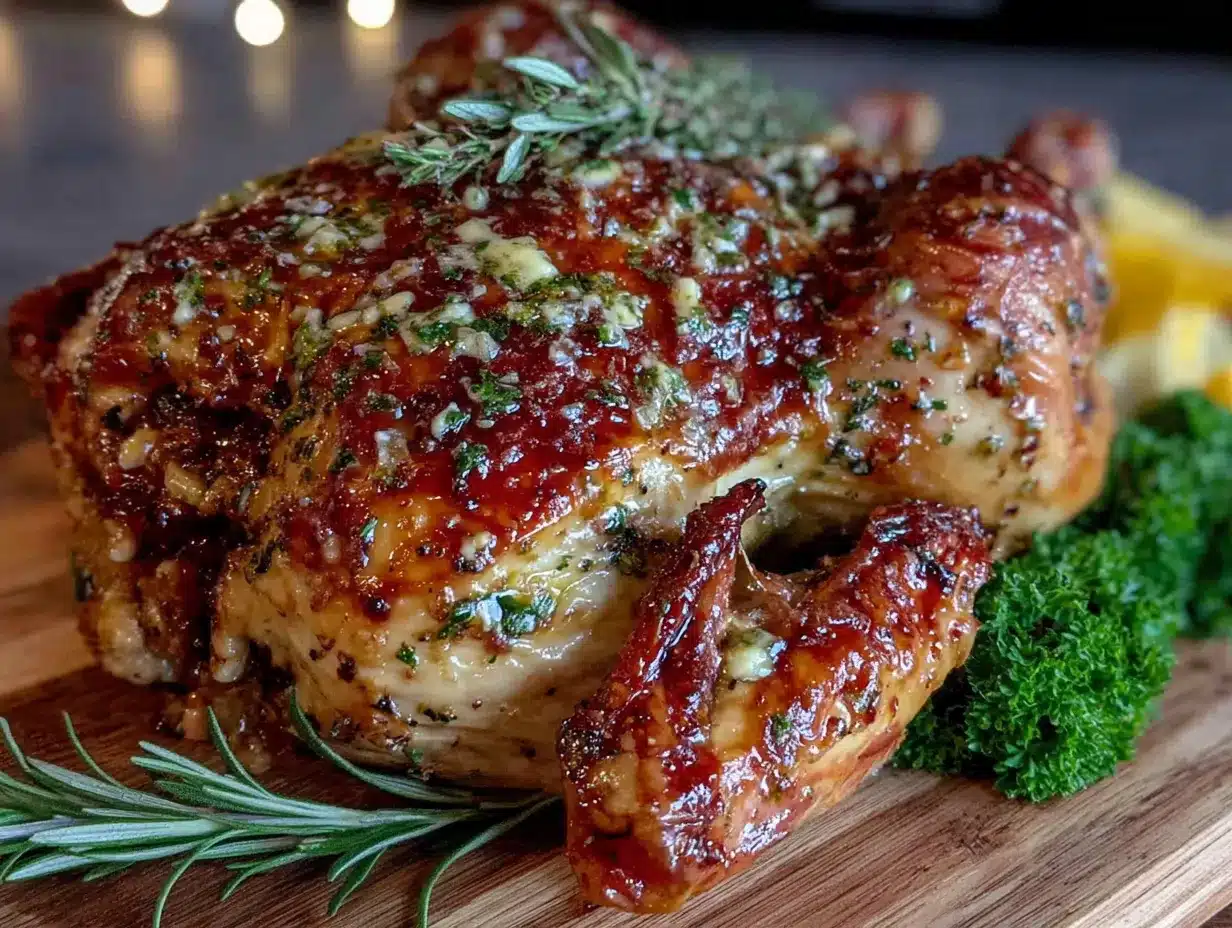
- 1 whole turkey, 12 to 14 pounds (this size roasts evenly and fits most standard ovens; adjust cooking time for larger birds—I’ve used this method on birds up to 18 pounds)
- 2 tablespoons kosher salt, for seasoning the cavity and exterior
- 1 teaspoon black pepper
- 1 lemon, halved (stuffed into the cavity for moisture and subtle citrus)
- 1 onion, quartered (adds sweetness to the roasting juices)
- 4 sprigs fresh rosemary
- 4 sprigs fresh sage
- 6 sprigs fresh thyme
- 2 cups low-sodium chicken or turkey broth, for the roasting pan (prevents drippings from burning and makes better gravy)
Ingredient Tips from Experience
Fresh herbs make a real difference here. Dried herbs won’t give you the same bright, aromatic butter. That said, if you’re in a pinch, use half the amount of dried herbs—they’re more concentrated. For the butter, let it sit out for at least an hour before mixing. Cold butter won’t spread under the skin properly, and trust me, you want it soft enough to work with easily. I learned that the hard way when I tried rushing it and ended up with lumpy butter pockets under the skin. Not ideal.
Equipment Needed
You don’t need a professional kitchen for this, but having the right tools makes the process smoother. Here’s what you’ll want on hand:
- Roasting pan with a rack: The rack lifts the turkey so heat circulates evenly. No rack? Roll up foil into coils and place them under the bird. It’s not pretty, but it works.
- Instant-read thermometer: This is non-negotiable. Guessing doneness is how dry turkey happens. A good thermometer costs around fifteen dollars and saves your Thanksgiving.
- Kitchen twine: For trussing the legs. You can skip this, but the turkey cooks more evenly when it’s tucked in neatly.
- Large cutting board: Preferably one with a groove to catch juices. Carving a hot turkey on a small board is a recipe for disaster.
- Chef’s knife: A sharp one. Dull knives make carving frustrating and dangerous.
- Mixing bowl: For combining the herb butter.
- Pastry brush or spatula: For spreading butter—though honestly, your clean hands work best for getting under the skin.
Preparation Method
- Make the herb butter (up to 3 days ahead): In a medium bowl, combine the softened butter, chopped rosemary, sage, thyme, minced garlic, salt, pepper, and lemon zest. Mix until everything is evenly distributed. Taste a tiny bit—it should be savory, herbal, and bright. Cover and refrigerate if making ahead, but bring it back to room temperature before using. Cold butter won’t spread, and you’ll fight with the skin.
- Prepare the turkey (one day ahead is ideal): Remove the turkey from its packaging. Take out the giblets and neck—save them for gravy if you’re making homemade stock. Pat the turkey completely dry with paper towels. This is important. Moisture is the enemy of crispy skin. Dry it inside and out until the paper towels come away clean.
- Season the cavity: Sprinkle about 1 tablespoon of kosher salt and ½ teaspoon pepper inside the cavity. Stuff it with the halved lemon, quartered onion, and the remaining fresh herb sprigs. This isn’t just for flavor—the steam from the lemon and onion keeps the meat moist from the inside.
- Apply the herb butter: Here’s where the magic happens. Using your fingers, gently loosen the skin over the turkey breast. Start at the neck end and work your hands between the skin and the meat, being careful not to tear the skin. It should separate easily—if it’s tugging, your turkey might still be too cold. Take about two-thirds of the herb butter and push it under the skin, spreading it evenly over both breasts. Massage it from the outside to distribute it. Rub the remaining butter all over the outside of the turkey, including the legs and wings. Don’t forget the underside.
- Season the exterior: Sprinkle the remaining 1 tablespoon of salt and ½ teaspoon pepper all over the outside of the turkey. This helps the skin crisp and adds flavor to every bite.
- Truss the turkey (optional but recommended): Cut a piece of kitchen twine about 3 feet long. Cross the turkey’s legs and tie them together at the ankles. Tuck the wing tips under the body—they’ll burn otherwise. Trussing keeps the turkey compact and helps it cook evenly.
- Rest overnight (optional but game-changing): Place the seasoned turkey on a rack over a baking sheet and refrigerate uncovered for 8 to 24 hours. This dries out the skin further, which means it gets even crispier in the oven. If you’re short on time, skip this step—the turkey will still be delicious.
- Preheat and prepare: About 45 minutes before roasting, take the turkey out of the fridge to come to room temperature. Preheat your oven to 425°F (220°C). Place the turkey on the rack in your roasting pan. Pour 2 cups of broth into the bottom of the pan—not over the turkey, or you’ll ruin that crispy skin you worked for.
- Roast at high heat: Put the turkey in the oven and roast at 425°F for 30 minutes. This initial blast of high heat jumpstarts browning and gives you that gorgeous golden color.
- Reduce heat and continue roasting: After 30 minutes, reduce the oven temperature to 350°F (175°C). Continue roasting, basting every 30 to 45 minutes with the pan juices. Don’t baste more often—opening the oven lets heat escape and extends cooking time. For a 12 to 14 pound turkey, total roasting time will be about 2.5 to 3 hours.
- Check for doneness: Start checking the temperature about 30 minutes before you expect the turkey to be done. Insert your instant-read thermometer into the thickest part of the thigh, avoiding the bone. You’re looking for 165°F (74°C). Also check the breast—it should register 160°F (71°C). If the breast is done but the thigh isn’t, tent the breast loosely with foil and keep roasting.
- Rest the turkey: This is the hardest part. Once the turkey reaches temperature, transfer it to a cutting board and let it rest for at least 30 minutes, uncovered. Resting lets the juices redistribute throughout the meat. Carve too early, and all that moisture ends up on your cutting board instead of on your plate.
- Make gravy while it rests: Pour the pan drippings through a fine-mesh strainer into a fat separator or a glass measuring cup. Let the fat rise to the top, then skim it off. Use the remaining juices as the base for your gravy—just whisk in a little flour or cornstarch slurry over medium heat until thickened.
Cooking Tips & Techniques
I’ve made this turkey enough times to know exactly where things can go sideways. Let me save you the trouble.
Don’t skip drying the turkey. The first time I made this, I patted it dry once and called it done. The skin came out pale and rubbery. Now I go through three or four paper towels until the bird feels almost tacky to the touch. Dry skin equals crispy skin. It’s that simple.
Watch your butter temperature. One year, I was rushing and used cold butter. Getting it under the skin was like trying to spread a stick of butter on toast with a spoon. It tore the skin in two places, and the butter never distributed evenly. Let it sit out for a full hour before mixing. You want it spreadable, almost like a paste.
Baste with restraint. I know every Thanksgiving movie shows someone basting every ten minutes like their life depends on it. Don’t do that. Every time you open the oven door, you lose heat and extend cooking time. Baste every 30 to 45 minutes, and do it quickly. Close the door between bastes.
Use a thermometer, not a timer. I once followed a recipe’s timing exactly and ended up with a turkey that was 10 degrees overdone. Ovens vary. Turkey sizes vary. The only reliable way to know if it’s done is a thermometer. Trust the probe, not the clock.
Let it rest, no exceptions. I know you’re hungry. I know everyone’s standing around with plates. But carving a turkey that’s rested for 30 minutes versus one that’s rested for 10 makes a world of difference. The meat stays juicy instead of turning into a puddle on your cutting board.
Multitask wisely. While the turkey rests, that’s your golden window for finishing sides, making gravy, and setting the table. Use that 30 minutes wisely. I usually pop the rolls in the oven and reheat the mashed potatoes while the turkey rests.
Variations & Adaptations
Citrus-Herb Butter
Add the zest of two oranges and one lemon to the herb butter, and swap the lemon halves in the cavity for orange halves. The citrus cuts through the richness beautifully and adds a bright note that works especially well if you’re serving a sweeter stuffing.
Spiced Herb Butter
Add 1 teaspoon smoked paprika, ½ teaspoon cayenne pepper, and ½ teaspoon ground cumin to the herb butter. This gives the turkey a subtle warmth and a deeper color. I tried this one year when I was feeling adventurous, and it’s become my go-to for Friendsgiving.
Garlic-Lovers Version
Double the garlic in the herb butter and add 6 whole garlic cloves to the cavity along with the herbs. The roasted garlic flavor permeates the meat without being overwhelming. Just be warned—your kitchen will smell incredible.
Dietary Adaptations
This recipe is naturally gluten-free if you use gluten-free broth. For a dairy-free version, substitute the butter with a high-quality vegan butter—I’ve had good results with Miyoko’s. The texture won’t be quite as rich, but the herb flavor still comes through beautifully.
Different Cooking Methods
If you have a convection oven, use it. Convection cooking reduces roasting time by about 25 percent and gives you even browning. Just keep an eye on the temperature—check it 30 minutes earlier than you normally would. For a spatchcocked turkey (butterflied and flattened), reduce cooking time significantly—usually around 90 minutes for a 12-pound bird. The herb butter method works exactly the same way.
Serving & Storage Suggestions
This turkey is best served warm, right after its 30-minute rest. Carve it at the table if you’re feeling dramatic, or slice it in the kitchen and arrange it on a platter. I like to garnish with fresh herb sprigs and lemon slices for color.
What to serve alongside it: Classic mashed potatoes, green bean casserole, roasted Brussels sprouts, cranberry sauce (homemade if you have time), and a good dinner roll for sopping up gravy. The turkey’s herb butter flavors complement almost any Thanksgiving side.
Storing leftovers: Remove all meat from the bones within two hours of cooking. Store white and dark meat separately in airtight containers. It keeps in the refrigerator for up to 4 days. The bones and carcass make an incredible stock—just cover with water, add aromatics, and simmer for 2 hours.
Reheating tips: The best way to reheat turkey without drying it out is to add a splash of broth or turkey stock, cover with foil, and warm in a 300°F oven for about 15 minutes. For individual servings, microwave with a damp paper towel over the plate for 30-second intervals. Avoid high heat—it turns tender meat into shoe leather.
Freezing: Cooked turkey freezes well for up to 3 months. Slice or shred the meat, pack it in freezer-safe bags with as much air removed as possible, and label with the date. Thaw overnight in the refrigerator before reheating.
Flavor development: Honestly, leftover turkey tastes even better the next day. The herb flavors have had time to settle into the meat, and the texture softens slightly. I always make extra just for sandwiches the next day.
Nutritional Information & Benefits
Turkey is naturally lean, high in protein, and packed with B vitamins. A 4-ounce serving of roasted turkey breast provides about 30 grams of protein, making it a satisfying and nutrient-dense centerpiece for your holiday meal. The herb butter adds some fat and calories, but remember—a lot of that butter renders out during roasting and ends up in the pan drippings.
Key nutritional highlights per serving (4 ounces, white meat, no skin):
- Calories: Approximately 200
- Protein: 30g
- Fat: 8g (varies with butter absorption)
- Carbohydrates: 0g
- Vitamin B6: 25% of daily value
- Niacin: 30% of daily value
- Selenium: 35% of daily value
Dietary considerations: This recipe is naturally low-carb, keto-friendly, and gluten-free (if using gluten-free broth). The herbs—rosemary, sage, and thyme—are rich in antioxidants and anti-inflammatory compounds. Garlic adds immune-supporting allicin. It’s a meal that tastes indulgent but delivers real nutritional value.
Potential allergens: Dairy (butter). For a dairy-free option, see the variations section above.
Conclusion
This herb butter roasted turkey isn’t just a recipe—it’s the one that finally made me feel like I could host Thanksgiving without secretly panicking. It’s the turkey that got my grandmother to ask for seconds. The one that turned my neighbor Carlos from a recipe-giver into a regular dinner guest. And honestly, it’s the one that made me realize that a great Thanksgiving isn’t about perfection. It’s about gathering around a table with people you love and eating something that tastes like it was made with care.
You can tweak the herbs. You can adjust the garlic. You can skip the overnight rest if you’re short on time. This recipe is forgiving, and it wants you to succeed. So go ahead—make it your own. And when someone asks for the recipe, share it. That’s how good food keeps moving through the world.
I’d love to hear how yours turns out. Drop a comment below with your favorite herb combination or any questions you have. And if you make this for your Thanksgiving table, tag me—I want to see that golden, crispy skin.
Frequently Asked Questions
Can I use dried herbs instead of fresh?
You can, but the flavor won’t be as bright or aromatic. If you’re substituting, use about half the amount of dried herbs—they’re more concentrated. Fresh herbs really do make a difference here, especially since they’re the star of the butter.
How do I keep the breast meat from drying out?
The herb butter under the skin is your best defense. It keeps the breast meat moist as it roasts. Also, don’t overcook it—pull the turkey at 160°F in the breast and 165°F in the thigh. Resting finishes the cooking without drying it out.
Can I prepare this turkey the night before?
Absolutely. In fact, I recommend it. Season the turkey with the herb butter and salt, refrigerate it uncovered overnight, and roast it the next day. The overnight rest dries out the skin for extra crispiness and lets the flavors penetrate deeper into the meat.
What size turkey should I buy for this recipe?
For most families, a 12 to 14 pound turkey is the sweet spot. It roasts evenly, fits in a standard oven, and provides enough meat for 8 to 10 people with leftovers. If you’re cooking for a smaller group, a 10-pound bird works well—just reduce the roasting time.
How do I make gravy from the pan drippings?
After removing the turkey, pour the pan drippings through a fine-mesh strainer into a fat separator or measuring cup. Let the fat rise to the top and skim it off. In a saucepan, whisk ¼ cup of flour into ¼ cup of the fat over medium heat until golden. Slowly whisk in the remaining drippings plus enough broth to reach your desired consistency. Simmer until thickened, about 5 minutes. Season with salt and pepper to taste.
Pin This Recipe!
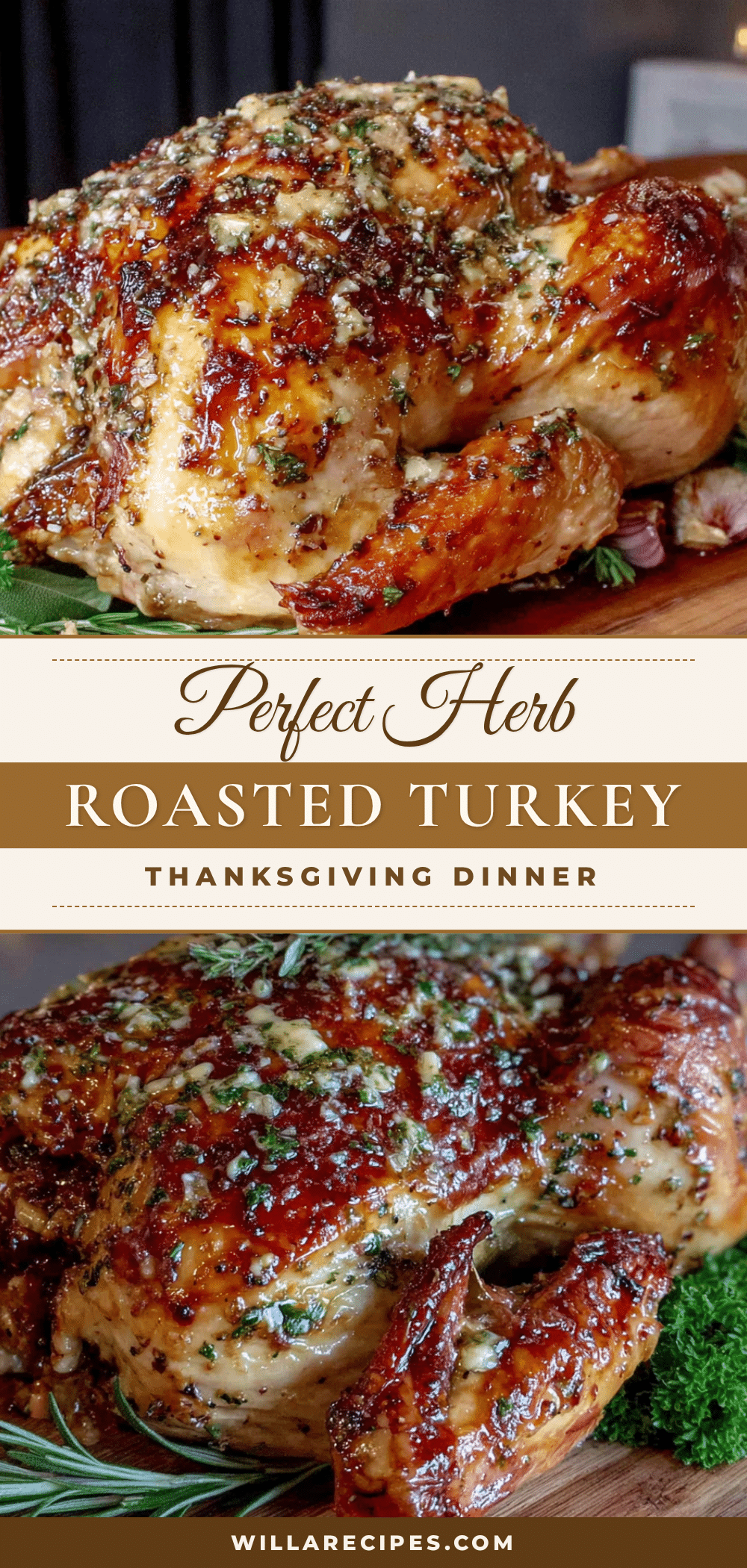
Perfect Herb Butter Roasted Turkey: Best Thanksgiving Recipe
This herb butter roasted turkey is incredibly juicy with crispy, golden skin. It’s the foolproof Thanksgiving centerpiece that will make you look like a hero without the all-day stress.
- Prep Time: 30 minutes
- Cook Time: 2 hours 30 minutes
- Total Time: 3 hours
- Yield: 8 to 10 servings 1x
- Category: Main Course
- Cuisine: American
Ingredients
- 1 cup (2 sticks) unsalted butter, softened
- 3 tablespoons fresh rosemary, finely chopped
- 3 tablespoons fresh sage, finely chopped
- 2 tablespoons fresh thyme leaves
- 4 cloves garlic, minced or grated
- 1 tablespoon kosher salt (Diamond Crystal preferred)
- 1 teaspoon freshly ground black pepper
- 1 teaspoon lemon zest
- 1 whole turkey, 12 to 14 pounds
- 2 tablespoons kosher salt, for seasoning
- 1 teaspoon black pepper
- 1 lemon, halved
- 1 onion, quartered
- 4 sprigs fresh rosemary
- 4 sprigs fresh sage
- 6 sprigs fresh thyme
- 2 cups low-sodium chicken or turkey broth
Instructions
- Make the herb butter (up to 3 days ahead): In a medium bowl, combine the softened butter, chopped rosemary, sage, thyme, minced garlic, salt, pepper, and lemon zest. Mix until evenly distributed. Cover and refrigerate if making ahead, but bring to room temperature before using.
- Prepare the turkey (one day ahead is ideal): Remove the turkey from packaging. Take out the giblets and neck. Pat the turkey completely dry with paper towels inside and out.
- Season the cavity: Sprinkle about 1 tablespoon of kosher salt and ½ teaspoon pepper inside the cavity. Stuff with the halved lemon, quartered onion, and remaining fresh herb sprigs.
- Apply the herb butter: Using your fingers, gently loosen the skin over the turkey breast. Push about two-thirds of the herb butter under the skin, spreading evenly over both breasts. Rub the remaining butter all over the outside of the turkey, including legs and wings.
- Season the exterior: Sprinkle the remaining 1 tablespoon of salt and ½ teaspoon pepper all over the outside of the turkey.
- Truss the turkey (optional but recommended): Cut a piece of kitchen twine about 3 feet long. Cross the turkey’s legs and tie them together at the ankles. Tuck the wing tips under the body.
- Rest overnight (optional but game-changing): Place the seasoned turkey on a rack over a baking sheet and refrigerate uncovered for 8 to 24 hours.
- Preheat and prepare: About 45 minutes before roasting, take the turkey out of the fridge to come to room temperature. Preheat oven to 425°F (220°C). Place turkey on the rack in your roasting pan. Pour 2 cups of broth into the bottom of the pan.
- Roast at high heat: Roast at 425°F for 30 minutes.
- Reduce heat and continue roasting: Reduce oven temperature to 350°F (175°C). Continue roasting, basting every 30 to 45 minutes with pan juices. Total roasting time for a 12 to 14 pound turkey is about 2.5 to 3 hours.
- Check for doneness: Insert an instant-read thermometer into the thickest part of the thigh, avoiding bone. Target 165°F (74°C). Check the breast—it should register 160°F (71°C).
- Rest the turkey: Transfer to a cutting board and let rest for at least 30 minutes, uncovered.
- Make gravy while it rests: Pour pan drippings through a fine-mesh strainer into a fat separator. Let fat rise, skim off, and use remaining juices as base for gravy.
Notes
Don’t skip drying the turkey thoroughly for crispy skin. Let butter soften to room temperature for easy spreading. Baste every 30-45 minutes, not more often. Use a thermometer, not a timer. Let the turkey rest for at least 30 minutes before carving.
Nutrition
- Serving Size: 4 ounces white meat,
- Calories: 200
- Sodium: 600
- Fat: 8
- Saturated Fat: 4
- Protein: 30
Keywords: herb butter roasted turkey, Thanksgiving turkey, juicy turkey, crispy skin turkey, holiday turkey recipe