I was staring at the clock again, that familiar 5:45 PM panic creeping in. The fridge held salmon fillets, a sad lemon, and some forgotten dill from last week’s farmers market. My neighbor across the hall, an older Greek woman named Eleni, had watched me fumble with my grocery bags the week before. She’d just smiled and said nothing. That Tuesday, I texted her a photo of my sad salmon situation. Her reply came back in broken English: “Butter. Lemon. Dill. Oven. Fifteen minutes. Trust me.” Honestly, I was skeptical. Salmon always felt like a fancy restaurant thing to me, something you had to babysit and worry about. But I was tired, hungry, and out of ideas. So I tried it. And let me tell you, that first bite was a revelation. The butter melted into the fish, the lemon cut through the richness, and the dill—that fresh, almost anise-like flavor—tied it all together. It was so simple I felt almost silly for not figuring it out myself. But that’s the thing about the best recipes, right? They come from someone who’s been doing it their whole life, not from a complicated cookbook. I’ve made this quick baked salmon at least twice a month since then. It’s become my go-to for those nights when I need dinner on the table fast, but I still want to feel like I’ve actually cooked something. Maybe you’ve been there too, standing in front of your open fridge, hoping a meal will just appear. Well, this one practically does.
Why You’ll Love This Recipe
Let’s be real for a second. Weeknight cooking can feel like a chore. You’re tired, the day was long, and the last thing you want is a sink full of dishes and a recipe that takes an hour. This quick baked salmon with lemon dill butter is the opposite of that. It’s the kind of recipe that makes you feel like a kitchen pro without actually having to work for it.
- Ready in 15 Minutes: From start to finish, including prep. That’s faster than ordering takeout in some neighborhoods. The oven does all the heavy lifting.
- Simple Ingredients: Salmon, butter, lemon, dill, salt, pepper. Chances are you already have most of these in your kitchen. No fancy grocery store trips required.
- Perfect for Busy Weeknights: This is the definition of a quick meal. It’s fancy enough for a Tuesday but takes almost no effort. You can even prep the butter mixture the night before.
- Crowd-Pleaser: I’ve served this to picky eaters, seafood skeptics, and my mom (who is notoriously hard to impress). Everyone loves it. The butter and lemon do all the convincing.
- Unbelievably Delicious: The salmon comes out tender and flaky, with a rich, buttery sauce that you’ll want to spoon over everything on your plate. It’s comfort food that happens to be good for you.
What makes this recipe different from every other salmon recipe out there? It’s the timing. Most recipes tell you to bake salmon at 375°F or 400°F for 12–15 minutes. But I’ve found that a hot oven—425°F—gives you that perfect, just-done texture in exactly 10 minutes. No dry fish, no raw center. Just perfect salmon, every single time. It’s a small tweak, but it makes all the difference when you’re hungry and impatient.
What Ingredients You Will Need
This recipe uses simple, wholesome ingredients to deliver bold flavor and satisfying texture without the fuss. Most of these are pantry or fridge staples, which makes this a great last-minute dinner option.
- 4 salmon fillets (6 oz each), skin on or off: I prefer skin-on for extra flavor and to keep the fish moist, but either works. Look for fillets that are about 1 inch thick for even cooking. Wild-caught salmon is great, but honestly, good-quality farmed salmon works perfectly here too.
- 4 tablespoons unsalted butter, softened: The butter is the base of our sauce. It melts over the salmon and creates that luscious, rich coating. I use unsalted so I can control the salt level. If you only have salted butter, just reduce the added salt.
- 2 tablespoons fresh dill, chopped: Fresh dill is non-negotiable here. Dried dill just doesn’t have the same bright, fresh flavor. It’s what gives this dish its signature taste. If you don’t have dill, fresh parsley or chives make good substitutes.
- 1 lemon (zest and juice): You’ll use both the zest and the juice. The zest goes into the butter mixture for a bright, aromatic flavor. The juice gets squeezed over the salmon right before serving for that final pop of acidity. Roll the lemon on the counter before juicing to get more juice out.
- 2 cloves garlic, minced: Optional, but I never skip it. Garlic adds a savory depth that complements the lemon and dill beautifully. Use fresh garlic, not the jarred stuff, for the best flavor.
- ½ teaspoon salt: I use fine sea salt. It dissolves easily into the butter mixture and seasons the fish evenly.
- ¼ teaspoon black pepper: Freshly ground is always better. It adds a subtle warmth that balances the bright citrus and herbs.
- Optional garnish: extra fresh dill and lemon wedges: For presentation, but also because more lemon and dill is never a bad thing.
Ingredient Selection Tips: For the best texture, look for salmon fillets that are bright in color and smell fresh, not fishy. The flesh should be firm to the touch. If you’re buying frozen salmon, thaw it overnight in the refrigerator for the best results. I’ve found that Costco’s farmed Atlantic salmon and Whole Foods’ wild-caught sockeye are both reliable options.
Equipment Needed
You don’t need a lot of fancy equipment for this recipe, which is part of why I love it. Here’s what you’ll need:
- Baking sheet or shallow baking dish: A rimmed baking sheet works perfectly. Line it with parchment paper or aluminum foil for the easiest cleanup ever. Trust me on this one—you’ll thank yourself later.
- Small bowl: For mixing the butter, dill, lemon zest, and garlic. Any small bowl will do.
- Chef’s knife and cutting board: For chopping the dill and mincing the garlic. A sharp knife makes this job take about 30 seconds.
- Microplane or zester: For getting the lemon zest. A fine grater works too. Just be careful not to get the white pith, which is bitter.
- Citrus juicer or your hands: For squeezing the lemon juice. I usually just use my hands, but a juicer is helpful if you have one.
- Instant-read thermometer (optional but recommended): If you’re nervous about overcooking salmon, this is a game-changer. Salmon is done at 125°F to 130°F for medium, or 135°F to 140°F for well-done.
I’ve made this recipe with just a baking sheet and a butter knife when my kitchen was in boxes after a move. It still turned out great. So don’t stress if you don’t have every tool—improvise and make it work.
Preparation Method
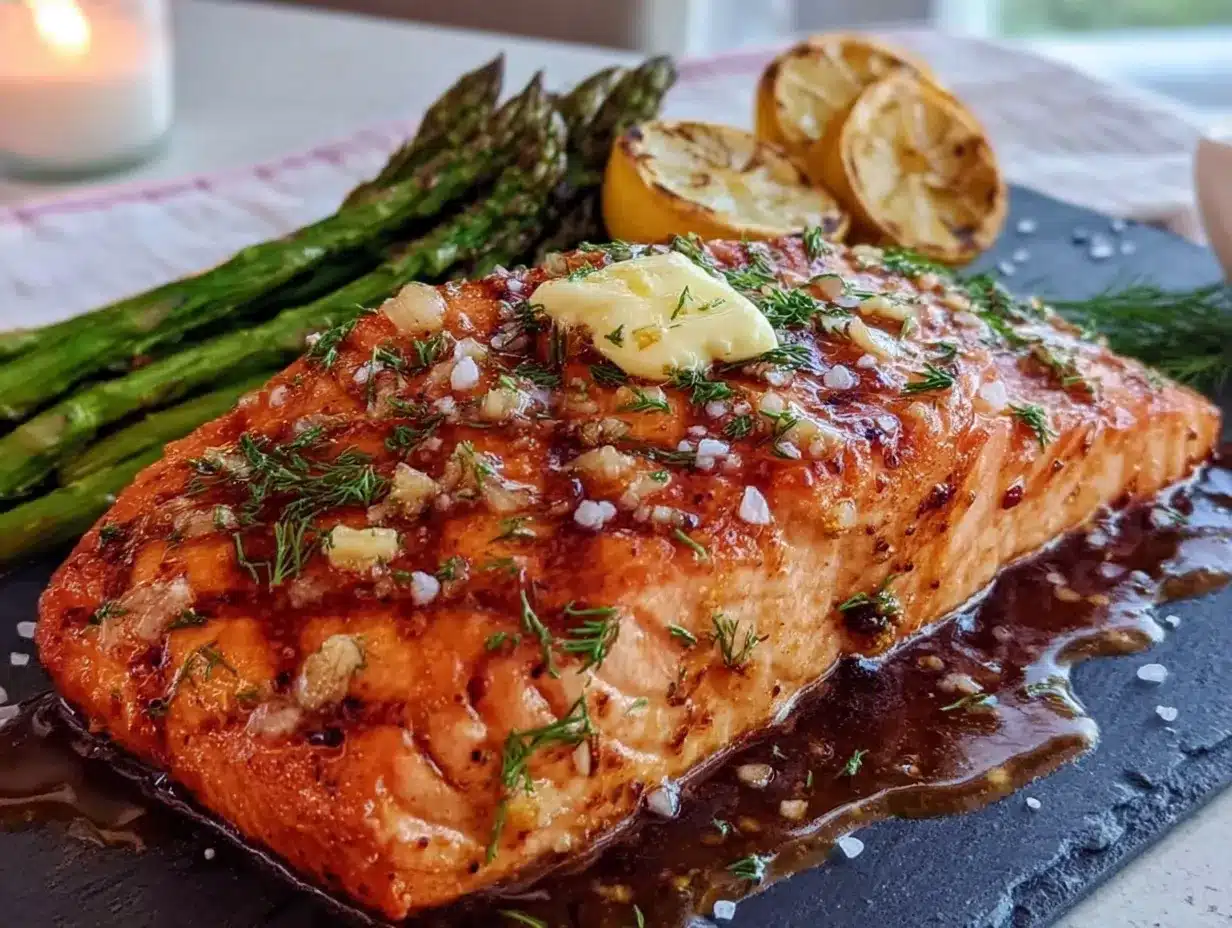
This is the easy part. Follow these steps, and you’ll have dinner on the table in 15 minutes flat. I promise.
- Preheat your oven to 425°F (220°C). This is important. A hot oven is key to getting that perfectly cooked salmon in just 10 minutes. While the oven heats up, line a baking sheet with parchment paper or foil for easy cleanup.
- Make the compound butter. In a small bowl, combine 4 tablespoons of softened unsalted butter, 2 tablespoons of chopped fresh dill, the zest of 1 lemon, and 2 minced garlic cloves. Add ½ teaspoon of salt and ¼ teaspoon of black pepper. Mix everything together with a fork until it’s well combined. The butter should be soft enough to spread easily. If your butter is too cold, microwave it for 5–10 seconds to soften it up.
- Prep the salmon. Pat the salmon fillets dry with paper towels. This step is crucial—dry salmon gets a nice sear and doesn’t steam in the oven. Place the fillets skin-side down on the prepared baking sheet, spacing them about 2 inches apart so they cook evenly.
- Top with the butter mixture. Divide the compound butter evenly among the 4 fillets. Spread it over the top of each fillet, covering as much surface area as you can. Don’t worry if some butter falls off the sides—it will melt and create a delicious sauce in the pan.
- Bake for 10–12 minutes. Place the baking sheet in the preheated oven and bake for 10 minutes for medium-cooked salmon (still slightly translucent in the center) or 12 minutes for well-done salmon (opaque all the way through). The exact time depends on the thickness of your fillets. For 1-inch thick fillets, 10 minutes is usually perfect.
- Check for doneness. The salmon is done when it flakes easily with a fork and the internal temperature reaches 125°F to 130°F for medium, or 135°F to 140°F for well-done. The butter should be melted and bubbly around the edges of the fish.
- Finish with lemon juice. Remove the baking sheet from the oven. Immediately squeeze the juice of half a lemon over the salmon fillets. The hot fish will absorb the lemon juice, adding that final bright, fresh flavor.
- Rest for 2 minutes. Let the salmon rest on the baking sheet for 2 minutes before serving. This allows the juices to redistribute, making the fish even more tender and flavorful.
- Serve and enjoy. Transfer the salmon fillets to plates or a serving platter. Spoon any leftover butter sauce from the pan over the top. Garnish with extra fresh dill and lemon wedges if you like.
Sensory Cues: When you open the oven, you should smell the warm, fragrant dill and lemon mingling with the rich aroma of melting butter. The salmon should look opaque and slightly golden on top, with a beautiful, glossy sheen from the butter. When you flake it with a fork, it should separate easily into large, moist chunks.
Cooking Tips & Techniques
I’ve made this quick baked salmon at least 50 times by now, and I’ve learned a few things along the way. Here are my best tips to make sure yours turns out perfect every time.
Don’t Overcook the Salmon. This is the number one mistake people make. Salmon goes from perfectly cooked to dry and rubbery in about 60 seconds. That’s why I recommend using an instant-read thermometer. But if you don’t have one, look for the visual cues: the salmon should be opaque on the outside but still slightly translucent in the center when you cut into it. It will continue to cook slightly as it rests.
Room Temperature Butter is Key. Cold butter won’t mix well with the dill and lemon zest. You’ll end up with clumps of plain butter on top of the salmon. Let your butter sit out for 30 minutes before you start, or microwave it in 5-second bursts until it’s soft but not melted.
Use Parchment Paper for Easy Cleanup. I cannot stress this enough. The butter and lemon juice will create a delicious sauce in the pan, but it can be a pain to scrub off. Parchment paper or foil makes cleanup a breeze. Just lift it out and throw it away.
Let the Salmon Rest. I know you’re hungry, but those 2 minutes of resting time make a real difference. The salmon fibers relax, and the juices redistribute throughout the fish. You’ll get a more tender, flavorful piece of salmon.
Don’t Skip the Lemon Juice at the End. The lemon zest in the butter provides aroma, but the lemon juice at the end provides that sharp, bright acidity that cuts through the richness of the butter. It’s a one-two punch of citrus flavor that makes this dish sing.
Variations & Adaptations
One of the best things about this recipe is how easy it is to customize. Here are a few variations I’ve tried and loved.
Herb Swap: If you don’t have dill, or you just want to try something different, swap it out for fresh parsley, chives, tarragon, or basil. Each herb gives the salmon a completely different personality. Parsley and chives are mild and fresh. Tarragon adds a subtle anise flavor. Basil gives it an Italian twist.
Spicy Kick: Add ¼ teaspoon of red pepper flakes or a pinch of cayenne pepper to the butter mixture. The heat pairs beautifully with the lemon and dill. I’ve also tried it with a drizzle of sriracha mixed into the butter, and it was fantastic.
Garlic-Free Version: If you’re not a garlic fan, or you’re cooking for someone who can’t eat garlic, just leave it out. The lemon and dill are strong enough to carry the flavor on their own. You can also substitute garlic with 1 teaspoon of Dijon mustard for a tangy, savory twist.
Sheet Pan Meal: To make this a complete one-pan dinner, add some vegetables to the baking sheet alongside the salmon. Asparagus, green beans, broccoli, or cherry tomatoes all work great. Toss them with a little olive oil, salt, and pepper, and roast them alongside the salmon. They’ll be perfectly cooked in the same 10–12 minutes.
Dairy-Free Option: Substitute the butter with a high-quality vegan butter or ghee (if you can tolerate dairy). I’ve tried this with Miyoko’s European Style Cultured Vegan Butter, and it worked beautifully. The flavor was slightly different but still delicious.
Serving & Storage Suggestions
This quick baked salmon is incredibly versatile when it comes to serving. Here are some of my favorite ways to enjoy it.
Serving Temperature: Serve the salmon warm, right out of the oven. The butter should be melted and glossy, and the lemon juice should be freshly squeezed. If you’re making it for a crowd, you can keep it warm in a low oven (200°F) for up to 15 minutes, but it’s best fresh.
What to Serve With It: The salmon pairs beautifully with almost any side dish. I love it with a simple green salad, roasted asparagus, steamed rice, or crusty bread to soak up the butter sauce. Mashed potatoes or couscous are also great options. For a low-carb meal, serve it with cauliflower rice or zucchini noodles.
Storage Instructions: Leftover salmon can be stored in an airtight container in the refrigerator for up to 3 days. The texture will change slightly upon reheating, but it’s still delicious. I like to flake it cold over a salad for lunch the next day.
Reheating Tips: The best way to reheat salmon is in a low oven (275°F) for about 10 minutes, or in a skillet over medium-low heat with a splash of water or lemon juice. Avoid the microwave if you can—it tends to dry out the fish and make it rubbery.
Flavor Development: The flavors of the lemon and dill actually meld together even more overnight. So if you’re making this ahead for meal prep, the leftovers will still taste great. Just don’t expect the same flaky texture as fresh-baked salmon.
Nutritional Information & Benefits
This quick baked salmon with lemon dill butter is not just delicious—it’s also packed with nutrients that are good for you.
Estimated Nutritional Values (per serving): Approximately 350–400 calories, 25g protein, 28g fat (mostly healthy fats), 2g carbohydrates, and 0g fiber. These values will vary depending on the exact size of your salmon fillets and the type of butter you use.
Health Benefits of Salmon: Salmon is one of the best sources of omega-3 fatty acids, which are essential for heart and brain health. It’s also rich in high-quality protein, vitamin D, and B vitamins. The butter adds a small amount of vitamin A and healthy fats, while the lemon provides a boost of vitamin C.
Dietary Considerations: This recipe is naturally gluten-free, low-carb, and keto-friendly. It’s also suitable for pescatarian diets. If you’re following a dairy-free or vegan diet, you can substitute the butter with a plant-based alternative.
Potential Allergens: This recipe contains fish (salmon) and dairy (butter). If you have allergies, be sure to use appropriate substitutions.
I love that this recipe lets me enjoy a healthy, satisfying meal without spending hours in the kitchen. It’s proof that eating well doesn’t have to be complicated or time-consuming.
Conclusion
This 15-minute baked salmon with lemon dill butter has become a staple in my kitchen for a reason. It’s fast, it’s simple, and it tastes like something you’d order at a nice restaurant. The butter melts into the fish, the lemon brightens everything up, and the dill adds that fresh, herby flavor that makes it feel special. Honestly, it’s the kind of recipe that makes you look forward to weeknight dinners.
I hope you give it a try, and I hope you make it your own. Maybe you’ll add more garlic, or swap the dill for parsley, or serve it with a side of roasted vegetables. That’s the beauty of a simple recipe—it’s a starting point, not a rigid set of rules. Play around with it and find what works for you.
If you make this quick baked salmon, I’d love to hear about it. Leave a comment below and let me know how it turned out, or share your own twist on the recipe. And if you’re looking for more quick and easy dinner ideas, be sure to check out my sheet pan lemon chicken and garlic butter shrimp recipes. Happy cooking!
Frequently Asked Questions
Can I use frozen salmon for this recipe?
Yes, you can use frozen salmon, but you’ll need to thaw it completely first. The best way to thaw salmon is to place it in the refrigerator overnight. If you’re short on time, you can thaw it in a bowl of cold water for about 30 minutes. Pat it dry before cooking to ensure a good sear.
What if I don’t have fresh dill?
Fresh dill is ideal for this recipe, but if you don’t have it, you can use dried dill. Use about 2 teaspoons of dried dill instead of 2 tablespoons of fresh. The flavor won’t be quite as bright, but it will still be delicious. You can also substitute with fresh parsley, chives, or tarragon.
How do I know when the salmon is done?
The easiest way to check is with an instant-read thermometer. Salmon is done when it reaches 125°F to 130°F for medium, or 135°F to 140°F for well-done. If you don’t have a thermometer, look for the visual cues: the salmon should be opaque on the outside and flake easily with a fork, but still slightly translucent in the center.
Can I make this recipe ahead of time?
While this recipe is best served fresh, you can prepare the compound butter up to 2 days in advance. Just mix the butter, dill, lemon zest, garlic, salt, and pepper together, then store it in the refrigerator. When you’re ready to cook, let the butter come to room temperature for about 15 minutes before spreading it on the salmon.
What can I use instead of butter?
If you’re dairy-free or vegan, you can substitute the butter with a high-quality vegan butter or ghee (if you can tolerate dairy). Olive oil is another option, but it won’t give you the same rich, creamy texture. Use about 3 tablespoons of olive oil mixed with the dill, lemon zest, and garlic.
Pin This Recipe!
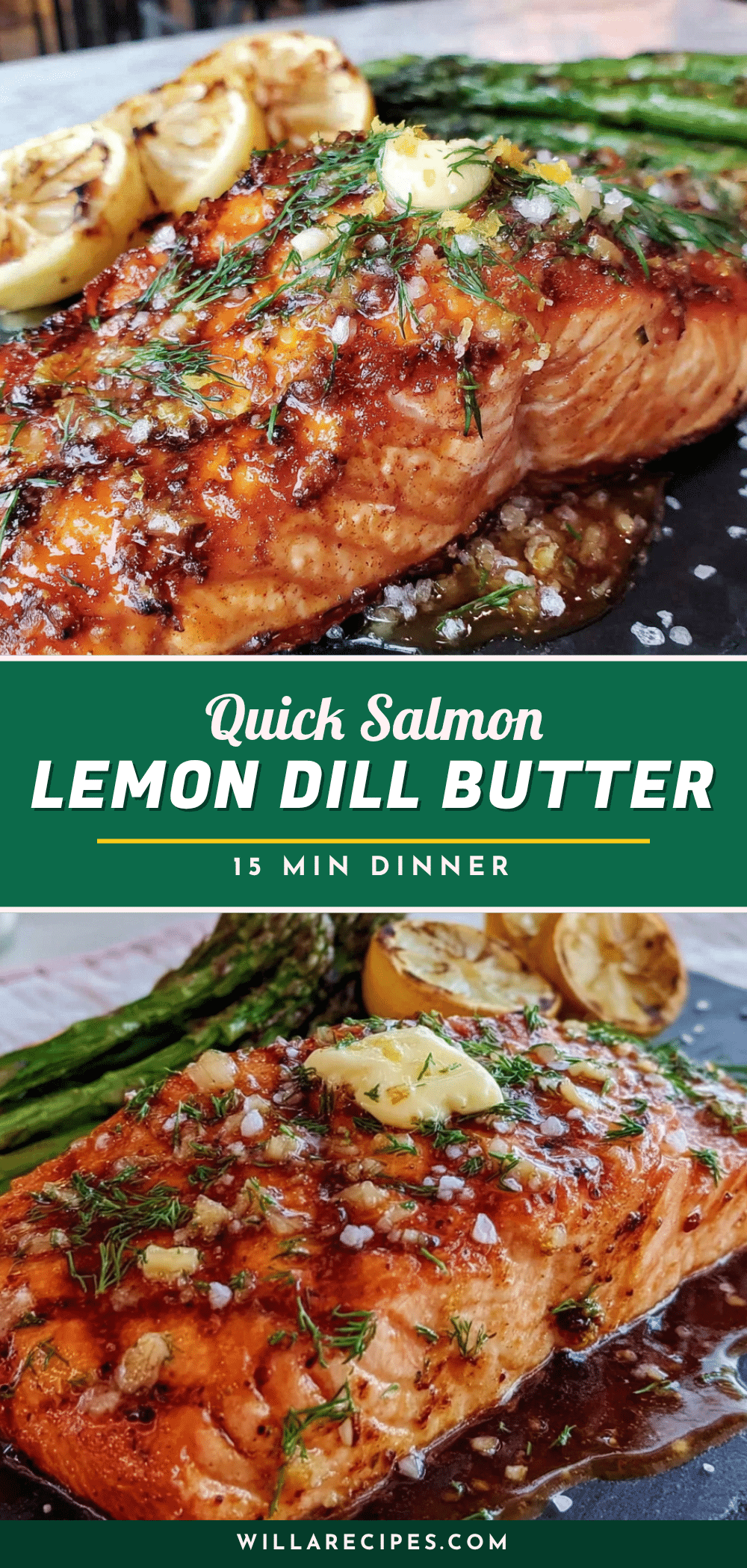
15-Minute Baked Salmon with Lemon Dill Butter
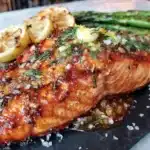
A quick and easy baked salmon recipe with a rich lemon dill butter sauce, ready in just 15 minutes. Perfect for busy weeknights, this dish is simple, delicious, and sure to impress.
- Prep Time: 5 minutes
- Cook Time: 10 minutes
- Total Time: 15 minutes
- Yield: 4 servings 1x
- Category: Main Course
- Cuisine: American
Ingredients
- 4 salmon fillets (6 oz each), skin on or off
- 4 tablespoons unsalted butter, softened
- 2 tablespoons fresh dill, chopped
- 1 lemon (zest and juice)
- 2 cloves garlic, minced
- ½ teaspoon salt
- ¼ teaspoon black pepper
- Optional garnish: extra fresh dill and lemon wedges
Instructions
- Preheat your oven to 425°F (220°C). Line a baking sheet with parchment paper or foil.
- In a small bowl, combine softened butter, chopped dill, lemon zest, minced garlic, salt, and pepper. Mix until well combined.
- Pat salmon fillets dry with paper towels. Place skin-side down on the prepared baking sheet, spacing them about 2 inches apart.
- Divide the compound butter evenly among the fillets, spreading it over the top of each.
- Bake for 10–12 minutes, depending on desired doneness (10 minutes for medium, 12 for well-done).
- Check for doneness: salmon should flake easily with a fork and reach an internal temperature of 125°F–130°F for medium, or 135°F–140°F for well-done.
- Remove from oven and immediately squeeze the juice of half a lemon over the fillets.
- Let rest for 2 minutes before serving.
- Serve with any leftover butter sauce from the pan, garnished with extra dill and lemon wedges if desired.
Notes
For best results, use room temperature butter and pat salmon dry. Let salmon rest for 2 minutes after baking. Fresh dill is recommended; dried dill can be substituted (use 2 teaspoons).
Nutrition
- Serving Size: 1 fillet
- Calories: 375
- Sodium: 450
- Fat: 28
- Saturated Fat: 12
- Carbohydrates: 2
- Protein: 25
Keywords: baked salmon, lemon dill butter, quick salmon, weeknight dinner, healthy salmon recipe