My friend Jenna asked why I couldn’t just leave the skin on the squash. I was mid-explanation about texture and prep—the whole spiel I’d given a dozen times—when I stopped. She was right.
I’d spent years peeling butternut squash for holiday sides, convinced the skin had no place in polite company. Then Jenna, who barely cooks, pointed at a pile of delicata squash on my counter and said, “But that one looks thin. Like you could eat it.” I started to explain why that wouldn’t work—then stopped. She had a point.
That moment changed everything. I tossed the squash into rings, skin on, tossed them with oil and salt, and roasted them on a sheet pan. Honestly, I expected a chewy mess. What came out of the oven was a revelation—tender edges, caramelized ridges, and that sweet, nutty flavor I’d been chasing for years. I stood there eating them straight off the pan, slightly embarrassed and completely delighted.
These roasted delicata squash rings with maple butter became my go-to for every gathering after that night. They’re the dish I bring to potlucks when I want to look like I tried hard when I barely tried at all. The rings look impressive—golden, glossy, stacked on a platter—but they come together in twenty minutes flat. Maybe you’ve been that person who overcomplicates a simple vegetable. I know I was. Let me show you what happens when you let a beginner’s instinct teach you something.
Why You’ll Love This Recipe
I’ve tested this recipe at least a dozen times across different ovens, different squash sizes, and different crowds. It never fails. Here’s what makes it stand out from every other squash side dish you’ve tried.
- Quick and Easy: From counter to table in 20 minutes flat. No peeling, no cubing, no fussing. Just slice, toss, and roast.
- Simple Ingredients: You need exactly five ingredients for the base version—delicata squash, oil, salt, butter, and maple syrup. That’s it. No specialty grocery runs required.
- Perfect for Hosting: These rings are built for dinner parties and holiday tables. They look stunning piled high on a platter, and guests can grab them with their fingers—no forks needed for the first round.
- Crowd-Pleaser: I’ve served these to vegetarians, meat-lovers, picky kids, and my uncle who “doesn’t do squash.” Every single person went back for seconds. The maple butter does something magical here—it’s sweet but not cloying, rich but not heavy.
- Unbelievably Delicious: The texture is what gets people. The edges get crispy and caramelized while the centers stay tender. The skin adds a slight chew that contrasts beautifully with the soft flesh. It’s comfort food that feels fancy without trying.
This isn’t just another roasted vegetable recipe. It’s the one that makes people ask for the recipe before they’ve finished eating. It’s the side dish that steals the show from the main course. And honestly? It’s the recipe that taught me to trust a beginner’s instinct over my own overthinking.
What Ingredients You Will Need
This recipe relies on a short list of ingredients that work together to create something greater than the sum of their parts. Each one plays a specific role in building flavor and texture.
- Delicata squash (2 medium, about 2 pounds total): Look for squash that feels heavy for its size with firm, unblemished skin. The skin should be a creamy yellow with green stripes. I prefer organic when possible since we’re eating the skin. One medium squash yields about 12-15 rings.
- Avocado oil or olive oil (2 tablespoons): Use a neutral oil with a high smoke point for the best caramelization. Avocado oil is my first choice—it handles the heat beautifully and lets the squash flavor shine. Regular olive oil works fine too, just avoid extra-virgin for roasting since it can burn.
- Fine sea salt (1 teaspoon): Don’t skimp here. Salt brings out the natural sweetness of the squash and helps the edges crisp up. I prefer fine sea salt over table salt because it dissolves more evenly.
- Unsalted butter (3 tablespoons): Use good-quality butter here—it makes a difference. I like Kerrygold or another European-style butter for its higher fat content and richer flavor. Salted butter works if that’s what you have, just reduce the added salt slightly.
- Pure maple syrup (2 tablespoons): Real maple syrup is non-negotiable for this recipe. The fake stuff won’t give you that deep, complex sweetness that makes the maple butter so addictive. Grade A dark amber is my preference for its robust flavor.
- Fresh thyme (4-5 sprigs, optional but recommended): The thyme adds an earthy, slightly floral note that balances the sweetness. Strip the leaves from the stems and sprinkle them over the finished dish. Dried thyme works in a pinch—use about 1/2 teaspoon.
- Flaky sea salt for finishing (optional): A sprinkle of Maldon or another flaky salt right before serving adds texture and a burst of salinity that makes the flavors pop. It’s a small touch that makes a big impression.
I’ve tested this with different squash varieties, and honestly, stick with delicata for this recipe. The skin is thin enough to eat, and the shape is perfect for rings. Butternut squash works if you’re desperate, but you’ll need to peel it and cut it into rounds—and the texture won’t be quite the same.
Equipment Needed
You don’t need much for this recipe, which is part of its charm. Here’s what you’ll want on hand.
- Sharp chef’s knife (8-inch recommended): A sharp knife makes slicing the squash into even rings a breeze. Dull knives are dangerous with hard squash—they slip. I learned this the hard way after a close call with a sad, dull blade.
- Cutting board: Any sturdy board works. I prefer wood or bamboo because they’re gentler on knife edges.
- Large baking sheet (18×13 inch half-sheet pan): A rimmed baking sheet is essential to catch any juices. Make sure it’s large enough to hold the rings in a single layer—crowding leads to steaming instead of caramelization. If your pan is smaller, use two pans or roast in batches.
- Parchment paper or silicone baking mat: This makes cleanup effortless and prevents sticking. I’ve roasted directly on the pan before, and while it works, the cleanup is a pain. Parchment paper is worth the tiny cost.
- Small saucepan: For making the maple butter. Any small pot works—you’re just melting and whisking.
- Mixing bowl: To toss the squash rings with oil and salt before roasting.
- Pastry brush or spoon: For brushing the maple butter onto the roasted rings. A brush gives you more control, but a spoon works fine.
If you don’t have a pastry brush, don’t stress. I’ve used the back of a spoon to drizzle and spread the butter, and it works perfectly well. The rings don’t need to be perfectly coated—a little unevenness adds character.
Preparation Method
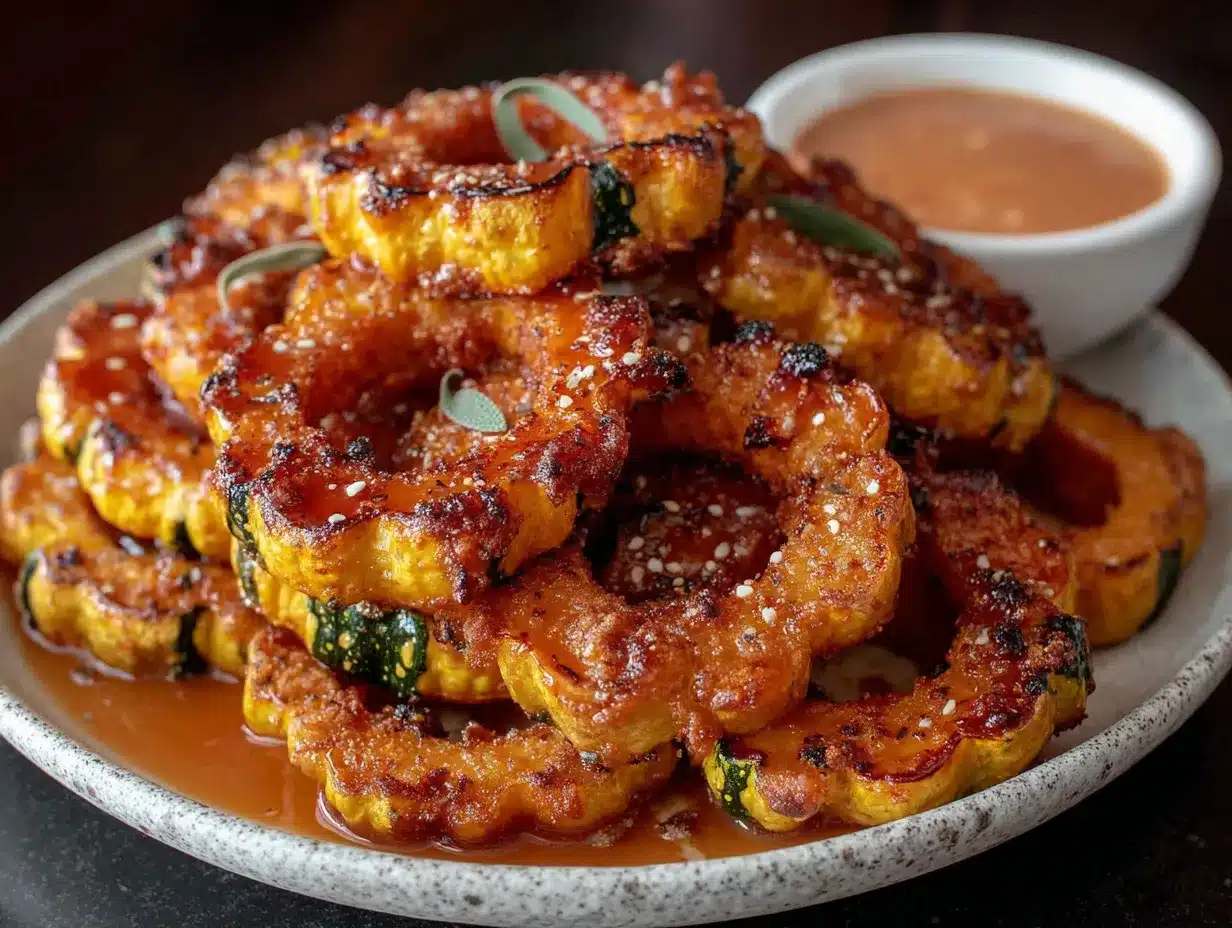
This comes together fast, so I like to have everything prepped before I start. Trust me on this—once those squash rings hit the oven, you’ll want to be ready.
- Preheat your oven to 425°F (218°C). Place the rack in the middle position. Give the oven a full 15 minutes to come to temperature—a properly preheated oven is the difference between crispy edges and soggy rings.
- Prepare the squash. Wash the delicata squash thoroughly under running water. The skin is edible, so you want it clean. Pat dry with a clean towel. Trim off about 1/4 inch from both ends of each squash using your sharp chef’s knife. Discard the ends.
- Slice into rings. Cut the squash crosswise into 1/2-inch thick rings. Aim for consistent thickness—this ensures even cooking. You should get about 12-15 rings per medium squash. If you hit a section with mostly seeds in the center, use your fingers or a small spoon to gently pop them out. Don’t stress about getting every single seed—a few leftover adds character.
- Season the rings. Place the squash rings in a large mixing bowl. Drizzle with 2 tablespoons of avocado oil and sprinkle with 1 teaspoon of fine sea salt. Use your hands to gently toss and coat each ring. Make sure every surface gets a light coating of oil—this is what creates that golden caramelization.
- Arrange on the baking sheet. Line your baking sheet with parchment paper. Arrange the squash rings in a single layer, making sure they don’t overlap. Give each ring a little space—about 1/2 inch between them. If they’re touching, they’ll steam instead of roast.
- Roast for 10 minutes. Place the sheet in the preheated oven and set a timer for 10 minutes. Don’t open the oven during this time—you want the heat to stay consistent.
- Flip and roast again. After 10 minutes, remove the baking sheet from the oven. Use tongs to carefully flip each ring. They should be golden on the bottom and starting to caramelize around the edges. Return the sheet to the oven and roast for another 8-10 minutes, until the rings are tender when pierced with a fork and the edges are deep golden brown and crispy.
- Make the maple butter while the squash roasts. In a small saucepan over low heat, combine 3 tablespoons of unsalted butter and 2 tablespoons of pure maple syrup. Stir frequently until the butter is completely melted and the mixture is smooth and slightly thickened, about 2-3 minutes. Remove from heat and set aside. Don’t let it boil—you want it warm and glossy, not separated.
- Finish and serve. Transfer the roasted squash rings to a serving platter. Brush or drizzle the maple butter over the warm rings. Sprinkle with fresh thyme leaves and a pinch of flaky sea salt if using. Serve immediately while they’re warm and the edges are still crispy.
A few things to watch for: If your rings look pale after the first 10 minutes, your oven might run cool. Don’t be afraid to add an extra 2 minutes on each side. The rings should be deep golden with dark brown edges—that’s where the flavor lives. And here’s a tip I learned from burning my fingers: let the rings cool on the pan for about 30 seconds before you try to flip them. They firm up slightly and flip more easily.
Cooking Tips and Techniques
After making these rings more times than I can count, I’ve picked up a few tricks that make the difference between good and unforgettable.
Don’t crowd the pan. This is the number one mistake I see home cooks make. Squash rings need breathing room to caramelize properly. If you crowd them, the moisture gets trapped and they steam instead of roast. Use two pans if you need to, or roast in batches. I learned this lesson the hard way when I tried to cram two squash onto one pan for Thanksgiving—soggy, sad rings that nobody touched.
Get your knife sharp. A sharp knife makes slicing delicata squash feel almost effortless. Dull knives require more pressure, which means less control and uneven slices. I sharpen my chef’s knife before every big cooking session, and it makes a noticeable difference. If you don’t have a sharpener, most grocery stores offer knife sharpening for a few dollars.
Watch the maple butter temperature. When you’re making the maple butter, keep the heat low and stir constantly. High heat can cause the butter to separate or burn, and nobody wants grainy, bitter butter on their beautiful squash rings. I ruined my first batch by walking away to check on the squash—don’t be me.
Timing is everything. The squash rings are best served immediately after roasting. The edges start to soften within 10-15 minutes as they cool. If you’re hosting, time the roasting so the rings come out of the oven right as guests are sitting down. You can make the maple butter ahead of time and reheat it gently while the squash roasts.
Use the broiler for extra crispiness. If you want those edges extra crispy, switch your oven to broil for the last 1-2 minutes of cooking. Watch closely—broilers work fast, and you don’t want burnt rings. I do this when I’m trying to impress guests who swear they don’t like squash.
Variations and Adaptations
This recipe is wonderfully flexible. Here are some variations I’ve tried and loved.
Savory herb version: Skip the maple butter and toss the roasted rings with a mixture of melted butter, minced garlic, and fresh rosemary. The garlic gets slightly toasted on the warm squash, and the rosemary adds an earthy, piney note that pairs beautifully with the sweet squash. I make this version when I’m serving the rings alongside roasted chicken or pork.
Spicy maple version: Add 1/4 teaspoon of cayenne pepper or red pepper flakes to the maple butter. The heat builds slowly and contrasts beautifully with the sweet maple and caramelized squash. My friend Marco, who loves spicy food, requests this version every time he comes over for dinner.
Balsamic glaze version: Drizzle the roasted rings with a good-quality balsamic glaze instead of maple butter. The tangy, slightly sweet glaze cuts through the richness of the squash and adds a beautiful dark sheen. I discovered this combination by accident when I ran out of maple syrup—and honestly, it might be my new favorite.
Dairy-free adaptation: Substitute the butter with a high-quality vegan butter or coconut oil. For the maple “butter,” use 3 tablespoons of coconut oil melted with the maple syrup. The flavor is slightly different—more coconut-forward—but still delicious. I’ve served this version to dairy-free guests who had no idea it wasn’t the original.
Air fryer method: If you’re short on time or want extra-crispy rings, the air fryer works beautifully. Cook at 400°F (200°C) for 8-10 minutes, shaking the basket halfway through. You’ll need to work in batches to avoid overcrowding. The rings come out incredibly crispy with a tender center—perfect for snacking straight from the basket.
Serving and Storage Suggestions
These rings are at their absolute best fresh from the oven, but they’re still pretty wonderful in other scenarios.
Serving temperature: Serve the rings warm, ideally within 5 minutes of coming out of the oven. The edges should be crispy and the maple butter should be glossy and warm. If you’re serving them at a party, you can keep them warm on a baking sheet in a 200°F (93°C) oven for up to 15 minutes, but the edges will soften slightly.
Presentation ideas: Arrange the rings in overlapping concentric circles on a large white platter for maximum visual impact. Drizzle the maple butter over the top and let it pool slightly in the center. Garnish with fresh thyme sprigs and a sprinkle of flaky salt. The golden rings against the white platter make for a stunning presentation that photographs beautifully.
What to serve alongside: These rings pair beautifully with roasted chicken, grilled steak, or pan-seared fish. They’re also wonderful as part of a vegetarian spread alongside a grain salad and roasted vegetables. For holiday meals, they’re a lighter alternative to heavy casseroles and pair well with turkey or ham.
Storage: Leftover rings can be stored in an airtight container in the refrigerator for up to 3 days. The texture will soften considerably, but the flavor remains delicious. I like to chop up leftover rings and toss them into salads or grain bowls for lunch the next day.
Reheating: The best way to reheat leftovers is in a 400°F (200°C) oven for 5-7 minutes. This helps restore some of the crispiness. The microwave works in a pinch but will make the rings soft. If you’re reheating for a party, add a fresh drizzle of maple butter to revive the flavor.
The flavors actually deepen slightly after a day in the fridge—the maple and squash meld together in a way that’s even more complex. I sometimes make extra rings just to have leftovers for the next day’s lunch.
Nutritional Information and Benefits
This recipe strikes a nice balance between indulgence and nutrition. Here’s what you’re getting in a serving of about 6 rings.
| Nutrient | Amount per serving |
|---|---|
| Calories | 185 |
| Total Fat | 12g |
| Saturated Fat | 6g |
| Carbohydrates | 20g |
| Fiber | 4g |
| Sugar | 10g |
| Protein | 2g |
| Vitamin A | 120% DV |
| Vitamin C | 25% DV |
| Potassium | 15% DV |
Delicata squash is packed with vitamin A in the form of beta-carotene, which supports eye health and immune function. It’s also a good source of vitamin C and potassium. The skin contains additional fiber, which is why I love leaving it on. The maple butter adds some sugar and saturated fat, but the overall dish is still nutrient-dense and satisfying.
This recipe is naturally gluten-free and can be made dairy-free with the substitution mentioned above. If you’re watching your sugar intake, you can reduce the maple syrup to 1 tablespoon or skip the maple butter entirely—the squash is delicious on its own with just salt and oil.
Conclusion
These roasted delicata squash rings with maple butter have become my signature dish for a reason. They’re simple enough for a Tuesday night but impressive enough for a holiday table. They require minimal effort but deliver maximum flavor. And they taught me something valuable about cooking—sometimes the best ideas come from questioning the rules we’ve been following without thinking.
I hope you try this recipe and make it your own. Add more thyme, skip the maple butter, pile the rings high on a platter and watch your guests reach for seconds. That moment when someone takes a bite and their eyes widen—that’s what cooking is all about.
If you make these rings, I’d love to hear about it. Drop a comment below and tell me how they turned out, what variations you tried, or who you served them to. And if you’re looking for more hosting-friendly sides, check out my crispy garlic chicken and roasted broccoli with parmesan—they’re both crowd-pleasers that come together fast.
Now go make some squash rings. Your guests will thank you.
Frequently Asked Questions
Can I use butternut squash instead of delicata?
You can, but you’ll need to peel it first since butternut squash skin is too tough to eat. The texture will be slightly different—butternut is denser and takes a few minutes longer to roast. Cut it into 1/2-inch thick rounds and follow the same method.
How do I know when the squash rings are done?
The rings should be tender when pierced with a fork and deep golden brown around the edges. The centers should be soft but not mushy. If the edges are browning too quickly but the centers are still firm, reduce the oven temperature to 400°F (200°C) and continue roasting.
Can I make these ahead of time for a party?
You can slice the squash and make the maple butter up to a day ahead. Store the sliced squash in an airtight container in the refrigerator and the maple butter in a separate container. Roast the rings just before serving for the best texture.
What’s the best way to reheat leftover squash rings?
The oven is your best bet. Reheat at 400°F (200°C) for 5-7 minutes on a parchment-lined baking sheet. The air fryer also works well at 375°F (190°C) for 3-4 minutes. Avoid the microwave if you want any crispiness left.
Can I freeze roasted delicata squash rings?
Freezing is possible but not ideal—the texture will become quite soft after thawing. If you do freeze them, place the cooled rings in a single layer on a baking sheet and freeze until solid, then transfer to a freezer bag. Reheat directly from frozen in a 400°F (200°C) oven for 10-12 minutes. They’re better used in soups or blended into a puree after freezing.
Pin This Recipe!
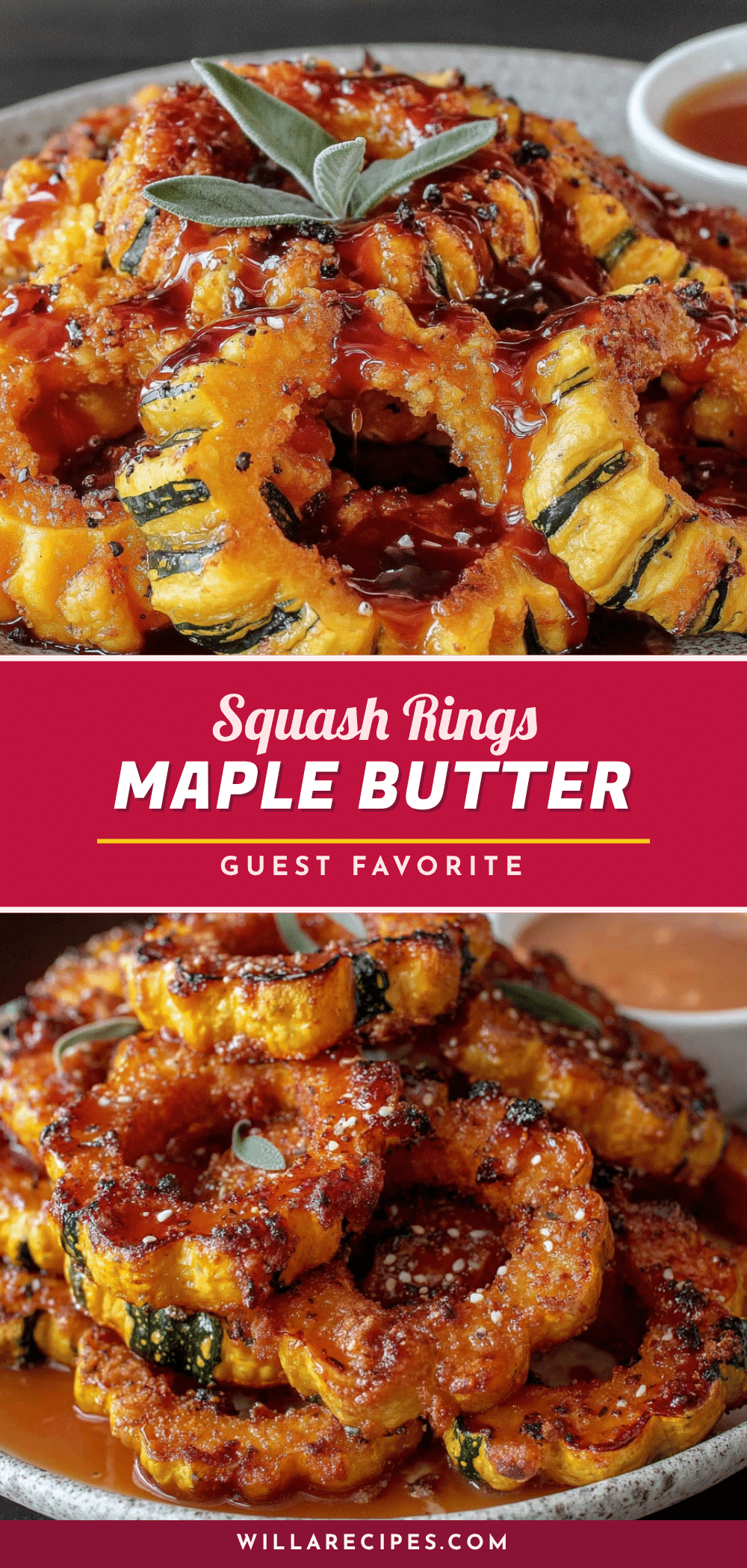
Easy 20-Minute Roasted Delicata Squash Rings with Maple Butter
These roasted delicata squash rings with maple butter are a quick and easy side dish that comes together in 20 minutes. With crispy edges, tender centers, and a sweet maple glaze, they’re perfect for weeknight dinners or holiday gatherings.
- Prep Time: 5 minutes
- Cook Time: 18-20 minutes
- Total Time: 23-25 minutes
- Yield: 4 servings 1x
- Category: Side Dish
- Cuisine: American
Ingredients
- 2 medium delicata squash (about 2 pounds total)
- 2 tablespoons avocado oil or olive oil
- 1 teaspoon fine sea salt
- 3 tablespoons unsalted butter
- 2 tablespoons pure maple syrup
- 4–5 sprigs fresh thyme (optional, or 1/2 teaspoon dried)
- Flaky sea salt for finishing (optional)
Instructions
- Preheat your oven to 425°F (218°C). Place the rack in the middle position.
- Wash the delicata squash thoroughly, pat dry, and trim about 1/4 inch from both ends. Discard the ends.
- Slice the squash crosswise into 1/2-inch thick rings. Remove seeds from the center if desired.
- Place the squash rings in a large mixing bowl. Drizzle with 2 tablespoons of avocado oil and sprinkle with 1 teaspoon of fine sea salt. Toss to coat evenly.
- Line a large baking sheet with parchment paper. Arrange the squash rings in a single layer without overlapping.
- Roast for 10 minutes. Do not open the oven during this time.
- Remove the baking sheet from the oven. Flip each ring using tongs. Return to the oven and roast for another 8-10 minutes, until tender and deep golden brown.
- While the squash roasts, make the maple butter: In a small saucepan over low heat, combine 3 tablespoons of unsalted butter and 2 tablespoons of pure maple syrup. Stir frequently until melted and smooth, about 2-3 minutes. Remove from heat.
- Transfer the roasted squash rings to a serving platter. Brush or drizzle the maple butter over the warm rings. Sprinkle with fresh thyme leaves and flaky sea salt if using. Serve immediately.
Notes
For extra crispiness, switch the oven to broil for the last 1-2 minutes of cooking. Watch closely to avoid burning. The rings are best served immediately; edges soften within 10-15 minutes. Leftovers can be stored in an airtight container in the refrigerator for up to 3 days and reheated in a 400°F oven for 5-7 minutes.
Nutrition
- Serving Size: About 6 rings
- Calories: 185
- Sugar: 10
- Sodium: 240
- Fat: 12
- Saturated Fat: 6
- Carbohydrates: 20
- Fiber: 4
- Protein: 2
Keywords: delicata squash, roasted squash, maple butter, easy side dish, fall recipe, vegetarian, gluten-free