The taxi driver didn’t look like someone who’d change my cooking life. He was maybe sixty, with a faded Eagles cap pulled low and a thermos of coffee wedged between his seat and the door. I was in the backseat, scrolling through my phone, stressed about a dinner party I was hosting that weekend. I had five people coming and absolutely no plan. He glanced in the rearview mirror and said, “You look like you’re planning a war, not a dinner.” I laughed — honestly, it was that obvious. And then, without missing a beat, he started telling me about this salmon dish his wife made for crowds. “Sheet pan,” he said. “Sticky sauce. Garlic. Honey. People lose their minds over it.” I scribbled the ingredients on a napkin from my bag, half-convinced I’d never actually make it. But there was something about the way he described it — the caramelization, the way the sauce clings to the salmon, how you can prep it in ten minutes and then just let the oven do the work. That weekend, I made it. And you know what? My guests actually asked for the recipe before I’d even cleared the plates. I’ve been making it ever since, and every time I pull that sheet pan out of the oven, I think about that taxi driver and his simple, perfect advice.
This sticky honey garlic salmon isn’t just another weeknight dinner — it’s the dish you pull out when you want to impress without breaking a sweat. It’s sweet, savory, sticky in the best way, and it practically cooks itself. Whether you’re hosting a dinner party, bringing something to a potluck, or just want to treat your family to something special on a Tuesday, this recipe delivers. And the best part? Everything cooks on one sheet pan, which means less cleanup and more time actually enjoying your company.
I mean, let’s be real — how many recipes actually live up to the hype? This one does. The honey caramelizes in the oven, the garlic gets all fragrant and mellow, and the salmon stays perfectly tender. It’s the kind of dish that makes you look like you spent hours in the kitchen when you really just threw things on a pan and let the oven do its thing. If you’ve been looking for a go-to recipe that works for both casual family dinners and fancy gatherings, this is it. Trust me on this one.
Why You’ll Love This Recipe
This sticky honey garlic salmon has earned a permanent spot in my recipe rotation, and for good reason. I’ve tested it at least a dozen times — tweaking the honey-to-soy ratio, playing with cook times, trying it with different types of salmon — and this version is the one that consistently gets the best results. It’s the kind of recipe that makes you feel like a hero in the kitchen without actually having to do much.
- Quick & Easy : Comes together in under 25 minutes, perfect for busy weeknights or last-minute dinner guests. The active prep time is maybe 10 minutes — the oven does the rest.
- Simple Ingredients : You probably already have honey, soy sauce, garlic, and salmon in your kitchen. No fancy grocery trips or obscure ingredients needed.
- Perfect for Hosting : Great for dinner parties, potlucks, holiday gatherings, or even a fancy Friday night dinner for two. It scales up beautifully — just use a bigger sheet pan or two.
- Crowd-Pleaser : I’ve served this to picky eaters, seafood skeptics, and full-on food snobs. Everyone loves it. The sticky-sweet glaze is basically irresistible.
- Unbelievably Delicious : The texture is what gets me every time — tender, flaky salmon with a caramelized, slightly sticky glaze that’s both sweet and savory. It’s next-level comfort food.
What makes this recipe different from all the other honey garlic salmon recipes out there? It’s the method. Instead of fussing with a separate sauce pan or basting every few minutes, everything happens on one sheet pan. The glaze reduces right on the salmon, creating that perfect sticky coating without any extra steps. And the ratio of honey to soy sauce to garlic is dialed in — not too sweet, not too salty, just perfectly balanced. This isn’t just another version of honey garlic salmon. It’s the one you’ll come back to again and again.
This recipe is the kind that makes you close your eyes after the first bite. It’s comfort food reimagined — faster, easier, but with the same soul-soothing satisfaction. Perfect for impressing guests without stress, or turning a simple weeknight dinner into something memorable.
What Ingredients You Will Need
This recipe uses simple, wholesome ingredients to deliver bold flavor and satisfying texture without the fuss. Most of these are pantry staples, which means you can make this anytime the craving hits.
- Salmon fillets (4 fillets, about 6 oz / 170g each, skin on or off) — Look for fillets that are roughly the same thickness so they cook evenly. I prefer center-cut fillets for the best texture. If using frozen salmon, thaw it completely in the refrigerator overnight and pat it very dry before cooking.
- Honey (1/3 cup / 110g) — Use a good-quality honey for the best flavor. I like a mild wildflower honey, but any liquid honey works. If your honey is crystallized, warm it gently before using.
- Soy sauce (3 tablespoons / 45ml) — Regular soy sauce works great. For a gluten-free version, use tamari or coconut aminos. Low-sodium soy sauce is fine too — just add a pinch of salt if needed.
- Garlic (4 cloves, minced) — Fresh garlic is non-negotiable here. The pre-minced stuff in a jar just doesn’t deliver the same punch. Trust me on this — I’ve tried both and fresh garlic makes a noticeable difference in the final flavor.
- Rice vinegar (1 tablespoon / 15ml) — Adds a subtle tang that balances the sweetness. Apple cider vinegar works in a pinch, but rice vinegar is milder and more delicate.
- Sesame oil (1 tablespoon / 15ml) — Toasted sesame oil adds that nutty, aromatic flavor that makes this dish feel special. Don’t skip it — it really rounds out the sauce.
- Cornstarch (1 teaspoon) — This helps thicken the glaze and gives it that signature sticky texture. If you don’t have cornstarch, arrowroot powder works too.
- Green beans (1 pound / 450g, trimmed) — I love how the green beans roast alongside the salmon and soak up some of that glorious sauce. You can substitute asparagus, broccoli florets, or snap peas depending on the season.
- Olive oil (2 tablespoons / 30ml) — For tossing the vegetables. Avocado oil works too.
- Sesame seeds (1 tablespoon, for garnish) — Optional but highly recommended for that visual pop and nutty crunch.
- Green onions (2, sliced, for garnish) — Adds freshness and color at the end.
- Salt and pepper (to taste) — I use kosher salt and freshly ground black pepper.
I recommend using a brand like Maille for honey or San-J for tamari — they’re reliable and deliver consistent results. When choosing salmon, look for fillets that are bright in color, smell fresh (not fishy), and have firm flesh. If you’re using wild-caught salmon, it will be slightly leaner than farmed, so keep an eye on cook time to avoid drying it out.
Equipment Needed
One of the best things about this recipe is that it doesn’t require any fancy equipment. Here’s what you’ll need:
- Sheet pan (half-sheet pan, about 18×13 inches / 45x33cm) — A rimmed baking sheet is essential to catch the sauce. I use a heavy-duty aluminum pan or a Nordic Ware natural aluminum sheet pan. Avoid non-stick pans if possible — they don’t conduct heat as evenly.
- Parchment paper or aluminum foil — For easy cleanup. Trust me, you’ll thank yourself later.
- Small mixing bowl — For whisking together the glaze.
- Whisk — To combine the glaze ingredients smoothly.
- Chef’s knife and cutting board — For mincing garlic and trimming vegetables.
- Measuring cups and spoons — Accuracy matters with the glaze ratio.
- Tongs — For flipping the salmon if needed (though I usually don’t flip mine).
- Instant-read thermometer (optional but recommended) — Salmon is perfectly cooked at 125-130°F (52-54°C) for medium. This takes the guesswork out.
If you don’t have a sheet pan, you can use a large baking dish, but the salmon might not caramelize as well since the sides are higher. For a budget-friendly option, a basic aluminum sheet pan from the grocery store works just fine — just be careful not to warp it under high heat.
Preparation Method
- Preheat your oven to 400°F (200°C). Position the rack in the middle of the oven. Line your sheet pan with parchment paper or aluminum foil — this makes cleanup a breeze and prevents the sticky glaze from burning onto the pan.
- Make the glaze. In a small bowl, whisk together 1/3 cup honey, 3 tablespoons soy sauce, 4 minced garlic cloves, 1 tablespoon rice vinegar, 1 tablespoon sesame oil, and 1 teaspoon cornstarch. Whisk until the cornstarch is completely dissolved — no lumps allowed. The mixture should be smooth and slightly syrupy. Set aside about 2 tablespoons of the glaze for drizzling later.
- Prep the vegetables. Toss 1 pound of trimmed green beans with 2 tablespoons olive oil, a pinch of salt, and a few cracks of black pepper. Spread them on one half of the prepared sheet pan in a single layer. Don’t overcrowd them — they need room to roast, not steam.
- Prep the salmon. Pat the salmon fillets dry with paper towels — this is crucial for getting that sticky glaze to adhere properly. Season both sides lightly with salt and pepper. Place the fillets on the other half of the sheet pan, skin-side down if they have skin. Leave a little space between each fillet so the heat can circulate.
- Brush the glaze. Using a pastry brush or the back of a spoon, generously brush the glaze over the top and sides of each salmon fillet. Don’t be shy — this is where all the flavor lives. Pour any remaining glaze (minus the reserved 2 tablespoons) over the green beans and toss to coat.
- Roast for 12-15 minutes. The exact time depends on the thickness of your fillets. For 1-inch thick fillets, 13 minutes is usually perfect. The salmon should be opaque and flake easily with a fork, but still slightly translucent in the center for medium. The glaze will be bubbly and starting to caramelize around the edges.
- Broil for 1-2 minutes (optional but recommended). If you want that extra-sticky, slightly charred glaze, switch your oven to broil for the last 1-2 minutes. Watch it carefully — it can go from perfect to burnt very quickly. I learned this the hard way when I got distracted by a phone call and ended up with charcoal salmon. Not my finest moment.
- Rest and garnish. Remove the sheet pan from the oven and let it rest for 2-3 minutes. Drizzle the reserved glaze over the salmon and green beans. Sprinkle with sesame seeds and sliced green onions. The residual heat will soften the green onions just enough.
- Serve immediately. Transfer the salmon and green beans to a platter or individual plates. Spoon any extra glaze from the pan over the top — this is liquid gold, don’t waste it.
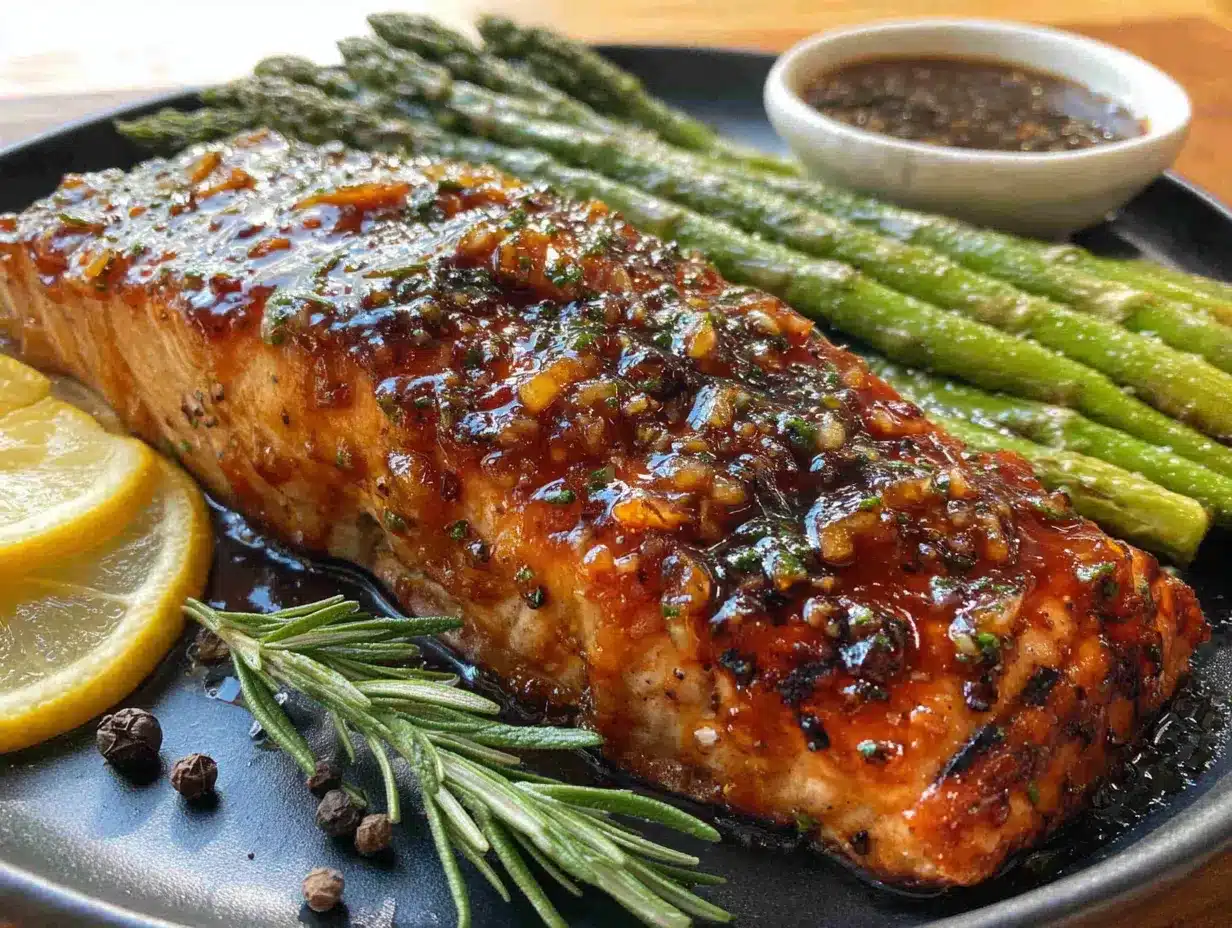
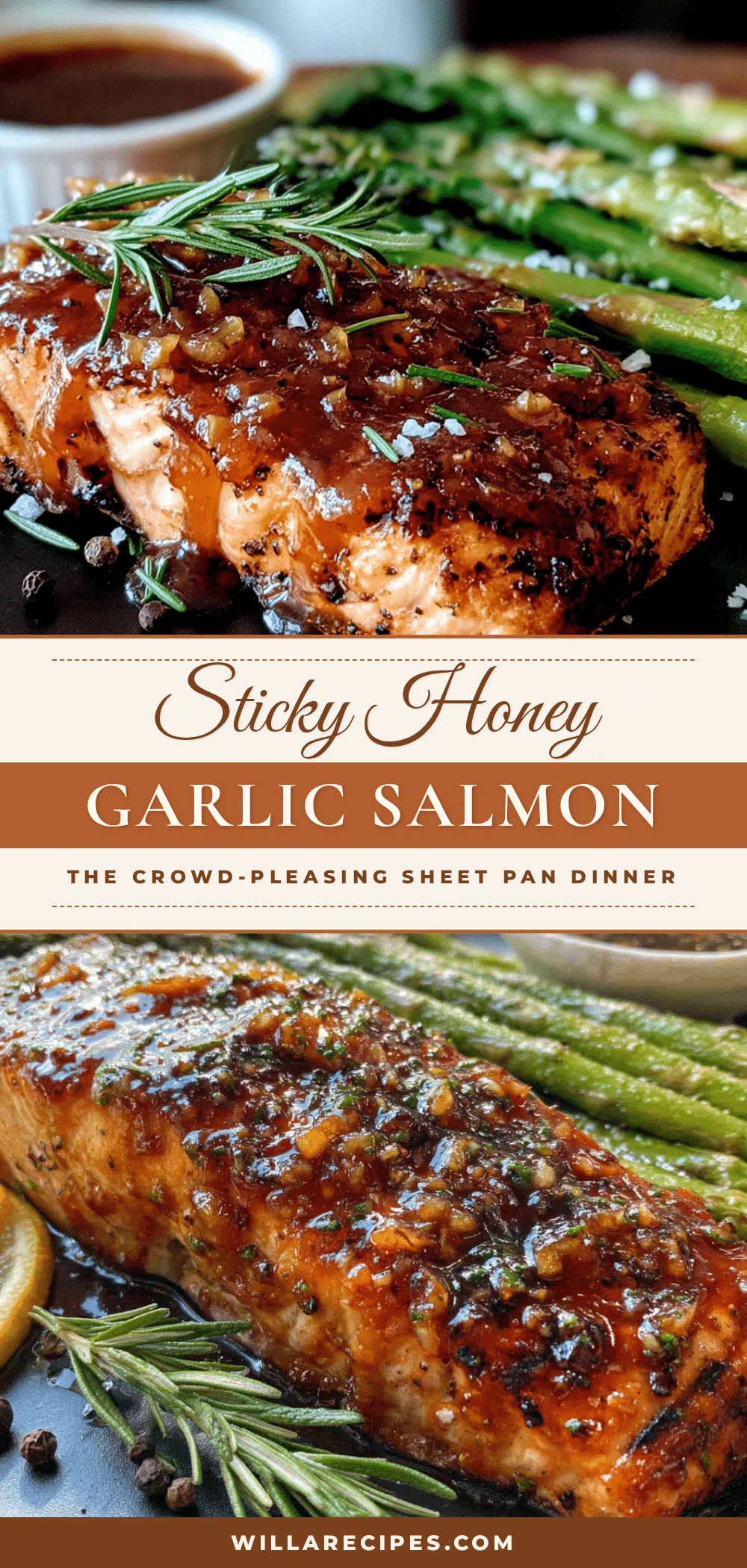
Visual cue: The salmon should look glossy and caramelized, with the glaze clinging to the surface like a shiny coat. The green beans should be bright green with some charred spots. You’ll smell the garlic and honey melding together — that’s how you know it’s ready.
Cooking Tips & Techniques
After making this recipe more times than I can count, I’ve picked up a few tricks that make a real difference. Here’s what I’ve learned — sometimes the hard way.
Pat your salmon dry. This is non-negotiable. If your salmon is wet, the glaze won’t stick properly and you’ll end up with a watery sauce instead of that beautiful sticky coating. Use paper towels and really press them into the flesh. I once skipped this step when I was in a rush, and the result was a sad, pale salmon with a thin, runny glaze. Never again.
Don’t overcrowd the pan. If your salmon fillets are touching or the green beans are piled on top of each other, they’ll steam instead of roast. Use a larger sheet pan or split everything between two pans if needed. The caramelization happens when the heat can reach the surface directly.
Watch the broiler like a hawk. I cannot stress this enough. The broiler is your friend for that perfect sticky finish, but it’s also the fastest way to ruin dinner. Set a timer for 1 minute, check, and add more time in 30-second increments if needed. Every oven is different — mine runs hot, so I usually only need 90 seconds.
Let it rest. I know it’s tempting to dig in right away, but letting the salmon rest for a couple of minutes allows the glaze to set and the juices to redistribute. The result is a more tender, more flavorful piece of fish.
Double the glaze if you’re feeding a crowd. The recipe as written works perfectly for 4 servings, but if you’re scaling up, make 1.5 times the glaze. You want enough to coat everything generously without running out halfway through.
Timing strategy: While the oven preheats, make the glaze and prep the vegetables. That way, everything is ready to go as soon as the oven hits 400°F. This recipe moves fast once it starts, so having everything prepped makes the process stress-free.
Variations & Adaptations
One of the reasons I love this recipe is how adaptable it is. Here are some variations I’ve tried and loved:
Spicy Honey Garlic Salmon: Add 1-2 teaspoons of sriracha or gochujang to the glaze for a spicy kick. The heat balances beautifully with the sweetness of the honey. I made this version for a friend who loves spicy food, and she said it was the best salmon she’d ever had.
Lemon Herb Version: Swap the rice vinegar for fresh lemon juice and add 1 teaspoon of dried thyme or oregano to the glaze. Finish with fresh dill instead of green onions. This lighter version is perfect for spring and summer gatherings.
Maple Dijon Twist: Replace the honey with pure maple syrup and add 1 tablespoon of Dijon mustard to the glaze. The mustard adds a tangy depth that’s absolutely addictive. This is my go-to for fall dinner parties.
Low-Carb / Keto Adaptation: Substitute the honey with a sugar-free honey alternative or use a monk fruit sweetener. The texture will be slightly different, but it still works beautifully. Serve with roasted broccoli or cauliflower instead of green beans for a lower-carb option.
Air Fryer Method: Cook the salmon at 375°F (190°C) for 8-10 minutes in the air fryer, brushing with glaze halfway through. You’ll need to cook the vegetables separately, but the salmon gets incredibly crispy on the edges. I tried this on a whim and was pleasantly surprised.
Different Protein: This glaze works beautifully on chicken thighs, pork chops, or even tofu. Adjust cooking times accordingly — chicken thighs need about 20-25 minutes at 400°F, while tofu needs about 15 minutes.
Seasonal Vegetable Swap: In winter, use roasted Brussels sprouts or carrots. In summer, try zucchini and bell peppers. The glaze works with pretty much any vegetable that roasts well.
Serving & Storage Suggestions
This sticky honey garlic salmon is best served fresh from the oven, but there are plenty of ways to enjoy it.
Serving temperature: Serve warm, ideally within 5 minutes of coming out of the oven. The glaze is at its stickiest and most flavorful when hot. If you’re hosting, keep the sheet pan in the oven on the lowest setting (around 170°F) for up to 15 minutes while you finish other dishes.
What to serve alongside: This salmon pairs beautifully with steamed jasmine rice or coconut rice — the grains soak up the extra glaze perfectly. For a lighter option, serve with a simple cucumber salad or a crisp green salad with a ginger-lime dressing. If you’re hosting a dinner party, I love serving this with roasted baby potatoes and a side of sautéed spinach. The combination is elegant but effortless.
Drink pairings: A crisp Sauvignon Blanc or a dry Riesling complements the sweet-savory flavors beautifully. For non-alcoholic options, try a sparkling water with lemon or a ginger beer.
Storage instructions: Store leftover salmon and vegetables in an airtight container in the refrigerator for up to 3 days. The glaze will continue to set as it cools, so don’t worry if it looks less shiny — the flavor is still there.
Reheating tips: The best way to reheat is in a 300°F (150°C) oven for 5-7 minutes, or in an air fryer at 350°F (175°C) for 3-4 minutes. The microwave works in a pinch, but it will make the salmon slightly rubbery and the glaze less sticky. If using the microwave, cover with a damp paper towel and heat in 30-second intervals.
Freezer instructions: This recipe freezes surprisingly well. Place cooled salmon fillets in a freezer-safe container with a little extra glaze, and freeze for up to 2 months. Thaw overnight in the refrigerator and reheat gently in the oven. The texture won’t be quite as perfect as fresh, but it’s still delicious — I’ve brought these to work for lunch and gotten compliments from coworkers.
Flavor development: The flavors actually meld together beautifully overnight. Leftover salmon, cold from the fridge, is amazing flaked over a salad or stuffed into a wrap with some fresh herbs. Don’t sleep on the leftovers — they’re a gift.
Nutritional Information & Benefits
This sticky honey garlic salmon isn’t just delicious — it’s packed with nutrients that make it a smart choice for any meal.
Estimated nutritional values per serving (1 salmon fillet with green beans):
– Calories: 420-450
– Protein: 35-38g
– Fat: 18-20g (mostly healthy omega-3s)
– Carbohydrates: 28-32g (from honey and vegetables)
– Fiber: 4-5g
– Sugar: 22-25g (natural honey and vegetables)
Health benefits: Salmon is one of the best sources of omega-3 fatty acids, which support heart health, brain function, and reduce inflammation. The green beans add fiber, vitamin C, and vitamin K. Garlic is known for its immune-boosting properties, and honey provides natural antioxidants. This is a meal that tastes indulgent but actually supports your health.
Dietary considerations: This recipe is naturally dairy-free and egg-free. For a gluten-free version, use tamari or coconut aminos instead of soy sauce. For a low-carb version, reduce the honey to 2 tablespoons or use a sugar-free alternative. The recipe is also nut-free and can be made soy-free by using coconut aminos.
Potential allergens: Contains fish (salmon) and soy (soy sauce). If you’re serving guests with allergies, make sure to use tamari for gluten sensitivity and check that your honey is pure (some brands add corn syrup).
From a wellness perspective, I love that this recipe feels like a treat but is actually incredibly nourishing. It’s the kind of meal that leaves you feeling satisfied and energized, not heavy and sluggish. That’s the sweet spot, honestly.
Conclusion
This sticky honey garlic salmon has become my secret weapon for hosting, and I think it’s about to become yours too. It’s the recipe that makes you look like you spent hours in the kitchen when really, you just threw things on a pan and let the oven work its magic. The glaze is perfectly balanced — sweet, savory, sticky — and the salmon comes out tender and flaky every single time.
What I love most about this recipe is how adaptable it is. You can make it spicy or mild, swap the vegetables with the seasons, serve it over rice or alongside a salad. It works for a quiet Tuesday dinner or a full-blown dinner party. And every time you make it, it delivers. That’s rare in a recipe, and it’s why I keep coming back to it.
I’d love to hear how this turns out for you. Did you add your own twist? Serve it with something unexpected? Share your experience in the comments below — I read every single one, and I love seeing how you make these recipes your own. And if you loved it as much as I think you will, please share it with a friend who needs a go-to dinner party recipe. Happy cooking, friends!
Frequently Asked Questions
Can I use frozen salmon for this recipe?
Yes, absolutely. Just make sure to thaw the salmon completely in the refrigerator overnight. Pat it very dry with paper towels before glazing — frozen salmon tends to hold more moisture, so drying it thoroughly is extra important to get that sticky glaze.
Can I make the glaze ahead of time?
Definitely. You can whisk together the glaze up to 3 days in advance and store it in an airtight container in the refrigerator. Give it a good stir before using, as the cornstarch can settle at the bottom. This is a great time-saver if you’re prepping for a party.
How do I know when the salmon is cooked through?
The easiest way is to use an instant-read thermometer — the salmon is done at 125-130°F (52-54°C) for medium. If you don’t have a thermometer, look for the salmon to be opaque and flake easily with a fork. It should still be slightly translucent in the center — it will continue cooking from residual heat after you take it out of the oven.
Can I use a different type of fish?
Yes! This glaze works beautifully with other firm fish like cod, halibut, or sea bass. Adjust cooking times based on thickness — cod usually takes about 10-12 minutes, while thicker cuts of halibut might need 15-18 minutes. Just keep an eye on it and use the flake test to check for doneness.
What if I don’t have rice vinegar?
No problem. You can substitute with apple cider vinegar, white wine vinegar, or even fresh lemon juice. Each will add a slightly different flavor profile — lemon juice makes it brighter, while apple cider vinegar adds a touch of fruitiness. Any of them will work perfectly.
Pin This Recipe!
Easy Sticky Honey Garlic Salmon – Best Sheet Pan Dinner
This sticky honey garlic salmon is sweet, savory, and caramelized to perfection on a single sheet pan. Ready in under 25 minutes, it’s the ultimate easy dinner for busy weeknights or impressive dinner parties.
- Prep Time: 10 minutes
- Cook Time: 15 minutes
- Total Time: 25 minutes
- Yield: 4 servings 1x
- Category: Main Course
- Cuisine: Asian-inspired
Ingredients
- 4 salmon fillets (about 6 oz / 170g each, skin on or off)
- 1/3 cup honey (110g)
- 3 tablespoons soy sauce (45ml)
- 4 cloves garlic, minced
- 1 tablespoon rice vinegar (15ml)
- 1 tablespoon sesame oil (15ml)
- 1 teaspoon cornstarch
- 1 pound green beans, trimmed (450g)
- 2 tablespoons olive oil (30ml)
- 1 tablespoon sesame seeds (for garnish)
- 2 green onions, sliced (for garnish)
- Salt and pepper to taste
Instructions
- Preheat your oven to 400°F (200°C). Position the rack in the middle of the oven. Line a sheet pan with parchment paper or aluminum foil.
- In a small bowl, whisk together honey, soy sauce, minced garlic, rice vinegar, sesame oil, and cornstarch until the cornstarch is completely dissolved. Set aside about 2 tablespoons of the glaze for drizzling later.
- Toss the trimmed green beans with olive oil, a pinch of salt, and a few cracks of black pepper. Spread them on one half of the prepared sheet pan in a single layer.
- Pat the salmon fillets dry with paper towels. Season both sides lightly with salt and pepper. Place the fillets on the other half of the sheet pan, skin-side down if they have skin.
- Brush the glaze generously over the top and sides of each salmon fillet. Pour any remaining glaze (minus the reserved 2 tablespoons) over the green beans and toss to coat.
- Roast for 12-15 minutes, depending on the thickness of the fillets. The salmon should be opaque and flake easily with a fork, but still slightly translucent in the center for medium.
- Optional: Switch the oven to broil for the last 1-2 minutes to caramelize the glaze further. Watch carefully to avoid burning.
- Remove the sheet pan from the oven and let it rest for 2-3 minutes. Drizzle the reserved glaze over the salmon and green beans. Sprinkle with sesame seeds and sliced green onions.
- Serve immediately, spooning any extra glaze from the pan over the top.
Notes
Pat the salmon dry for the best glaze adhesion. Do not overcrowd the pan. Watch the broiler closely to avoid burning. Let the salmon rest for a couple of minutes before serving. Double the glaze if feeding a crowd.
Nutrition
- Serving Size: 1 salmon fillet with
- Calories: 420450
- Sugar: 2225
- Sodium: 800900
- Fat: 1820
- Saturated Fat: 34
- Carbohydrates: 2832
- Fiber: 45
- Protein: 3538
Keywords: honey garlic salmon, sheet pan salmon, easy salmon recipe, sticky salmon, weeknight dinner, salmon with green beans