It was 11:47 PM on a quiet Christmas Eve, and I couldn’t sleep. The stockings were hung, the tree lights were blinking their little hearts out, and somewhere in the kitchen, a mountain of dishes from dinner was waiting for me. But I wasn’t thinking about any of that. I was thinking about breakfast. More specifically, I was thinking about that moment on Christmas morning when everyone shuffles into the living room in their pajamas, bleary-eyed and excited, and you want something special to greet them—something that says “Merry Christmas” without you having to stand at the stove for an hour.
The problem? I didn’t have a loaf of brioche, which every fancy French toast recipe seems to demand. I didn’t have time to let anything soak overnight. But I did have a half-loaf of slightly stale sourdough from Tuesday, a carton of eggs, and this wild idea that maybe I could throw it all together in one pan and let the oven do the heavy lifting while everyone opened presents. Honestly, it felt a little reckless at that hour—like baking at midnight was somehow breaking the rules of Christmas Eve. But something about the quiet house and the soft glow of the tree lights made me think, why not?
That late-night experiment turned into what my family now calls “the Christmas casserole.” It’s not fancy. It’s not fussy. But it’s warm, golden, and smells like cinnamon and vanilla and everything good about the holidays. Maybe you’ve been there—standing in your kitchen late at night, wanting to make the morning special but running out of steam. Let me tell you, this baked French toast casserole is the answer. It’s the recipe that saved my Christmas morning sanity, and I have a feeling it’ll do the same for you.
Why You’ll Love This Recipe
Let me be honest with you—I’ve tested a lot of French toast casseroles over the years. Some were too soggy. Some were too dry. Some required so many steps that I was exhausted before the coffee was even brewed. This one? It’s the Goldilocks of breakfast casseroles, and here’s why you’ll fall for it too.
- Make-Ahead Magic: You can assemble this the night before or throw it together 30 minutes before baking. Both work beautifully. I’ve done it both ways, and honestly, the overnight version gets a little extra flavor, but the quick version is just as delicious when you’re short on time.
- Simple Pantry Ingredients: No hunting down specialty bread or expensive ingredients. Stale bread, eggs, milk, butter, and a few pantry spices—that’s it. If you’ve got a well-stocked kitchen, you probably have everything you need right now.
- Perfect for Christmas Morning Chaos: While everyone’s tearing into presents, this casserole is quietly baking in the oven. You don’t have to flip anything, stir anything, or stand over a hot stove. It’s the ultimate set-it-and-forget-it holiday breakfast.
- Crowd-Pleaser That Feeds a Crowd: This recipe easily serves 8 to 10 people. I’ve brought it to brunches, served it at holiday gatherings, and watched it disappear every single time. Kids love it. Adults love it. Even my picky uncle who “doesn’t do sweet breakfasts” went back for seconds.
- Unbelievably Cozy: There’s something about the way the custard soaks into every nook and cranny of the bread, creating a texture that’s soft on the inside and slightly crisp on top. It’s the kind of breakfast that makes you want to curl up on the couch with a blanket and a cup of coffee and stay there all day.
What makes this recipe different from all the other French toast casseroles out there? It’s the balance. The bread-to-custard ratio is perfect—not too eggy, not too bready. The topping has just enough crunch to give you that satisfying texture contrast. And the flavor? It’s warm and spiced without being overwhelming. This isn’t just another breakfast casserole. It’s the one you’ll make every Christmas morning from now on.
I mean, honestly, this recipe is comfort food reimagined. It’s the kind of dish that makes you close your eyes after the first bite and just breathe. And on Christmas morning, isn’t that exactly what you need?
What Ingredients You Will Need
This recipe uses simple, wholesome ingredients to create something truly special. Most of these are pantry staples, which means you probably don’t need to make a special trip to the store. Let’s walk through what you’ll need and why each ingredient matters.
For the Casserole Base
- 1 large loaf of day-old bread (about 16 ounces): Sourdough, French bread, or challah work beautifully. Day-old or slightly stale bread is actually better here—it absorbs the custard without turning to mush. If your bread is fresh, just leave it out on the counter for a few hours or toast it lightly before using.
- 8 large eggs, room temperature: Room-temperature eggs blend more smoothly into the custard. I know, I know—nobody plans ahead on Christmas morning. If you’re in a rush, place the eggs in a bowl of warm water for 5 minutes and they’ll come to temperature quickly.
- 2 cups whole milk: Whole milk gives the richest, creamiest custard. You can use 2% in a pinch, but avoid skim milk—it makes the casserole a bit watery. For an extra-indulgent version, swap 1 cup of the milk for heavy cream. (I won’t tell anyone.)
- 1/2 cup granulated sugar: This adds just enough sweetness to balance the richness of the eggs and milk. If you prefer a less sweet casserole, you can reduce this to 1/3 cup.
- 2 teaspoons vanilla extract: Pure vanilla extract makes a noticeable difference here. I’ve tried imitation vanilla in a pinch, and honestly, the pure stuff is worth the splurge for holiday baking. It adds a warmth and depth that you just can’t fake.
- 1 teaspoon ground cinnamon: Cinnamon is non-negotiable for that cozy Christmas morning flavor. I prefer Ceylon cinnamon for its milder, sweeter taste, but regular cassia cinnamon works perfectly too.
- 1/4 teaspoon ground nutmeg: Freshly grated nutmeg is a game-changer if you have it. It adds this subtle, aromatic warmth that makes the whole kitchen smell like the holidays.
- 1/4 teaspoon salt: Don’t skip this! Salt balances the sweetness and enhances all the other flavors. It’s the secret ingredient that makes everything taste more like itself.
For the Streusel Topping
- 1/2 cup all-purpose flour: This forms the base of the crumbly topping. For a gluten-free version, you can use a 1:1 gluten-free flour blend.
- 1/2 cup packed brown sugar: Light or dark brown sugar both work. Dark brown sugar gives a deeper, more molasses-like flavor that’s lovely for the holidays.
- 1 teaspoon ground cinnamon: More cinnamon in the topping means every bite has that warm, spicy flavor.
- 1/4 cup cold unsalted butter, cut into small cubes: Cold butter is key for a crumbly streusel. If the butter is too warm, you’ll end up with a paste instead of crumbs. Pop it in the freezer for 10 minutes if your kitchen is warm.
- 1/2 cup chopped pecans or walnuts (optional): Nuts add a wonderful crunch and a toasty flavor. I usually add pecans because they feel more festive, but walnuts are lovely too. Leave them out if you’re serving a nut-free crowd.
For Serving (Optional but Highly Recommended)
- Powdered sugar for dusting
- Pure maple syrup
- Fresh berries or sliced bananas
- Whipped cream or a dollop of Greek yogurt
I recommend using a good-quality vanilla extract like Nielsen-Massey or simply organic vanilla for the best flavor. And for the bread, if you can get your hands on a loaf from a local bakery, it makes a real difference. The texture is just better. But honestly, even a standard grocery store loaf of French bread works perfectly—I’ve tested it, and nobody complained.
Equipment Needed
You don’t need any fancy equipment for this recipe, which is part of its charm. Here’s what you’ll need:
- A 9×13-inch baking dish: This is the standard size for feeding a crowd. If you’re making a half batch, an 8×8-inch dish works well. I’ve used both Pyrex and ceramic dishes, and both work beautifully. Ceramic holds heat a little better, but glass lets you see the bottom getting golden.
- A large mixing bowl: You’ll need this for whisking the custard. Any large bowl will do—I’ve used everything from a fancy ceramic bowl to a plastic one I bought at the dollar store.
- A whisk: A good whisk helps you get the eggs fully beaten and the custard smooth. If you don’t have a whisk, a fork works in a pinch, but you’ll need to whisk vigorously to avoid streaks of egg white.
- A smaller bowl for the streusel: You’ll mix the topping ingredients here. A pastry blender or two forks work great for cutting the butter into the flour mixture.
- A sharp knife and cutting board: For cubing the bread. A serrated bread knife works best for crusty loaves.
- Measuring cups and spoons: Accurate measurements matter in baking, so use proper measuring tools rather than eyeballing it.
- Aluminum foil: You’ll need this to cover the casserole during the first part of baking to prevent the top from burning before the center is set.
If you don’t have a pastry blender for the streusel, don’t worry. I’ve made the topping using my fingers to rub the butter into the flour, and it works just as well. The key is to work quickly so the butter stays cold. Also, a tip from experience—if you’re using a glass baking dish, place it on a baking sheet before putting it in the oven. This catches any potential overflow and makes it easier to get in and out of the oven.
Preparation Method
Alright, let’s get to the good part. Here’s how to make this Christmas morning magic happen.
- Preheat your oven to 350°F (175°C). If you’re making this the night before, you can skip this step until morning. But if you’re baking it right away, get that oven heating while you prep everything else.
- Prepare the bread. Cut your day-old bread into 1-inch cubes. Don’t worry about being too precise—rustic cubes are part of the charm. You should end up with about 8 to 9 cups of bread cubes. Spread them evenly in your greased 9×13-inch baking dish. I like to spray the dish first with non-stick cooking spray or rub it with a little butter.
- Make the custard. In your large mixing bowl, crack 8 eggs and whisk them until they’re fully beaten and slightly frothy. This takes about 30 seconds of vigorous whisking. You want to see no streaks of egg white. Then add the 2 cups of milk, 1/2 cup of granulated sugar, 2 teaspoons of vanilla extract, 1 teaspoon of cinnamon, 1/4 teaspoon of nutmeg, and 1/4 teaspoon of salt. Whisk everything together until the sugar is mostly dissolved and the mixture is smooth and uniform.
- Pour the custard over the bread. Slowly pour the custard mixture evenly over the bread cubes. Use a spatula or your hands (clean hands, obviously) to gently press the bread down into the custard, making sure every piece gets soaked. Don’t stir too vigorously—you want the bread to absorb the liquid, not break apart. Let it sit for 10 to 15 minutes if you have time. This allows the bread to really soak up all that custardy goodness.
- Make the streusel topping. While the bread is soaking, make your topping. In a small bowl, combine 1/2 cup of flour, 1/2 cup of packed brown sugar, and 1 teaspoon of cinnamon. Add the cold butter cubes. Using a pastry blender, two forks, or your fingers, work the butter into the flour mixture until it resembles coarse crumbs with some pea-sized butter pieces remaining. If you’re using nuts, stir them in now. Pop the bowl in the refrigerator while you finish the casserole—cold streusel bakes up crunchier.
- Assemble and bake. Sprinkle the streusel topping evenly over the soaked bread. Cover the dish with aluminum foil and bake for 30 minutes. Then remove the foil and bake for another 20 to 25 minutes, until the top is golden brown and the center is set. You’ll know it’s done when a knife inserted in the center comes out clean, or when the casserole jiggles just slightly in the middle but isn’t liquidy. The internal temperature should reach about 165°F (74°C).
- Rest before serving. This is crucial—let the casserole rest for 5 to 10 minutes after it comes out of the oven. This allows the custard to set completely and makes serving much easier. I know it’s hard to wait when the whole house smells like cinnamon and vanilla, but trust me on this one.
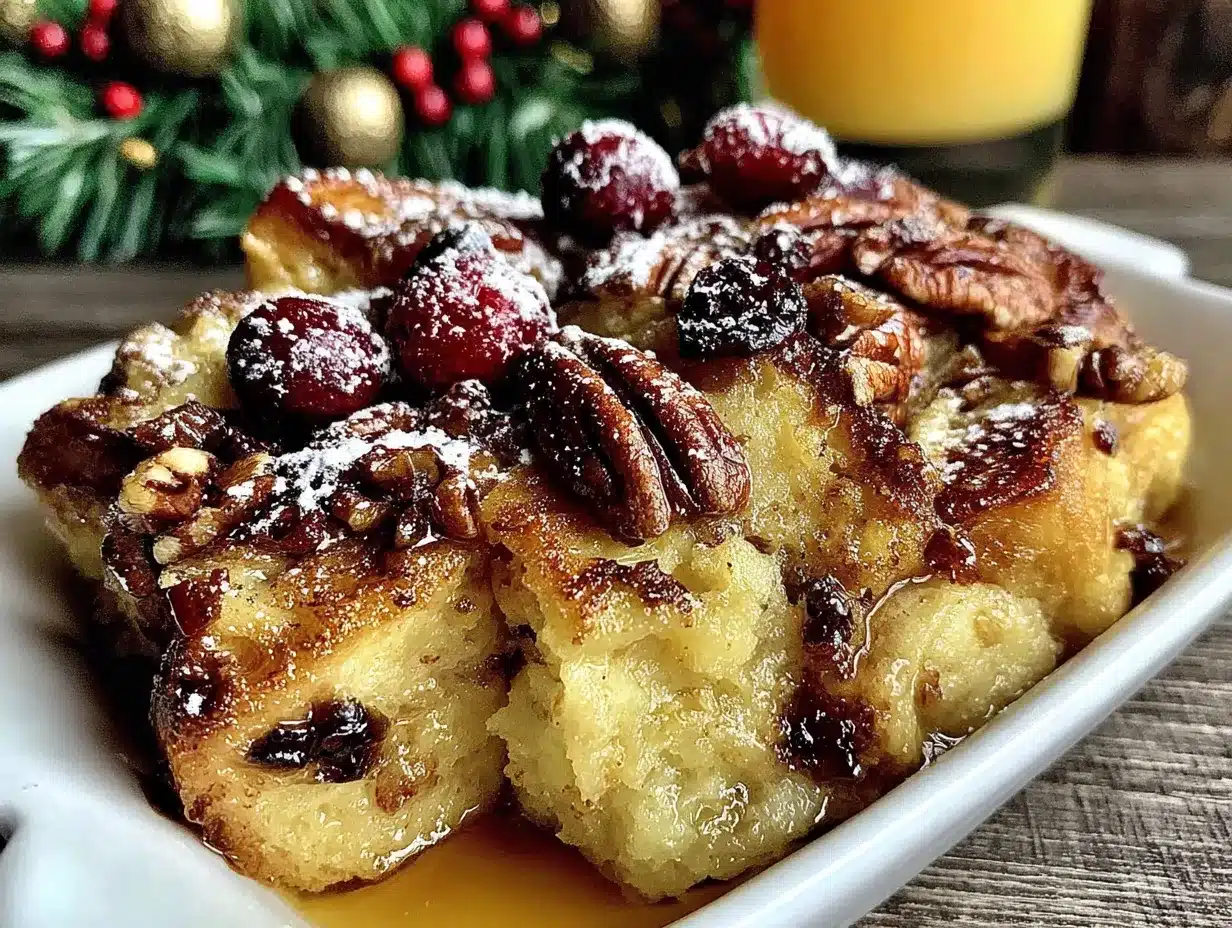
- Serve and enjoy. Dust with powdered sugar, drizzle with warm maple syrup, and add fresh berries if you’re feeling fancy. Serve it straight from the baking dish—it’s a breakfast casserole, not a formal dinner. The cozy, family-style presentation is part of the charm.
A note about overnight preparation: If you want to assemble this the night before, follow steps 1 through 5, then cover the dish tightly with plastic wrap and refrigerate for up to 12 hours. In the morning, let it sit on the counter for 20 to 30 minutes while the oven preheats. You may need to add 5 to 10 minutes to the baking time since the casserole will be cold from the fridge. The streusel topping can also be made ahead and stored in the refrigerator in a sealed container.
One time I forgot to set my alarm and only had 45 minutes before everyone woke up. I skipped the soaking time, used slightly warm milk to help the custard absorb faster, and it still turned out great. So don’t stress if things don’t go exactly according to plan. This recipe is forgiving, and Christmas morning is supposed to be joyful, not stressful.
Cooking Tips & Techniques
After making this casserole more times than I can count, I’ve picked up a few tricks that make a real difference. Here are my best tips for French toast casserole success.
Use stale bread, not fresh. This is probably the most important tip I can give you. Fresh bread turns into a soggy mess because it hasn’t had time to dry out. Day-old bread has a firmer structure that holds up to the custard. If your bread is fresh, cut it into cubes and spread them on a baking sheet in a 300°F oven for 10 minutes. This dries it out just enough without toasting it.
Don’t over-soak the bread. I know it’s tempting to let the bread sit in the custard for hours, but 10 to 15 minutes is usually enough. If the bread gets too saturated, the casserole can become mushy in the center. The bread should be moist but not swimming in liquid. If you’re making it overnight, use slightly less milk to account for the longer soaking time.
Watch your oven temperature. Every oven runs a little differently. I learned this the hard way when I burned the topping on my first attempt. If your oven runs hot, check the casserole 5 minutes earlier than the recipe suggests. If the topping is browning too quickly but the center isn’t set yet, tent it with foil for the remaining baking time.
Let it rest. I can’t emphasize this enough. The resting time allows the custard to finish setting and makes the casserole easier to cut and serve. It also lets the flavors meld together. If you serve it right out of the oven, it’ll be too loose and runny. Five minutes makes all the difference.
Scale the recipe easily. This recipe is easy to halve for a smaller crowd. Use an 8×8-inch dish and reduce the baking time by about 10 minutes. For a larger crowd, double the recipe and use a 12×17-inch baking dish or two 9×13-inch dishes. Just make sure your pan isn’t too full—you want room for the bread to expand.
I’ll be honest—my first attempt at this recipe was a disaster. I used fresh brioche, didn’t let it soak long enough, and the center was dry while the edges were burnt. I was so frustrated. But I learned from that failure, and now I know exactly how to get it right every time. That’s the thing about cooking—you mess up, you learn, and you get better. This recipe is the result of all those little lessons.
Variations & Adaptations
One of the best things about this baked French toast casserole is how adaptable it is. Here are some of my favorite variations.
Baked Berry French Toast: Add 1 cup of fresh or frozen berries (blueberries, raspberries, or sliced strawberries) to the bread cubes before pouring the custard. The berries burst as they bake, creating little pockets of jammy sweetness throughout the casserole. If you’re using frozen berries, don’t thaw them first—add them straight from the freezer to prevent them from bleeding too much color into the custard.
Apple Cinnamon Version: Peel and dice 2 medium apples (Honeycrisp or Granny Smith work well) and sauté them in a tablespoon of butter with a teaspoon of cinnamon until they’re slightly softened. Layer them between the bread cubes before adding the custard. This gives the casserole a lovely apple pie vibe that’s perfect for fall or winter mornings.
Chocolate Hazelnut Dream: For a more indulgent version, spread a thin layer of Nutella or chocolate-hazelnut spread between layers of bread cubes. The chocolate melts into the custard as it bakes, creating pockets of gooey chocolate throughout. This one is dangerous—I’ve seen people go back for thirds.
Dairy-Free Adaptation: Substitute the whole milk with unsweetened almond milk, oat milk, or coconut milk. Use a dairy-free butter alternative in the streusel. The texture will be slightly less rich, but it’s still delicious. I’ve made this for dairy-free guests and they couldn’t tell the difference.
Gluten-Free Version: Use a good-quality gluten-free bread. I’ve had the best luck with gluten-free brioche or a sturdy white bread. Avoid gluten-free breads that are too soft or airy—they’ll fall apart in the custard. Also, use a 1:1 gluten-free flour blend for the streusel topping.
Savory-Sweet Combo: This might sound weird, but hear me out. Add 1/2 cup of cooked, crumbled bacon or breakfast sausage to the bread cubes before adding the custard. The salty, savory bits contrast beautifully with the sweet custard and streusel. My husband was skeptical when I first tried this, but now he requests it every year.
I once made a version with leftover panettone (the Italian Christmas bread) instead of regular bread. It was incredible—the candied fruit and citrus zest added a whole new dimension of flavor. If you have leftover panettone after the holidays, this is a fantastic way to use it up.
Serving & Storage Suggestions
This casserole is best served warm, straight from the oven. Here’s how to make the most of it.
Serving Suggestions: Dust the top with powdered sugar for a pretty presentation. Set out a pitcher of warm maple syrup and let everyone drizzle their own portion. Fresh berries or sliced bananas add a pop of color and freshness that balances the richness. A dollop of whipped cream or Greek yogurt on top is never a bad idea. For a complete Christmas morning spread, serve this alongside crispy bacon or breakfast sausage links, a bowl of fresh fruit, and plenty of hot coffee or mimosas.
Storage Instructions: Leftover casserole keeps well in the refrigerator for up to 3 days. Cover the dish tightly with plastic wrap or transfer individual portions to airtight containers. The flavors actually continue to develop as it sits, so leftovers might taste even better the next day.
Freezing Instructions: This casserole freezes beautifully. Let it cool completely, then wrap the entire dish (or individual portions) tightly in plastic wrap and then aluminum foil. Freeze for up to 3 months. To reheat, thaw overnight in the refrigerator, then warm in a 350°F oven for about 15 to 20 minutes, covered with foil. Individual portions can be microwaved for about 1 minute.
Reheating Tips: The oven is your best friend for reheating this casserole. It helps restore the crispy topping that the microwave just can’t replicate. Pop individual servings in a toaster oven or air fryer at 350°F for 5 to 7 minutes. If you’re in a hurry, the microwave works, but the topping will be soft rather than crunchy.
One thing I’ve noticed—this casserole actually gets better after a day in the fridge. The flavors meld together and the texture becomes even more cohesive. So don’t be sad if you have leftovers. You’re in for a treat the next morning.
Nutritional Information & Benefits
Let’s be real—this is a holiday breakfast casserole, not a health food. But it does have some redeeming qualities beyond being absolutely delicious.
Per serving (based on 10 servings, without syrup or toppings):
- Calories: Approximately 380
- Protein: 12 grams
- Fat: 18 grams
- Carbohydrates: 44 grams
- Fiber: 2 grams
- Sugar: 22 grams
Health Benefits: Eggs provide high-quality protein and important nutrients like choline, which supports brain health. The cinnamon in this recipe is more than just a flavor—it’s packed with antioxidants and has anti-inflammatory properties. If you use whole-grain bread, you’ll get more fiber and nutrients. And the milk adds calcium and vitamin D for bone health.
Dietary Considerations: This recipe is vegetarian. It can be made dairy-free and gluten-free with the substitutions mentioned above. It contains eggs, dairy, and gluten (unless modified), and nuts if you add them to the topping. For a lower-sugar version, reduce the sugar in the custard to 1/3 cup and use a sugar substitute in the streusel.
I’m not a nutritionist, and I firmly believe that Christmas morning is not the time to count calories. But I do think it’s helpful to know what’s in your food, especially if you’re cooking for guests with dietary restrictions. The beauty of this recipe is that it’s easy to adapt without sacrificing flavor.
Conclusion
This cozy Christmas morning baked French toast casserole is more than just a breakfast recipe—it’s a tradition waiting to happen. It’s the dish that lets you sleep in, sip your coffee, and watch the joy on your loved ones’ faces as they tear into presents, all while something warm and wonderful is baking in the oven.
I love this recipe because it captures everything I want Christmas morning to be: warm, sweet, unhurried, and full of love. It’s not about perfection. It’s about gathering around the table in your pajamas, passing the maple syrup, and starting the day with something that tastes like a hug.
I’d love to hear how this recipe turns out for you. Did you add your own twist? Did your family love it? Leave a comment below and share your Christmas morning story. And if you make this for your holiday celebration, tag me on Pinterest—I want to see your beautiful creations. Here’s to making this Christmas the coziest one yet.
Frequently Asked Questions
Can I use any type of bread for this casserole?
Yes, but day-old bread works best. Sourdough, French bread, challah, brioche, and even Texas toast all work well. The key is using bread that’s slightly stale so it absorbs the custard without falling apart. Avoid very soft sandwich bread, which can turn mushy.
Can I make this casserole the night before?
Absolutely! Assemble the casserole completely (including the streusel topping), cover it tightly with plastic wrap, and refrigerate for up to 12 hours. In the morning, let it sit at room temperature for 20 to 30 minutes while the oven preheats, then bake as directed, adding 5 to 10 minutes to the baking time if needed.
How do I know when the casserole is fully baked?
The casserole is done when the top is golden brown and the center is set. Insert a knife into the center—if it comes out clean, it’s ready. The internal temperature should reach about 165°F (74°C). The casserole should jiggle just slightly in the center but shouldn’t be liquidy.
Can I freeze this baked French toast casserole?
Yes! Let the baked casserole cool completely, then wrap it tightly in plastic wrap and aluminum foil. Freeze for up to 3 months. To reheat, thaw overnight in the refrigerator, then warm in a 350°F oven for 15 to 20 minutes, covered with foil. Individual portions can be microwaved for about 1 minute.
What can I serve with this casserole for a complete Christmas breakfast?
This casserole pairs beautifully with crispy bacon or breakfast sausage links, fresh fruit salad, yogurt parfaits, and plenty of hot coffee, tea, or mimosas. A side of roasted potatoes or a simple green salad can balance out the sweetness if you’re serving a larger brunch spread.
Pin This Recipe!
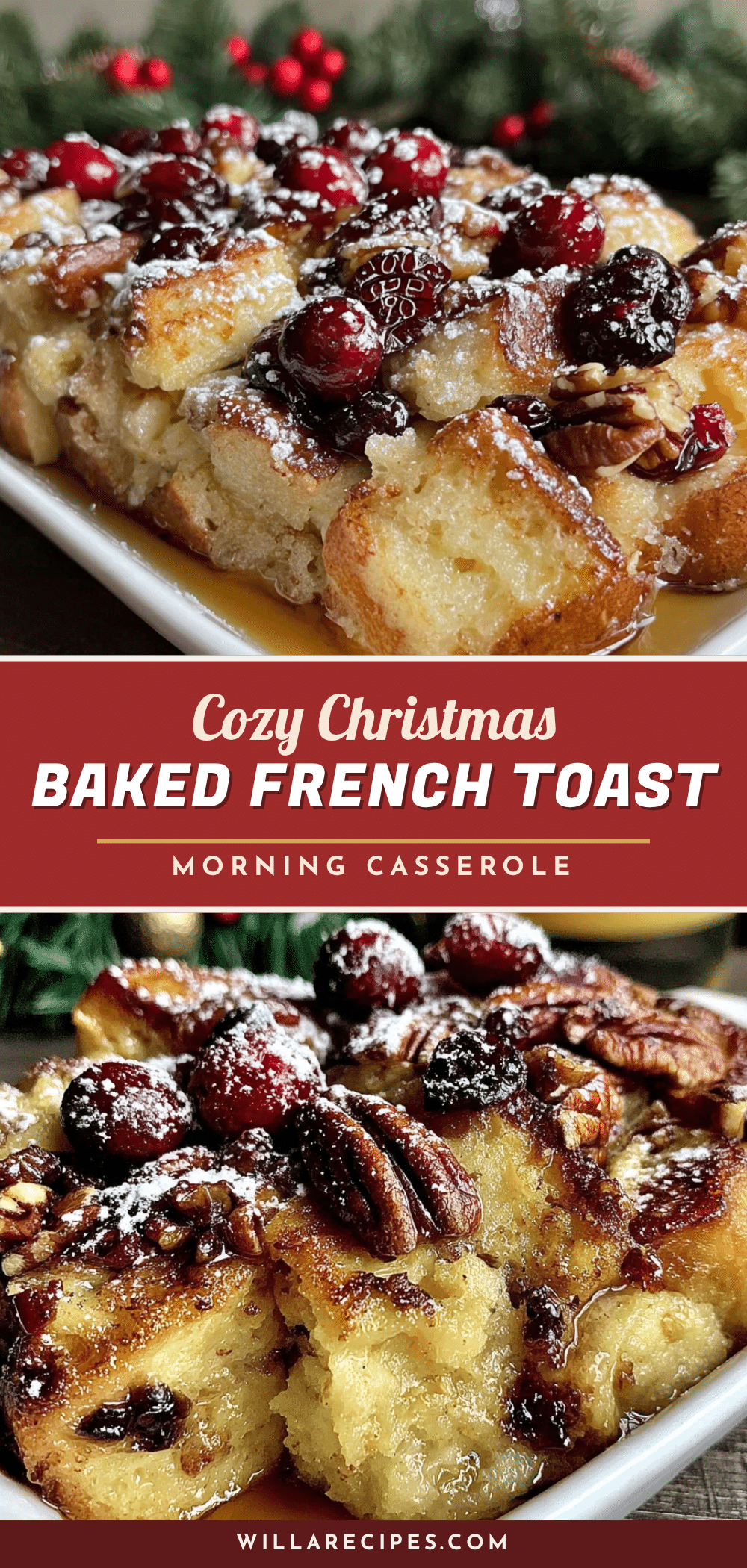
Cozy Christmas Morning Baked French Toast Casserole

A warm, golden baked French toast casserole made with simple pantry ingredients. Perfect for Christmas morning, it can be assembled the night before or baked right away, allowing you to enjoy the festivities while the oven does the work.
- Prep Time: 15 minutes
- Cook Time: 50 minutes
- Total Time: 1 hour 5 minutes
- Yield: 8 to 10 servings 1x
- Category: Breakfast
- Cuisine: American
Ingredients
- 1 large loaf day-old bread (about 16 ounces), cut into 1-inch cubes
- 8 large eggs, room temperature
- 2 cups whole milk
- 1/2 cup granulated sugar
- 2 teaspoons vanilla extract
- 1 teaspoon ground cinnamon
- 1/4 teaspoon ground nutmeg
- 1/4 teaspoon salt
- 1/2 cup all-purpose flour
- 1/2 cup packed brown sugar
- 1 teaspoon ground cinnamon
- 1/4 cup cold unsalted butter, cut into small cubes
- 1/2 cup chopped pecans or walnuts (optional)
- Powdered sugar for dusting (optional)
- Pure maple syrup for serving (optional)
- Fresh berries or sliced bananas for serving (optional)
- Whipped cream or Greek yogurt for serving (optional)
Instructions
- Preheat your oven to 350°F (175°C). Grease a 9×13-inch baking dish.
- Cut the day-old bread into 1-inch cubes and spread them evenly in the prepared baking dish.
- In a large mixing bowl, whisk the eggs until fully beaten and slightly frothy. Add the milk, granulated sugar, vanilla extract, cinnamon, nutmeg, and salt. Whisk until the sugar is mostly dissolved and the mixture is smooth.
- Pour the custard evenly over the bread cubes. Gently press the bread down into the custard to ensure even soaking. Let it sit for 10 to 15 minutes.
- In a small bowl, combine the flour, brown sugar, and cinnamon. Add the cold butter cubes and cut them into the flour mixture using a pastry blender, two forks, or your fingers until it resembles coarse crumbs with some pea-sized butter pieces. Stir in the nuts if using. Refrigerate the streusel until needed.
- Sprinkle the streusel topping evenly over the soaked bread. Cover the dish with aluminum foil and bake for 30 minutes. Remove the foil and bake for another 20 to 25 minutes, until the top is golden brown and the center is set (internal temperature should reach about 165°F / 74°C).
- Let the casserole rest for 5 to 10 minutes before serving.
- Dust with powdered sugar, drizzle with warm maple syrup, and add fresh berries or other toppings if desired. Serve warm.
Notes
For overnight preparation, assemble the casserole completely (including streusel), cover tightly with plastic wrap, and refrigerate for up to 12 hours. In the morning, let it sit at room temperature for 20 to 30 minutes while the oven preheats, then bake as directed, adding 5 to 10 minutes to the baking time if needed. Leftovers keep in the refrigerator for up to 3 days and can be frozen for up to 3 months.
Nutrition
- Serving Size: 1 serving (1/10 of c
- Calories: 380
- Sugar: 22
- Sodium: 350
- Fat: 18
- Saturated Fat: 8
- Carbohydrates: 44
- Fiber: 2
- Protein: 12
Keywords: baked French toast casserole, Christmas breakfast, overnight French toast, holiday brunch, easy breakfast casserole