I had this thing about squash for years. I mean, a real thing. I’d walk right past the butternut at the farmers market, eyeing the piles of potatoes and sweet potatoes instead, convinced that squash was just… fine. Not bad, but not worth the effort of wrestling with that tough skin. My neighbor Carla, though, she was obsessed. Every fall, her kitchen window would steam up, and I’d catch the scent of something warm and sweet drifting across the fence. I’d smile and wave, thinking, “Good for her.”
Then last November, she showed up at my door holding a baking dish wrapped in a kitchen towel. “Just try it,” she said. “No pressure.” I took a bite standing there in the doorway, and honestly? I had to sit down. The edges were all caramelized and sticky, the inside was soft like butter, and there was this tangy cheese melted into the cracks. I asked her what she’d done, and she just grinned. “Maple. And goat cheese. That’s it.” I felt a little ridiculous, honestly—like I’d been missing out on something obvious for years. But better late than never, right?
That dish became my fall secret weapon. I tweaked it a bit—added some thyme, a pinch of red pepper flakes for a little warmth—and now I make it every time the air gets that crisp, leaf-smell. It’s the kind of recipe that makes people close their eyes when they eat it, which is my favorite kind of recipe to share. Maybe you’ve been there, too—skeptical of something simple, until you taste the right version. This is that version.
Why You’ll Love This Recipe
This isn’t just another roasted squash recipe. I’ve made plenty of those—some that turned out watery, some that burned on the bottom, some that just felt… boring. This one is different. It’s the one I bring to Friendsgiving, the one I make on a Tuesday when I need the kitchen to smell like comfort. Let me tell you why it works.
- Quick & Easy: Under an hour from start to finish, and most of that is hands-off oven time. Perfect for a weeknight side that feels special.
- Simple Ingredients: You need a butternut squash, some good maple syrup, goat cheese, and a few pantry staples. No weird shopping trips.
- Perfect for Cozy Nights: This dish was made for cold weather. It’s warm, sweet, savory, and just a little tangy—everything you want when the wind is howling.
- Crowd-Pleaser: I’ve served this to my veggie-skeptic brother and my fancy-foodie aunt. Both asked for seconds. It’s magic like that.
- Unbelievably Delicious: The caramelized maple edges, the creamy goat cheese, the pop of fresh thyme—it’s a texture and flavor combo that just works. You’ll see.
What makes this version stand out is the technique. I toss the squash in a little cornstarch before roasting, which helps it get those crispy, browned edges without burning the maple syrup. It’s a small trick, but it makes a big difference. And I always buy a log of goat cheese that feels a little too generous—because you want those pockets of tangy cream in every bite. This recipe is comfort food reimagined: a little healthier, a little faster, but with all the soul-soothing satisfaction of something that took hours.
What Ingredients You Will Need
This recipe relies on simple, wholesome ingredients to build layers of flavor without any fuss. Everything is easy to find at a regular grocery store, and most of it you probably already have on hand. Here’s what you’ll need, along with a few tips I’ve picked up along the way.
- Butternut Squash (1 medium, about 2-3 pounds) — Look for one that feels heavy for its size and has a firm, unblemished skin. I usually buy pre-peeled and cubed from the store when I’m in a rush, but if you’re cutting it yourself, a sharp vegetable peeler is your best friend. (Pro tip: microwave the whole squash for 2 minutes first—it softens the skin just enough to make peeling easier.)
- Maple Syrup (3 tablespoons, pure maple syrup preferred) — Don’t use the pancake stuff here. You want the real deal, Grade A or B. It makes a difference in flavor and how it caramelizes. I like the dark amber syrup for a more robust taste.
- Goat Cheese (4 ounces, softened) — A good log of fresh goat cheese, sometimes called chèvre, is perfect. I’ve tried this with feta in a pinch, and it’s good, but goat cheese is creamier and melts into the squash in a way that’s just dreamy. Let it sit out for 15 minutes before using so it’s easier to crumble.
- Olive Oil (2 tablespoons, extra virgin) — Helps the squash roast evenly and carries the flavors. You can use avocado oil if that’s what you have.
- Cornstarch (1 tablespoon) — This is my secret weapon. It helps the squash get those crispy, golden edges that everyone fights over. Don’t skip it!
- Fresh Thyme (1 tablespoon, leaves removed from stems, plus extra for garnish) — Adds an earthy, slightly floral note that pairs beautifully with the maple. Dried thyme works in a pinch, but fresh is better here.
- Red Pepper Flakes (¼ teaspoon, or to taste) — Just a pinch for a little warmth. It doesn’t make the dish spicy, but it adds a nice depth. Leave it out if you’re sensitive to heat.
- Salt and Black Pepper (to taste) — I use flaky sea salt for finishing, but regular kosher salt works fine for roasting.
- Pumpkin Seeds or Pecans (¼ cup, optional, for crunch) — I love adding a handful of toasted pecans or pumpkin seeds right before serving. It adds a nice textural contrast to the soft squash.
Equipment Needed
You don’t need much for this recipe, which is part of the appeal. Here’s what I use, plus a few alternatives if you’re working with a less-stocked kitchen.
- Baking Sheet (rimmed, half-sheet size) — A good, sturdy baking sheet with edges is key. It catches any syrupy drips and prevents a mess in the oven. I’ve used a jelly roll pan too, and it works fine.
- Parchment Paper or Silicone Baking Mat — Lining the pan makes cleanup a breeze. The silicone mat also helps prevent the maple syrup from burning onto the pan.
- Large Mixing Bowl — For tossing the squash with the oil, cornstarch, and seasonings. Any big bowl will do.
- Sharp Knife and Cutting Board — For cubing the squash. A good chef’s knife makes quick work of it. If you buy pre-cut squash, you can skip this.
- Measuring Spoons — For the maple syrup, oil, and spices. I just eyeball the cornstarch, honestly, but measuring is safer if you’re new to the recipe.
- Small Skillet (optional) — For toasting the pecans or pumpkin seeds. Adds a nice touch, but you can skip it if you’re short on time.
Preparation Method
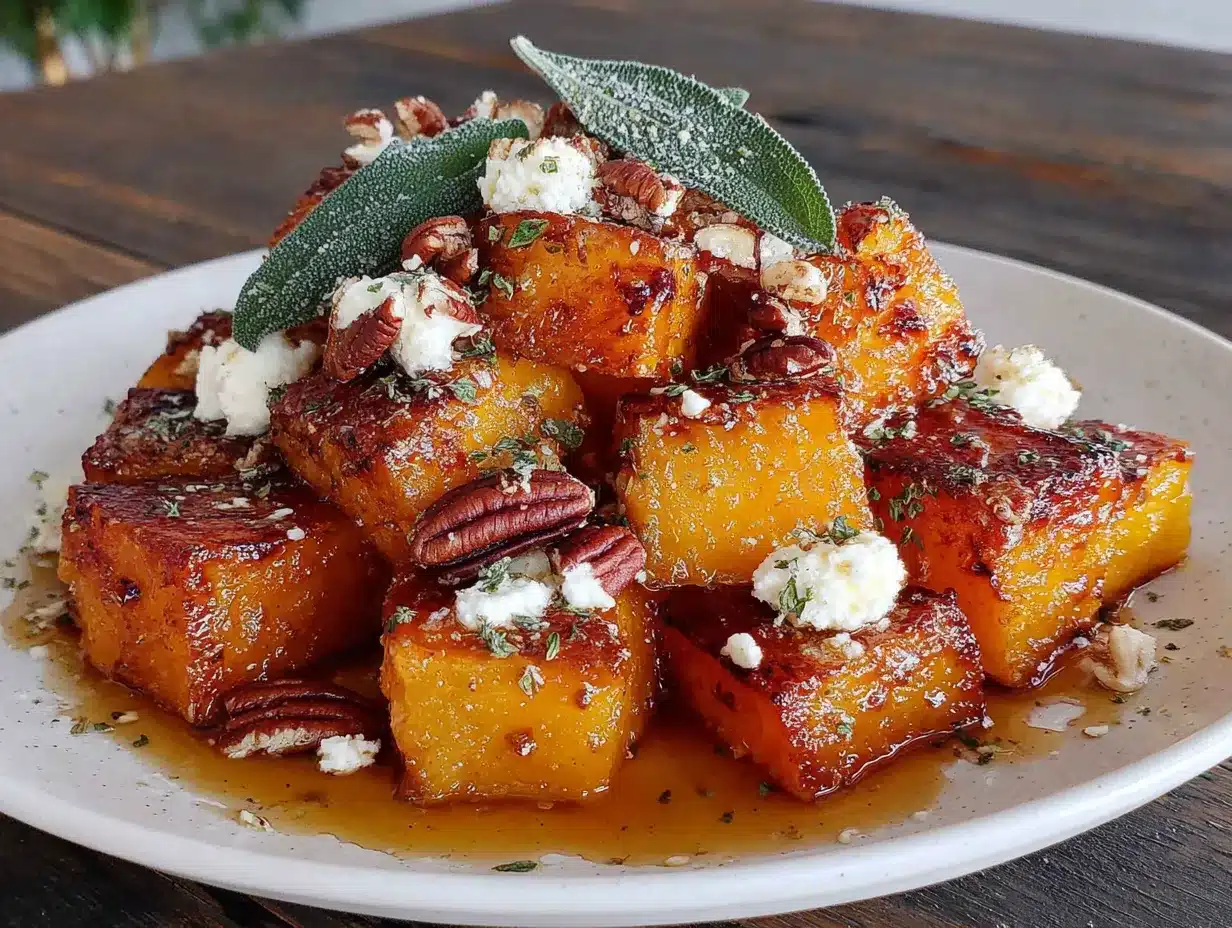
Let’s get cooking. This comes together in about 45 minutes, and most of that is hands-off oven time. I’ll walk you through every step, including what to look for so you know you’re on the right track.
- Preheat your oven to 400°F (200°C). Line a large, rimmed baking sheet with parchment paper or a silicone mat. Getting the oven hot before you start is important—it helps the squash caramelize instead of steaming.
- Prep the squash. If you’re using a whole butternut squash, cut off both ends, then peel the skin with a vegetable peeler or a sharp knife. Cut it in half lengthwise, scoop out the seeds with a spoon, and cut the flesh into 1-inch cubes. (Pro tip: try to make them all about the same size so they cook evenly. I’ve learned this the hard way—some burnt, some raw—not fun.) If you’re using pre-cut squash, you’re already ahead of the game.
- Season the squash. In a large mixing bowl, combine the cubed squash, olive oil, maple syrup, cornstarch, fresh thyme leaves, red pepper flakes, and a generous pinch of salt and black pepper. Toss everything together with your hands or a spatula until every piece is evenly coated. The cornstarch will look a little pasty at first—that’s okay. It’ll work its magic in the oven.
- Arrange on the baking sheet. Spread the squash out in a single layer on the prepared baking sheet. Make sure the pieces aren’t touching too much—if they’re crowded, they’ll steam instead of roast. Give them a little space to breathe. (I usually use two sheets if I’m doubling the recipe.)
- Roast for 25-30 minutes. Place the sheet in the oven and roast until the squash is tender and the edges are caramelized and golden brown. Halfway through, at the 15-minute mark, flip the pieces with a spatula so they brown evenly. The squash is done when you can easily pierce a piece with a fork, and the bottoms are sticky and dark in spots.
- Add the goat cheese. Remove the baking sheet from the oven. While the squash is still hot, crumble the softened goat cheese over the top. Use your fingers or a fork to break it into small pieces—you want little pockets of cheese, not a solid layer. The heat from the squash will soften the cheese just enough.
- Finish and serve. If you’re using nuts or seeds, toast them in a dry skillet over medium heat for 2-3 minutes until fragrant, then sprinkle them over the dish. Garnish with a few extra fresh thyme leaves and a tiny pinch of flaky sea salt. Serve warm, straight from the sheet or transferred to a platter.
Cooking Tips & Techniques
I’ve made this recipe about a dozen times, and I’ve definitely had a few flops along the way. Here’s what I’ve learned so you don’t have to repeat my mistakes.
- Don’t skip the cornstarch. I know it sounds weird, but it’s the key to getting those crispy edges. Without it, the maple syrup just makes the squash sticky and soft. With it, you get a beautiful, almost candy-like crust. Trust me on this one.
- Flip the squash halfway. I forgot to do this once, and the bottoms got a little too dark while the tops stayed pale. A quick flip at the 15-minute mark ensures even caramelization.
- Let the goat cheese come to room temperature. Cold goat cheese is crumbly and hard to spread. Let it sit out for 15-20 minutes before you crumble it—it’ll be creamier and melt into the squash more beautifully.
- Watch the maple syrup. Pure maple syrup burns faster than you think. If your oven runs hot, check the squash at 20 minutes. You want caramelized, not carbonized.
- Toast your nuts or seeds. I used to skip this step, but it makes a big difference. A quick dry-toast brings out their oils and adds a nutty crunch that contrasts perfectly with the soft squash. Just watch them—they burn in seconds.
Variations & Adaptations
One of the best things about this recipe is how easy it is to tweak. Here are a few ways I’ve changed it up depending on what I have in the pantry or who I’m cooking for.
- Vegan Version: Skip the goat cheese and use a dollop of cashew cream or a sprinkle of vegan feta instead. The maple-roasted squash is still delicious on its own, but the creamy element really ties it together.
- Add Some Heat: I love adding a drizzle of hot honey instead of regular maple syrup for a sweet-spicy kick. Or toss the finished squash with a pinch of smoked paprika for a deeper, smokier flavor.
- Swap the Cheese: Not a goat cheese fan? Try crumbled feta for a saltier bite, or shaved Parmesan for a nuttier, more savory finish. Both work beautifully.
- Change the Nuts: I’ve used toasted walnuts, pecans, pumpkin seeds, and even slivered almonds. Each one adds a different texture and flavor. My personal favorite is pecans—they get so buttery when toasted.
- Make it a Meal: Turn this into a hearty dinner by adding cooked quinoa or farro, some baby spinach, and a simple lemon vinaigrette. It’s a fantastic fall grain bowl.
Serving & Storage Suggestions
This dish is best served warm, straight from the oven, when the goat cheese is still soft and the edges are at their crispiest. I like to transfer it to a wooden board or a shallow platter, sprinkle on the fresh thyme and toasted nuts, and watch it disappear. It’s a showstopper on a Thanksgiving table, but honestly, I make it for Tuesday night dinners, too.
If you have leftovers (which is rare in my house), let the squash cool completely, then store it in an airtight container in the refrigerator for up to 4 days. The goat cheese will firm up, and the squash will soften a bit, but it’s still delicious. To reheat, spread it on a baking sheet and warm it in a 350°F oven for about 10 minutes, or until heated through. The microwave works in a pinch, but the oven will help revive some of that caramelized texture.
I don’t recommend freezing this dish—the squash gets watery and the goat cheese turns grainy. It’s really best enjoyed fresh. But the flavors do deepen overnight, so cold leftovers straight from the fridge are a sneaky little treat.
Nutritional Information & Benefits
This recipe is as nourishing as it is delicious. Butternut squash is packed with vitamin A (in the form of beta-carotene), vitamin C, and fiber, making it great for your immune system and digestion. The maple syrup provides a touch of natural sweetness, while the goat cheese adds protein and calcium. It’s a well-rounded side dish that feels indulgent but is actually pretty wholesome.
Estimated nutritional values per serving (based on 6 servings):
| Nutrient | Amount |
|---|---|
| Calories | 185 |
| Fat | 9g |
| Carbohydrates | 24g |
| Fiber | 4g |
| Protein | 6g |
| Vitamin A | 190% DV |
| Vitamin C | 35% DV |
This recipe is naturally gluten-free and can easily be made vegetarian or vegan. If you’re watching your sugar intake, you can reduce the maple syrup to 2 tablespoons—it’ll still be plenty sweet from the squash itself.
Conclusion
This Cozy Maple Roasted Butternut Squash with Goat Cheese is the kind of recipe that makes you slow down. It’s simple enough for a Tuesday, but impressive enough for a holiday table. The caramelized edges, the creamy tang of goat cheese, the little pop of heat from the red pepper flakes—every bite feels like a hug.
I hope you give it a try, and I hope you make it your own. Maybe you’ll add extra thyme, or swap in walnuts for pecans, or double the goat cheese (I won’t judge). That’s the beauty of a recipe like this—it’s a starting point, not a rulebook. I’d love to hear how it turns out for you. Drop a comment below and let me know what twist you added, or tag me in your photos on Pinterest. Happy cooking, friends.
Frequently Asked Questions
Can I use frozen butternut squash?
Yes, you can, but the texture will be softer and less caramelized. Thaw the squash first and pat it very dry with paper towels to remove as much moisture as possible before roasting. You might need to add an extra 5-10 minutes of roasting time.
Do I have to peel the butternut squash?
I recommend it for this recipe. The skin gets tough when roasted and doesn’t soften the way the flesh does. If you’re in a hurry, look for pre-peeled and cubed squash in the produce section—it’s a real time-saver.
Can I make this ahead of time?
You can roast the squash up to a day in advance and store it in the fridge. Reheat it in a 350°F oven for about 10 minutes, then add the goat cheese and nuts just before serving. The goat cheese is best when it’s fresh and soft.
What can I substitute for goat cheese?
Feta cheese is the closest substitute—it’s salty and tangy, though not as creamy. For a dairy-free option, try a dollop of cashew cream or a sprinkle of vegan feta. If you just want a different flavor, shaved Parmesan works surprisingly well.
How do I store leftovers?
Let the squash cool completely, then transfer it to an airtight container. It will keep in the refrigerator for up to 4 days. Reheat in a 350°F oven for best texture, or in the microwave for speed. I don’t recommend freezing this dish.
Pin This Recipe!
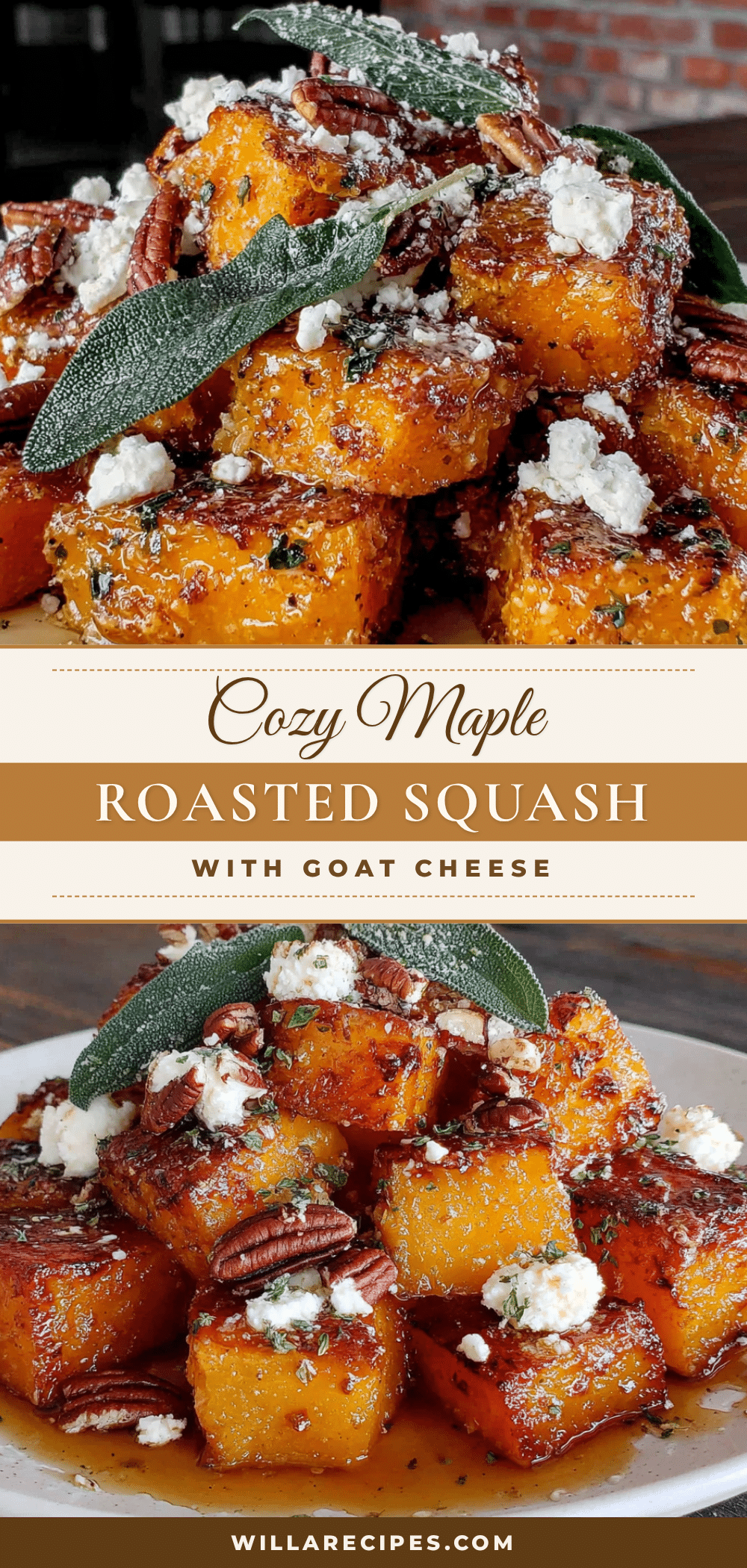
Cozy Maple Roasted Butternut Squash with Goat Cheese
This roasted butternut squash is caramelized with maple syrup, topped with creamy goat cheese, and finished with fresh thyme and toasted pecans. It’s a simple yet impressive side dish perfect for fall and winter meals.
- Prep Time: 15 minutes
- Cook Time: 30 minutes
- Total Time: 45 minutes
- Yield: 6 servings 1x
- Category: Side Dish
- Cuisine: American
Ingredients
- 1 medium butternut squash (about 2–3 pounds), peeled and cubed into 1-inch pieces
- 3 tablespoons pure maple syrup
- 4 ounces goat cheese, softened
- 2 tablespoons extra virgin olive oil
- 1 tablespoon cornstarch
- 1 tablespoon fresh thyme leaves, plus extra for garnish
- ¼ teaspoon red pepper flakes (or to taste)
- Salt and black pepper to taste
- ¼ cup pumpkin seeds or pecans, toasted (optional)
Instructions
- Preheat your oven to 400°F (200°C). Line a large, rimmed baking sheet with parchment paper or a silicone mat.
- If using a whole butternut squash, cut off both ends, peel the skin, cut in half lengthwise, scoop out seeds, and cut into 1-inch cubes. If using pre-cut squash, proceed directly.
- In a large mixing bowl, combine the cubed squash, olive oil, maple syrup, cornstarch, fresh thyme leaves, red pepper flakes, and a generous pinch of salt and black pepper. Toss until every piece is evenly coated.
- Spread the squash in a single layer on the prepared baking sheet, ensuring pieces are not crowded.
- Roast for 25-30 minutes, flipping the pieces halfway through at the 15-minute mark, until the squash is tender and edges are caramelized and golden brown.
- Remove the baking sheet from the oven. While the squash is still hot, crumble the softened goat cheese over the top.
- If using nuts or seeds, toast them in a dry skillet over medium heat for 2-3 minutes until fragrant, then sprinkle over the dish. Garnish with extra fresh thyme leaves and a tiny pinch of flaky sea salt. Serve warm.
Notes
Don’t skip the cornstarch—it helps create crispy, caramelized edges. Let the goat cheese come to room temperature before crumbling for easier melting. Watch the maple syrup as it can burn quickly; check the squash at 20 minutes if your oven runs hot. Toast nuts or seeds for added crunch.
Nutrition
- Serving Size: 1 serving (about 1 c
- Calories: 185
- Sugar: 10
- Sodium: 180
- Fat: 9
- Saturated Fat: 3
- Carbohydrates: 24
- Fiber: 4
- Protein: 6
Keywords: roasted butternut squash, maple roasted squash, goat cheese squash, fall side dish, Thanksgiving side, easy squash recipe