I spent years convinced that beef stew was something you ate out of obligation, not desire. The kind of meal your grandmother makes because it’s Tuesday and the potatoes are getting soft. The memories I had were fine—warm, sure—but fine. The meat was always a little dry. The vegetables were mushy in a way that felt less like comfort and more like surrender. And the broth? Watery, thin, apologetic. I didn’t hate it exactly. I just never understood the fuss. Then a friend invited me over for dinner last January, right when the cold had settled into my bones like it planned to stay. “I’m making stew,” she said, and I smiled politely while mentally preparing my excuse to leave early. I walked into her kitchen and stopped mid-sentence. The smell hit me first—deep, rich, almost smoky, with something sweet and earthy underneath. She was standing at the stove, wooden spoon in hand, looking at this pot like it had just told her a secret. “Taste this,” she said, holding out a spoon. I was skeptical. Let me be honest—I was bracing myself. One bite, and I just stood there in her kitchen, holding the spoon, not saying anything. Because the meat was so tender it practically dissolved. The broth was thick and glossy, with layers of flavor I couldn’t even name. And the vegetables—carrots, parsnips, potatoes—had soaked up all that wine and herbs until they were little bombs of sweetness. I think I muttered something like “okay, this is different.” She laughed. She knew. I asked for the recipe, and she shrugged and said she’d just thrown things together. That was not helpful. So I spent the next few weeks trying to reverse-engineer that moment. I burned a batch. I oversalted another. I learned the hard way that not all red wine is created equal when you’re cooking with it. But eventually, I cracked it. And now this cozy red wine beef stew with root vegetables is the one I make when I want to prove that stew can be something you crave, not just something you eat. Maybe you’ve had that same experience—the one where a dish you thought you knew surprises you so completely that you have to rethink everything. That’s what this recipe does. It’s not just warm. It’s not just filling. It’s the kind of meal that makes you slow down, breathe deeper, and actually taste every single bite.
Why You’ll Love This Recipe
This isn’t just another beef stew recipe. After countless tests and a few spectacular failures, I can tell you exactly why this version earns a permanent spot in your dinner rotation. It’s the one I bring to potlucks, serve at dinner parties, and make on Sundays when I want the whole house to smell like someone who actually knows what they’re doing in the kitchen.
- One-Pot Wonder : Everything comes together in a single Dutch oven. Less cleanup, more time enjoying the people around your table.
- Deep, Complex Flavor : The red wine isn’t just an afterthought here. It’s the backbone. It cooks down into something rich and velvety, not sharp or boozy.
- Melt-in-Your-Mouth Meat : Chuck roast is the star. Low and slow cooking breaks it down until it falls apart with just a nudge from your fork.
- Perfect for Entertaining : This is the dish you make when guests are coming over and you want to look like you’ve been cooking all day—even though most of the work happens unattended.
- Root Vegetables That Actually Taste Like Something : Carrots, parsnips, and potatoes soak up all that wine-infused broth until they’re sweet, tender, and completely unforgettable.
- Better the Next Day : I’m not joking. The flavors deepen overnight. This stew is even more incredible on day two or three.
What makes this recipe different from the dozens of others out there? It’s the technique. Most stews rush the browning step or skip the wine reduction entirely. I don’t. I take the time to sear the beef in batches—crowding the pan is the enemy of good browning—and I let the wine simmer until it’s nearly syrupy before adding the broth. That extra step changes everything. The result is a stew that’s deeply savory, slightly sweet from the caramelized vegetables, and rich without being heavy. It’s the kind of meal that makes people close their eyes after the first bite. The kind you serve when you want to impress without stress. And honestly? It’s the kind of recipe that turns skeptics into believers. I should know.
What Ingredients You Will Need
This cozy red wine beef stew with root vegetables uses simple, hearty ingredients that work together to create something far greater than the sum of their parts. Most of these are pantry staples or easy to find at any grocery store. I’ve included a few notes on what to look for and what you can swap if needed.
- Beef Chuck Roast (2 lbs / 900 g) – Cut into 1.5-inch cubes. Chuck is my go-to here. It has enough marbling to stay tender during the long simmer. Don’t use lean cuts like sirloin—they’ll turn dry and tough. I prefer buying a whole roast and cubing it myself for the best consistency.
- Kosher Salt (2 tsp) – I use Diamond Crystal. If you’re using table salt, reduce to 1.5 tsp. Salt the beef generously before searing—it makes a real difference.
- Black Pepper (1 tsp, freshly ground) – Freshly ground gives you more aroma. Pre-ground works in a pinch, but it’s worth the extra few seconds.
- All-Purpose Flour (1/4 cup / 30 g) – This helps thicken the stew naturally. Toss the beef cubes in flour before browning for a richer texture. Gluten-free all-purpose flour works too.
- Olive Oil (3 tbsp) – Use a good quality extra virgin for browning. You need enough to coat the bottom of the pot without the beef sticking.
- Yellow Onions (2 medium, diced) – About 2 cups. Onions form the aromatic base. Sweet onions or shallots work if that’s what you have.
- Garlic (4 cloves, minced) – Fresh garlic is non-negotiable here. Pre-minced jarred garlic loses its punch during the long cook time.
- Tomato Paste (2 tbsp) – This adds depth and umami. I recommend double-concentrated tomato paste in a tube—it keeps longer and has more intense flavor than the canned stuff.
- Dry Red Wine (1.5 cups / 355 ml) – This is crucial. Use a wine you’d actually drink. I prefer a medium-bodied red like Merlot or Côtes du Rhône. Avoid anything labeled “cooking wine”—it’s overly salty and lacks complexity.
- Beef Broth (4 cups / 950 ml) – Low-sodium is best so you control the salt level. I like Better Than Bouillon roasted beef base mixed with water for the richest flavor.
- Fresh Thyme (4 sprigs) – Thyme holds up beautifully during the long simmer. Dried thyme (1 tsp) works if fresh isn’t available.
- Bay Leaves (2) – Adds subtle herbal notes. Remove before serving.
- Carrots (3 large, peeled and cut into 1-inch chunks) – About 2 cups. Carrots add natural sweetness that balances the wine’s acidity. I use rainbow carrots when I want extra color.
- Parsnips (2 medium, peeled and cut into 1-inch chunks) – About 1.5 cups. Parsnips have a slightly peppery, nutty flavor that pairs beautifully with beef. Swap with extra carrots or celery root if needed.
- Yukon Gold Potatoes (1.5 lbs / 680 g, cut into 1.5-inch chunks) – Yukon Golds hold their shape better than Russets and have a buttery texture. Red potatoes work too.
- Frozen Peas (1 cup / 150 g) – Added at the very end for a pop of color and sweetness. Fresh peas work, but frozen are more consistent year-round.
- Fresh Parsley (2 tbsp, chopped) – For garnish. Adds freshness and a bright finish.
Equipment Needed
You don’t need a professional kitchen to make this stew, but a few key tools make the process smoother. Here’s what I use and what you can substitute if needed.
- Dutch Oven (6-7 quart) – This is my absolute favorite tool for stew. The heavy bottom distributes heat evenly, and the tight-fitting lid traps steam for tender meat. Le Creuset is lovely, but a Lodge enameled cast iron pot costs a fraction and works just as well. No Dutch oven? Use a heavy-bottomed stockpot with a lid.
- Sharp Chef’s Knife – You’ll be cubing beef and chopping vegetables. A dull knife makes both tasks harder and more dangerous. I use a Wüsthof 8-inch, but any sharp knife will do.
- Cutting Board – Wood or plastic. Just make sure it’s stable. Place a damp paper towel underneath to prevent slipping.
- Wooden Spoon – For stirring and scraping up the browned bits from the bottom of the pot. Silicone spatulas work too, but I prefer the heft of wood.
- Tongs – For flipping the beef cubes during searing. Metal tongs with silicone tips are my favorite.
- Measuring Cups and Spoons – Accuracy matters, especially with the wine and broth.
- Mixing Bowl – For tossing the beef with flour and seasoning.
- Slotted Spoon – Useful for removing bay leaves and thyme sprigs before serving.
Preparation Method
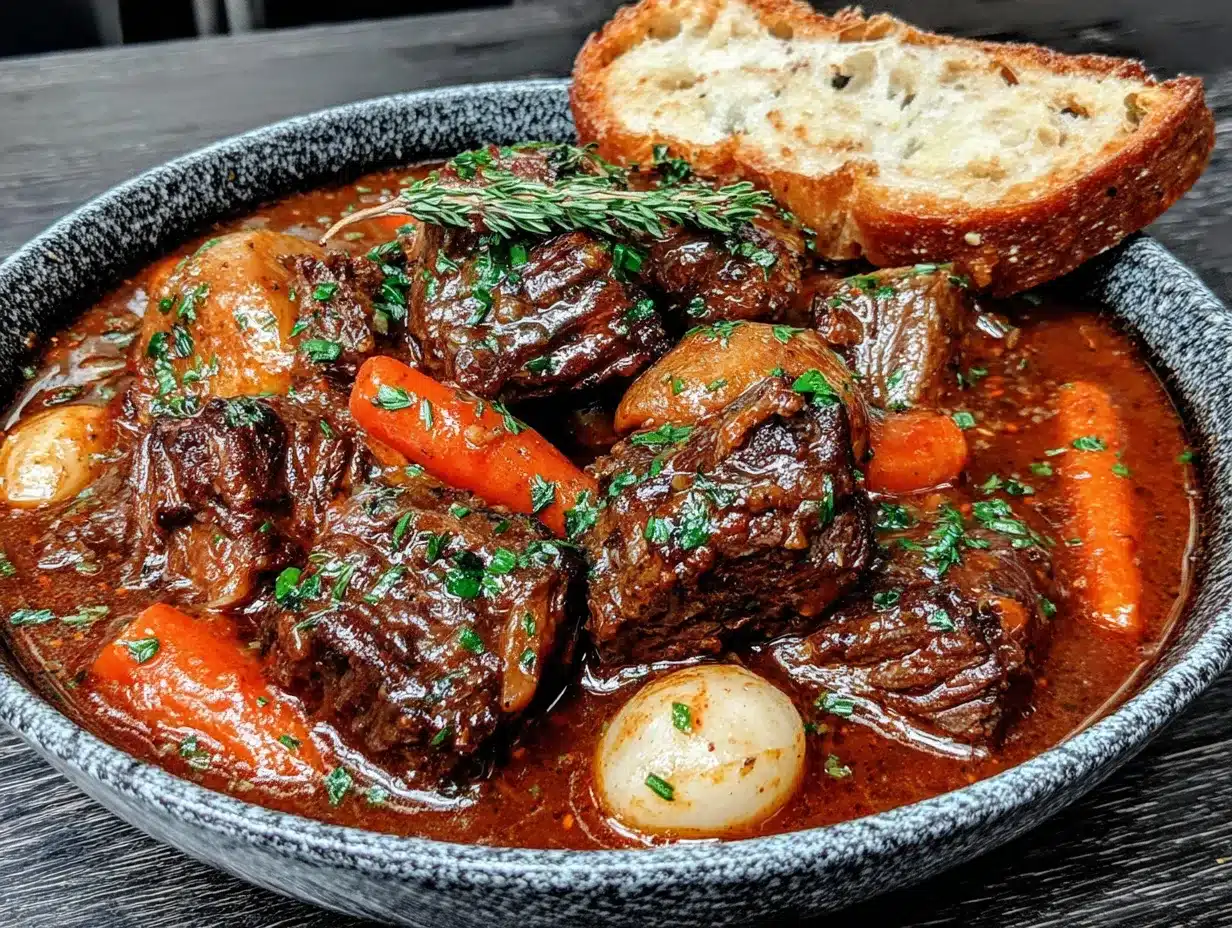
This cozy red wine beef stew with root vegetables comes together in stages, but none of them are complicated. Take your time with the browning—it’s the step that builds the most flavor. I’ve included time estimates and sensory cues so you know exactly what to look for.
Step 1: Prep the Beef (10 minutes)
Pat the beef chuck cubes dry with paper towels. This is important—wet meat won’t brown properly. In a large mixing bowl, combine the flour, 1 teaspoon of kosher salt, and the black pepper. Add the beef cubes and toss until evenly coated. Shake off any excess flour. Set aside on a plate.
Step 2: Sear the Beef (15-20 minutes)
Heat the olive oil in your Dutch oven over medium-high heat until it shimmers. Working in batches to avoid crowding, add the beef cubes in a single layer. Sear for 3-4 minutes per side until deeply browned. You want a dark crust—that’s where the flavor lives. Transfer the seared beef to a clean plate. Don’t worry if the bottom of the pot looks dark; those browned bits are gold.
Step 3: Cook the Aromatics (8-10 minutes)
Reduce the heat to medium. Add the diced onions to the pot and cook, stirring occasionally, until softened and translucent—about 5 minutes. Scrape up any browned bits from the bottom as they release. Add the minced garlic and cook for 1 minute until fragrant. Stir in the tomato paste and cook for 2 more minutes, stirring constantly. The paste will darken and smell richer.
Step 4: Deglaze with Wine (5 minutes)
Pour in the red wine and increase the heat to medium-high. Use your wooden spoon to scrape up every last bit of browned goodness from the bottom of the pot. Let the wine simmer vigorously until it reduces by about half, roughly 4-5 minutes. The alcohol will cook off, leaving behind concentrated flavor. The liquid should look syrupy and smell deeply fruity.
Step 5: Simmer the Stew (1.5 to 2 hours)
Return the seared beef to the pot, along with any accumulated juices. Pour in the beef broth. Add the fresh thyme sprigs and bay leaves. Bring the liquid to a gentle boil, then reduce the heat to low. Cover the pot with the lid slightly ajar—you want a gentle simmer, not a rolling boil. Let it cook for 1 hour. The kitchen should smell incredible at this point. The beef will be tender but not quite fall-apart yet.
Step 6: Add the Root Vegetables (40-45 minutes)
After the first hour, add the carrots, parsnips, and Yukon Gold potatoes to the pot. Stir gently to combine. Cover again and continue simmering for 40-45 minutes, or until the vegetables are fork-tender. The potatoes should offer a little resistance when pierced—not mushy. Taste the broth and adjust salt if needed. Add the remaining 1 teaspoon of salt now if it needs it.
Step 7: Finish and Serve (5 minutes)
Remove the thyme sprigs and bay leaves and discard them. Stir in the frozen peas and let them warm through for 2-3 minutes. The peas will add a pop of bright green color and a touch of sweetness. Ladle the stew into bowls and garnish with fresh chopped parsley. Serve hot with crusty bread for soaking up every last drop of that incredible broth.
Cooking Tips & Techniques
I’ve made this cozy red wine beef stew with root vegetables more times than I can count, and I’ve learned a few things the hard way. Here are the tips that make the biggest difference.
Don’t skip the browning. I know it’s tempting to rush this step. But the deep brown crust on the beef is where all the savory flavor comes from. If you crowd the pan, the meat steams instead of sears. Work in batches. It adds 10 minutes but changes everything.
Use a wine you’d drink. This is the rule I break at my own peril. The first time I made this stew, I used a cheap bottle I found in the back of my pantry. The result was thin and slightly bitter. A decent $12 bottle of Merlot makes a world of difference. You don’t need expensive wine—just something you wouldn’t mind sipping.
Season as you go. Salt the beef before searing. Add a little more when you add the vegetables. Taste the broth before serving. Layering salt throughout the process gives you a more balanced final dish than dumping it all in at the end.
Let it rest. This stew is actually better the next day. The flavors meld and deepen overnight. If you have time, make it a day ahead, refrigerate it, and reheat gently before serving. I’ve done this for dinner parties and it’s a lifesaver—one less thing to stress about.
Skim the fat if you want. Depending on your beef, there might be a layer of fat on top after cooking. You can skim it off with a spoon, or stir it back in for extra richness. I usually leave it because it adds flavor, but it’s totally personal preference.
Don’t overcook the vegetables. Add them after the beef has had its first hour of simmering. If you add them too early, they’ll disintegrate into the broth. You want them tender but still intact.
Variations & Adaptations
One of the best things about this cozy red wine beef stew with root vegetables is how adaptable it is. Here are a few variations I’ve tried and loved.
Make it gluten-free. Swap the all-purpose flour for a gluten-free blend or use 2 tablespoons of cornstarch mixed with 2 tablespoons of cold water (slurry) added at the end to thicken. The texture is slightly different but still delicious.
Add mushrooms. I sometimes add 8 ounces of cremini mushrooms, halved, along with the root vegetables. They soak up the wine broth and add an earthy depth that’s incredible. Just make sure to sauté them first to release their moisture.
Try different root vegetables. Celery root, turnips, or sweet potatoes all work beautifully. Sweet potatoes will make the stew slightly sweeter, so adjust your salt accordingly. I’ve also used rutabaga in a pinch—it has a mild, peppery flavor that pairs well.
Go dairy-free. This recipe is naturally dairy-free as written. If you want extra richness, you can stir in a splash of full-fat coconut milk at the end, but honestly, the broth is rich enough on its own.
Use a different protein. Lamb shoulder works beautifully in place of beef. Cut it the same way and follow the same method. The flavor is a little gamier, but it’s a wonderful change of pace.
Add a splash of balsamic. Right before serving, stir in 1 tablespoon of balsamic vinegar. It brightens the whole dish and adds a subtle sweetness that complements the wine. I tried this on a whim and now I do it almost every time.
Serving & Storage Suggestions
This stew is a meal in itself, but the right accompaniments make it even better. Here’s how I serve and store it.
Serving temperature: Serve this stew piping hot. Ladle it into wide, shallow bowls so the broth has room to spread. A generous sprinkle of fresh parsley on top adds color and freshness.
What to serve alongside: Crusty sourdough or a baguette is essential for sopping up the broth. I also love serving it over creamy mashed potatoes or wide egg noodles for extra heartiness. A simple green salad with a lemon vinaigrette cuts through the richness beautifully.
Wine pairing: Pour the same wine you used in the stew. A medium-bodied red like Merlot or Côtes du Rhône is perfect. The flavors will echo each other.
Storage: Let the stew cool completely before transferring it to an airtight container. It keeps in the refrigerator for up to 4 days. The flavors actually improve after a day or two.
Freezing: This stew freezes beautifully. Portion it into freezer-safe containers or zip-top bags. It keeps for up to 3 months. Thaw overnight in the refrigerator before reheating.
Reheating: Reheat gently on the stovetop over medium-low heat, stirring occasionally. Add a splash of beef broth or water if the stew has thickened too much. You can also reheat individual portions in the microwave in 1-minute intervals, stirring between each.
Nutritional Information & Benefits
This cozy red wine beef stew with root vegetables is as nourishing as it is delicious. Here’s a rough breakdown per serving (based on 6 servings).
| Nutrient | Amount Per Serving |
|---|---|
| Calories | 485 |
| Protein | 38g |
| Fat | 18g |
| Carbohydrates | 42g |
| Fiber | 8g |
| Sugar | 12g |
| Sodium | 890mg |
Health benefits: Beef is an excellent source of protein, iron, and B vitamins, which support energy and red blood cell production. Root vegetables like carrots, parsnips, and potatoes provide fiber, vitamin A, and potassium. The red wine adds antioxidants called polyphenols, which are good for heart health in moderation. This stew is naturally gluten-free if you use a gluten-free flour alternative. It’s also dairy-free as written.
Dietary considerations: This recipe contains gluten from the flour coating. For a gluten-free version, use a gluten-free flour blend or cornstarch slurry. It’s also suitable for a low-carb diet if you reduce or omit the potatoes. Always check your broth and tomato paste labels for hidden gluten or additives if you have sensitivities.
Conclusion
This cozy red wine beef stew with root vegetables is the kind of recipe that changes how you think about comfort food. It’s not just warm—it’s deeply satisfying. It’s not just filling—it’s memorable. The beef turns impossibly tender. The vegetables soak up all that rich, wine-infused broth. And the whole thing comes together in one pot with minimal fuss. I’ve made this for quiet Sunday dinners, for holiday gatherings, and for nights when I just needed something that felt like a hug in a bowl. Every single time, it delivers. I hope you give it a try and make it your own. Maybe you’ll swap in sweet potatoes or add mushrooms. Maybe you’ll serve it over mashed potatoes or with a hunk of crusty bread. That’s the beauty of a good stew—it’s flexible, forgiving, and always rewarding. If you make this recipe, I’d love to hear about it. Leave a comment below and let me know how it turned out. Share your own twists and variations. And if you’re looking for more one-pot meals that feed a crowd, check out my cozy beef stew recipes or my one-pot dinner ideas. Happy cooking, friends. Your kitchen is about to smell amazing.
Frequently Asked Questions
Can I make this stew in a slow cooker?
Absolutely. Sear the beef and cook the aromatics on the stovetop first, then transfer everything to a slow cooker. Cook on low for 8 hours or high for 4-5 hours. Add the root vegetables during the last 2 hours of cooking so they don’t turn to mush.
What’s the best cut of beef for stew?
Beef chuck roast is my top choice. It has enough marbling to stay tender during the long simmer. Avoid lean cuts like sirloin or round—they’ll turn dry and tough. If you can’t find chuck, brisket or bottom round also work well.
Can I use chicken instead of beef?
You can, but the cooking time will be shorter. Use boneless, skinless chicken thighs for the best results. Sear them whole, then shred after cooking. Reduce the simmering time to about 45 minutes before adding the vegetables.
How do I thicken the stew if it’s too thin?
Mix 2 tablespoons of cornstarch with 2 tablespoons of cold water until smooth. Stir the slurry into the simmering stew and cook for 2-3 minutes until thickened. You can also mash a few of the cooked potatoes against the side of the pot to naturally thicken the broth.
Can I skip the wine?
You can, but the flavor will be noticeably different. Replace the wine with an equal amount of beef broth plus 2 tablespoons of balsamic vinegar for acidity and depth. It won’t be the same, but it will still be a solid stew.
Pin This Recipe!
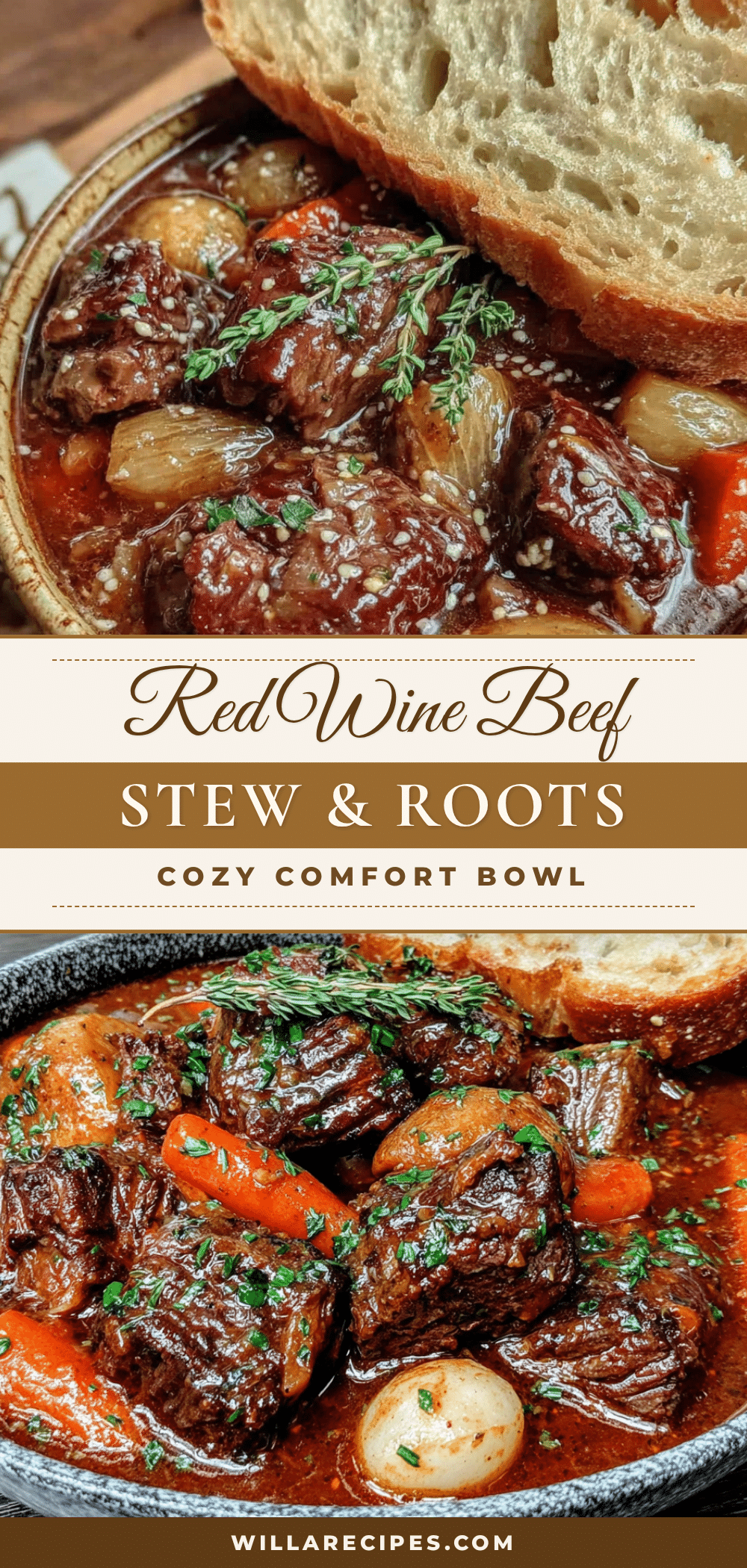
Cozy Red Wine Beef Stew with Root Vegetables: Easy One-Pot Recipe
This deeply flavorful beef stew features melt-in-your-mouth chuck roast, tender root vegetables, and a rich, velvety red wine broth. It’s a one-pot wonder that’s perfect for cozy dinners and entertaining, and it tastes even better the next day.
- Prep Time: 20 minutes
- Cook Time: 2 hours 30 minutes
- Total Time: 2 hours 50 minutes
- Yield: 6 servings 1x
- Category: Main Course
- Cuisine: American
Ingredients
- 2 lbs (900 g) beef chuck roast, cut into 1.5-inch cubes
- 2 tsp kosher salt (Diamond Crystal; reduce to 1.5 tsp if using table salt)
- 1 tsp freshly ground black pepper
- 1/4 cup (30 g) all-purpose flour (or gluten-free all-purpose flour)
- 3 tbsp olive oil
- 2 medium yellow onions, diced (about 2 cups)
- 4 cloves garlic, minced
- 2 tbsp tomato paste (preferably double-concentrated)
- 1.5 cups (355 ml) dry red wine (e.g., Merlot or Côtes du Rhône)
- 4 cups (950 ml) low-sodium beef broth
- 4 sprigs fresh thyme (or 1 tsp dried thyme)
- 2 bay leaves
- 3 large carrots, peeled and cut into 1-inch chunks (about 2 cups)
- 2 medium parsnips, peeled and cut into 1-inch chunks (about 1.5 cups)
- 1.5 lbs (680 g) Yukon Gold potatoes, cut into 1.5-inch chunks
- 1 cup (150 g) frozen peas
- 2 tbsp fresh parsley, chopped (for garnish)
Instructions
- Pat the beef chuck cubes dry with paper towels. In a large mixing bowl, combine the flour, 1 teaspoon of kosher salt, and the black pepper. Add the beef cubes and toss until evenly coated. Shake off any excess flour. Set aside on a plate.
- Heat the olive oil in a Dutch oven over medium-high heat until it shimmers. Working in batches to avoid crowding, add the beef cubes in a single layer. Sear for 3-4 minutes per side until deeply browned. Transfer the seared beef to a clean plate.
- Reduce the heat to medium. Add the diced onions to the pot and cook, stirring occasionally, until softened and translucent—about 5 minutes. Scrape up any browned bits from the bottom. Add the minced garlic and cook for 1 minute until fragrant. Stir in the tomato paste and cook for 2 more minutes, stirring constantly.
- Pour in the red wine and increase the heat to medium-high. Use a wooden spoon to scrape up every last bit of browned goodness from the bottom of the pot. Let the wine simmer vigorously until it reduces by about half, roughly 4-5 minutes.
- Return the seared beef to the pot, along with any accumulated juices. Pour in the beef broth. Add the fresh thyme sprigs and bay leaves. Bring the liquid to a gentle boil, then reduce the heat to low. Cover the pot with the lid slightly ajar and let it simmer for 1 hour.
- After the first hour, add the carrots, parsnips, and Yukon Gold potatoes to the pot. Stir gently to combine. Cover again and continue simmering for 40-45 minutes, or until the vegetables are fork-tender. Taste the broth and adjust salt if needed (add the remaining 1 teaspoon of salt now if needed).
- Remove the thyme sprigs and bay leaves and discard them. Stir in the frozen peas and let them warm through for 2-3 minutes. Ladle the stew into bowls and garnish with fresh chopped parsley. Serve hot with crusty bread.
Notes
For best flavor, use a wine you’d drink. Season as you go. The stew is even better the next day—make it ahead if possible. To thicken, use a cornstarch slurry or mash some potatoes. For a gluten-free version, use gluten-free flour or a cornstarch slurry.
Nutrition
- Serving Size: 1 serving (about 1.5
- Calories: 485
- Sugar: 12
- Sodium: 890
- Fat: 18
- Saturated Fat: 6
- Carbohydrates: 42
- Fiber: 8
- Protein: 38
Keywords: beef stew, red wine stew, one-pot meal, comfort food, root vegetables, winter recipe, Dutch oven