I swore I hated beef stew. For years. And I meant it with my whole heart.
Then I walked into my own kitchen last Tuesday, after a freezing afternoon spent chasing a leaky pipe in the basement, and found the smell of something rich and red-winey filling the air. My husband was standing at the stove, spoon in hand, looking guilty. “I know you don’t like it,” he said, “but I was cold.” I grabbed a spoon just to prove a point. That first bite—the beef so tender it fell apart, the carrots sweet and jammy, the broth silky and deep—I didn’t say a word. I just ate another spoonful. And another. He didn’t even smirk. Well, maybe a little.
Honestly, I think the problem was never beef stew itself. It was the bad versions I’d had before—gloopy, bland, with sad, rubbery chunks of meat swimming in brown water. That’s not stew. That’s punishment. This version, though? It’s the kind of meal that makes you forget you were cold and tired and grumpy. It’s the kind of dinner that makes everyone at the table go quiet for a minute. And the best part? It’s actually easy. No complicated techniques, no fancy ingredients. Just patience and a good bottle of red wine. Maybe you’ve been there—skeptical of a dish everyone raves about, only to discover you just hadn’t met the right recipe yet. This is that recipe.
Why You’ll Love This Recipe
This isn’t just another beef stew recipe. This is the one I’ve tested a dozen times to get just right—the one my neighbor Karen (the one who never cooks) actually asked me to write down for her. Here’s why it works for busy weeknights:
- Quick & Easy Prep: The active cooking time is only about 20 minutes. After that, your oven does all the work. Perfect for those evenings when you walk in the door tired and hungry.
- Simple Ingredients: No trips to a specialty store. You need beef chuck, carrots, onions, potatoes, red wine, broth, and a few pantry staples. That’s it.
- Perfect for Cold Weeknights: This stew is pure comfort in a bowl. It warms you from the inside out and makes the whole house smell incredible.
- Crowd-Pleaser: My kids, who claim to hate “mushy food,” go back for seconds. Even my picky father-in-law asked for the recipe.
- Unbelievably Delicious: The red wine adds a depth of flavor you just can’t get any other way. The beef becomes fork-tender, the carrots turn sweet and buttery, and the broth is rich enough to eat with a spoon all by itself.
What makes this recipe different from the rest? It’s the technique of searing the beef in batches and deglazing the pan with wine. It sounds fancy, but it’s actually the easiest way to build massive flavor without any extra effort. Plus, I’ve streamlined the process so you don’t have to stand over the stove stirring for hours. You just brown, dump, and let the oven work its magic. It’s comfort food reimagined—deeply satisfying, but totally doable on a Tuesday night.
What Ingredients You Will Need
This recipe uses simple, honest ingredients to create something truly special. Most of these are probably in your kitchen right now, which makes this the perfect last-minute dinner plan.
- Beef chuck, cut into 1 ½-inch cubes (2 lbs / 900g) — This is the best cut for stew. It has enough fat and connective tissue to break down into tender, juicy pieces. Don’t use lean cuts like sirloin; they’ll turn out dry and tough.
- All-purpose flour (¼ cup / 30g) — For dredging the beef. It helps create a beautiful brown crust and thickens the stew slightly as it cooks.
- Olive oil (2 tablespoons) — For searing. Use a good quality one, but nothing too fancy—you’ll be cooking it at high heat.
- Yellow onion, diced (1 large) — Adds sweetness and depth. I prefer yellow onions here; they’re mellow and cook down beautifully.
- Carrots, peeled and cut into 1-inch chunks (4 large) — The star vegetable. They get sweet and tender as they cook. I recommend using fresh carrots, not baby ones, for the best texture.
- Celery stalks, diced (2) — Adds a subtle savory note. Don’t skip it—it’s a classic mirepoix for a reason.
- Garlic cloves, minced (4) — Fresh garlic is non-negotiable here. The jarred stuff just won’t give you the same punch.
- Tomato paste (2 tablespoons) — This little powerhouse adds umami and richness. I like the double-concentrated kind in a tube—it keeps in the fridge forever.
- Dry red wine (1 ½ cups / 360 ml) — Use something you’d actually drink. A medium-bodied red like Cabernet Sauvignon, Merlot, or Côtes du Rhône works perfectly. Avoid “cooking wine”—it’s salty and sad.
- Beef broth, low-sodium (4 cups / 960 ml) — Low-sodium is key so you can control the salt level. I prefer Swanson or Pacific Foods for consistent quality.
- Yukon Gold potatoes, cut into 1-inch chunks (1 lb / 450g) — These hold their shape beautifully and get creamy inside. Russets will fall apart, so stick with Yukon Golds.
- Frozen peas (1 cup / 150g) — Added at the very end for a pop of color and sweetness. No need to thaw them first.
- Fresh thyme sprigs (4-5) — Adds an earthy, aromatic note. If you only have dried, use 1 teaspoon.
- Bay leaves (2) — For subtle herbal depth. Remember to fish them out before serving!
- Salt and black pepper — To taste. Don’t be shy—seasoning in layers is what builds flavor.
Substitution Tips: For a gluten-free version, swap the all-purpose flour with a gluten-free all-purpose blend or use cornstarch (mixed with a little cold water) to thicken at the end. No red wine? Use an extra cup of beef broth mixed with 2 tablespoons of balsamic vinegar for similar depth. For a lower-carb option, replace the potatoes with extra carrots or turnips.
Equipment Needed
You don’t need a lot of fancy gear for this one, which is part of the beauty. Here’s what you’ll need:
- Large Dutch oven or heavy-bottomed pot (5-6 quart / 5-6 liter) — This is your best friend for stew. It holds heat evenly and goes from stovetop to oven. I use my trusty Lodge enameled cast iron—it’s affordable and works like a dream. If you don’t have one, a heavy stockpot will do, just keep an eye on the heat.
- Sharp chef’s knife — A dull knife is dangerous and makes cutting beef and vegetables a chore. A good 8-inch chef’s knife is worth every penny.
- Cutting board — Preferably a large wooden or plastic one. Give yourself room to work.
- Wooden spoon or spatula — For stirring and scraping up those delicious browned bits from the bottom of the pot.
- Measuring cups and spoons — Accuracy matters, especially with the wine and broth.
- Tongs — For turning the beef while searing. Much easier than a fork.
- Small bowl — For the flour dredge.
Budget-Friendly Tip: If you don’t own a Dutch oven, you can brown the beef and cook the stew in a large skillet, then transfer everything to a 9×13-inch baking dish, cover tightly with foil, and cook in the oven. It works perfectly—I’ve done it myself when my Dutch oven was busy holding sourdough starter.
Preparation Method
-
Preheat your oven to 325°F (160°C). Get this going first so the oven is ready when you are. Position the rack in the lower third of the oven.
-
Pat the beef cubes dry with paper towels. This is crucial—wet meat won’t brown, and browning is where the flavor lives. Season the beef generously with salt and pepper. In a small bowl, combine the flour with another pinch of salt and pepper. Toss the beef cubes in the flour until they’re lightly coated on all sides. Shake off any excess. (I learned this the hard way: too much flour makes the stew gummy.)
-
Heat 1 tablespoon of olive oil in your Dutch oven over medium-high heat. When the oil shimmers, add half the beef cubes in a single layer. Don’t crowd the pot—if you pile them in, they’ll steam instead of sear. Let them cook undisturbed for 3-4 minutes until a deep brown crust forms. Flip them with tongs and brown the other side for another 3 minutes. Transfer the browned beef to a plate. Repeat with the remaining oil and beef. Yes, it takes a little time, but trust me—this step is what makes the stew amazing.
-
Reduce the heat to medium. Add the diced onion, carrots, and celery to the pot. Cook, stirring occasionally, for 5-6 minutes until the vegetables start to soften and the onion turns translucent. Scrape up any browned bits from the bottom of the pot—that’s pure flavor. (If the bits are stubborn, add a splash of the red wine to help loosen them.)
-
Add the minced garlic and tomato paste. Stir constantly for 1 minute until the garlic is fragrant and the tomato paste darkens slightly. This cooks out the raw flavor and deepens the umami.
-
Pour in the red wine. Stir well, scraping up every last bit of goodness from the bottom of the pot. Let the wine simmer for 2-3 minutes until it reduces by about half. The alcohol cooks off, leaving behind rich, fruity, savory notes. The kitchen will smell incredible right about now.
-
Add the beef broth, thyme sprigs, and bay leaves. Return the browned beef (and any juices on the plate) to the pot. Stir everything together. Bring the liquid to a gentle simmer—you should see small bubbles breaking the surface, not a rolling boil.
-
Cover the pot with the lid and transfer it to the preheated oven. Let it cook for 1 hour. This gentle, even heat is the secret to tender beef. The oven does all the work while you go fold laundry or answer emails.
-
After 1 hour, remove the pot from the oven. Carefully stir in the potato chunks. Re-cover the pot and return it to the oven for another 45 minutes to 1 hour, until the beef is fork-tender (it should shred easily with a fork) and the potatoes are soft but not falling apart.
-
Remove the pot from the oven. Fish out the thyme sprigs (the leaves will have fallen off—that’s fine) and the bay leaves. Stir in the frozen peas—they’ll warm through in the residual heat in about 2 minutes. Taste the broth and adjust the seasoning with more salt and pepper if needed. I almost always add a little more black pepper here—it brightens everything up.
-
Let the stew rest for 10 minutes before serving. This allows the flavors to meld and the broth to thicken slightly. I know it’s hard to wait, but it’s worth it.
Cooking Tips & Techniques
I’ve made this stew more times than I can count, and I’ve learned a few things the hard way. Here are my best tips:
Don’t rush the sear. I know it’s tempting to just dump everything in the pot and call it a day, but that deep brown crust on the beef is where the magic lives. If you don’t have time to sear in batches, at least do it in two batches. The difference is night and day.
Use the right wine. I once grabbed a bottle of cheap “cooking wine” from the grocery store because I was in a hurry. The stew turned out metallic and salty. Don’t do it. Use a dry red wine you’d actually drink. If you wouldn’t sip it, don’t cook with it. A $10 bottle of Cabernet Sauvignon works perfectly.
Season in layers. Salt the beef before browning. Season the vegetables as they cook. Taste the broth before serving. Each layer of seasoning builds on the last. Under-seasoned stew is the saddest thing in the world.
Let it rest. The stew actually tastes better the next day. The flavors have time to meld and deepen. If you can, make it a day ahead and reheat it gently on the stove. Your future self will thank you.
My biggest failure: The first time I made this, I used a cheap pot and the bottom scorched. I tried to scrape it off and stirred the burnt bits into the stew. It tasted like regret. Now I always use a heavy-bottomed Dutch oven and keep the heat moderate. Learn from my mistakes.
Variations & Adaptations
This stew is a fantastic base, and you can tweak it to fit your mood or what’s in your fridge. Here are a few variations I’ve tried and loved:
- Herb Swap: Replace the thyme with rosemary or a couple of sprigs of fresh oregano. Both add a lovely piney, aromatic quality that pairs beautifully with the red wine.
- Vegetable Medley: Add a cup of sliced mushrooms along with the carrots and celery. They add an earthy, meaty flavor that deepens the stew. You can also swap the potatoes for parsnips or sweet potatoes for a different sweetness.
- Slow Cooker Version: After browning the beef and sautéing the vegetables, transfer everything to a slow cooker. Add the wine, broth, and herbs, and cook on low for 8 hours or high for 4-5 hours. Add the potatoes and peas in the last hour. This is my go-to when I know I’ll be out all day.
- Dairy-Free & Gluten-Free: Skip the flour dredge and use a gluten-free all-purpose blend or thicken the stew at the end with a cornstarch slurry (2 tablespoons cornstarch mixed with 2 tablespoons cold water). The rest of the recipe is naturally dairy-free.
- Spicy Twist: Add a teaspoon of smoked paprika and a pinch of cayenne pepper along with the tomato paste. It gives the stew a warm, smoky heat that’s incredible on a cold night.
Serving & Storage Suggestions
This stew is a meal in itself, but a few simple sides make it even better. Serve it piping hot in deep bowls with a generous ladle of broth over each portion. I love it with a hunk of crusty sourdough bread for dipping—it’s essential for sopping up every last drop of that rich gravy. A simple green salad with a lemony vinaigrette on the side cuts through the richness beautifully.
Storage: Leftover stew keeps beautifully in an airtight container in the refrigerator for up to 5 days. In fact, the flavor actually improves after a day or two as the ingredients continue to meld. This stew also freezes like a dream. Let it cool completely, then transfer it to freezer-safe containers or zip-top bags. It will keep for up to 3 months. Thaw overnight in the refrigerator before reheating.
Reheating: The best way to reheat stew is gently on the stovetop over medium-low heat, stirring occasionally, until warmed through. If it’s too thick, add a splash of beef broth or water to loosen it up. You can also microwave individual portions in 30-second bursts, stirring in between. The potatoes may get a little softer, but it’s still delicious.
Nutritional Information & Benefits
This stew is hearty comfort food, but it also packs some nutritional perks. Here’s an approximate breakdown per serving (based on 6 servings):
| Nutrient | Amount per Serving |
|---|---|
| Calories | 420 |
| Protein | 35g |
| Fat | 18g |
| Carbohydrates | 30g |
| Fiber | 5g |
| Sugar | 8g |
| Sodium | 680mg |
The beef provides high-quality protein and iron, which is great for energy and healthy blood. Carrots are loaded with beta-carotene (which your body turns into vitamin A) and fiber. The red wine, in moderation, contributes antioxidants called polyphenols. And the potatoes offer potassium and vitamin C. It’s a balanced meal that fills you up without weighing you down. Just watch your portion sizes if you’re watching your sodium or calories—this stew is rich and satisfying, so a little goes a long way.
Conclusion
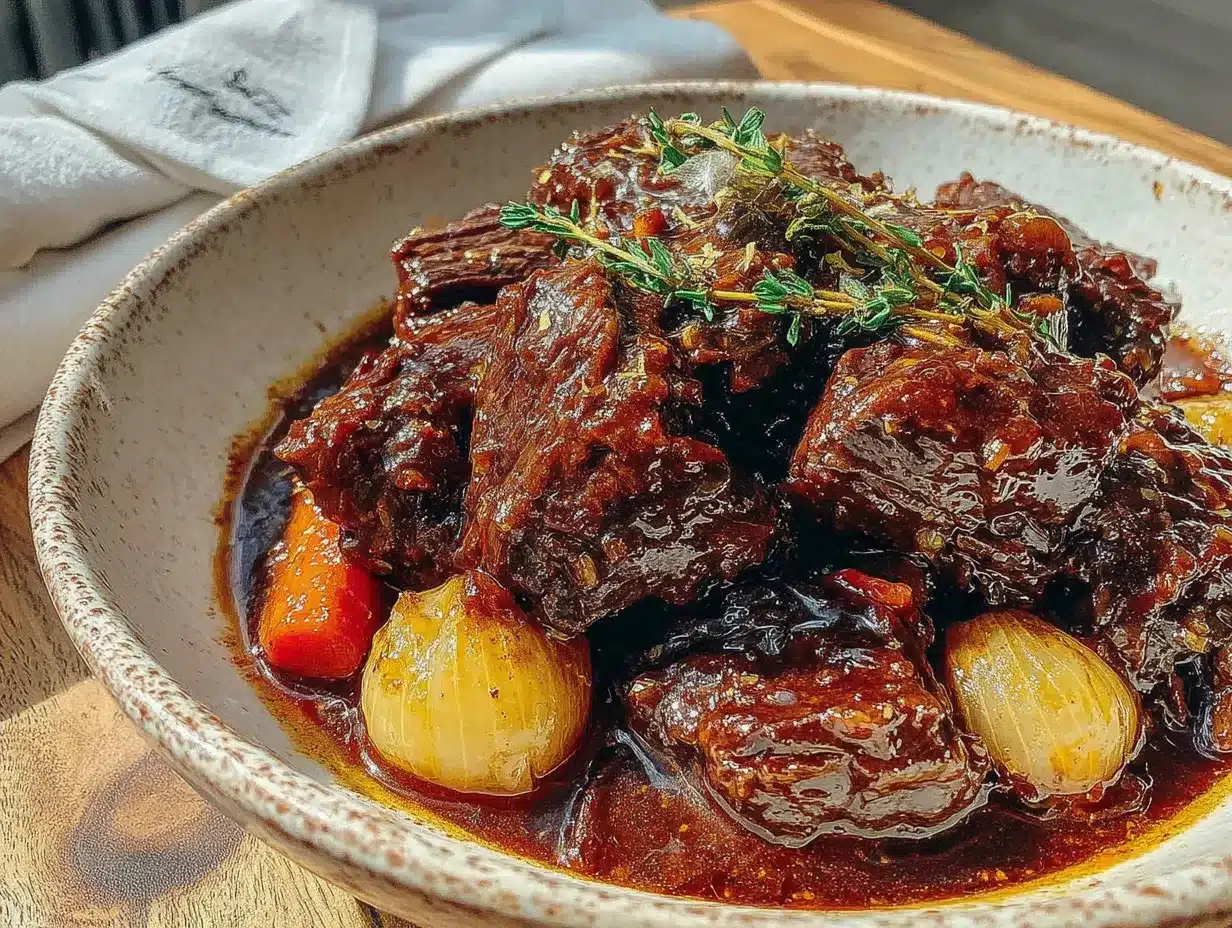
This easy classic beef stew with carrots and red wine is proof that you don’t need complicated techniques or exotic ingredients to make something truly special. It’s the kind of meal that brings people together, warms you from the inside out, and makes a cold Tuesday night feel like a celebration. I’ve made it for family dinners, lazy Sundays, and even for a stressed-out friend who needed a hug in a bowl. It never disappoints.
I hope you give it a try and make it your own. Maybe you’ll add extra garlic, or swap the potatoes for sweet potatoes, or throw in a handful of mushrooms. That’s the beauty of a good stew—it’s forgiving and adaptable. If you do make it, I’d love to hear how it turned out. Drop a comment below and let me know what you changed, or share a photo on Pinterest. Your version might just become someone else’s new favorite.
Happy cooking, and stay warm out there!
Frequently Asked Questions
Can I make this stew without red wine?
Absolutely. If you don’t have wine or prefer not to use it, replace the 1 ½ cups of wine with an extra cup of beef broth and 2 tablespoons of balsamic vinegar or red wine vinegar. The vinegar adds acidity and depth that mimics the wine’s flavor. It won’t be exactly the same, but it’s still delicious.
Why is my beef tough instead of tender?
Tough beef usually means it hasn’t cooked long enough, or you used the wrong cut. Beef chuck needs time—at least 1 ½ to 2 hours—for the connective tissue to break down. If your beef is still chewy, give it another 30 minutes in the oven. Also, make sure you’re using a well-marbled cut like chuck or brisket, not a lean cut like sirloin.
Can I add other vegetables to this stew?
Yes, this recipe is very flexible. Mushrooms, parsnips, turnips, or even green beans work well. Just keep in mind that different vegetables have different cooking times. Add hearty root vegetables like parsnips with the potatoes, and more delicate vegetables like green beans or peas in the last 10 minutes of cooking.
How do I thicken the stew if it’s too thin?
If your stew is thinner than you’d like, you have a few options. You can mash a few of the cooked potato chunks against the side of the pot—they’ll release their starch and naturally thicken the broth. Or, make a cornstarch slurry: mix 1 tablespoon of cornstarch with 1 tablespoon of cold water, stir it into the simmering stew, and cook for 2-3 minutes until it thickens.
Can I cook this stew on the stovetop instead of the oven?
Yes, you can. After adding the broth and returning the beef to the pot, bring it to a gentle simmer, then reduce the heat to low, cover, and let it cook on the stovetop for about 1 ½ to 2 hours, stirring occasionally. Keep the heat low enough that it’s barely bubbling—too high and the bottom will scorch. The oven method is more hands-off and gives more even heat, but the stovetop works in a pinch.
Pin This Recipe!
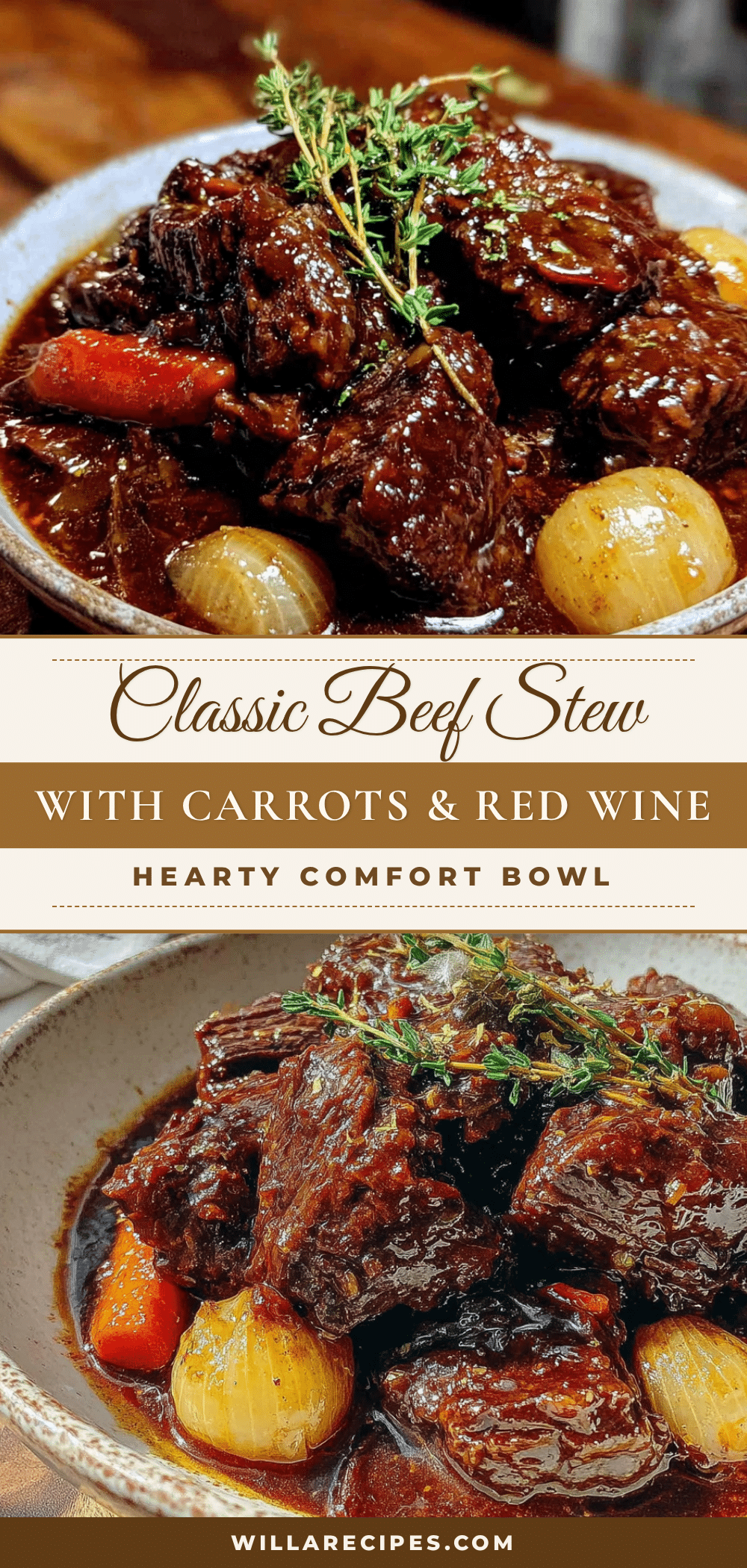
Easy Classic Beef Stew with Carrots and Red Wine
This easy classic beef stew with carrots and red wine is proof that you don’t need complicated techniques or exotic ingredients to make something truly special. It’s the kind of meal that brings people together, warms you from the inside out, and makes a cold Tuesday night feel like a celebration.
- Prep Time: 20 minutes
- Cook Time: 2 hours 15 minutes
- Total Time: 2 hours 35 minutes
- Yield: 6 servings
- Category: Main Course
- Cuisine: American
Ingredients
- Beef chuck, cut into 1 ½-inch cubes (2 lbs / 900g)
- All-purpose flour (¼ cup / 30g)
- Olive oil (2 tablespoons)
- Yellow onion, diced (1 large)
- Carrots, peeled and cut into 1-inch chunks (4 large)
- Celery stalks, diced (2)
- Garlic cloves, minced (4)
- Tomato paste (2 tablespoons)
- Dry red wine (1 ½ cups / 360 ml)
- Beef broth, low-sodium (4 cups / 960 ml)
- Yukon Gold potatoes, cut into 1-inch chunks (1 lb / 450g)
- Frozen peas (1 cup / 150g)
- Fresh thyme sprigs (4-5)
- Bay leaves (2)
- Salt and black pepper (to taste)
Instructions
- Preheat your oven to 325°F (160°C). Position the rack in the lower third of the oven.
- Pat the beef cubes dry with paper towels. Season the beef generously with salt and pepper. In a small bowl, combine the flour with another pinch of salt and pepper. Toss the beef cubes in the flour until they’re lightly coated on all sides. Shake off any excess.
- Heat 1 tablespoon of olive oil in your Dutch oven over medium-high heat. When the oil shimmers, add half the beef cubes in a single layer. Let them cook undisturbed for 3-4 minutes until a deep brown crust forms. Flip them with tongs and brown the other side for another 3 minutes. Transfer the browned beef to a plate. Repeat with the remaining oil and beef.
- Reduce the heat to medium. Add the diced onion, carrots, and celery to the pot. Cook, stirring occasionally, for 5-6 minutes until the vegetables start to soften and the onion turns translucent. Scrape up any browned bits from the bottom of the pot.
- Add the minced garlic and tomato paste. Stir constantly for 1 minute until the garlic is fragrant and the tomato paste darkens slightly.
- Pour in the red wine. Stir well, scraping up every last bit of goodness from the bottom of the pot. Let the wine simmer for 2-3 minutes until it reduces by about half.
- Add the beef broth, thyme sprigs, and bay leaves. Return the browned beef (and any juices on the plate) to the pot. Stir everything together. Bring the liquid to a gentle simmer.
- Cover the pot with the lid and transfer it to the preheated oven. Let it cook for 1 hour.
- After 1 hour, remove the pot from the oven. Carefully stir in the potato chunks. Re-cover the pot and return it to the oven for another 45 minutes to 1 hour, until the beef is fork-tender and the potatoes are soft but not falling apart.
- Remove the pot from the oven. Fish out the thyme sprigs and the bay leaves. Stir in the frozen peas—they’ll warm through in the residual heat in about 2 minutes. Taste the broth and adjust the seasoning with more salt and pepper if needed.
- Let the stew rest for 10 minutes before serving.
Notes
Don’t rush the sear. Use the right wine (a dry red you’d drink). Season in layers. Let it rest—the stew actually tastes better the next day. For a gluten-free version, swap the all-purpose flour with a gluten-free all-purpose blend or use cornstarch to thicken at the end. No red wine? Use an extra cup of beef broth mixed with 2 tablespoons of balsamic vinegar.
Nutrition
- Serving Size: 1 serving (about 1 ½
- Calories: 420
- Sugar: 8
- Sodium: 680
- Fat: 18
- Saturated Fat: 6
- Carbohydrates: 30
- Fiber: 5
- Protein: 35
Keywords: beef stew, classic beef stew, red wine stew, easy beef stew, comfort food, winter recipe, one-pot meal