This was supposed to be a simple batch of sandwich rolls. I had the yeast proofing, the flour measured, and I was feeling pretty good about myself — like one of those people who has their Sunday baking routine down to a science. Then I grabbed the wrong jar from the pantry. Instead of the sugar I needed to kickstart the yeast, I grabbed the baking soda. And not just a pinch — I dumped a whole tablespoon in before I realized what I’d done. The water was already warm, the yeast was already bubbling, and I was already running late for a phone call with my mom. I couldn’t start over. So I just… kept going. I figured I’d end up with some weird, dense dinner rolls and we’d laugh about it later.
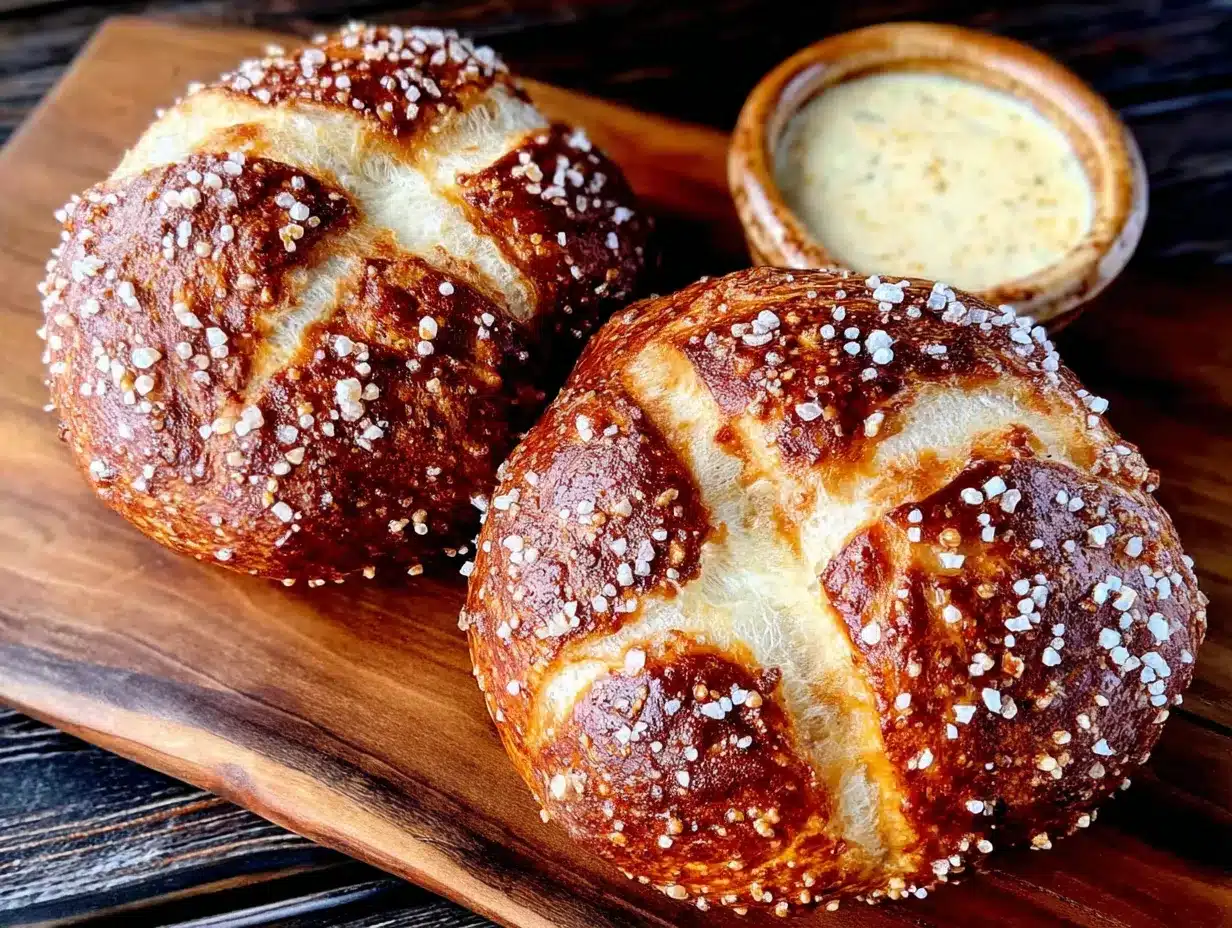
What came out of the oven was nothing like the plan. The smell alone stopped me in my tracks — that warm, malty, slightly toasty scent that hits you the second you walk past a proper German bakery. The tops were glossy and dark brown, almost mahogany, with those little cracks that make pretzels look like they know something you don’t. And the texture? Chewy on the outside, pillowy soft on the inside, with that unmistakable pretzel tang that I honestly thought only professional bakeries could pull off. I grabbed one straight from the pan — burned my fingers, didn’t care — tore it open, and just stood there in my messy kitchen, breathing in the steam. I had accidentally made the best thing I’d baked all year.
These cozy soft Bavarian pretzel rolls with mustard butter are now my go-to for game days, soup nights, and those lazy Sunday afternoons when you just need something warm and salty in your hands. Maybe you’ve been there — staring at a failed recipe, ready to toss the whole bowl, only to realize the mistake was actually the best thing that could have happened. That’s this recipe. It’s the happy accident that became a staple, and I’m so glad I didn’t give up on it.
Why You’ll Love This Recipe
Let me tell you why these pretzel rolls are different from every other recipe you’ve tried. I’ve tested this batch more times than I care to admit — tweaking the baking soda ratio, adjusting the boil time, even trying different flours — and this version is the one that finally made me close my eyes on the first bite. It’s not just good. It’s the kind of good that makes you text a photo to your group chat and say “you need to come over.”
- Quick & Easy: From start to finish, you’re looking at about 2 hours — and most of that is rising time. The active work is maybe 20 minutes. Perfect for a weekend project that doesn’t eat up your whole day.
- Simple Ingredients: Flour, yeast, butter, salt, baking soda, and a little brown sugar. That’s it. No weird specialty ingredients, no trips to three different stores. You probably have everything right now.
- Perfect for Cozy Evenings: These rolls are made for cold weather, rainy afternoons, and nights when you just want to curl up with a bowl of soup and something warm to dip in it.
- Crowd-Pleaser: I’ve served these at parties, potlucks, and casual dinners. They disappear fast. Kids love the soft texture, adults love the salty pretzel crust, and everyone loves the mustard butter.
- Unbelievably Delicious: The trick is the baking soda bath — that’s what gives these rolls their signature chewy crust and deep brown color. It’s the same technique professional bakeries use, and it works like magic at home.
What makes this recipe stand out is the balance. The rolls are soft but not doughy, chewy but not tough, salty but not overwhelming. And the mustard butter? It’s tangy and rich, with just enough kick to cut through the warmth of the bread. I’ve tried pretzel rolls from bakeries all over town, and honestly? These hold their own. Maybe it’s the accident factor, but I swear they taste better because they weren’t supposed to happen.
What Ingredients You Will Need
This recipe uses simple, wholesome ingredients to deliver bold flavor and satisfying texture without the fuss. Most of these are pantry staples you probably already have on hand, which makes these rolls perfect for spontaneous baking sessions.
For the Pretzel Rolls
- All-purpose flour, 3 ½ cups (440g) – I prefer Gold Medal or King Arthur for consistent results. Bread flour works too, but the rolls will be slightly chewier.
- Warm water, 1 ¼ cups (300ml) – Should feel like warm bathwater, about 110°F. Too hot will kill the yeast, too cold won’t activate it.
- Active dry yeast, 2 ¼ teaspoons (one packet) – I use Red Star or Fleischmann’s. Instant yeast works too, just skip the proofing step.
- Brown sugar, 1 tablespoon – Light or dark both work. Adds a tiny bit of sweetness and helps the yeast get going.
- Unsalted butter, 2 tablespoons, melted – Adds richness and softness to the dough. Salted butter works if you reduce the added salt slightly.
- Salt, 1 teaspoon – Fine sea salt is best. Don’t use coarse salt here — it won’t distribute evenly.
For the Baking Soda Bath
- Water, 8 cups (2 liters) – Just tap water is fine.
- Baking soda, ⅓ cup (80g) – This is what creates the pretzel crust. Don’t skip it, and don’t reduce it. The high alkalinity is what gives pretzels their signature flavor and color.
- Coarse sea salt, for sprinkling – Maldon or any flaky salt works beautifully. Regular table salt will dissolve too quickly.
For the Mustard Butter
- Unsalted butter, ½ cup (1 stick), softened – Leave it out for about 30 minutes before making the butter.
- Dijon mustard, 2 tablespoons – I recommend Grey Poupon or Maille for that sharp, creamy texture.
- Whole grain mustard, 1 tablespoon – Adds texture and those little bursts of flavor. If you only have Dijon, just use 3 tablespoons total.
- Honey, 1 teaspoon – Balances the tanginess. You can skip it if you prefer a sharper butter.
- Salt and pepper, to taste – Just a pinch of each.
Ingredient Selection Tips: For the best texture, use room temperature ingredients when possible. Cold butter can make the dough stiff and harder to knead. If you’re using active dry yeast, make sure it’s not expired — I keep mine in the fridge to extend its life. And for the baking soda, fresh is key. If your box has been open for months, the alkalinity may have weakened, and your rolls won’t get that deep brown color.
Equipment Needed
You don’t need much fancy equipment for these rolls, which is part of what makes them so approachable. Here’s what you’ll need:
- Large mixing bowl – Any bowl works, but I prefer a wide ceramic or glass bowl for easy kneading.
- Wooden spoon or dough whisk – For mixing the dough before you get your hands in there.
- Measuring cups and spoons – Accuracy matters, especially for the baking soda and yeast.
- Kitchen scale (optional but helpful) – Weighing the flour gives more consistent results than scooping.
- Large pot – For the baking soda bath. You need enough room for the rolls to float without crowding.
- Slotted spoon – For gently lowering and lifting the rolls out of the boiling water.
- Baking sheet – Line it with parchment paper or a silicone baking mat. The rolls will stick to ungreased metal.
- Sharp knife or lame – For scoring the tops before baking. A serrated knife works too.
- Pastry brush – For brushing the melted butter after baking. A silicone brush is easiest to clean.
If you don’t have a stand mixer, don’t worry. I actually prefer kneading these by hand — it’s more forgiving, and you can feel when the dough is ready. The only thing I’d recommend splurging on is a good baking sheet. Thin, flimsy ones can warp in the oven and lead to uneven browning. I use Nordic Ware and they’ve held up for years.
Preparation Method
Alright, let’s make some pretzel rolls. Take your time with each step — the dough is forgiving, but the details matter.
Step 1: Activate the Yeast
In your large mixing bowl, combine the warm water (110°F) and brown sugar. Sprinkle the yeast on top and give it a gentle stir. Let it sit for 5-10 minutes until it’s foamy and smells like warm bread. If nothing happens after 10 minutes, your yeast might be dead — start over with fresh yeast. I’ve learned this the hard way, and it’s not worth risking a whole batch.
Step 2: Make the Dough
Add the melted butter, salt, and 2 cups of flour to the yeast mixture. Stir until combined, then gradually add the remaining flour, about ½ cup at a time. The dough will be shaggy at first, then come together into a soft, slightly sticky ball. Don’t add too much flour — it should be tacky but not wet. If it’s sticking to your hands like crazy, add a tablespoon more flour at a time.
Step 3: Knead the Dough
Turn the dough onto a lightly floured surface. Knead for 8-10 minutes, pushing the dough away from you with the heel of your hand, then folding it back over itself. The dough should become smooth and elastic — when you poke it, it should spring back slowly. If you’re using a stand mixer with a dough hook, knead on medium-low speed for 6-7 minutes.
Step 4: First Rise
Lightly oil the same bowl (or a clean one) and place the dough inside, turning it to coat all sides. Cover with a clean kitchen towel or plastic wrap. Let it rise in a warm, draft-free spot for 1 hour, or until doubled in size. I like to put mine in the oven with the light on — it stays perfectly warm without actually heating up.
Step 5: Shape the Rolls
Punch the dough down gently to release the air. Turn it onto a clean surface and divide it into 8 equal pieces (about 100g each). Roll each piece into a tight ball by cupping your hand over it and moving it in small circles on the counter. Place the shaped rolls on a parchment-lined baking sheet, cover loosely, and let them rest for 15 minutes.
Step 6: Prepare the Baking Soda Bath
While the rolls rest, bring 8 cups of water to a boil in a large pot. Carefully add the baking soda — it will foam up vigorously, so make sure your pot is big enough. Reduce the heat to a gentle simmer. Warning: The water will be very alkaline, so don’t use aluminum pots (it can react) and avoid splashing on your skin or countertops.
Step 7: Boil the Rolls
Preheat your oven to 425°F (220°C). Gently lower each roll into the simmering water, one or two at a time. Boil for 30 seconds on each side — use a slotted spoon to flip them carefully. The longer you boil, the thicker and chewier the crust will be. I’ve found 30 seconds per side gives the perfect balance. Transfer the boiled rolls back to the parchment-lined baking sheet, spacing them about 2 inches apart.
Step 8: Score and Bake
Using a sharp knife or lame, cut a deep “X” or a slash across the top of each roll. This isn’t just for looks — it allows steam to escape and prevents the rolls from bursting open in the oven. Sprinkle generously with coarse sea salt. Bake for 14-16 minutes, until the rolls are deep golden brown and glossy. The kitchen will smell incredible at this point — try not to eat them straight from the pan.
Step 9: Make the Mustard Butter
While the rolls bake, combine the softened butter, Dijon mustard, whole grain mustard, honey, and a pinch of salt and pepper in a small bowl. Mix until smooth and well combined. Taste and adjust — I like mine tangy, so I sometimes add an extra teaspoon of Dijon. Set aside at room temperature.
Step 10: Finish and Serve
As soon as the rolls come out of the oven, brush them with melted butter (optional, but amazing). Let them cool on the baking sheet for 5 minutes, then transfer to a wire rack. Serve warm with the mustard butter on the side. If you can wait that long, that is.
Cooking Tips & Techniques
I’ve made these rolls more times than I can count, and I’ve messed up almost every step at least once. Here’s what I’ve learned so you don’t have to repeat my mistakes.
Don’t skip the boiling step. I know it seems fussy, but this is what separates pretzel rolls from regular dinner rolls. The baking soda bath gelatinizes the starch on the outside, creating that chewy, dark crust. If you skip it, you’ll just have soft bread rolls — which are fine, but not pretzel rolls. Trust the process.
Watch your baking soda. Fresh baking soda is crucial. If yours has been sitting in the back of your pantry for two years, it won’t create the right alkalinity. I learned this when my first batch came out pale and sad. Buy a new box if you’re not sure.
Timing is everything. The rolls need to go into the oven immediately after boiling. If they sit too long, the crust will start to wrinkle and lose that glossy finish. Have your oven preheated and your salt ready before you start boiling.
Don’t over-flour the dough. It’s tempting to keep adding flour when the dough feels sticky, but resist. A slightly tacky dough produces softer, fluffier rolls. If you add too much flour, they’ll be dense and dry. Use a light touch when kneading.
Multitasking hack: While the dough is rising for the first time, make the mustard butter and set it aside. You can also clean up your workspace so you’re not scrambling later. I like to line my baking sheet with parchment and have my salt ready before the dough even goes in the fridge.
One more thing: If your rolls come out lopsided or uneven, don’t stress. Homemade bread has character. The slightly imperfect ones always taste the best — I swear there’s a rule about that somewhere.
Variations & Adaptations
These pretzel rolls are incredibly versatile, and I’ve tried more variations than I can list. Here are a few of my favorites:
Cheesy Pretzel Rolls
After boiling and before baking, press shredded cheddar or gruyere into the tops of the rolls. The cheese melts into the crust and gets all crispy and golden. I made these for a football party once, and they were gone in ten minutes. Use about ¼ cup of cheese per roll, and don’t skip the salt on top.
Garlic Herb Pretzel Rolls
Add 1 teaspoon of garlic powder and 1 tablespoon of dried rosemary or thyme to the flour mixture. The herbs infuse the dough with a savory flavor that pairs beautifully with the mustard butter. I also brush the baked rolls with garlic butter instead of plain butter — just melt 2 tablespoons of butter with 1 minced garlic clove and brush it on hot.
Whole Wheat Pretzel Rolls
Substitute half the all-purpose flour with whole wheat flour. The rolls will be denser and nuttier, but still delicious. You may need to add an extra tablespoon or two of water since whole wheat absorbs more liquid. I’ve also tried using spelt flour, which gives a slightly sweet, earthy flavor.
Gluten-Free Option
Use a 1:1 gluten-free baking flour blend (I like Bob’s Red Mill). The dough will be stickier and harder to shape, so wet your hands with water before rolling. The texture won’t be exactly the same — slightly more crumbly — but the flavor is still fantastic. Boil them for only 20 seconds per side to prevent them from falling apart.
Sweet Pretzel Rolls
Skip the salt on top and brush the baked rolls with melted butter, then sprinkle with cinnamon sugar. These are amazing for breakfast or dessert, especially with a side of cream cheese frosting for dipping. I made these for a brunch once and they were a huge hit.
Serving & Storage Suggestions
These pretzel rolls are best served warm, straight from the oven. The contrast between the chewy, salty crust and the soft, pillowy interior is at its peak within the first hour. But let’s be real — they’re still pretty amazing the next day.
Serving Temperature: Serve the rolls warm, with the mustard butter at room temperature. If the butter is too cold, it won’t spread easily and will tear the delicate crust. I like to set the butter out about 30 minutes before serving.
What to Serve With Them: These rolls are perfect alongside a bowl of hearty soup — think creamy tomato, beer cheese, or loaded potato soup. They’re also amazing with sausages, roasted meats, or a simple salad. For a game day spread, serve them with the mustard butter, beer cheese dip, or even a spicy honey butter.
Storage: Store leftover rolls in an airtight container at room temperature for up to 2 days. After that, they start to dry out. Do not refrigerate them — the cold air will make them stale faster. If you need to keep them longer, freeze them.
Freezing: These rolls freeze beautifully. Let them cool completely, then wrap each one tightly in plastic wrap and place them in a freezer bag. They’ll keep for up to 3 months. To reheat, unwrap and bake at 350°F for 8-10 minutes, or until warmed through. You can also microwave them for 20-30 seconds, but the crust won’t be as crisp.
Reheating: The best way to revive day-old pretzel rolls is to pop them in a 350°F oven for 5 minutes. The crust crisps back up and the inside gets soft again. If you’re in a hurry, slice them in half and toast them in a skillet with a little butter — they turn into the most amazing sandwich buns.
Flavor Development: Honestly, the rolls are even better the next day for certain uses. The flavor mellows and deepens, and the texture becomes slightly more tender. I love using leftover rolls for breakfast sandwiches — split them, toast them, and fill with scrambled eggs and cheese.
Nutritional Information & Benefits
These pretzel rolls are a treat, but they’re made with real, whole ingredients that offer some nutritional benefits. Here’s a rough estimate per roll (without the mustard butter):
- Calories: 210
- Carbohydrates: 38g
- Protein: 6g
- Fat: 4g
- Fiber: 2g
- Sodium: 480mg (varies with salt topping)
Health Benefits: All-purpose flour provides carbohydrates for energy, and the small amount of brown sugar is minimal per serving. The butter adds a touch of fat for satiety. If you use whole wheat flour, you’ll get more fiber and nutrients. The mustard butter, while rich, contains mustard seeds which are a good source of selenium and omega-3 fatty acids.
Dietary Considerations: These rolls are vegetarian. For a vegan version, use plant-based butter in the dough and skip the egg wash (these rolls don’t need one anyway). For lower sodium, use less salt on top or skip it entirely — the baking soda bath still provides plenty of flavor. If you’re watching your carb intake, these are not low-carb, but they are a satisfying treat when enjoyed in moderation.
Allergen Note: These rolls contain wheat (gluten) and dairy (butter). For a dairy-free version, use vegan butter in the dough and for brushing. The mustard butter can be made with vegan butter as well.
I’m not a nutritionist, but I believe in balance. These rolls are comfort food — they’re meant to be enjoyed without guilt. Pair them with a big salad or a veggie-packed soup, and you’ve got a meal that feels both indulgent and nourishing.
Conclusion
These cozy soft Bavarian pretzel rolls with mustard butter started as a mistake, but they’ve become one of my most-requested recipes. They’re proof that sometimes the best things in the kitchen happen when you least expect them — when you grab the wrong ingredient, when you’re distracted, when you just keep going instead of giving up. That’s the kind of cooking I love. It’s not about perfection. It’s about showing up, making a mess, and ending up with something warm and wonderful that brings people together.
I hope you give these rolls a try. Don’t stress about making them look perfect — the slightly uneven ones taste just as good, I promise. Customize them with your favorite toppings, serve them with whatever butter or dip you love, and make them your own. That’s what cooking is all about.
If you make these, I’d love to hear about it. Leave a comment below and let me know how they turned out — did you try a variation? Did you serve them with something amazing? Share your photos and tag me on social media. And if you have your own happy accident story, I’m all ears. Sometimes the best recipes come from the biggest messes.
Happy baking, friends. Go make some pretzel rolls — your kitchen is about to smell incredible.
Frequently Asked Questions
Can I make the dough ahead of time?
Yes! After the first rise, punch the dough down, cover it tightly, and refrigerate for up to 24 hours. When you’re ready to bake, let it sit at room temperature for 30 minutes before shaping and proceeding with the recipe. The cold fermentation actually adds more flavor.
Why did my pretzel rolls come out pale?
Pale rolls usually mean your baking soda bath wasn’t alkaline enough. Either your baking soda is old, or you didn’t boil the rolls long enough. Make sure you’re using fresh baking soda and boiling each roll for a full 30 seconds per side. The water should be at a gentle simmer, not just warm.
Can I use bread flour instead of all-purpose flour?
Absolutely. Bread flour has more protein, which creates a chewier, more structured roll. I actually prefer a mix of half all-purpose and half bread flour for the perfect balance. If you use all bread flour, you may need to add an extra tablespoon or two of water.
How do I get the salt to stick to the top?
The salt sticks best when the rolls are still wet from the baking soda bath. Sprinkle the salt immediately after transferring them to the baking sheet, before they have a chance to dry. If you’re adding cheese or other toppings, press them gently into the surface.
Can I skip the mustard butter and use something else?
Of course! These rolls are delicious with plain butter, honey butter, garlic butter, or even a spicy sriracha mayo. The mustard butter is just a suggestion — use whatever you love. I’ve also served them with beer cheese dip and marinara sauce, and both were amazing.
Pin This Recipe!
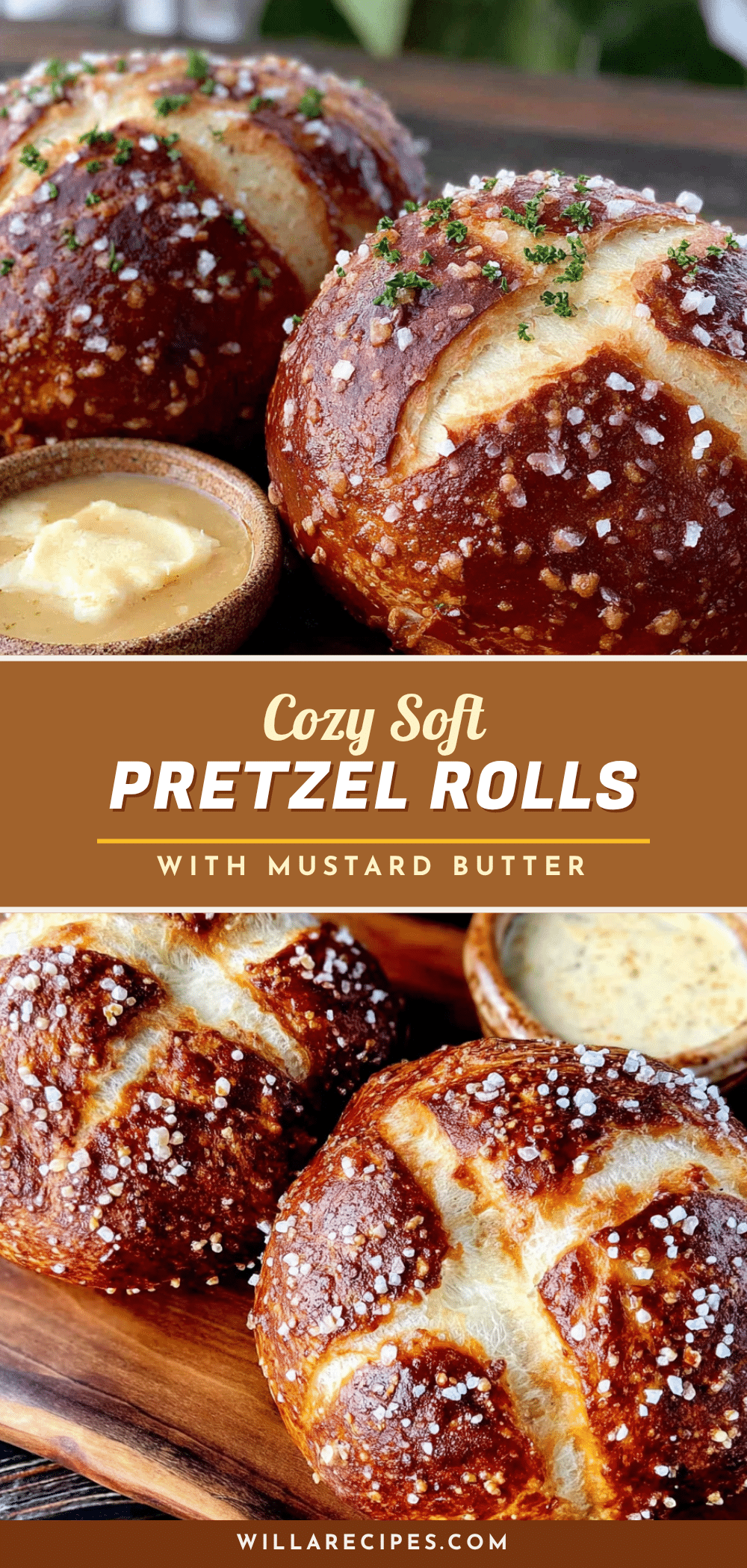
Easy Homemade Bavarian Pretzel Rolls with Mustard Butter

These cozy soft Bavarian pretzel rolls with mustard butter are a happy accident that became a staple. Chewy on the outside, pillowy soft on the inside, with that unmistakable pretzel tang, they’re perfect for game days, soup nights, and lazy Sunday afternoons.
- Prep Time: 20 minutes
- Cook Time: 16 minutes
- Total Time: 2 hours (including rising time)
- Yield: 8 servings 1x
- Category: Bread
- Cuisine: German
Ingredients
- 3 ½ cups (440g) all-purpose flour
- 1 ¼ cups (300ml) warm water (110°F)
- 2 ¼ teaspoons (one packet) active dry yeast
- 1 tablespoon brown sugar
- 2 tablespoons unsalted butter, melted
- 1 teaspoon fine sea salt
- 8 cups (2 liters) water (for baking soda bath)
- ⅓ cup (80g) baking soda (for bath)
- Coarse sea salt, for sprinkling
- ½ cup (1 stick) unsalted butter, softened (for mustard butter)
- 2 tablespoons Dijon mustard
- 1 tablespoon whole grain mustard
- 1 teaspoon honey
- Salt and pepper, to taste
Instructions
- In a large mixing bowl, combine warm water (110°F) and brown sugar. Sprinkle yeast on top and let sit for 5-10 minutes until foamy.
- Add melted butter, salt, and 2 cups of flour to the yeast mixture. Stir until combined, then gradually add remaining flour, about ½ cup at a time, until a soft, slightly sticky dough forms.
- Turn dough onto a lightly floured surface and knead for 8-10 minutes until smooth and elastic. (Or use a stand mixer with dough hook on medium-low for 6-7 minutes.)
- Lightly oil the bowl, place dough inside, turning to coat. Cover with a towel and let rise in a warm spot for 1 hour, or until doubled in size.
- Punch down dough, turn onto a clean surface, and divide into 8 equal pieces (about 100g each). Roll each into a tight ball. Place on a parchment-lined baking sheet, cover loosely, and rest for 15 minutes.
- While rolls rest, bring 8 cups of water to a boil in a large pot. Carefully add baking soda (it will foam). Reduce heat to a gentle simmer.
- Preheat oven to 425°F (220°C). Gently lower each roll into simmering water, one or two at a time. Boil for 30 seconds per side. Transfer back to parchment-lined baking sheet, spacing 2 inches apart.
- Using a sharp knife, cut a deep ‘X’ or slash across the top of each roll. Sprinkle generously with coarse sea salt.
- Bake for 14-16 minutes until deep golden brown and glossy.
- While rolls bake, combine softened butter, Dijon mustard, whole grain mustard, honey, and a pinch of salt and pepper in a small bowl. Mix until smooth.
- As soon as rolls come out of the oven, brush with melted butter (optional). Let cool on baking sheet for 5 minutes, then transfer to a wire rack. Serve warm with mustard butter.
Notes
Don’t skip the boiling step – it creates the chewy crust. Use fresh baking soda for best results. Rolls need to go into the oven immediately after boiling. A slightly tacky dough produces softer rolls. For best flavor, serve warm with mustard butter at room temperature.
Nutrition
- Serving Size: 1 roll
- Calories: 210
- Sugar: 2
- Sodium: 480
- Fat: 4
- Saturated Fat: 2
- Carbohydrates: 38
- Fiber: 2
- Protein: 6
Keywords: pretzel rolls, Bavarian pretzel rolls, homemade pretzel rolls, soft pretzel rolls, mustard butter, easy pretzel recipe, German bread