I was standing in the parking lot of my local grocery store last Tuesday when the cold air hit me—that specific damp chill that seeps through your coat and settles in your bones. And just like that, I was seven years old again, sitting at my great-aunt Marguerite’s kitchen table in her tiny bungalow on the South Side of Chicago. The smell of braised beef and red wine had been following me around for weeks, honestly, and I finally understood why. It was the smell of a Sunday that never rushed. The smell of someone who had all day to let a pot do its thing on the stove.
Marguerite wasn’t a fancy cook. She used a dented Dutch oven she’d probably owned since the Eisenhower administration, and she never measured anything—just handfuls and splashes and “a little more of that.” I remember watching her sear chunks of beef on a Tuesday morning, which confused me. “Stew is for Sundays,” I said. She just laughed and told me that comfort doesn’t check the calendar. She was right, of course. She usually was.
I’ve been trying to recreate that feeling ever since she passed, and let me tell you—I’ve had some disasters. Burnt bottoms. Watery broth. Beef that chewed like a tire. But this slow cooker version? This is the one. It’s not her exact recipe—I’ll never have that, and I’ve made peace with it—but it carries the same spirit. The wine is bold but not boozy. The beef falls apart like it’s been waiting all day to be loved. And the best part? You don’t have to stand over a stove for hours. The slow cooker does the heavy lifting while you go about your day. Maybe you’ve been chasing a taste like that too. If so, pull up a chair.
Why You’ll Love This Recipe
I’ve tested this Easy Slow Cooker Red Wine Beef Stew more times than I care to count—eight batches in one month alone, if you can believe it. My neighbors started knocking on my door around 5 PM, hoping for samples. The point is, I’ve worked out every kink so you don’t have to. Here’s what makes this one different from every other beef stew recipe out there.
- Set It and Forget It : This isn’t a recipe that demands your attention every fifteen minutes. You sear the beef (and yes, you have to do this part—trust me), toss everything in the slow cooker, and walk away. Six to eight hours later, dinner is ready. Perfect for busy weeknights or lazy Sundays.
- Simple Ingredients, Big Flavor : You don’t need a specialty grocery store for this one. Chuck roast, carrots, potatoes, a decent bottle of red wine, and pantry staples. That’s it. I tested this with an expensive Cabernet and a $7 bottle of Merlot—the cheap one actually worked better. Save your good wine for drinking.
- Company-Worthy Without the Stress : I’ve served this for dinner parties, casual Sunday suppers, and even a Valentine’s Day dinner when we decided to stay in. Every single time, people ask for the recipe. It looks and tastes like you fussed, but you didn’t.
- Freezer-Friendly Hero : This stew actually gets better after a day or two in the fridge. I always make a double batch and freeze half for those weeks when cooking feels impossible. It’s like finding money in a coat pocket.
- Comfort Food That Fits a Balanced Life : Packed with protein and vegetables, this stew is indulgent without being heavy. It’s the kind of meal that makes you feel good—not just in your belly, but in your whole mood.
This isn’t just another beef stew recipe. It’s the one that makes you close your eyes after the first bite. The one that fills your kitchen with a smell that says “everything is going to be okay.” And honestly? We could all use a little more of that.
What Ingredients You Will Need
This Easy Slow Cooker Red Wine Beef Stew relies on a short list of ingredients that work together to create something far greater than the sum of their parts. Most of these are pantry or fridge staples, and I’ve included notes on substitutions where they actually work.
For the Beef and Marinade
- 2 pounds beef chuck roast, cut into 1.5-inch cubes (look for good marbling—it’s what makes the meat tender after hours of cooking)
- 1 ½ teaspoons kosher salt
- 1 teaspoon black pepper, freshly ground
- 3 tablespoons all-purpose flour (helps thicken the stew and gives the beef a nice crust when searing)
- 2 tablespoons olive oil, divided (use one with a higher smoke point, like regular olive oil, not extra-virgin)
For the Braising Liquid
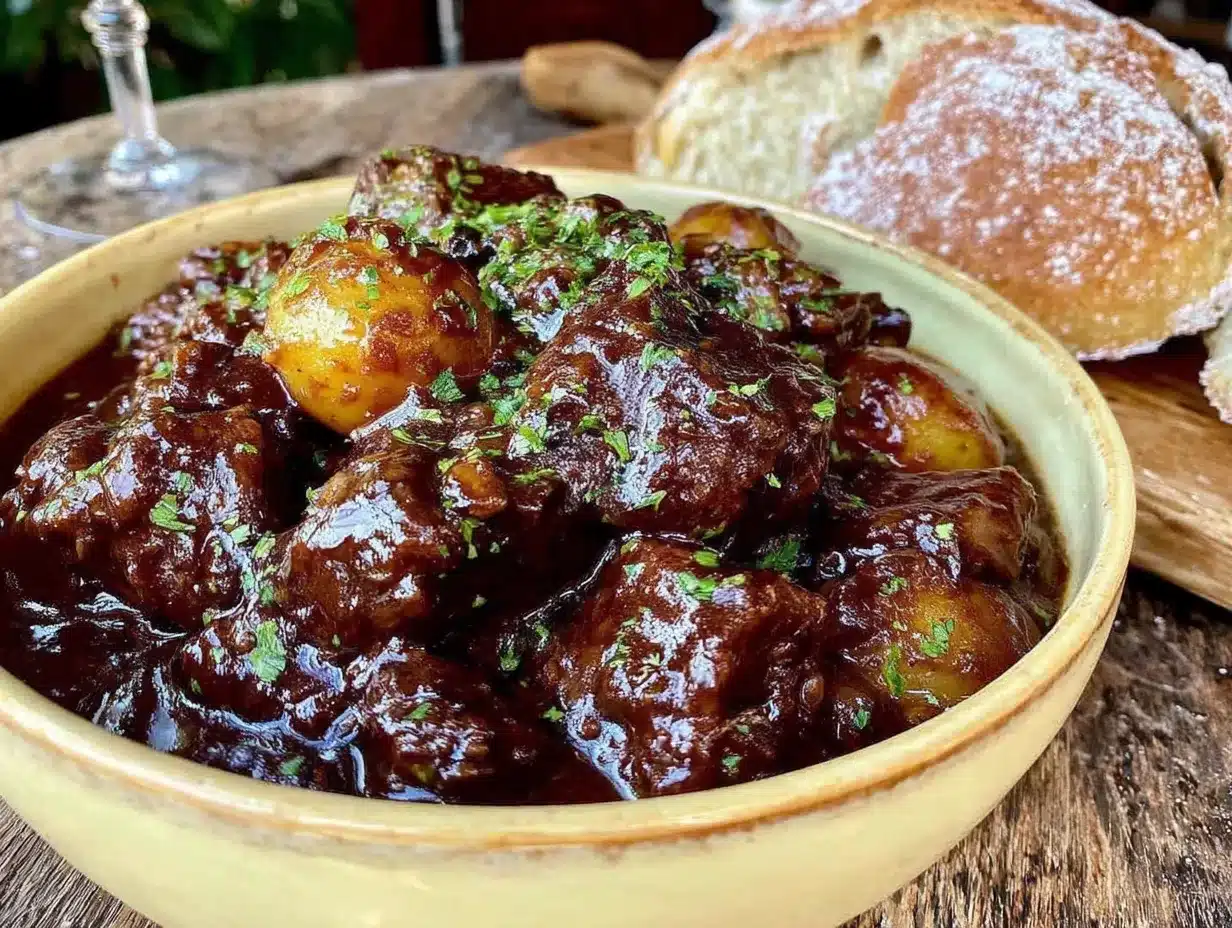
- 1 ½ cups dry red wine (I recommend a Merlot or Cabernet Sauvignon—nothing sweet or cooking wine. If you wouldn’t drink it, don’t cook with it)
- 2 cups beef broth, low-sodium (I prefer Better Than Bouillon roasted beef base—it has deeper flavor than boxed broth)
- 2 tablespoons tomato paste (adds richness and helps deepen the color)
- 2 teaspoons Worcestershire sauce (brings umami and a little tang)
- 1 bay leaf
- 2 sprigs fresh thyme (or 1 teaspoon dried thyme)
For the Aromatics and Vegetables
- 1 large yellow onion, diced (about 1 ½ cups)
- 3 cloves garlic, minced
- 4 large carrots, peeled and cut into 1-inch chunks
- 3 ribs celery, sliced into ½-inch pieces
- 1 ½ pounds Yukon Gold potatoes, cut into 1-inch chunks (they hold their shape better than russets)
- 8 ounces cremini mushrooms, halved (optional, but I love the earthy depth they add)
- 1 cup frozen peas, added at the end (adds a pop of sweetness and color)
For Thickening (Optional, but Recommended)
- 2 tablespoons cornstarch mixed with 2 tablespoons cold water (slurry) — stir this in during the last 30 minutes if you want a thicker broth
A quick note on wine: I tested this recipe with a $6.99 bottle of Merlot from Trader Joe’s and a $25 bottle of Cabernet. The cheap wine won. It was fruitier, which balanced beautifully with the savory beef and vegetables. Don’t overthink the wine selection—just grab something dry and affordable.
Equipment Needed
You don’t need a professional kitchen to make this stew, but a few specific tools will make your life a lot easier.
- Slow cooker (5 to 6-quart capacity is ideal) — I use a Cuisinart 6-Quart programmable model, and it’s been reliable for years. If you have an Instant Pot, you can adapt this recipe for pressure cooking, but the slow cooker gives the best texture for the beef.
- Large skillet or Dutch oven — you need this for searing the beef. A cast-iron skillet works beautifully because it holds heat well. Don’t skip this step, even though it adds 10 minutes to the process.
- Sharp chef’s knife — cutting 2 pounds of chuck roast into cubes is much easier (and safer) with a sharp blade. I use a Victorinox 8-inch chef’s knife, which is affordable and stays sharp.
- Cutting board — preferably one with a groove to catch juices
- Wooden spoon or spatula — for scraping up the browned bits from the pan (that’s pure flavor)
- Measuring cups and spoons
- Mixing bowl — for the cornstarch slurry, if you use it
- Tongs — for flipping the beef while searing
If you don’t have a cast-iron skillet, any heavy-bottomed pan will work. The key is getting that deep brown crust on the beef—that’s where the flavor lives. And if you’re using a slow cooker liner for easy cleanup, I won’t tell anyone.
Preparation Method
Making this Easy Slow Cooker Red Wine Beef Stew is straightforward, but there are a few steps where patience pays off. I’ve broken it down so you know exactly what to look for at each stage.
- Prep the beef (10 minutes) : Pat the beef cubes dry with paper towels. This is important—wet meat won’t brown properly. Season generously with salt and pepper, then sprinkle the flour over the beef and toss to coat evenly. Shake off any excess flour before searing.
- Sear the beef (15 minutes) : Heat 1 tablespoon of olive oil in your large skillet over medium-high heat until it shimmers. Working in batches (don’t crowd the pan!), add the beef cubes in a single layer. Let them sear undisturbed for 3-4 minutes per side until a deep brown crust forms. Use tongs to flip each piece. Transfer the seared beef to the slow cooker. I know it’s tempting to rush this, but please don’t. That brown crust is the difference between “good” stew and “I can’t stop eating this” stew.
- Sauté the aromatics (5 minutes) : Reduce the heat to medium and add the remaining tablespoon of olive oil to the skillet. Add the diced onion and cook for 3-4 minutes, stirring occasionally, until softened and translucent. Add the minced garlic and cook for 30 seconds until fragrant—don’t let it burn or it will turn bitter.
- Deglaze the pan (2 minutes) : Pour about ½ cup of the red wine into the hot skillet and scrape up all those browned bits stuck to the bottom with your wooden spoon. This is called deglazing, and it’s pure gold. Let the wine bubble for about a minute, then pour the entire contents of the skillet into the slow cooker over the beef.
- Layer the vegetables : Add the carrots, celery, potatoes, and mushrooms (if using) to the slow cooker. Don’t stir them in yet—keeping the vegetables on top of the beef helps them cook evenly without turning to mush.
- Add the liquids and seasonings : Pour the remaining 1 cup of red wine and the beef broth into the slow cooker. Add the tomato paste, Worcestershire sauce, bay leaf, and thyme sprigs. Gently stir everything together, making sure the tomato paste dissolves into the liquid. The beef and vegetables should be mostly submerged—if they’re not, add a little more broth or water.
- Cook low and slow : Cover the slow cooker and cook on LOW for 7-8 hours or on HIGH for 4-5 hours. I strongly recommend LOW—the longer cooking time breaks down the connective tissue in the beef, making it melt-in-your-mouth tender. You’ll know it’s ready when the beef shreds easily with a fork and the potatoes are tender.
- Add the peas and thicken (last 30 minutes) : About 30 minutes before serving, stir in the frozen peas. If you want a thicker broth, make the cornstarch slurry: whisk 2 tablespoons cornstarch with 2 tablespoons cold water until smooth, then stir it into the stew. Let it cook uncovered for the final 20-30 minutes, stirring occasionally, until the broth thickens to your liking.
- Finish and serve : Remove the bay leaf and thyme sprigs (they’ve done their job). Taste and adjust seasoning with additional salt and pepper if needed. Ladle into bowls and serve hot.
A few things I’ve learned the hard way: First, don’t open the slow cooker lid to check on it every hour. Every time you lift that lid, you release heat and add 20-30 minutes to the cooking time. Trust the process. Second, if your stew tastes flat at the end, a splash of red wine vinegar or a squeeze of lemon juice can brighten everything up. Acidity is often the missing piece.
Cooking Tips & Techniques
After eight test batches (and a few that ended up in the trash), here’s what I’ve learned about making the best Easy Slow Cooker Red Wine Beef Stew.
Don’t skip the sear. I know, I know—it’s an extra step and it dirties a pan. But the Maillard reaction (that browning process) creates complex flavors that you simply cannot get from dumping raw beef into a slow cooker. I tried it once. The result was gray, sad beef with none of the deep, savory richness you want from a stew. Just sear it. Your future self will thank you.
Brown in batches. If you crowd the pan, the beef steams instead of searing. You’ll end up with gray meat and no crust. Give each piece room to breathe. I usually do three batches for 2 pounds of beef, wiping out the pan between batches if there are burnt bits.
Use the right cut of beef. Chuck roast is the gold standard for slow-cooked stew. It has enough marbling and connective tissue to break down into tender, juicy bites over long cooking. Don’t use sirloin or tenderloin—they’ll dry out and turn tough. If you can’t find chuck, look for brisket or bottom round.
Watch your wine choice. I made the mistake of using a sweet red blend once—it was like stew with grape jelly. Stick with dry red wines like Merlot, Cabernet Sauvignon, or even a Pinot Noir. If you don’t cook with wine often, buy a small bottle so you’re not stuck with an open bottle you won’t drink.
Season as you go, not just at the end. Salt the beef before searing. Season the onion as it cooks. Taste the broth before you add the slurry. Layering seasoning throughout the process creates depth. Underseasoned stew is one of the most common problems, and it’s so easy to fix.
Patience with the potatoes. Yukon Gold potatoes hold their shape better than russets, but even they can get mushy if you overcook them. If you’re cooking on HIGH, check the potatoes at the 4-hour mark. On LOW, they should be perfect around hour 7.
One more thing—I once forgot to add the tomato paste entirely. The stew was still good, but it lacked that deep, savory richness. Don’t be like me. Don’t forget the tomato paste.
Variations & Adaptations
One of the best things about this Easy Slow Cooker Red Wine Beef Stew is how adaptable it is. Here are some variations I’ve tested and loved.
Low-Carb / Keto Version : Skip the potatoes and flour. Instead, add extra mushrooms, cauliflower florets, and celery root. For the thickener, use 1 tablespoon xanthan gum stirred into ¼ cup warm broth (whisk it in at the end, and don’t overdo it—xanthan gum is powerful stuff). The beef and vegetables will still be incredibly satisfying without the carbs.
Gluten-Free Adaptation : Replace the all-purpose flour with a gluten-free all-purpose blend or simply skip the flour coating on the beef. The stew will be slightly thinner, so you can use the cornstarch slurry (cornstarch is naturally gluten-free) to thicken it at the end. I’ve tested this with King Arthur Measure for Measure flour, and it works perfectly.
Instant Pot Version : Use the sauté function to sear the beef and cook the aromatics directly in the Instant Pot. Add all ingredients except the peas and slurry. Pressure cook on HIGH for 35 minutes with a natural release (let the pressure come down on its own for 15 minutes, then release the rest). Stir in the peas and slurry, then use the sauté function to simmer and thicken for 5 minutes. The texture is slightly different—the beef is tender but not quite as fall-apart as the slow cooker version—but it’s still excellent when you’re short on time.
Herb Variations : Not a fan of thyme? Swap in rosemary or sage. I made a batch with fresh rosemary and a strip of orange zest once, and it was surprisingly bright and aromatic. You can also add a Parmesan rind to the broth while it cooks—it adds an umami depth that’s hard to describe but impossible to miss.
Spicy Kick : Add ½ teaspoon smoked paprika and a pinch of cayenne pepper along with the tomato paste. It won’t make the stew spicy, but it adds a warmth that lingers on the back of your tongue. My husband, who claims he doesn’t like spicy food, ate three bowls of this version before admitting it was “pretty good.”
Feel free to experiment with whatever vegetables you have on hand. Parsnips, turnips, and sweet potatoes all work beautifully. Just cut them into similar-sized chunks so they cook evenly.
Serving & Storage Suggestions
This stew is a meal in itself, but the right accompaniments can take it from satisfying to spectacular.
Serving Temperature and Presentation : Serve the stew piping hot in deep bowls. I like to garnish with a sprinkle of fresh parsley (it adds a pop of green and freshness) and a crack of black pepper. If you want to get fancy, a dollop of sour cream or crème fraîche on top adds a lovely tangy contrast to the rich broth.
What to Serve With It : Crusty bread is non-negotiable in my house. A good baguette or sourdough loaf, toasted and buttered, is perfect for sopping up every last drop of that wine-infused broth. For a lighter option, serve over egg noodles, mashed potatoes, or creamy polenta. A simple green salad with a tangy vinaigrette cuts through the richness beautifully. And honestly? A glass of the same red wine you used in the stew is the perfect pairing.
Storage Instructions : This stew is one of those rare dishes that tastes even better the next day. Store leftovers in an airtight container in the refrigerator for up to 4 days. The flavors continue to meld and deepen overnight—it’s like the stew is still cooking even after it’s done.
Freezing Instructions : This stew freezes beautifully. Let it cool completely, then transfer to freezer-safe containers or zip-top bags. Leave about an inch of headspace for expansion. Freeze for up to 3 months. To thaw, move the container to the refrigerator overnight, then reheat gently on the stovetop or in the microwave.
Reheating Tips : Reheat the stew over medium-low heat on the stovetop, stirring occasionally. Add a splash of beef broth or water if it has thickened too much during storage. Avoid boiling, which can make the beef tough. The microwave works in a pinch, but the stovetop gives you better control over the texture.
One thing I love about this stew is how the flavors develop. Day one is excellent. Day two is transcendent. I’ve been known to make it on a Thursday specifically so I can eat it on Friday when it’s at its peak.
Nutritional Information & Benefits
This Easy Slow Cooker Red Wine Beef Stew isn’t just delicious—it’s packed with nutrients that make it a genuinely wholesome meal.
Estimated Nutritional Values (per serving, based on 6 servings):
- Calories: 485
- Protein: 38g
- Fat: 18g
- Carbohydrates: 34g
- Fiber: 5g
- Sugar: 8g
- Sodium: 890mg (varies based on broth and added salt)
Health Benefits of Key Ingredients:
- Beef chuck roast : An excellent source of high-quality protein, iron (important for energy and oxygen transport), zinc (supports immune function), and B vitamins, particularly B12.
- Carrots and sweet potatoes : Rich in beta-carotene (which your body converts to vitamin A), fiber, and antioxidants. They support eye health and digestion.
- Red wine : Contains resveratrol, an antioxidant compound that may support heart health when consumed in moderation. The alcohol largely cooks off during the long simmering process.
- Garlic and onions : Both are prebiotic foods that feed the beneficial bacteria in your gut. They also contain compounds that may support immune function.
- Mushrooms : A source of selenium, copper, and B vitamins. They also contain beta-glucans, which can support immune health.
Dietary Considerations: This recipe is naturally dairy-free and nut-free. For gluten-free, use the adaptation mentioned in the variations section. For lower sodium, use no-salt-added beef broth and reduce the added salt.
I love that this stew feels indulgent while actually being a balanced meal. It’s the kind of food that nourishes you from the inside out—comforting without being heavy, satisfying without being excessive.
Conclusion
This Easy Slow Cooker Red Wine Beef Stew is more than just a recipe—it’s a way to bring warmth and comfort to your table with almost no effort. The deep, rich flavors from the red wine and seared beef meld together over hours of gentle cooking, creating a stew that tastes like you spent all day in the kitchen. But here’s the secret: you didn’t. The slow cooker did the work while you went about your day.
I love this recipe because it reminds me that good food doesn’t have to be complicated. It just needs time, patience, and a little bit of love. Whether you’re making it for a cozy family dinner, a dinner party with friends, or a meal prep session for the week ahead, this stew delivers every single time.
I’d love to hear how yours turns out! Did you add any fun variations? Serve it over something unexpected? Let me know in the comments below—and if you loved it as much as I do, share this recipe with someone who needs a little comfort in their life. Happy cooking, friends!
Frequently Asked Questions
Can I make this stew without wine?
Absolutely. Replace the red wine with an equal amount of beef broth plus 2 tablespoons of balsamic vinegar or red wine vinegar. The vinegar adds the acidity and depth that the wine would provide. It won’t taste exactly the same, but it will still be delicious.
Why is my beef tough after cooking all day?
This usually happens for one of two reasons: either you used a lean cut of beef (like sirloin or round) that doesn’t have enough connective tissue to break down, or you cooked it on HIGH instead of LOW. Tough cuts need low, slow cooking to become tender. Stick with chuck roast and cook on LOW for best results.
Can I add other vegetables to this stew?
Yes! This recipe is very flexible. Parsnips, turnips, sweet potatoes, butternut squash, and even green beans all work well. Just cut them into similar-sized chunks so they cook evenly. Add delicate vegetables like peas or green beans in the last 30 minutes so they don’t turn to mush.
How do I thicken the stew if it’s too thin?
The easiest method is the cornstarch slurry I mentioned in the recipe—2 tablespoons cornstarch mixed with 2 tablespoons cold water, stirred in during the last 30 minutes. You can also mash some of the cooked potatoes against the side of the slow cooker to release their starch, which will naturally thicken the broth.
Can I prepare this stew the night before?
You can prep the ingredients the night before—cut the beef and vegetables, measure the seasonings, and store everything in the refrigerator separately. But don’t assemble and cook the stew overnight unless you plan to eat it for breakfast (no judgment here). For best results, sear the beef and assemble the stew in the morning, then let it cook all day.
Pin This Recipe!
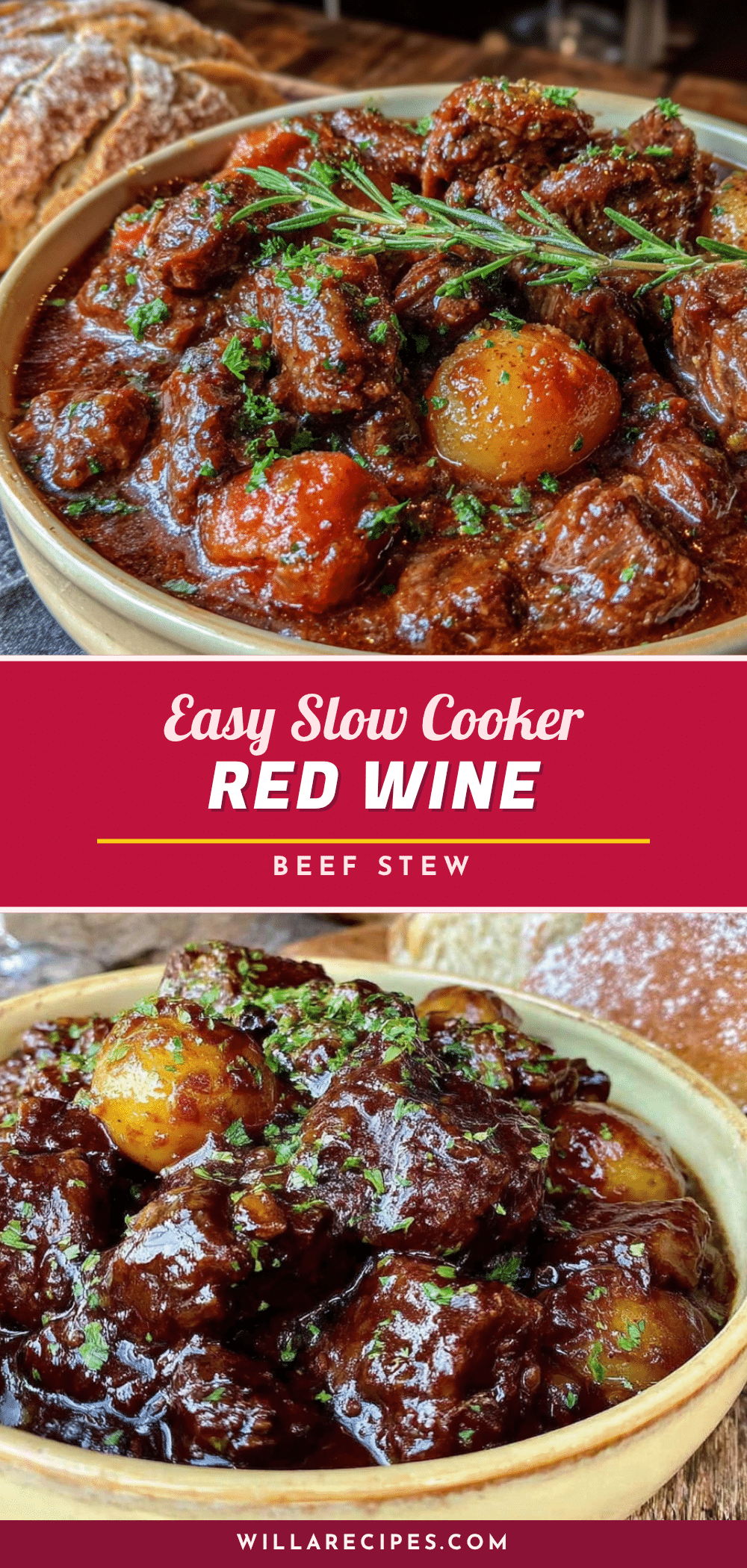
Easy Slow Cooker Red Wine Beef Stew: Best Comfort Food
This Easy Slow Cooker Red Wine Beef Stew is the ultimate comfort food—tender beef, hearty vegetables, and a rich, wine-infused broth that tastes like you spent all day cooking, but the slow cooker does the work for you.
- Prep Time: 20 minutes
- Cook Time: 7 hours 30 minutes
- Total Time: 7 hours 50 minutes
- Yield: 6 servings 1x
- Category: Main Course
- Cuisine: American
Ingredients
- 2 pounds beef chuck roast, cut into 1.5-inch cubes
- 1 ½ teaspoons kosher salt
- 1 teaspoon black pepper, freshly ground
- 3 tablespoons all-purpose flour
- 2 tablespoons olive oil, divided
- 1 ½ cups dry red wine (Merlot or Cabernet Sauvignon)
- 2 cups low-sodium beef broth
- 2 tablespoons tomato paste
- 2 teaspoons Worcestershire sauce
- 1 bay leaf
- 2 sprigs fresh thyme (or 1 teaspoon dried thyme)
- 1 large yellow onion, diced (about 1 ½ cups)
- 3 cloves garlic, minced
- 4 large carrots, peeled and cut into 1-inch chunks
- 3 ribs celery, sliced into ½-inch pieces
- 1 ½ pounds Yukon Gold potatoes, cut into 1-inch chunks
- 8 ounces cremini mushrooms, halved (optional)
- 1 cup frozen peas
- 2 tablespoons cornstarch (optional, for thickening)
- 2 tablespoons cold water (for slurry)
Instructions
- Prep the beef: Pat the beef cubes dry with paper towels. Season generously with salt and pepper, then sprinkle the flour over the beef and toss to coat evenly. Shake off any excess flour before searing.
- Sear the beef: Heat 1 tablespoon of olive oil in a large skillet over medium-high heat until it shimmers. Working in batches, add the beef cubes in a single layer. Sear undisturbed for 3-4 minutes per side until a deep brown crust forms. Transfer seared beef to the slow cooker.
- Sauté the aromatics: Reduce heat to medium and add the remaining tablespoon of olive oil to the skillet. Add the diced onion and cook for 3-4 minutes until softened. Add the minced garlic and cook for 30 seconds until fragrant.
- Deglaze the pan: Pour about ½ cup of the red wine into the hot skillet and scrape up the browned bits with a wooden spoon. Let the wine bubble for about a minute, then pour the entire contents into the slow cooker over the beef.
- Layer the vegetables: Add the carrots, celery, potatoes, and mushrooms (if using) to the slow cooker. Do not stir yet.
- Add liquids and seasonings: Pour the remaining 1 cup of red wine and the beef broth into the slow cooker. Add the tomato paste, Worcestershire sauce, bay leaf, and thyme sprigs. Gently stir to combine, ensuring the tomato paste dissolves.
- Cook low and slow: Cover and cook on LOW for 7-8 hours or on HIGH for 4-5 hours, until the beef is fork-tender and the potatoes are cooked through.
- Add peas and thicken (last 30 minutes): About 30 minutes before serving, stir in the frozen peas. If desired, make a cornstarch slurry by whisking 2 tablespoons cornstarch with 2 tablespoons cold water, then stir into the stew. Cook uncovered for the final 20-30 minutes, stirring occasionally, until thickened.
- Finish and serve: Remove the bay leaf and thyme sprigs. Taste and adjust seasoning with additional salt and pepper if needed. Ladle into bowls and serve hot.
Notes
Don’t skip searing the beef—it’s essential for deep flavor. Use a dry red wine like Merlot or Cabernet Sauvignon; avoid sweet wines. For a thicker stew, use the cornstarch slurry. The stew tastes even better the next day. Store in the refrigerator for up to 4 days or freeze for up to 3 months.
Nutrition
- Serving Size: 1 serving
- Calories: 485
- Sugar: 8
- Sodium: 890
- Fat: 18
- Saturated Fat: 6
- Carbohydrates: 34
- Fiber: 5
- Protein: 38
Keywords: slow cooker beef stew, red wine beef stew, comfort food, easy stew recipe, beef stew with red wine, slow cooker recipe, winter dinner