My neighbor Frank watched me hauling a bag of groceries up the stairs one Tuesday evening, and he didn’t say anything at first. Then he just pointed at my bag and said, “That’s not going to cut it for the holidays.” Frank is this retired butcher who’s lived next door for twenty years, and he’s never once given me unsolicited advice. But that night, he told me about his method for prime rib — a way to get that gorgeous crust and tender meat without spending all day in the kitchen. I was skeptical, honestly. I mean, prime rib is supposed to be this big, fancy production, right? You know the feeling — you want to impress your family but you also have a million other things to do. Frank just shrugged and said, “Try it. You’ll thank me later.”
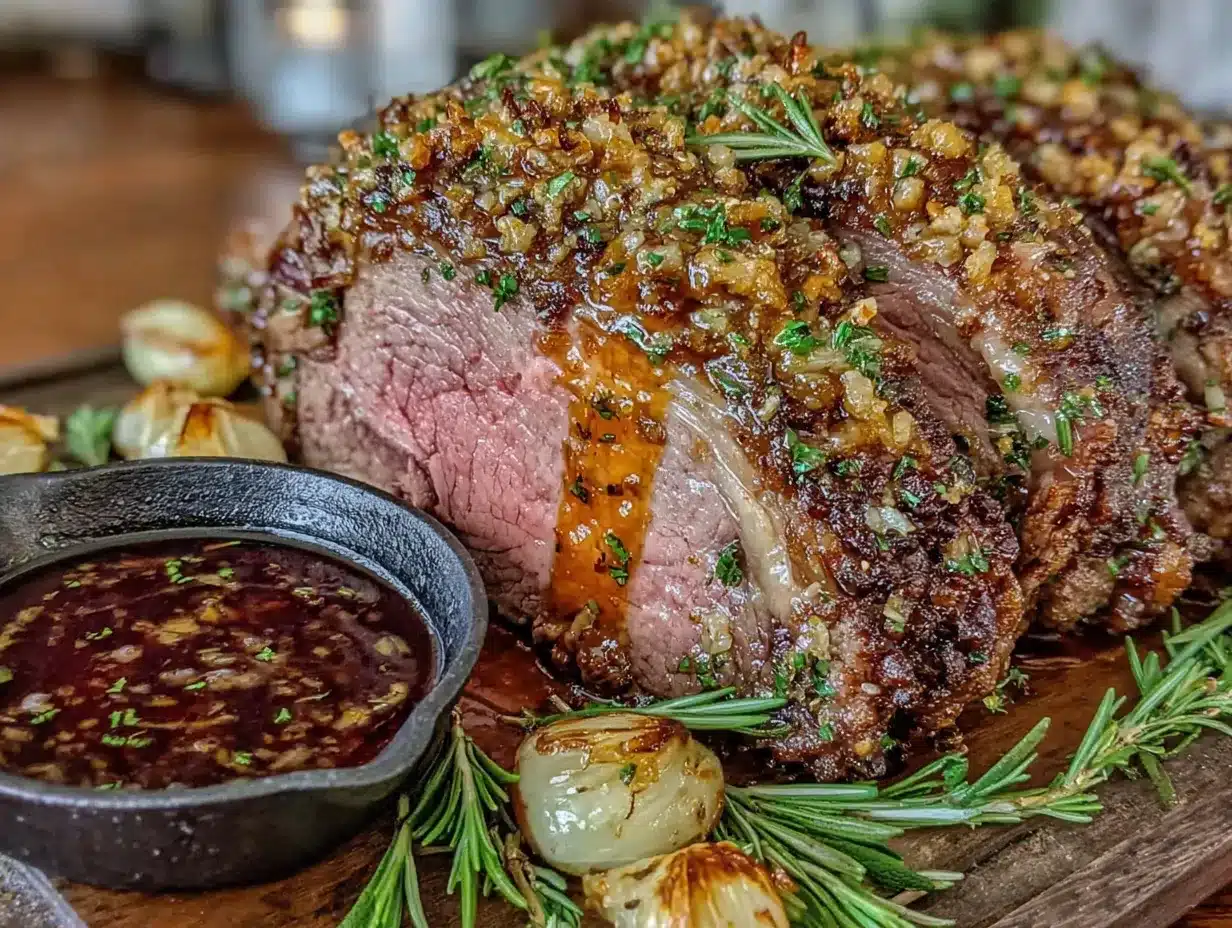
So I tried it. And let me tell you, I’ve never looked back. This quick herb-crusted prime rib with red wine jus is the kind of recipe that makes you wonder why you ever stressed about holiday dinners. It’s got that beautiful, aromatic herb crust with rosemary and thyme that fills your whole kitchen with the most incredible smell. And the red wine jus? It’s rich and glossy and comes together in the same pan while your meat rests. No separate pots, no fancy techniques — just honest, delicious food that looks like you spent hours on it.
The thing that stayed with me from Frank’s lesson wasn’t just the technique, though. It was how he talked about cooking for people — like it was a gift, not a chore. That’s what this recipe is for me now. It’s the meal I make when I want to tell my family they matter, even when I’m running on fumes. Maybe you’ve been there, standing in the grocery store at 5 PM wondering how you’re going to pull off a special dinner. This is your answer. It’s quick enough for a busy weeknight but impressive enough for any celebration.
Why You’ll Love This Recipe
Let’s be real for a second. Prime rib has a reputation for being fussy, expensive, and time-consuming. But this version flips all of that on its head. Here’s why you’re going to fall hard for this quick herb-crusted prime rib:
- Quick & Easy: This comes together in about 90 minutes from start to finish, including resting time. For prime rib, that’s practically a miracle. Perfect for those weeknights when you want something special but don’t have all afternoon.
- Simple Ingredients: You probably already have most of the herb crust ingredients in your pantry. Fresh rosemary, thyme, garlic, salt, pepper — that’s basically it. No obscure spices or specialty items to hunt down.
- Perfect for Entertaining: Whether it’s a birthday dinner, anniversary, or just a Tuesday that needs a little spark, this dish delivers. It looks like something from a fancy steakhouse but costs a fraction of the price.
- Crowd-Pleaser: I’ve served this to picky eaters, steak snobs, and vegetarian-curious friends, and everyone goes back for seconds. The herb crust is aromatic without being overwhelming, and the meat is so tender it practically melts.
- Unbelievably Delicious: That first bite — the crispy, herby exterior giving way to buttery, medium-rare meat — is honestly one of the best things you’ll ever taste. And the red wine jus ties it all together with this rich, savory finish.
What makes this recipe different from the dozens of other prime rib recipes out there is the technique. Most recipes tell you to start with a cold roast and slowly bring it up to temperature. That works, but it takes forever. Frank’s method uses a hot sear first to lock in flavor and develop that gorgeous crust, then a quick roast in a hot oven. You get the same result in half the time. Plus, the red wine jus is made right in the roasting pan, so you get all those browned bits and herb flavors without any extra cleanup.
This isn’t just another prime rib recipe — it’s the one that will become your go-to for every special occasion. It’s comfort food that feels luxurious, a meal that says “I love you” without saying a word. And honestly, after a long week, isn’t that exactly what we all need?
What Ingredients You Will Need
This recipe uses simple, high-quality ingredients to deliver big flavor without a lot of fuss. Most of these are pantry staples, and the ones that aren’t are easy to find at any grocery store.
For the Prime Rib
- 1 (4-5 pound) boneless prime rib roast — Look for one with good marbling for the most flavor and tenderness. I prefer Choice or Prime grade if your budget allows. (A boneless roast cooks faster and is easier to slice, but you can use bone-in — just add 15-20 minutes to the cooking time.)
- 2 tablespoons olive oil — This helps the herb crust stick and promotes browning. Use a good quality extra virgin for the best flavor.
- 2 tablespoons fresh rosemary, finely chopped — Don’t use dried here if you can help it. Fresh rosemary has a piney, aromatic quality that really shines. (I grow my own in a pot on the windowsill — it’s almost impossible to kill.)
- 2 tablespoons fresh thyme leaves — The earthy, slightly floral notes of thyme are perfect with beef. Strip the leaves from the stems — no one wants to chew on a woody stem.
- 4 cloves garlic, minced — Fresh garlic is non-negotiable here. The jarred stuff won’t give you the same punch. (I use a Microplane for the finest mince — it practically melts into the crust.)
- 1 tablespoon kosher salt — Kosher salt is less dense than table salt, so you get better coverage. I use Diamond Crystal brand for its consistent texture.
- 1 teaspoon black pepper, freshly ground — Pre-ground pepper is fine in a pinch, but freshly ground gives you those little bursts of heat and flavor.
For the Red Wine Jus
- 1 cup dry red wine — Use something you’d actually drink. Cabernet Sauvignon or Merlot work beautifully. (I keep a bottle of affordable Cabernet in the pantry just for cooking — around $10-12 is perfect.)
- 2 cups beef broth — Low-sodium is best so you can control the salt. I prefer Pacific Foods or Swanson brand for clean flavor.
- 2 tablespoons unsalted butter — This adds richness and helps emulsify the jus. (If you’re dairy-free, you can skip this or use a vegan butter substitute.)
- 1 tablespoon all-purpose flour — This thickens the jus just enough to coat the back of a spoon. (For gluten-free, use arrowroot powder or cornstarch mixed with a little cold water.)
- 1 teaspoon Worcestershire sauce — This adds umami depth that you can’t quite identify but definitely miss if it’s not there. (Lea & Perrins is my go-to brand.)
- Salt and pepper to taste — You’ll likely need less salt since the roast was seasoned generously.
Ingredient Substitution Notes
If you don’t have fresh herbs, you can use dried — just reduce the amount by half since dried herbs are more concentrated. For the wine, you can substitute an equal amount of additional beef broth mixed with 1 tablespoon of balsamic vinegar for acidity. And if you’re watching your sodium, use low-sodium broth and go easy on the salt in the herb crust — you can always add more at the table.
Equipment Needed
You don’t need a lot of fancy equipment for this recipe, which is part of what makes it so weeknight-friendly. Here’s what you’ll need:
- Large cast-iron skillet or heavy-bottomed roasting pan — Cast iron is ideal because it holds heat beautifully and gives you that perfect sear. (I use my trusty 12-inch Lodge skillet that I’ve had for years — it just gets better with time.)
- Meat thermometer — This is absolutely essential for perfect prime rib. An instant-read thermometer is fine, but a leave-in probe thermometer makes life much easier. (ThermoPro makes an affordable digital one that I swear by.)
- Chef’s knife — A sharp 8-inch chef’s knife is all you need for chopping herbs and slicing the finished roast.
- Cutting board — A large wooden or plastic board with a groove to catch juices is ideal. You’ll need it for resting the meat and slicing.
- Whisk — For smoothing out the jus. A small balloon whisk works perfectly.
- Measuring spoons — For the herbs and seasonings. (I keep a set of magnetic ones on my fridge — they never get lost.)
If you don’t have a cast-iron skillet, any heavy-bottomed pan that can go from stovetop to oven will work. A stainless steel roasting pan is a great alternative. Just make sure it’s oven-safe up to 450°F.
Preparation Method
Follow these steps carefully, and you’ll have a restaurant-quality prime rib on your table in about 90 minutes. I’ve included time estimates and visual cues so you know exactly what to look for at each stage.
Step 1: Prep the Roast (10 minutes)
Take your prime rib out of the refrigerator about 30 minutes before you start cooking. This helps it cook more evenly. Pat it completely dry with paper towels — moisture is the enemy of a good crust. In a small bowl, combine the chopped rosemary, thyme, minced garlic, kosher salt, and black pepper. Drizzle the olive oil over the roast and rub it all over, then press the herb mixture firmly onto all sides. Don’t be shy — you want a nice, thick crust. (Pro tip: Use your hands here. The warmth helps the herbs stick better.)
Step 2: Preheat and Sear (15 minutes)
Preheat your oven to 450°F. Place your cast-iron skillet or roasting pan over high heat on the stovetop. Let it get screaming hot — you should see a wisp of smoke. Carefully place the seasoned roast in the pan and sear for 3-4 minutes per side, rotating to get all sides, including the ends. You’re looking for a deep, golden-brown crust. The sizzle should be loud and satisfying. (Don’t crowd the pan — if your roast is too big for the skillet, use a larger roasting pan and sear in batches.)
Step 3: Roast (30-40 minutes)
Once the roast is beautifully seared on all sides, transfer the pan to the preheated oven. Roast for 15 minutes at 450°F, then reduce the oven temperature to 325°F and continue roasting until the internal temperature reaches 125°F for medium-rare. This usually takes about 15-25 minutes more, depending on the size of your roast. (I start checking the temperature at the 30-minute mark with my instant-read thermometer inserted into the thickest part.)
Step 4: Rest and Make the Jus (20 minutes)
Remove the roast from the oven and transfer it to a cutting board. Tent it loosely with aluminum foil and let it rest for at least 15-20 minutes. This is crucial — the juices need time to redistribute throughout the meat. While the roast rests, make the red wine jus. Place the same skillet or roasting pan over medium-high heat on the stovetop. Add the red wine and use a wooden spoon to scrape up all those browned bits from the bottom — that’s pure flavor. Let the wine simmer for 2-3 minutes until it reduces slightly. Whisk in the flour and cook for 1 minute, then slowly pour in the beef broth while whisking constantly. Add the Worcestershire sauce and let the jus simmer for 5-7 minutes until it thickens slightly. Stir in the butter until melted and glossy. Taste and adjust salt and pepper.
Step 5: Slice and Serve (5 minutes)
After the roast has rested, slice it against the grain into 1/2-inch thick slices. You should see a beautiful pink center with a dark, herby crust. Arrange the slices on a platter and pour a little of the red wine jus over the top. Serve the remaining jus on the side in a small pitcher or gravy boat. (If you’re feeding a crowd, I like to warm the plates first — it keeps the meat hot longer.)
Cooking Tips & Techniques
After making this recipe more times than I can count, I’ve learned a few things the hard way. Here are my best tips to ensure success every time.
Don’t skip the resting time. I know it’s tempting to slice right into that beautiful roast, but trust me on this one. If you cut into it too soon, all those precious juices will run out onto the cutting board instead of staying in the meat. Fifteen minutes minimum — set a timer if you have to. (I once ignored this advice when I was in a hurry, and I regretted every dry bite.)
Use a thermometer, not a timer. Ovens vary wildly, and the size of your roast matters. A meat thermometer takes the guesswork out completely. For medium-rare, pull the roast at 125°F — it will continue cooking to about 130°F during resting. For medium, pull at 130°F. (I keep my ThermoPro clipped to the side of the pan so I can monitor without opening the oven door.)
Patience with the sear. Don’t rush this step. A good sear takes time, and it’s what gives you that incredible crust. Let the roast sit undisturbed in the hot pan — if you try to move it too soon, it will stick. It will release naturally when it’s ready. (You’ll hear the sizzle change from aggressive to a gentler sound — that’s your cue to flip.)
Make the jus while the meat rests. This is the ultimate multitasking move. While your prime rib is resting on the cutting board, the pan is still hot and full of flavor. The jus comes together in exactly the time the meat needs to rest. It’s like they were made for each other — which, I mean, they were.
Slice against the grain. This is one of those tips that sounds technical but makes a huge difference. Look at the direction the muscle fibers run and cut perpendicular to them. This shortens the fibers and makes each bite more tender. (If you’re having trouble seeing the grain, look for the lines running through the meat — that’s your guide.)
Variations & Adaptations
One of the best things about this recipe is how adaptable it is. Here are some ways to make it your own.
Herb Variations
Not a fan of rosemary? Swap it out. Try a mixture of fresh oregano, sage, and parsley for a different flavor profile. Or go with a classic French blend of herbes de Provence — it’s a beautiful combination of lavender, thyme, and savory. I once made this with a tarragon and chive crust, and it was unexpectedly amazing with the red wine jus.
Dietary Adaptations
For a low-carb or keto-friendly version, this recipe is already perfect — just skip the flour in the jus and let it reduce a little longer for a thinner, more concentrated sauce. For gluten-free, use cornstarch or arrowroot powder mixed with cold water instead of flour. For dairy-free, omit the butter in the jus or use a plant-based alternative. (I’ve tried this with oat-based butter, and it works surprisingly well.)
Different Cooking Methods
If you’re short on time, you can cook this on the grill. Sear the roast over high heat for 3-4 minutes per side, then move it to indirect heat and cook at 350°F until it reaches your desired temperature. The smoky flavor from the grill adds a whole new dimension. (Just make sure your grill has a lid and a reliable thermometer.)
Flavor Twists
Add a tablespoon of Dijon mustard to the herb crust for a tangy kick. Or mix in some finely grated Parmesan cheese for an umami boost that’s absolutely addictive. For a spicy version, add a pinch of red pepper flakes to the herb mixture. (I tried the Parmesan version for a dinner party, and my guests literally asked for the recipe before they finished eating.)
Serving & Storage Suggestions
This prime rib is a showstopper on its own, but a few thoughtful accompaniments can make it a complete meal.
Serving Temperature: Serve the prime rib warm, straight from resting. The red wine jus should be hot and glossy. I like to arrange the slices on a warmed platter and drizzle a little jus over the top just before serving. The contrast between the warm meat and the rich sauce is pure magic.
What to Serve With It: This dish pairs beautifully with creamy mashed potatoes or roasted root vegetables. A simple arugula salad with lemon vinaigrette cuts through the richness perfectly. For a low-carb option, try roasted asparagus or sautéed green beans with garlic. (I’m partial to a side of creamed spinach — the creamy texture is a perfect match for the herb crust.)
Storage: Leftover prime rib will keep in an airtight container in the refrigerator for up to 4 days. The red wine jus can be stored separately for up to 5 days. (I’ve found that the flavors actually deepen overnight — the jus becomes even more complex.)
Reheating: The best way to reheat prime rib is low and slow. Place slices in a baking dish with a splash of beef broth, cover with foil, and warm in a 300°F oven for 10-15 minutes. This prevents the meat from drying out. For the jus, reheat it gently on the stovetop over medium-low heat, whisking occasionally. (Avoid the microwave — it tends to make the meat tough and the jus separate.)
Freezing: You can freeze cooked prime rib for up to 3 months. Wrap it tightly in plastic wrap, then aluminum foil. Thaw overnight in the refrigerator before reheating. The jus can be frozen separately in a freezer-safe container. (I often make a double batch of the jus and freeze half for quick weeknight meals.)
Nutritional Information & Benefits
Here’s the nutritional breakdown for a 6-ounce serving of herb-crusted prime rib with 2 tablespoons of red wine jus. Keep in mind these are estimates and will vary based on the exact cut of meat and ingredients used.
| Nutrient | Amount |
|---|---|
| Calories | 420 |
| Protein | 45g |
| Fat | 24g |
| Saturated Fat | 9g |
| Carbohydrates | 4g |
| Fiber | 0g |
| Sugar | 1g |
| Sodium | 680mg |
| Iron | 4mg (22% DV) |
| Vitamin B12 | 3.5mcg (146% DV) |
| Zinc | 6mg (55% DV) |
Prime rib is an excellent source of high-quality protein, which is essential for muscle repair and growth. It’s also rich in iron, which supports healthy blood oxygen levels, and vitamin B12, which is crucial for nerve function and energy production. The herbs in the crust — rosemary and thyme — are packed with antioxidants that help fight inflammation. (I love knowing that this indulgent meal actually has some nutritional benefits hidden in the herbs.)
Dietary Considerations: This recipe is naturally low-carb and keto-friendly. It’s also gluten-free if you use cornstarch instead of flour in the jus. It does contain dairy from the butter, but you can easily omit it or use a substitute. (If you’re watching your sodium, use low-sodium broth and go easy on the salt in the herb crust.)
Conclusion
This quick herb-crusted prime rib with red wine jus is proof that you don’t need to spend all day in the kitchen to create something truly special. It’s the meal I turn to when I want to show the people I love how much they mean to me, even when I’m short on time and energy. The herb crust is fragrant and flavorful, the meat is tender and juicy, and the red wine jus ties it all together in the most satisfying way.
I hope you’ll give this recipe a try and make it your own. Maybe you’ll add a different herb, or serve it with your family’s favorite side dish. That’s the beauty of cooking — it’s always a conversation, a chance to share a little piece of yourself with the people around the table. Frank was right all along. This recipe cuts it — and then some.
I’d love to hear how it turns out for you! Drop a comment below and let me know what you served with it, or tag me in your photos on social media. Happy cooking, friends!
Frequently Asked Questions
Can I use a bone-in prime rib for this recipe?
Absolutely! Bone-in prime rib will work beautifully with this method. Just add about 15-20 minutes to the total cooking time, and use your meat thermometer to check for doneness. The bone adds extra flavor and helps the meat stay moist. (You’ll also get the bonus of having a beautiful bone to gnaw on later — don’t judge me.)
What if I don’t have fresh herbs?
Dried herbs will work in a pinch, but the flavor won’t be quite as vibrant. Use about half the amount called for in the recipe — so 1 tablespoon dried rosemary and 1 tablespoon dried thyme instead of 2 tablespoons each. (I’ve done this when my windowsill herbs were looking sad, and it still turned out delicious.)
How do I know when the prime rib is done without a thermometer?
While I strongly recommend using a meat thermometer for accuracy, you can use the hand test if you’re in a bind. For medium-rare, the meat should feel like the fleshy part of your palm when you touch your thumb to your pinky finger. But honestly, a thermometer is cheap insurance against overcooking a pricey cut of meat. (I learned this the hard way — once served well-done prime rib to guests who were too polite to say anything.)
Can I make the red wine jus ahead of time?
Yes! The jus can be made up to 3 days in advance and stored in an airtight container in the refrigerator. Reheat it gently on the stovetop over medium-low heat, whisking occasionally. You may need to add a splash of water or broth if it thickens too much during storage. (I often make a double batch of jus and use the extra for quick steak dinners during the week.)
What’s the best way to slice prime rib for serving?
Always slice against the grain — this means cutting perpendicular to the direction the muscle fibers run. For a boneless roast, you’ll usually slice across the narrower end. For bone-in, slice between the bones. Aim for 1/2-inch thick slices for the perfect balance of crust and tender interior. (I use a long, sharp carving knife and a gentle sawing motion to keep the slices neat.)
Pin This Recipe!
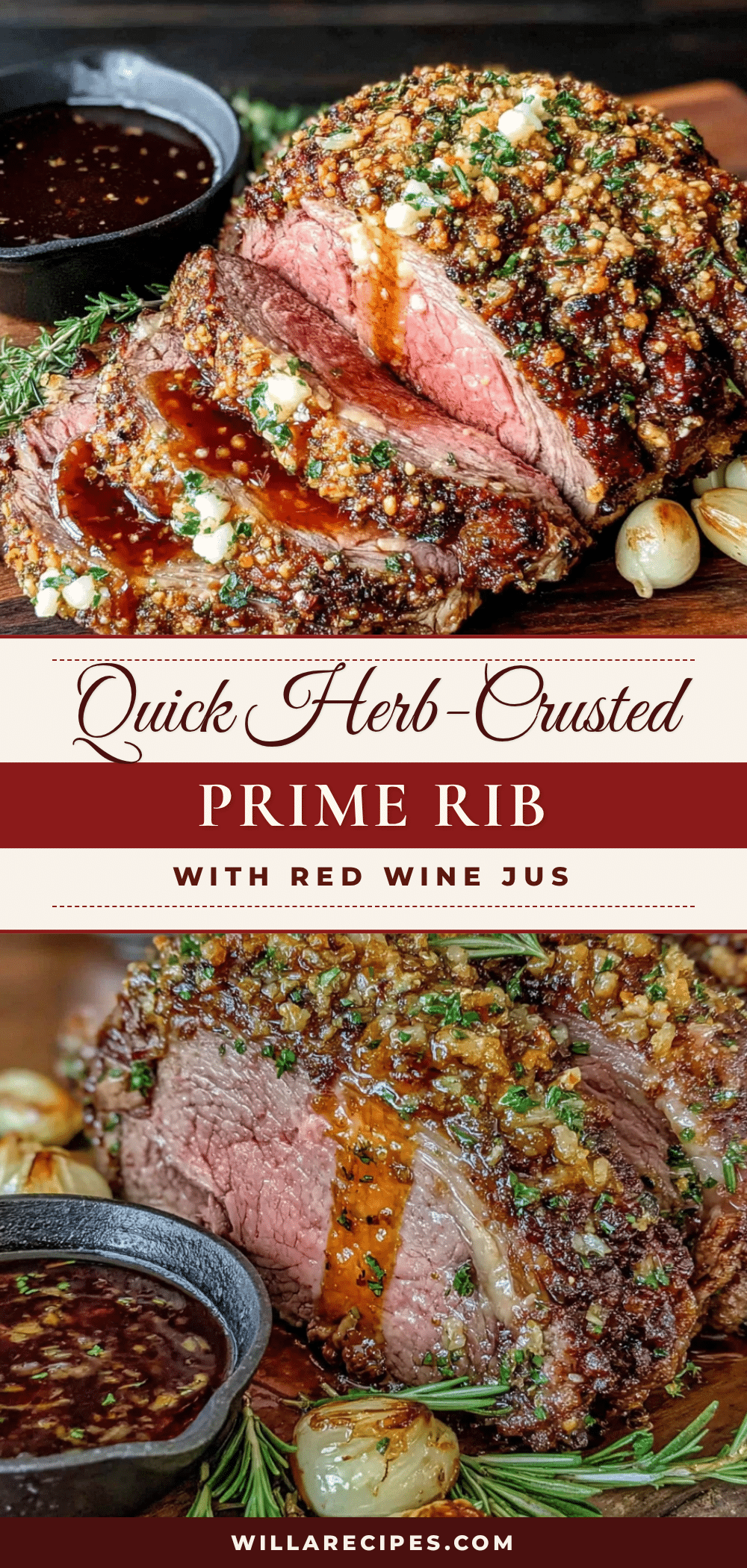
Quick Herb-Crusted Prime Rib with Easy Red Wine Jus
This quick herb-crusted prime rib with red wine jus is the kind of recipe that makes you wonder why you ever stressed about holiday dinners. It’s got that beautiful, aromatic herb crust with rosemary and thyme that fills your whole kitchen with the most incredible smell.
- Prep Time: 10 minutes
- Cook Time: 45 minutes
- Total Time: 1 hour 30 minutes
- Yield: 8 servings 1x
- Category: Main Course
- Cuisine: American
Ingredients
- 1 (4-5 pound) boneless prime rib roast
- 2 tablespoons olive oil
- 2 tablespoons fresh rosemary, finely chopped
- 2 tablespoons fresh thyme leaves
- 4 cloves garlic, minced
- 1 tablespoon kosher salt
- 1 teaspoon black pepper, freshly ground
- 1 cup dry red wine (Cabernet Sauvignon or Merlot)
- 2 cups beef broth, low-sodium
- 2 tablespoons unsalted butter
- 1 tablespoon all-purpose flour
- 1 teaspoon Worcestershire sauce
- Salt and pepper to taste
Instructions
- Take your prime rib out of the refrigerator about 30 minutes before you start cooking. Pat it completely dry with paper towels. In a small bowl, combine the chopped rosemary, thyme, minced garlic, kosher salt, and black pepper. Drizzle the olive oil over the roast and rub it all over, then press the herb mixture firmly onto all sides.
- Preheat your oven to 450°F. Place your cast-iron skillet or roasting pan over high heat on the stovetop. Let it get screaming hot. Carefully place the seasoned roast in the pan and sear for 3-4 minutes per side, rotating to get all sides, including the ends, until a deep, golden-brown crust forms.
- Once the roast is beautifully seared on all sides, transfer the pan to the preheated oven. Roast for 15 minutes at 450°F, then reduce the oven temperature to 325°F and continue roasting until the internal temperature reaches 125°F for medium-rare. This usually takes about 15-25 minutes more, depending on the size of your roast.
- Remove the roast from the oven and transfer it to a cutting board. Tent it loosely with aluminum foil and let it rest for at least 15-20 minutes. While the roast rests, make the red wine jus. Place the same skillet or roasting pan over medium-high heat on the stovetop. Add the red wine and use a wooden spoon to scrape up all those browned bits from the bottom. Let the wine simmer for 2-3 minutes until it reduces slightly. Whisk in the flour and cook for 1 minute, then slowly pour in the beef bro…
- After the roast has rested, slice it against the grain into 1/2-inch thick slices. Arrange the slices on a platter and pour a little of the red wine jus over the top. Serve the remaining jus on the side.
Notes
Don’t skip the resting time. Use a thermometer, not a timer. Patience with the sear. Make the jus while the meat rests. Slice against the grain.
Nutrition
- Serving Size: 6 ounces
- Calories: 420
- Sugar: 1
- Sodium: 680
- Fat: 24
- Saturated Fat: 9
- Carbohydrates: 4
- Protein: 45
Keywords: prime rib, herb crust, red wine jus, quick, easy, holiday, dinner, beef