I was standing in the middle of a hardware store last November when the smell hit me. Not sawdust or paint thinner—someone had set up one of those plug-in oil diffusers near the lighting aisle, and the scent was cinnamon and clove and something faintly savory. And just like that, I was twenty-two again, wedged into my friend Jenna’s tiny Brooklyn kitchen with seven other people, all of us holding paper plates piled high with turkey meatball sliders. The radiator was hissing, someone’s phone was playing a shuffled playlist, and Jenna was passing around a bowl of pickled jalapeños she’d made herself because she insisted the acidity cut through the richness. I’d forgotten about that night—the way the rolls got slightly soggy from the marinara, the way the turkey meatballs were somehow both tender and slightly crispy at the edges. I stood there in the hardware store for a solid minute, just breathing, trying to hold onto the feeling.
That night was the first Friendsgiving I’d ever been to, and honestly, I had no idea what I was doing. I showed up with a bag of store-bought dinner rolls and a six-pack of cider, feeling wildly underprepared. Jenna, who somehow managed to feed twelve people from a kitchen the size of a closet, handed me a slider and said, “Just taste this.” One bite, and I got it. The whole point of Friendsgiving isn’t the turkey or the sides—it’s the gathered chaos, the mismatched chairs, the someone-bring-more-napkins energy. And these sliders were the perfect vehicle for all of it. You can hold one in one hand while gesturing wildly with the other. They don’t require a plate or a fork. They’re built for mingling.
I spent the next few years trying to recreate that exact slider. I’d text Jenna for details—what kind of cheese did she use? Did she toast the buns? Was there something in the meatballs besides turkey? She’d send back vague answers, half-remembered, and I’d be left guessing. But you know how it is—sometimes the memory is better than the thing itself, and no matter how closely you follow a recipe, you can’t replicate a specific night. So I stopped trying to copy it exactly and started making my own version. This one. It’s got the same spirit—crowd-friendly, make-ahead possible, ridiculously satisfying—but it’s mine now. And honestly, it might be even better than Jenna’s. Don’t tell her I said that.
Why You’ll Love This Recipe
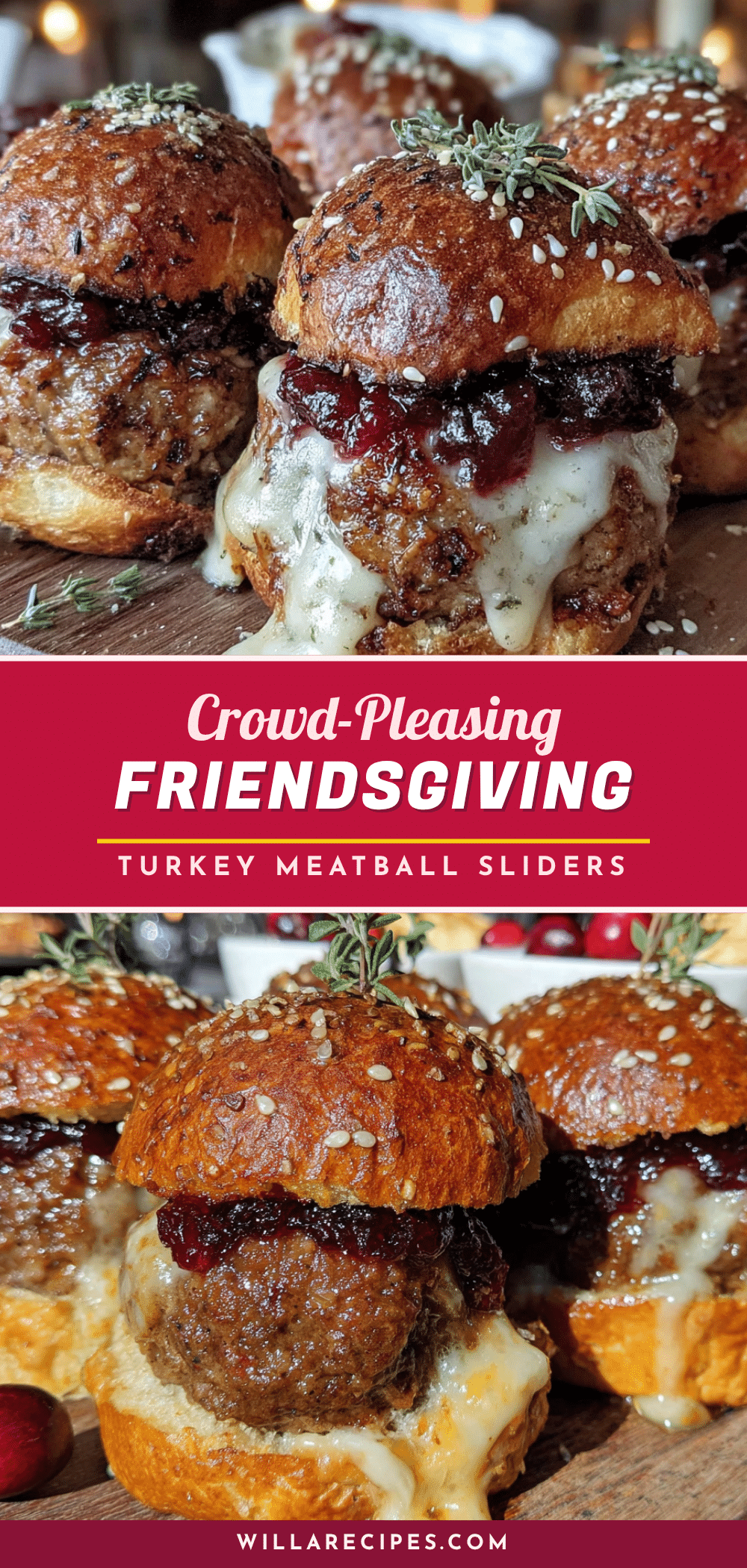
Let me tell you why these sliders have become my non-negotiable Friendsgiving contribution. I’ve tested this recipe across three different gatherings, tweaking and adjusting, and it’s finally at the point where people ask for the recipe before they’ve even finished eating. There’s something about the combination of juicy turkey meatballs, melty provolone, and soft, buttery rolls that just works. No one ever walks away from the platter unsatisfied.
- Made for a Crowd : This recipe scales effortlessly. Need to feed eight? Double it. Sixteen? Triple it. The meatballs hold their shape, the sliders stack beautifully on a platter, and everything stays warm for a good hour under a foil tent.
- Make-Ahead Friendly : You can prep the meatballs two days in advance, assemble the sliders the morning of, and pop them in the oven when guests arrive. That’s the kind of hosting I can get behind.
- Simple Ingredients : Ground turkey, breadcrumbs, eggs, cheese, marinara, slider buns—nothing you need to hunt down at a specialty store. Most of it is probably in your kitchen right now.
- Customizable for Dietary Needs : Swap the provolone for dairy-free cheese, use gluten-free buns, or add a spoonful of harissa to the meatball mix for a spicy kick. Everyone leaves happy.
- Visually Impressive : There’s something undeniably satisfying about a tray of golden, cheese-topped sliders. They look like you spent hours, but the whole thing comes together in under an hour.
What makes this recipe different from the dozens of other slider recipes out there? It’s the technique. I brown the meatballs in a skillet first—just enough to get a crust on the outside—before finishing them in the oven with the sauce. That extra step keeps them from turning into dry, sad little orbs. Also, I brush the tops of the rolls with garlic butter before baking. It’s a small thing, but it makes the whole kitchen smell like a restaurant and gives the buns that irresistible golden crust.
This isn’t just another appetizer recipe. This is the one that makes people close their eyes after the first bite. It’s comfort food that feels special without being fussy—perfect for the kind of gathering where everyone brings a dish and leaves with a full stomach and a slightly louder laugh.
What Ingredients You Will Need
This recipe relies on straightforward ingredients that work together to create something greater than the sum of their parts. Here’s what you’ll need, along with a few notes from my personal testing.
For the Turkey Meatballs
- 1 pound ground turkey (93/7 lean) — I prefer 93/7 for meatballs. Anything leaner tends to dry out during cooking. If you can only find 99% lean, add an extra tablespoon of olive oil to the mix.
- 1/2 cup plain breadcrumbs — Panko works beautifully here, giving the meatballs a lighter texture. Regular breadcrumbs are fine too, but you might need to reduce the milk slightly.
- 1/4 cup milk (whole or 2%) — This keeps the meatballs moist. I’ve used oat milk in a pinch, and it worked fine—just make sure it’s unsweetened.
- 1 large egg, lightly beaten — The binder that holds everything together. No egg? Use 2 tablespoons of olive oil or a flax egg (1 tablespoon ground flaxseed mixed with 3 tablespoons water).
- 1/4 cup finely grated Parmesan cheese — Adds umami and salt. I use the stuff in the green can when I’m lazy, but freshly grated really does make a difference here.
- 2 cloves garlic, minced — Fresh is non-negotiable for me. The jarred stuff tastes metallic in this application.
- 1 teaspoon dried oregano — I’ve tried fresh oregano, and honestly, dried holds up better during cooking. Crush it between your palms before adding to release the oils.
- 1/2 teaspoon salt — Start here and adjust. Different cheeses have different salt levels.
- 1/4 teaspoon black pepper — Freshly ground, always.
- 2 tablespoons olive oil (for browning) — Avocado oil works too, but olive oil adds a subtle fruity note.
For the Sliders
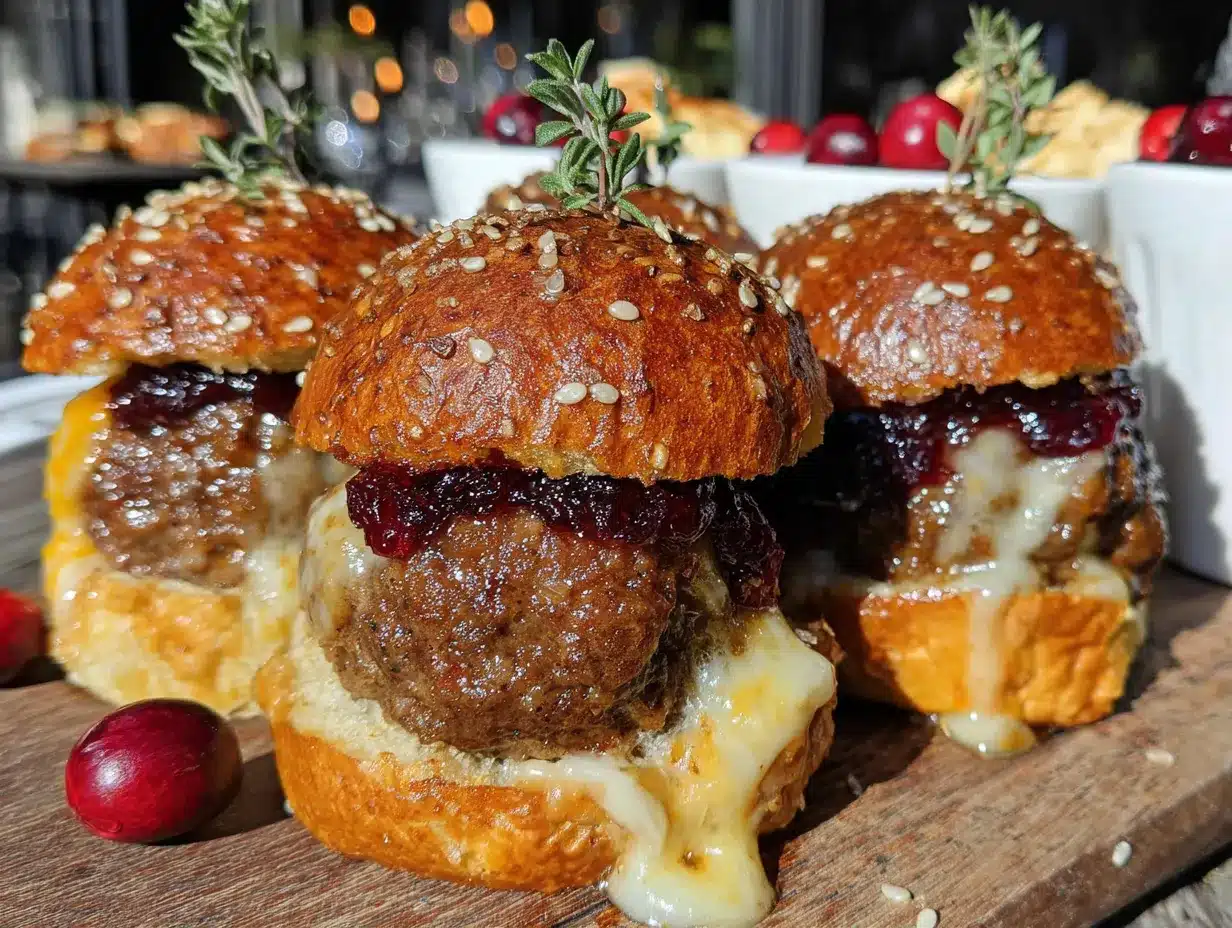
- 12 slider buns — I use Martin’s potato rolls. They’re soft, slightly sweet, and hold up to the meatballs without falling apart. If you can’t find them, any soft dinner roll will work—just avoid anything too crusty or dense.
- 1 1/2 cups marinara sauce — Use your favorite jarred sauce or make your own. I’m partial to Rao’s for store-bought—it’s thick and not overly sweet. If you’re feeling ambitious, a quick homemade sauce with crushed tomatoes, garlic, and basil takes about 20 minutes.
- 6 slices provolone cheese, halved — Provolone melts beautifully and has enough flavor to stand up to the meatballs. Low-moisture mozzarella works too, but it’s milder. Avoid pre-shredded cheese—it doesn’t melt as smoothly.
- 3 tablespoons unsalted butter, melted — For brushing the tops. Don’t skip this. It’s what gives the sliders that glossy, golden finish.
- 1 clove garlic, minced (for butter) — Adds flavor to the butter wash. Garlic powder works in a pinch, but fresh is better.
- 1 tablespoon fresh parsley, chopped (optional) — For garnish. It makes the sliders look restaurant-ready, and the freshness cuts through the richness.
Equipment Needed
You don’t need a professional kitchen to pull these off, but a few specific tools make the process smoother.
- Large skillet or frying pan — For browning the meatballs. A 12-inch skillet gives you enough room to work in batches without overcrowding. Cast iron or nonstick both work—just avoid overcrowding either way.
- Baking sheet or 9×13-inch baking dish — For assembling and baking the sliders. A rimmed baking sheet works best because it catches any sauce that bubbles over. Line it with parchment paper for easier cleanup.
- Mixing bowls — One large bowl for the meatball mixture, one small bowl for the garlic butter.
- Cookie scoop or tablespoon — For portioning meatballs evenly. I use a 1.5-tablespoon scoop. It gives you consistent sizes, which means even cooking. If you don’t have one, wet your hands slightly and roll them by hand.
- Pastry brush — For brushing the garlic butter onto the buns. A silicone brush is easier to clean, but a natural bristle brush works fine.
- Aluminum foil — For tenting the sliders during the first part of baking. It traps steam and keeps the buns from drying out before the cheese melts.
If you don’t have a pastry brush, just use the back of a spoon to spread the butter. It’s not as pretty, but it works. And if you’re making these for a crowd and don’t have a big enough baking sheet, use two smaller ones and rotate them halfway through baking.
Preparation Method
Here’s the step-by-step process. I’ve included time estimates and sensory cues so you know exactly what to look for at each stage.
Step 1: Make the Meatball Mixture (10 minutes)
In a large mixing bowl, combine the ground turkey, breadcrumbs, milk, beaten egg, Parmesan cheese, minced garlic, oregano, salt, and pepper. Use your hands to mix everything together—don’t overwork it. You want it just combined; overmixing makes the meatballs tough. The mixture should feel moist but hold together when pressed. If it feels too wet, add another tablespoon of breadcrumbs. Too dry? Add a splash more milk.
Step 2: Form and Brown the Meatballs (15 minutes)
Using a cookie scoop or your hands, form the mixture into 12 uniform meatballs, each about 1.5 inches in diameter. Place them on a plate or baking sheet as you go.
Heat the olive oil in a large skillet over medium-high heat. When the oil shimmers and a test piece of meat sizzles immediately, add the meatballs in a single layer. Don’t crowd the pan—work in two batches if necessary. Brown them on all sides, turning gently with tongs, for about 2-3 minutes per side. You’re not cooking them through here, just building a crust. The meatballs should be deeply golden on the outside and still raw in the center. Transfer them to a plate and repeat with the remaining batch.
Step 3: Assemble the Sliders (10 minutes)
Preheat your oven to 375°F (190°C).
Slice the slider buns in half horizontally, keeping the tops and bottoms connected in a single sheet if possible. Place the bottom halves in your baking dish or on the lined baking sheet. Spoon about half the marinara sauce over the bottom buns, spreading it evenly. Arrange the browned meatballs on top of the sauce, spacing them evenly—one meatball per slider. Spoon the remaining sauce over the meatballs, then lay the halved provolone slices over the top. Place the top buns on, pressing down gently.
Step 4: Add the Garlic Butter and Bake (20-25 minutes)
In a small bowl, mix the melted butter with the minced garlic. Brush this mixture generously over the tops of the buns. Don’t be shy—every bit of butter adds flavor and color.
Cover the baking dish loosely with aluminum foil and bake for 15 minutes. Remove the foil and bake for another 5-10 minutes, until the cheese is fully melted and the tops are golden brown. The internal temperature of the meatballs should reach 165°F (74°C) if you want to be precise, but honestly, if the cheese is bubbly and the buns are toasty, you’re good.
Step 5: Rest and Serve (5 minutes)
Let the sliders rest for 5 minutes before serving. This allows the cheese to set slightly so it doesn’t slide off when you lift a slider. Garnish with fresh parsley if you’re feeling fancy. Serve warm, directly from the baking dish.
Cooking Tips & Techniques
I’ve made these sliders enough times to learn a few things the hard way. Here’s what I wish someone had told me.
Don’t skip the browning step. I know it’s tempting to just throw the raw meatballs into the sauce and let the oven do the work. I’ve done it. The result is a pale, sad meatball with no texture contrast. That golden crust isn’t just for looks—it adds a layer of flavor that makes the whole dish sing. Plus, the browning creates fond (those brown bits stuck to the pan) that you’re not deglazing here, but the mental satisfaction counts.
Use a thermometer if you’re nervous about turkey. Ground turkey has a bad reputation for drying out, but if you pull the meatballs at 165°F (74°C), they’ll be perfectly juicy. If you don’t have a thermometer, cut one open—no pink, juices run clear. But honestly, the 93/7 fat content and the milk in the mixture keep them moist.
Toast the buns if you have time. Before assembling, you can pop the bottom buns under the broiler for 30 seconds. It creates a barrier that prevents the sauce from making them soggy. I don’t always do this, but when I do, the texture is noticeably better.
Work in batches when browning. If you crowd the pan, the meatballs steam instead of searing. You’ll end up with gray, sad meatballs. Give them space. Two batches take an extra 5 minutes and make all the difference.
Let the meatballs rest after browning. They’ll continue cooking slightly from residual heat. This rest period also lets the juices redistribute, so they stay moist during the final bake.
Variations & Adaptations
One of the best things about this recipe is how adaptable it is. Here are a few variations I’ve tried and loved.
Spicy Chipotle Version : Add 1-2 chipotle peppers in adobo sauce (minced) to the meatball mixture. The smokiness pairs beautifully with the turkey. Top with pepper jack cheese instead of provolone for an extra kick. I made this version for a game day party, and it disappeared in 20 minutes.
Italian Sausage Style : Swap half the ground turkey for sweet or hot Italian sausage (casings removed). The added fat from the sausage keeps the meatballs extra moist, and the fennel in the sausage adds a subtle anise note that works surprisingly well with the marinara.
Gluten-Free Adaptation : Use gluten-free breadcrumbs or crushed pork rinds as the binder. Serve on gluten-free slider buns. I’ve tested this with Schar’s gluten-free ciabatta rolls, and they held up beautifully. Just be careful not to overbake, as gluten-free buns dry out faster.
Dairy-Free Option : Skip the Parmesan in the meatballs (or use a dairy-free alternative) and use dairy-free cheese slices. The milk can be swapped for unsweetened almond milk or oat milk. The texture is slightly less rich, but the flavor is still solid.
Herb-Forward Version : Add 1/4 cup chopped fresh basil and 2 tablespoons chopped fresh parsley to the meatball mixture. It brightens the whole dish and feels more spring-like. I make this version when I’m craving something lighter.
Serving & Storage Suggestions
These sliders are best served warm, straight from the oven. Arrange them on a large platter with the parsley garnish and watch them disappear. They’re perfect for a Friendsgiving spread alongside a simple green salad, roasted vegetables, or a bowl of creamy coleslaw for crunch.
For beverages, I love these with a crisp lager or a light red wine like Pinot Noir. If you’re keeping it non-alcoholic, a sparkling apple cider or a tart lemonade cuts through the richness beautifully.
Storage : Leftover sliders (if you have any) can be stored in an airtight container in the refrigerator for up to 3 days. The buns will soften, but the flavor is still great. To reheat, wrap them in foil and warm in a 350°F (175°C) oven for 10 minutes. Avoid the microwave—it turns the buns into rubber.
Freezing : You can freeze the assembled, unbaked sliders. Wrap the entire baking dish tightly in plastic wrap, then foil, and freeze for up to 2 months. To bake, thaw overnight in the refrigerator, then follow the baking instructions, adding 5-10 minutes to the covered baking time. I’ve done this for a last-minute gathering, and no one knew they were frozen the day before.
Flavor Development : Honestly, these sliders taste even better the next day. The flavors meld together overnight, and the buns absorb just enough sauce to become soft and savory without being soggy. If you’re making them for a party, assembling them a day ahead and baking just before serving is a solid strategy.
Nutritional Information & Benefits
Here’s an approximate nutritional breakdown per slider (based on 12 sliders using the ingredients listed):
- Calories : 310
- Protein : 22g
- Fat : 14g
- Carbohydrates : 24g
- Fiber : 2g
- Sugar : 5g
- Sodium : 580mg
Ground turkey is a lean source of protein, lower in saturated fat than beef or pork. It’s also a good source of selenium, which supports thyroid function and acts as an antioxidant. The Parmesan and provolone add calcium, and the marinara provides a serving of vegetables (yes, tomatoes count). If you’re watching your sodium, use low-sodium marinara and reduce the added salt in the meatballs.
These sliders are not low-carb, but they can be adapted with lettuce wraps or low-carb buns if needed. They’re naturally nut-free (unless you use almond milk) and can be made gluten-free with the substitutions mentioned above.
I’m not a nutritionist, but I’ve learned that food like this—shared with people you love—is good for you in ways that go beyond macros. There’s something nourishing about the act of passing a platter, watching someone take their first bite, hearing that little hum of approval. That’s the real benefit.
Conclusion
These Friendsgiving Turkey Meatball Sliders have become my signature dish, and I think they deserve to be yours too. They’re forgiving enough for a beginner cook, impressive enough for a seasoned host, and crowd-friendly in a way that makes everyone feel included. The meatballs stay juicy, the cheese gets gloriously melty, and the garlic butter on top? It’s the kind of detail that makes people think you tried harder than you actually did.
I love this recipe because it reminds me of that night in Jenna’s apartment—the chaos, the laughter, the feeling of being part of something. But I also love it because it’s become my own. I’ve tweaked it, tested it, and served it to friends who now request it by name. That’s the magic of cooking, isn’t it? You start with someone else’s memory, and you end up making your own.
I’d love to hear how these turn out for you. Did you add a twist? Serve them with something unexpected? Drop a comment below and let me know—I read every single one. And if you’re planning a Friendsgiving of your own, these sliders are your secret weapon. Trust me on this.
Now go preheat that oven. Your people are waiting.
Frequently Asked Questions
Can I use ground beef instead of turkey?
Absolutely. Ground beef (80/20) will yield richer, juicier meatballs. Just drain any excess fat after browning. The cooking time remains the same.
Can I make these in a slow cooker?
Yes. Brown the meatballs first, then transfer them to a slow cooker with the marinara sauce. Cook on low for 2-3 hours. Assemble the sliders on buns just before serving, add cheese, and broil for 2-3 minutes until melted.
How do I prevent the sliders from getting soggy?
Toast the bottom buns under the broiler for 30 seconds before assembling. Also, don’t oversauce—1 1/2 cups is plenty for 12 sliders. If you’re making them ahead, store the sauce and buns separately.
Can I freeze the cooked meatballs?
Yes. Cook the meatballs completely, let them cool, then freeze in a single layer on a baking sheet. Transfer to a freezer bag for up to 3 months. Thaw in the refrigerator overnight before assembling the sliders.
What’s the best way to reheat leftovers?
Wrap individual sliders in foil and warm in a 350°F (175°C) oven for 10 minutes. The microwave works in a pinch, but the buns will be soft and the cheese may become rubbery. Oven is always better.
Pin This Recipe!
Easy Friendsgiving Turkey Meatball Sliders Recipe
Juicy turkey meatballs, melty provolone, and soft buttery rolls come together in these crowd-friendly sliders. Perfect for Friendsgiving or any gathering, they’re make-ahead friendly and disappear fast.
- Prep Time: 25 minutes
- Cook Time: 25 minutes
- Total Time: 50 minutes
- Yield: 12 sliders 1x
- Category: Appetizer
- Cuisine: American
Ingredients
- 1 pound ground turkey (93/7 lean)
- 1/2 cup plain breadcrumbs (panko preferred)
- 1/4 cup milk (whole or 2%)
- 1 large egg, lightly beaten
- 1/4 cup finely grated Parmesan cheese
- 2 cloves garlic, minced
- 1 teaspoon dried oregano
- 1/2 teaspoon salt
- 1/4 teaspoon black pepper
- 2 tablespoons olive oil (for browning)
- 12 slider buns (e.g., Martin’s potato rolls)
- 1 1/2 cups marinara sauce
- 6 slices provolone cheese, halved
- 3 tablespoons unsalted butter, melted
- 1 clove garlic, minced (for butter)
- 1 tablespoon fresh parsley, chopped (optional, for garnish)
Instructions
- In a large mixing bowl, combine ground turkey, breadcrumbs, milk, beaten egg, Parmesan, minced garlic, oregano, salt, and pepper. Mix with your hands until just combined; do not overwork.
- Form mixture into 12 uniform meatballs, about 1.5 inches in diameter.
- Heat olive oil in a large skillet over medium-high heat. Brown meatballs on all sides, about 2-3 minutes per side, working in batches if needed. They should be deeply golden outside and still raw inside.
- Preheat oven to 375°F (190°C).
- Slice slider buns in half horizontally, keeping tops and bottoms connected if possible. Place bottom halves in a baking dish or on a lined baking sheet.
- Spoon half the marinara sauce over bottom buns. Arrange browned meatballs on top, then spoon remaining sauce over meatballs. Lay provolone halves over the top.
- Place top buns on, pressing gently. In a small bowl, mix melted butter with minced garlic and brush generously over bun tops.
- Cover loosely with aluminum foil and bake for 15 minutes. Remove foil and bake another 5-10 minutes until cheese is melted and tops are golden brown.
- Let sliders rest for 5 minutes before serving. Garnish with fresh parsley if desired. Serve warm.
Notes
Don’t skip browning the meatballs—it adds flavor and texture. For best results, use 93/7 ground turkey. Toast bottom buns under broiler for 30 seconds to prevent sogginess. Sliders can be assembled a day ahead and baked just before serving.
Nutrition
- Serving Size: 1 slider
- Calories: 310
- Sugar: 5
- Sodium: 580
- Fat: 14
- Saturated Fat: 6
- Carbohydrates: 24
- Fiber: 2
- Protein: 22
Keywords: turkey meatball sliders, Friendsgiving, appetizer, party food, slider recipe, turkey meatballs