This was supposed to be pan-seared salmon with a creamy dill sauce. I had the dill picked, the cream measured, and even a fancy white wine I’d been saving for the deglazing step. But then the power flickered. Not a full blackout, just enough to make my induction cooktop throw a little tantrum and refuse to heat evenly. I stood there, staring at the raw fillets, the now-warm cream, and the clock ticking towards dinner. In a moment of pure kitchen panic, I grabbed a baking dish, threw the salmon in, and started rummaging for anything that didn’t need a stovetop. What came out of the oven was nothing like the plan — and better.
Honestly, I almost didn’t even blog it. I mean, baked salmon is so simple, right? Everyone has a version. But the first time I made this Spring Baked Salmon with Lemon Garlic Butter, the smell alone brought my neighbor, Carol, over to the back door. “What on earth is that?” she asked, peeking over the fence. I handed her a forkful, still warm from the dish, and she actually closed her eyes. That’s when I knew this wasn’t just a backup plan. It was the new plan.
That first happy accident taught me something: sometimes the best recipes come from the moments you think you’ve ruined everything. The lemon garlic butter bastes the salmon as it roasts, keeping it impossibly tender, while the spring vegetables — asparagus, snap peas, whatever’s in your crisper — soak up all those savory juices. It’s the kind of meal that feels like a celebration but comes together with almost no hands-on work. Maybe you’ve been there, standing in a kitchen that isn’t cooperating, wondering how to salvage dinner. Let me tell you, this spring baked salmon is your answer.
Why You’ll Love This Recipe
This isn’t just another salmon recipe. It’s the one that will make you forget the stovetop even exists. After countless tests (and a few overcooked fillets I’d rather not discuss), I’ve landed on a method that delivers perfectly flaky fish and tender-crisp vegetables every single time.
- Quick & Easy: Ready in under 30 minutes, with only 5 minutes of active prep. Perfect for those busy spring evenings when you want something special without the fuss.
- Simple Ingredients: You likely have everything you need already. Lemon, garlic, butter, and salmon — that’s the heart of it. No exotic grocery store trips required.
- Perfect for Spring: This dish was made for the season. Fresh asparagus, sweet peas, and new potatoes all shine alongside the bright, citrusy salmon.
- Crowd-Pleaser: I’ve served this at casual weeknight dinners and fancier spring gatherings. It gets rave reviews every time. Even my friend who “doesn’t like fish” asked for seconds.
- Unbelievably Delicious: The lemon garlic butter creates a rich, savory sauce that coats every bite. The salmon stays moist and tender, while the edges get just a little golden and crispy.
What makes this version different? It’s the technique of basting the salmon with the melted butter as it roasts, which keeps the fish from drying out and infuses every layer with flavor. Plus, the vegetables roast right alongside, so you have a complete meal in one dish. It’s comfort food reimagined for spring — lighter, brighter, but with the same soul-soothing satisfaction.
What Ingredients You Will Need
This recipe uses simple, fresh ingredients to build big flavor. The key is using good-quality salmon and letting the lemon garlic butter do its magic. Here’s what you’ll need:
For the Salmon & Vegetables
- 4 salmon fillets (6 oz / 170g each), skin-on or skinless (I prefer skin-on for extra moisture, but either works)
- 1 lb (450g) asparagus, woody ends trimmed (look for bright green, firm stalks)
- 1 cup (150g) snap peas, trimmed (adds a lovely spring crunch)
- 1 lemon, thinly sliced (use a whole lemon for a milder citrus flavor)
- Salt and black pepper, to taste
- Fresh parsley, chopped, for garnish (optional, but adds a nice pop of color)
For the Lemon Garlic Butter
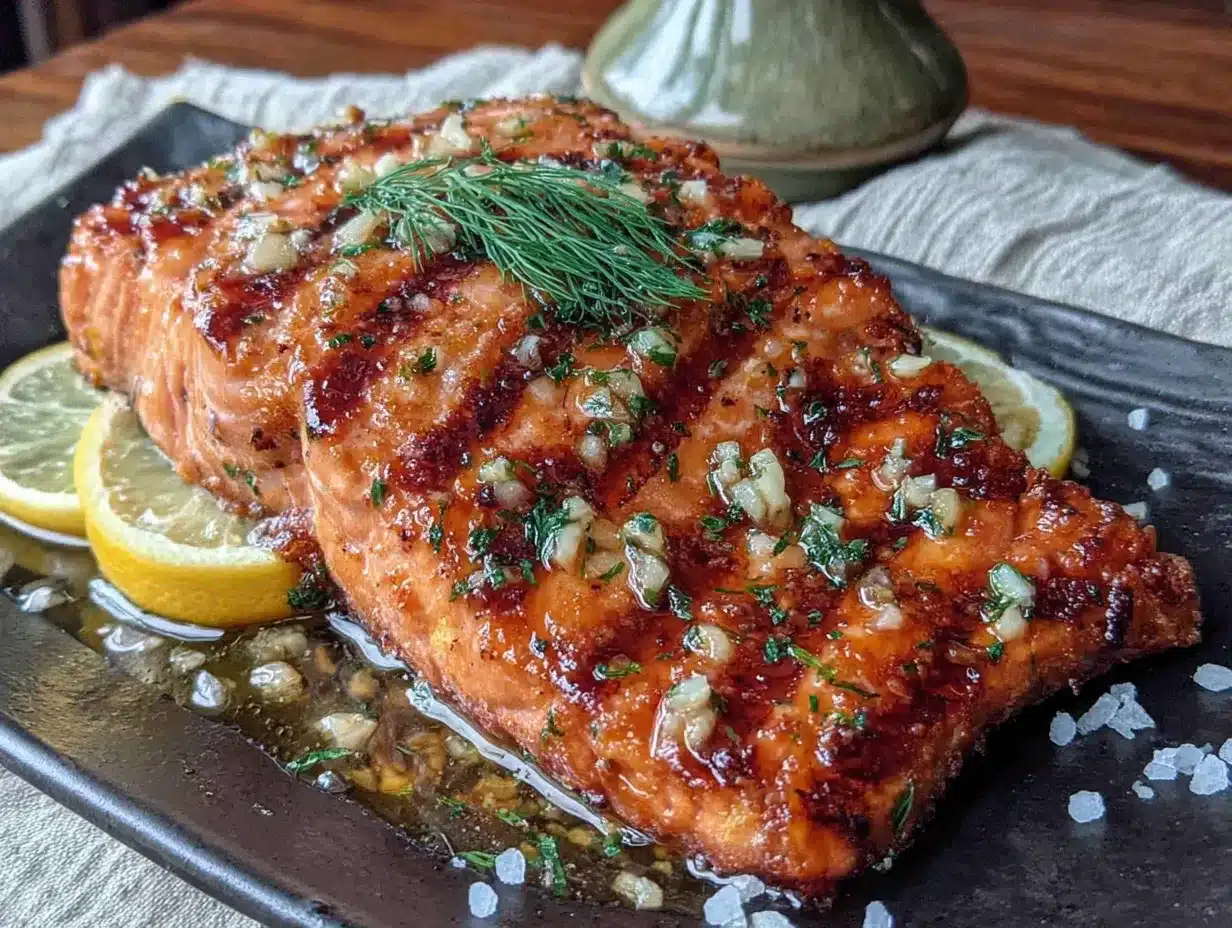
- 4 tablespoons (60g) unsalted butter, melted (I use Kerrygold for its rich flavor)
- 3 cloves garlic, minced (fresh is best; pre-minced can be bitter)
- 2 tablespoons (30ml) fresh lemon juice (about 1 lemon)
- 1 teaspoon lemon zest (adds bright, aromatic flavor)
- 1/2 teaspoon dried oregano (or 1 teaspoon fresh, chopped)
- 1/4 teaspoon red pepper flakes (optional, for a little heat)
Ingredient Tips & Substitutions
- Salmon: Look for wild-caught salmon when possible — it has a firmer texture and richer flavor. If using frozen, thaw completely in the refrigerator overnight and pat dry before cooking.
- Asparagus: If asparagus isn’t in season, swap in broccoli florets, green beans, or zucchini slices. Adjust roasting time as needed.
- Butter: Use salted butter and reduce the added salt by about 1/4 teaspoon. For a dairy-free option, use a high-quality vegan butter or olive oil.
- Garlic: Don’t skip the fresh garlic — it’s the backbone of the butter sauce. If you’re in a pinch, 1/2 teaspoon of garlic powder can work, but the flavor won’t be as bright.
Equipment Needed
You don’t need much for this recipe, which is part of its charm. Here’s what I use:
- Baking dish or sheet pan: A 9×13-inch baking dish works perfectly. A rimmed baking sheet is also great — it allows for better air circulation and helps the vegetables get a little caramelized.
- Small bowl: For mixing the lemon garlic butter.
- Chef’s knife and cutting board: For trimming asparagus and mincing garlic.
- Microplane or zester: For getting that fine lemon zest without the bitter pith. A vegetable peeler can also work in a pinch.
- Instant-read thermometer: Not essential, but it takes the guesswork out of cooking salmon. You’re looking for 125°F (52°C) for medium, 130°F (54°C) for medium-well.
If you don’t have a baking dish, a cast-iron skillet works beautifully — it holds heat well and gives the salmon a nice sear on the bottom. Just make sure it’s oven-safe.
Preparation Method
Let’s get cooking! This spring baked salmon comes together in just a few simple steps. I’ve included all the little details I’ve learned from making this dish dozens of times.
- Preheat your oven to 400°F (200°C). While it’s heating, take the salmon out of the fridge and let it sit at room temperature for about 10 minutes. This helps it cook more evenly.
- Make the lemon garlic butter. In a small bowl, whisk together the melted butter, minced garlic, lemon juice, lemon zest, oregano, and red pepper flakes (if using). Set aside. The smell at this point is already incredible.
- Prepare the vegetables. Trim the woody ends off the asparagus — just bend a stalk near the bottom and it will snap naturally where the tough part ends. Trim the snap peas if needed. Spread them in your baking dish or on a rimmed baking sheet in a single layer.
- Season the salmon. Pat the salmon fillets dry with paper towels. This is key for getting that nice golden exterior. Season both sides generously with salt and black pepper. Place the fillets on top of the vegetables, skin-side down if using skin-on fillets.
- Add the lemon slices and butter. Tuck the lemon slices around the salmon and vegetables. Pour the lemon garlic butter evenly over the salmon fillets and vegetables. Use a brush or spoon to make sure every piece gets some of that buttery goodness.
- Bake for 12-15 minutes. The exact time depends on the thickness of your fillets. For 1-inch thick fillets, start checking at 12 minutes. The salmon should be opaque and flake easily with a fork. The vegetables should be tender-crisp — still bright green but easily pierced with a fork.
- Optional: Broil for 1-2 minutes. If you want a slightly golden, caramelized top, switch your oven to broil for the last minute or two. Watch it carefully — it can go from perfect to burnt in seconds!
- Rest and serve. Let the salmon rest in the dish for 2-3 minutes. This allows the juices to redistribute. Sprinkle with fresh parsley and serve immediately.
Pro tip from my kitchen: If your salmon fillets are different thicknesses, place the thicker ones towards the back of the oven where it’s usually a bit hotter. This helps everything finish at the same time. I learned this after one too many meals where one piece was perfect and another was overdone.
Cooking Tips & Techniques
After making this spring baked salmon more times than I can count, I’ve picked up a few tricks that make a real difference. Here are the ones I swear by:
- Don’t skip the resting time. I know it’s tempting to dig in right away, but letting the salmon rest for a few minutes makes it noticeably more tender. The carryover cooking also brings it to the perfect temperature without overcooking.
- Use room temperature ingredients. Cold salmon straight from the fridge will cook unevenly. A 10-minute sit on the counter makes a world of difference. Same goes for the butter — make sure it’s fully melted so it coats everything evenly.
- Watch the garlic. Fresh garlic can burn quickly under the broiler. If you’re broiling at the end, keep a close eye on it. Burnt garlic turns bitter and can ruin the whole dish. When in doubt, skip the broil and just bake.
- Check for doneness with a fork. The fish should flake easily when gently pressed. If it resists, give it another minute or two. An instant-read thermometer is your best friend here — 125°F (52°C) for medium is my sweet spot.
- Don’t overcrowd the pan. Give the salmon and vegetables a little breathing room. If they’re too crowded, they’ll steam instead of roast, and you’ll miss out on those lovely caramelized edges.
One mistake I made early on? I used salted butter and then added extra salt. The result was a dish that was way too salty. Now I always use unsalted butter and season carefully. Learn from my mistake!
Variations & Adaptations
This spring baked salmon is incredibly versatile. Here are a few ways to switch it up based on what you have or what you’re craving:
- Herb Garden Variation: Swap the oregano for a mix of fresh dill, chives, and tarragon. The dill pairs beautifully with the lemon. I tried this last spring when my herb garden went wild, and it was a revelation.
- Mediterranean Twist: Add 1/2 cup of halved cherry tomatoes and a handful of Kalamata olives to the baking dish. Sprinkle with crumbled feta cheese after baking. This version is perfect for a summer dinner party.
- Spicy Maple Glaze: Whisk 2 tablespoons of maple syrup into the lemon garlic butter and add an extra 1/2 teaspoon of red pepper flakes. The sweet-spicy combo is incredible with the rich salmon.
- Low-Carb / Keto Adaptation: Skip the snap peas (they have a bit of sugar) and double up on asparagus or add zucchini noodles after baking. The butter and salmon are already keto-friendly.
- One-Pan Meal: Add 1 cup of halved new potatoes or baby red potatoes to the dish. Toss them in a little olive oil and salt before adding the salmon. They’ll need about 10 extra minutes in the oven, so start them first, then add the salmon and vegetables.
Serving & Storage Suggestions
This spring baked salmon is best served warm, straight from the oven. The lemon garlic butter creates a natural sauce that’s perfect for spooning over the fish and vegetables. Here’s how I like to serve it:
- Presentation: Arrange the salmon fillets on a platter with the roasted vegetables around them. Spoon any remaining butter sauce from the pan over the top. Garnish with fresh parsley and extra lemon wedges.
- Side dish ideas: This dish is a complete meal on its own, but it pairs beautifully with a simple green salad, crusty bread for soaking up the butter sauce, or a side of fluffy rice or quinoa.
- Wine pairing: A crisp Sauvignon Blanc or a light Pinot Grigio is a classic match. For a non-alcoholic option, try sparkling water with a splash of lemon.
Storage: Leftover salmon can be stored in an airtight container in the refrigerator for up to 2 days. The texture will be best if you eat it cold or gently reheated. To reheat, place the salmon in a low oven (300°F / 150°C) for 5-7 minutes, or enjoy it cold flaked over a salad. I actually love the leftovers for lunch the next day — the flavors meld together beautifully overnight.
Freezer: Cooked salmon can be frozen for up to 1 month. Wrap it tightly in plastic wrap and then foil. Thaw in the refrigerator overnight. The texture will be a bit softer after freezing, so it’s best used in salads or flaked into pasta.
Nutritional Information & Benefits
This spring baked salmon is not just delicious — it’s packed with nutrients that make it a smart choice for a healthy meal. Here’s an estimated breakdown per serving (based on 4 servings):
| Nutrient | Amount per Serving |
|---|---|
| Calories | 385 |
| Protein | 35g |
| Fat | 22g |
| Saturated Fat | 9g |
| Carbohydrates | 12g |
| Fiber | 4g |
| Sugar | 5g |
| Sodium | 480mg |
Health Benefits: Salmon is an excellent source of omega-3 fatty acids, which support heart and brain health. It’s also rich in high-quality protein and vitamin D. Asparagus is packed with folate and vitamins A, C, and K, while snap peas add a good dose of vitamin C and fiber. This meal is naturally gluten-free and can be made dairy-free with a simple butter swap. It’s also low in carbs, making it suitable for low-carb and keto diets.
Conclusion
This spring baked salmon with lemon garlic butter has become my go-to for so many reasons. It’s the recipe I turn to when I want something that feels special but doesn’t require hours in the kitchen. It’s the dish I make when I want to celebrate the season — those first few warm days when asparagus is finally in season and everything feels fresh and new. And honestly? It’s the recipe that taught me that some of the best things in the kitchen come from happy accidents.
I hope you give this a try and make it your own. Maybe you’ll add a little more garlic, or swap in your favorite spring vegetables. That’s the beauty of a simple recipe like this — it’s a starting point for your own creativity. When you make it, I’d love to hear how it turned out. Drop a comment below and let me know what you think! And if you’re looking for another easy weeknight dinner, you might enjoy my creamy lemon herb chicken — it has a similar bright, buttery flavor that’s perfect for spring.
Happy cooking, friends. Here’s to more happy accidents in the kitchen!
Frequently Asked Questions
Can I use frozen salmon for this recipe?
Yes, you can! Just make sure to thaw the salmon completely in the refrigerator overnight. Pat it very dry with paper towels before seasoning to remove any excess moisture. You may need to add an extra 2-3 minutes to the baking time.
How do I know when the salmon is done?
The easiest way is to use an instant-read thermometer — 125°F (52°C) for medium, 130°F (54°C) for medium-well. Without a thermometer, look for the salmon to be opaque and flake easily when gently pressed with a fork. The center should still be slightly translucent if you like it medium.
Can I make this recipe ahead of time?
This dish is best served fresh from the oven, but you can prep the ingredients ahead. Trim the vegetables, make the lemon garlic butter, and season the salmon up to a day in advance. Store everything separately in the refrigerator, then assemble and bake when you’re ready.
What if I don’t have asparagus?
No problem! You can substitute any spring vegetable — broccoli florets, green beans, zucchini slices, or even sugar snap peas all work well. Just adjust the roasting time based on the vegetable’s density. Broccoli and green beans will take about the same time as asparagus.
Can I use skinless salmon fillets?
Absolutely. Skinless fillets will cook slightly faster, so start checking for doneness a minute or two earlier. They may be a bit more delicate to handle, but the flavor will be just as delicious. If you’re using skin-on, the skin helps keep the fish moist and adds a nice crispy texture.
Pin This Recipe!
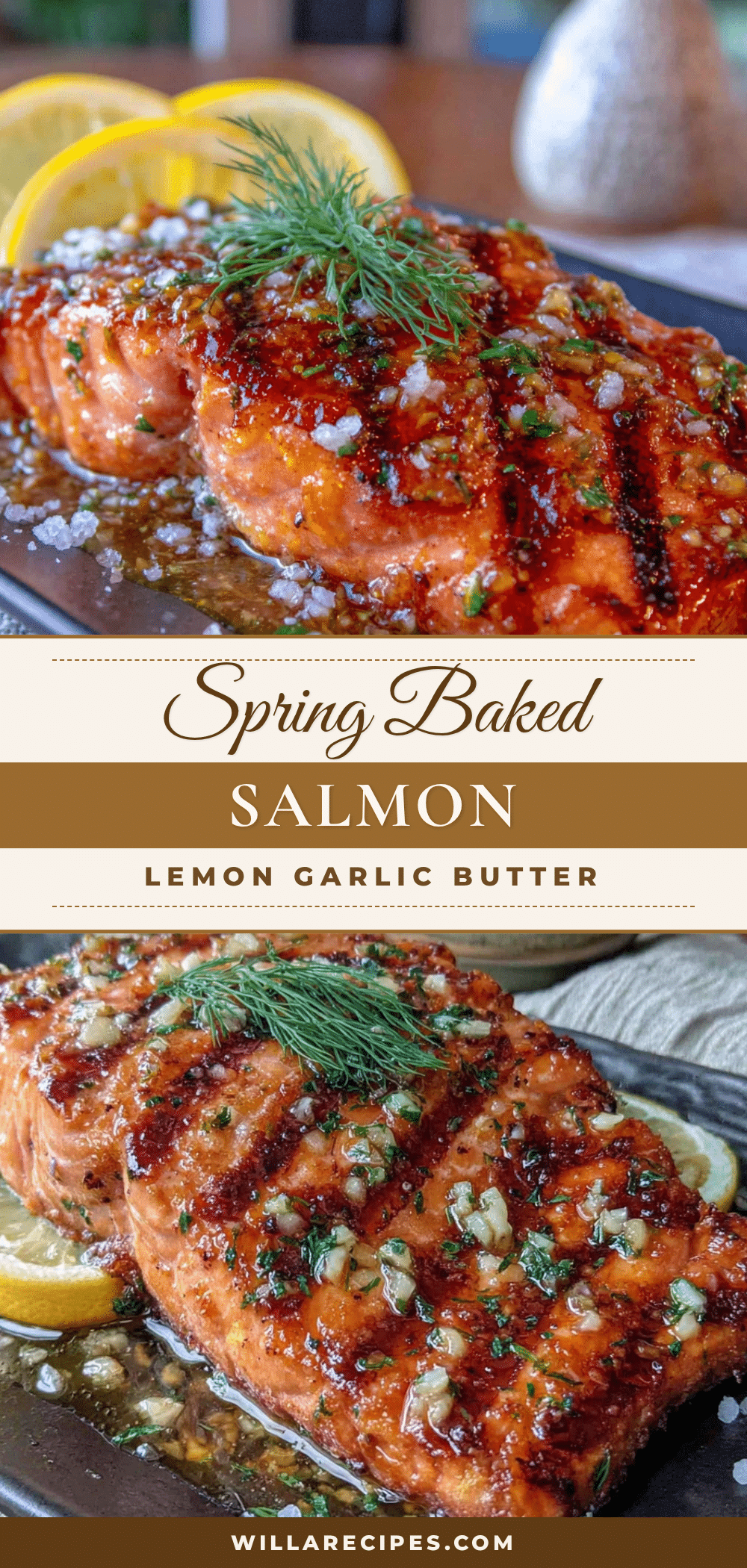
Easy Spring Baked Salmon with Lemon Garlic Butter

This spring baked salmon with lemon garlic butter is a quick and easy one-pan meal that delivers perfectly flaky fish and tender-crisp vegetables in under 30 minutes. It’s the perfect weeknight dinner that feels special without the fuss.
- Prep Time: 5 minutes
- Cook Time: 15 minutes
- Total Time: 20 minutes
- Yield: 4 servings 1x
- Category: Main Course
- Cuisine: American
Ingredients
- 4 salmon fillets (6 oz / 170g each), skin-on or skinless
- 1 lb (450g) asparagus, woody ends trimmed
- 1 cup (150g) snap peas, trimmed
- 1 lemon, thinly sliced
- Salt and black pepper, to taste
- Fresh parsley, chopped, for garnish (optional)
- 4 tablespoons (60g) unsalted butter, melted
- 3 cloves garlic, minced
- 2 tablespoons (30ml) fresh lemon juice
- 1 teaspoon lemon zest
- 1/2 teaspoon dried oregano
- 1/4 teaspoon red pepper flakes (optional)
Instructions
- Preheat your oven to 400°F (200°C). While it’s heating, take the salmon out of the fridge and let it sit at room temperature for about 10 minutes.
- Make the lemon garlic butter: In a small bowl, whisk together the melted butter, minced garlic, lemon juice, lemon zest, oregano, and red pepper flakes (if using). Set aside.
- Prepare the vegetables: Trim the woody ends off the asparagus and trim the snap peas if needed. Spread them in your baking dish or on a rimmed baking sheet in a single layer.
- Season the salmon: Pat the salmon fillets dry with paper towels. Season both sides generously with salt and black pepper. Place the fillets on top of the vegetables, skin-side down if using skin-on fillets.
- Add the lemon slices and butter: Tuck the lemon slices around the salmon and vegetables. Pour the lemon garlic butter evenly over the salmon fillets and vegetables.
- Bake for 12-15 minutes, depending on thickness. The salmon should be opaque and flake easily with a fork. The vegetables should be tender-crisp.
- Optional: Broil for 1-2 minutes for a golden, caramelized top. Watch carefully to avoid burning.
- Let the salmon rest in the dish for 2-3 minutes. Sprinkle with fresh parsley and serve immediately.
Notes
For best results, use room temperature salmon and pat dry before seasoning. If broiling, watch the garlic closely to prevent burning. Leftovers can be stored in the refrigerator for up to 2 days.
Nutrition
- Serving Size: 1 serving
- Calories: 385
- Sugar: 5
- Sodium: 480
- Fat: 22
- Saturated Fat: 9
- Carbohydrates: 12
- Fiber: 4
- Protein: 35
Keywords: baked salmon, lemon garlic butter, spring recipe, one-pan meal, quick dinner, healthy salmon, asparagus, snap peas