My neighbor Jenna wasn’t trying to impress anyone. I’d stopped by to borrow a corkscrew—a deeply unglamorous Tuesday errand—and this warm, almost caramelized smell hit me before I even got past her screen door. She was standing at the counter in an old t-shirt, mashing sweet potatoes with a fork like it was the most boring thing in the world. I mean, I practically drooled on her welcome mat. “Oh, that?” she said, barely looking up. “Just the sweet potato thing for Thursday.” She was so nonchalant about it, like she hadn’t just created a cloud of pure comfort in her kitchen. I stood there, corkscrew forgotten, watching her toss in a splash of vanilla and a pinch of something I couldn’t identify. She caught me staring and laughed. “It’s not a big deal. My grandma used to make it with a stick of butter and a cup of sugar. I kind of… fixed it.”
That was three years ago, and honestly, I haven’t stopped thinking about it. This isn’t the heavy, syrupy sweet potato casserole that sits on holiday tables like a brick of sugar. This is the version that lets the sweet potato actually taste like a sweet potato—earthy, creamy, and naturally sweet. The marshmallows are still there, because let’s be real, you need that gooey, toasted top. But everything else got a thoughtful, delicious makeover. Maybe you’ve been there, staring at a recipe that calls for more butter than potatoes and thinking, “There has to be a better way.” There is. Jenna found it, and I’ve been making her “fixed” version ever since. It’s the dish that gets quiet at the table—the kind of quiet where everyone is too busy eating to talk.
Why You’ll Love This Recipe
This lightened up marshmallow sweet potato casserole isn’t just another holiday side dish. It’s the one that disappears first, and people are always shocked when they find out it’s actually good for you. I’ve tested this version at three different Thanksgiving dinners, a Friendsgiving, and a random Tuesday night when I needed comfort food that wouldn’t leave me feeling sluggish. It passed every single test.
- Quick & Easy: Comes together in about 45 minutes, with only 15 minutes of hands-on prep. Perfect for busy holiday mornings or a weeknight craving for something cozy.
- Simple Ingredients: No weird health-food store finds here. You probably have most of this in your pantry right now—sweet potatoes, a touch of maple syrup, coconut oil, and marshmallows.
- Perfect for Holidays and Everyday Meals: It’s elegant enough for Thanksgiving but simple enough for a Sunday dinner. I’ve served it alongside roast chicken and even grilled salmon.
- Crowd-Pleaser: Kids love the marshmallow topping, and adults love that they can go back for seconds without regret. I’ve watched self-proclaimed sweet potato haters ask for the recipe.
- Unbelievably Delicious: The texture is what gets me every time—silky smooth potatoes with a slightly caramelized edge, topped with golden, toasted marshmallows. It’s comfort food that actually makes you feel good.
What makes this recipe different from the rest? It’s the technique. Instead of drowning the potatoes in cream and sugar, we roast them first to concentrate their natural sweetness. Then we mash them with a tiny bit of coconut oil and maple syrup—just enough to enhance, not mask. The marshmallows are the star on top, not an afterthought. It’s a balanced approach that lets every ingredient shine. Honestly, this is the kind of dish that makes you close your eyes after the first bite. It’s comfort food reimagined—lighter, brighter, but with the same soul-soothing satisfaction you crave.
What Ingredients You Will Need
This recipe uses simple, wholesome ingredients to deliver that classic sweet potato casserole flavor without the heavy feeling. Most of these are pantry staples, and I’ve tested several substitutions so you can make it work with what you have.
- Sweet Potatoes (3 pounds, about 4-5 medium): Look for firm, smooth-skinned sweet potatoes. I prefer Garnet or Jewel varieties for their natural sweetness and creamy texture. (Avoid yams, which can be starchier.)
- Coconut Oil (2 tablespoons, melted): This replaces butter and adds a subtle richness. Use refined coconut oil if you don’t want any coconut flavor, or unrefined for a light tropical note. (You can substitute with olive oil or melted butter if you prefer.)
- Maple Syrup (3 tablespoons, pure): Real maple syrup is key here—skip the pancake syrup. It adds depth and sweetness without refined sugar. (Honey or agave work well too.)
- Vanilla Extract (1 teaspoon, pure): A good vanilla rounds out the flavors and makes the dish taste more indulgent than it is. (I like Nielsen-Massey for its clean flavor.)
- Egg (1 large, lightly beaten): This helps bind the mixture and gives it a lighter, fluffier texture. (For a vegan version, use a flax egg: 1 tablespoon ground flaxseed mixed with 3 tablespoons water.)
- Salt (1/2 teaspoon, fine sea salt): Don’t skip this—salt balances the sweetness and makes the flavors pop.
- Cinnamon (1 teaspoon, ground): Warm spice that complements the sweet potatoes beautifully. (You can also use pumpkin pie spice for a more complex flavor.)
- Nutmeg (1/4 teaspoon, freshly grated if possible): Just a hint adds warmth. (Pre-ground works fine, but fresh is noticeably better.)
- Mini Marshmallows (1 1/2 cups): The classic topping. I use mini marshmallows because they toast more evenly. (For a healthier twist, try a crumble topping of oats, nuts, and coconut sugar.)
- Pecans (1/2 cup, chopped – optional): Jenna’s original didn’t have these, but I love adding them for crunch. Toast them first for extra flavor.
Equipment Needed
You don’t need a fancy kitchen to make this casserole shine. Most of these tools are things you probably already have. I’ve made this in three different kitchens, and the results were always the same—delicious.
- Large Baking Sheet: For roasting the sweet potatoes. A rimmed sheet works best to catch any drips.
- Medium Saucepan or Large Pot: If you prefer boiling instead of roasting, you’ll need a pot big enough to hold all the potatoes.
- Potato Masher or Fork: For mashing. I prefer a potato masher for a chunkier texture, but a fork works in a pinch. (I once used a sturdy whisk and it was a mess—learn from my mistakes.)
- 9×13-inch Baking Dish: Standard size for this recipe. A glass or ceramic dish works best for even heating.
- Mixing Bowls: One large bowl for the potato mixture, one small for the egg.
- Measuring Cups and Spoons: Accuracy matters, especially with the maple syrup and spices.
- Sharp Knife and Cutting Board: For peeling and chopping the sweet potatoes.
- Oven Mitts: The dish gets hot, and you’ll be handling it multiple times.
Preparation Method
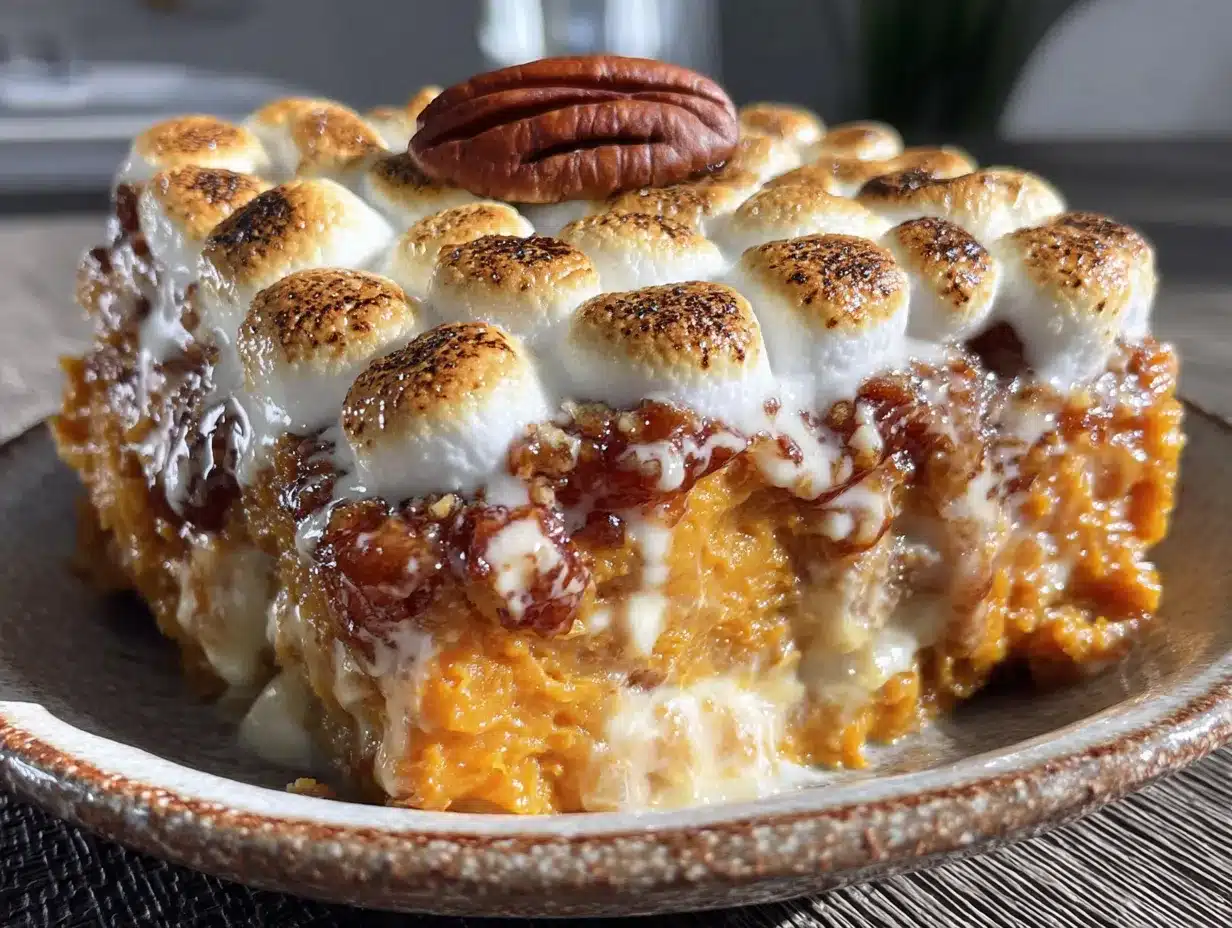
Let’s get cooking. This method has evolved over several Thanksgivings, and I’ve learned a few things the hard way so you don’t have to. Trust me on the roasting step—it makes a world of difference.
- Preheat your oven to 400°F (200°C). Position a rack in the middle. While it’s heating, scrub your sweet potatoes clean. You can peel them now or after roasting—I find it easier to peel after they’re soft.
- Roast the sweet potatoes. Prick each sweet potato a few times with a fork (this lets steam escape and prevents explosions—learned that one the messy way). Place them directly on the oven rack or on a baking sheet. Roast for 45-60 minutes, until they’re very soft and a knife slides in with no resistance. The skins will look wrinkled and might leak a little caramelized syrup—that’s good.
- Let them cool slightly. When they’re cool enough to handle but still warm, peel off the skins. They should slip right off. If any sticky bits stick to your fingers, just lick them off—no judgment here.
- Mash the potatoes. Transfer the peeled potatoes to a large mixing bowl. Mash them with a potato masher or fork until mostly smooth. I like a few small lumps for texture, but go ahead and make it silky if that’s your thing. (Note: If you want ultra-smooth potatoes, use a food processor, but don’t over-process or they’ll become gummy.)
- Add the wet ingredients. To the mashed potatoes, add the melted coconut oil, maple syrup, vanilla extract, beaten egg, salt, cinnamon, and nutmeg. Stir everything together until well combined. The mixture should be creamy and smell like warm, spiced heaven.
- Transfer to baking dish. Lightly grease your 9×13-inch dish with a little coconut oil or cooking spray. Spread the sweet potato mixture evenly in the dish. Use a spatula to smooth the top—this helps the marshmallows sit evenly.
- First bake. Place the dish in the oven (still at 400°F) and bake for 20 minutes, uncovered. The potatoes will set and the edges will start to look slightly golden. This step is crucial—if you add marshmallows to cold potatoes, they’ll just melt into a puddle instead of toasting.
- Add the marshmallows. Remove the dish from the oven. Sprinkle the mini marshmallows evenly over the top. If you’re using pecans, scatter them over the marshmallows now. Return to the oven.
- Final bake. Bake for another 8-10 minutes, watching closely. The marshmallows should be puffed and golden brown—not burnt. I usually start checking at 7 minutes because ovens vary, and burnt marshmallows are sad marshmallows.
- Rest before serving. Let the casserole sit for 5 minutes before serving. This allows the marshmallows to set slightly so they don’t slide off when you scoop. Plus, it gives you a moment to admire your work.
Cooking Tips & Techniques
I’ve made this casserole more times than I can count, and I’ve definitely had my share of mishaps. Here’s what I’ve learned so you can skip the trial and error.
Roast, don’t boil. I know boiling is faster, but roasting concentrates the sweetness and gives you a drier potato. Boiled potatoes absorb water and can make your casserole watery. Roasted potatoes are creamy and rich without any extra effort. Trust me on this one—it’s the single biggest upgrade you can make.
Don’t over-mash. Over-mashed sweet potatoes can turn gummy, especially if you use a food processor. I aim for a slightly rustic texture. If you want it silky, use a potato ricer instead—it gives you smooth potatoes without the glue factor.
Watch the marshmallows like a hawk. Marshmallows go from perfectly toasted to burnt in about 30 seconds. I set a timer for 7 minutes and then watch them like I’m guarding the last slice of pie. The perfect marshmallow is puffed, golden on the edges, and still soft in the center.
Make it ahead. This casserole is a lifesaver for busy holidays. Prepare the sweet potato mixture (steps 1-6) up to two days in advance. Store it covered in the fridge. When you’re ready to serve, bake it at 400°F for 25 minutes (add 5 minutes since it’s cold), then add marshmallows and bake another 8-10 minutes.
Double the batch. This recipe fits perfectly in a 9×13 dish, but if you’re feeding a crowd, double it and use a 9×13 and an 8×8. I’ve never had leftovers of this dish—ever.
Variations & Adaptations
One of the best things about this recipe is how flexible it is. I’ve tried several variations over the years, and they’ve all been winners in their own way.
Vegan Version: Replace the egg with a flax egg (1 tablespoon ground flaxseed mixed with 3 tablespoons water, let sit for 5 minutes). Use vegan marshmallows—Dandies brand works beautifully. The texture is slightly less fluffy but still delicious. I made this for a vegan friend’s potluck and no one noticed the difference.
Paleo-Friendly: Skip the marshmallows entirely and top with a crumble made from 1/2 cup chopped pecans, 2 tablespoons coconut oil, 2 tablespoons maple syrup, and 1/4 cup almond flour. Bake for an extra 10 minutes until the topping is golden and crunchy. Honestly, I sometimes prefer this version—the nutty crunch is amazing.
Spiced-Up Version: Add 1/4 teaspoon ground ginger and a pinch of cayenne pepper to the potato mixture. The heat balances the sweetness and adds a surprising depth. I tried this on a whim one Thanksgiving and it was a hit with the adventurous eaters at the table.
Low-Sugar Option: Reduce the maple syrup to 1 tablespoon and skip the marshmallows. Top with a mixture of 1/4 cup chopped pecans and 1 tablespoon coconut sugar. The natural sweetness of roasted sweet potatoes is enough to satisfy, and the pecans add a toasty flavor.
Serving & Storage Suggestions
This casserole is best served warm, straight from the oven, when the marshmallows are still gooey and the potatoes are piping hot. I like to set it on the table with a large spoon and let everyone dig in family-style.
What to serve with it: This dish is a natural partner for roasted turkey or chicken, but don’t limit it to holidays. It’s amazing alongside grilled pork chops, baked ham, or even a simple roast chicken. For a vegetarian meal, pair it with a hearty lentil loaf or stuffed acorn squash. A crisp green salad with a tangy vinaigrette cuts through the sweetness beautifully.
Storage: Leftovers (if you have any) keep well in an airtight container in the fridge for up to 4 days. The marshmallows will soften, but the flavor is still fantastic. I actually love cold leftovers straight from the fridge—the sweetness is even more pronounced.
Reheating: The best way to reheat is in the oven at 350°F for 10-15 minutes, covered with foil to prevent the marshmallows from burning. You can also microwave individual portions for 1-2 minutes, but the marshmallows won’t be as toasty. If you’re reheating a large portion, I like to add a few fresh marshmallows on top before reheating for that fresh-toasted effect.
Freezing: You can freeze the unbaked sweet potato mixture (without marshmallows) for up to 3 months. Thaw overnight in the fridge, then bake as directed, adding marshmallows at the end. The texture is still creamy and delicious.
Nutritional Information & Benefits
This lightened up version is a far cry from the butter-and-sugar bomb of traditional recipes. Here’s what you’re getting in a serving (about 3/4 cup, with marshmallows):
| Nutrient | Amount per Serving |
|---|---|
| Calories | 210 |
| Total Fat | 6g |
| Saturated Fat | 4g |
| Carbohydrates | 38g |
| Fiber | 5g |
| Sugar | 16g |
| Protein | 3g |
| Vitamin A | 380% DV |
| Vitamin C | 20% DV |
| Potassium | 540mg |
Sweet potatoes are a powerhouse of nutrition. They’re loaded with beta-carotene, which your body converts to vitamin A for healthy vision and immune function. The fiber keeps you full and supports digestion. By swapping butter for coconut oil and cutting the sugar in half, this recipe keeps all the flavor with a fraction of the guilt. It’s naturally gluten-free and can easily be made vegan or paleo. The only potential allergen is the egg, but the flax egg substitution works perfectly.
Conclusion
This lightened up marshmallow sweet potato casserole has become my go-to dish for every gathering, and it all started with a borrowed corkscrew and a neighbor who didn’t realize she was sharing something special. It’s proof that you don’t need a stick of butter and a cup of sugar to make something unforgettable. The sweet potatoes shine, the marshmallows toast to golden perfection, and every bite feels like a warm hug.
I’d love for you to try this recipe and make it your own. Maybe you’ll add extra cinnamon, swap the pecans for walnuts, or skip the marshmallows entirely and go for a crunchy topping. Whatever you do, let me know how it turns out. Drop a comment below, share your photos, or tell me about your own “fixed” recipe that became a family favorite. This dish is meant to be shared—just like that moment in Jenna’s kitchen. Happy cooking, friends!
Frequently Asked Questions
Can I use canned sweet potatoes instead of fresh?
You can, but I don’t recommend it. Canned sweet potatoes are often packed in syrup and have a softer, mushier texture. Roasting fresh sweet potatoes gives you better flavor and a creamier consistency. If you’re short on time, you can microwave the sweet potatoes instead—prick them with a fork and microwave on high for 8-10 minutes, turning once.
Can I make this casserole dairy-free?
Absolutely! This recipe is already dairy-free if you use coconut oil instead of butter. The marshmallows are typically dairy-free as well (most brands don’t contain dairy), but always check the label to be sure. For a vegan version, use a flax egg and vegan marshmallows.
Why did my marshmallows turn into a puddle?
This usually happens if the sweet potato mixture is too hot when you add the marshmallows, or if you add them too early. Make sure to bake the potato mixture for 20 minutes first so it’s set and slightly cooled. Then add the marshmallows and bake just until they’re puffed and golden—usually 8-10 minutes. Also, avoid over-stirring the marshmallows into the hot potatoes.
Can I prepare this casserole the night before?
Yes! Prepare the sweet potato mixture completely (steps 1-6), spread it in the baking dish, and cover it tightly with plastic wrap or foil. Store it in the fridge overnight. The next day, let it sit at room temperature for 30 minutes, then bake as directed, adding an extra 5 minutes to the first bake since it’s starting cold. Add marshmallows at the end.
How do I get perfectly toasted marshmallows without burning them?
The key is watching closely and using the right oven rack. Place the dish on the middle rack and check at 7 minutes. If the marshmallows are golden on top but not quite done, switch the oven to broil for 30-60 seconds—but don’t walk away! Broiling can go from perfect to burnt in seconds. I’ve lost many a marshmallow to the broiler, so set a timer and stay nearby.
Pin This Recipe!
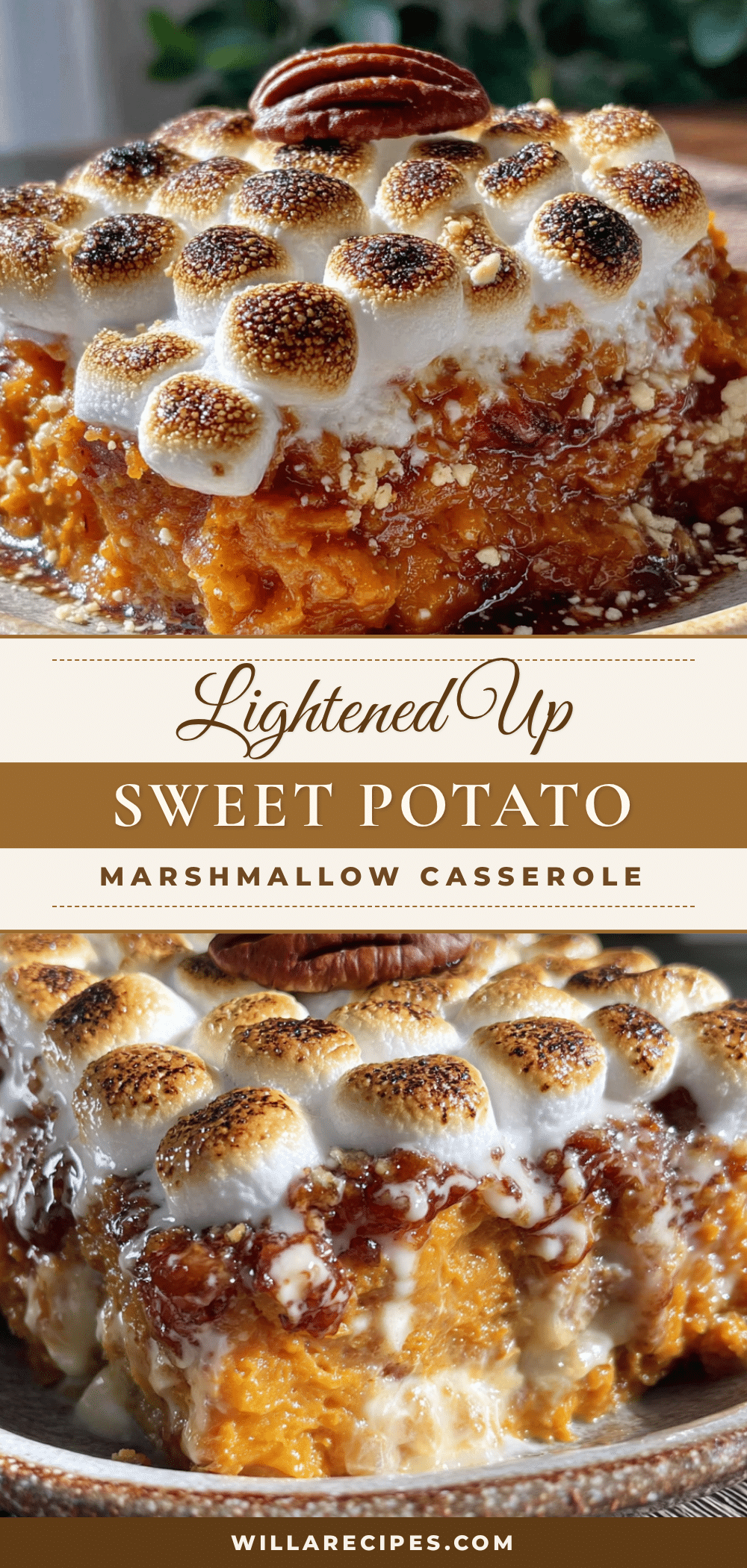
Lightened Up Marshmallow Sweet Potato Casserole

A lighter version of the classic sweet potato casserole, roasted to concentrate natural sweetness and topped with gooey toasted marshmallows. It’s comfort food reimagined—lighter, brighter, but with the same soul-soothing satisfaction.
- Prep Time: 15 minutes
- Cook Time: 30 minutes
- Total Time: 45 minutes
- Yield: 8 servings 1x
- Category: Side Dish
- Cuisine: American
Ingredients
- 3 pounds sweet potatoes (about 4–5 medium)
- 2 tablespoons coconut oil, melted
- 3 tablespoons pure maple syrup
- 1 teaspoon pure vanilla extract
- 1 large egg, lightly beaten
- 1/2 teaspoon fine sea salt
- 1 teaspoon ground cinnamon
- 1/4 teaspoon freshly grated nutmeg
- 1 1/2 cups mini marshmallows
- 1/2 cup chopped pecans (optional)
Instructions
- Preheat your oven to 400°F (200°C). Position a rack in the middle. Scrub the sweet potatoes clean. You can peel them now or after roasting.
- Prick each sweet potato a few times with a fork. Place them directly on the oven rack or on a baking sheet. Roast for 45-60 minutes, until very soft and a knife slides in with no resistance.
- Let the sweet potatoes cool slightly until they are cool enough to handle but still warm. Peel off the skins.
- Transfer the peeled potatoes to a large mixing bowl. Mash them with a potato masher or fork until mostly smooth, leaving a few small lumps for texture.
- Add the melted coconut oil, maple syrup, vanilla extract, beaten egg, salt, cinnamon, and nutmeg to the mashed potatoes. Stir until well combined.
- Lightly grease a 9×13-inch baking dish with coconut oil or cooking spray. Spread the sweet potato mixture evenly in the dish and smooth the top with a spatula.
- Bake the dish (uncovered) at 400°F for 20 minutes, until the potatoes are set and the edges start to look slightly golden.
- Remove the dish from the oven. Sprinkle the mini marshmallows evenly over the top. If using pecans, scatter them over the marshmallows.
- Return to the oven and bake for another 8-10 minutes, watching closely, until the marshmallows are puffed and golden brown.
- Let the casserole rest for 5 minutes before serving.
Notes
Roast the sweet potatoes instead of boiling to concentrate their natural sweetness and avoid a watery casserole. Watch the marshmallows closely as they can go from perfectly toasted to burnt in about 30 seconds. For make-ahead, prepare the sweet potato mixture up to two days in advance and store covered in the fridge; add 5 minutes to the first bake when baking from cold.
Nutrition
- Serving Size: 3/4 cup
- Calories: 210
- Sugar: 16
- Sodium: 210
- Fat: 6
- Saturated Fat: 4
- Carbohydrates: 38
- Fiber: 5
- Protein: 3
Keywords: sweet potato casserole, lightened up, marshmallow, Thanksgiving, holiday side dish, healthy sweet potato casserole