My sister-in-law asked why I couldn’t just skip the commercial yeast and use my sourdough starter for the focaccia. I started to explain why that wouldn’t work—then stopped. Honestly, I had no good reason. I just assumed yeast was necessary for that signature airy crumb. But she was looking at me with that patient expression that says, “You’re overthinking this, aren’t you?” So I shrugged, grabbed my bubbly starter, and figured we’d end up with dense bread that would still be fine slathered in butter. Wrong. So wonderfully wrong.
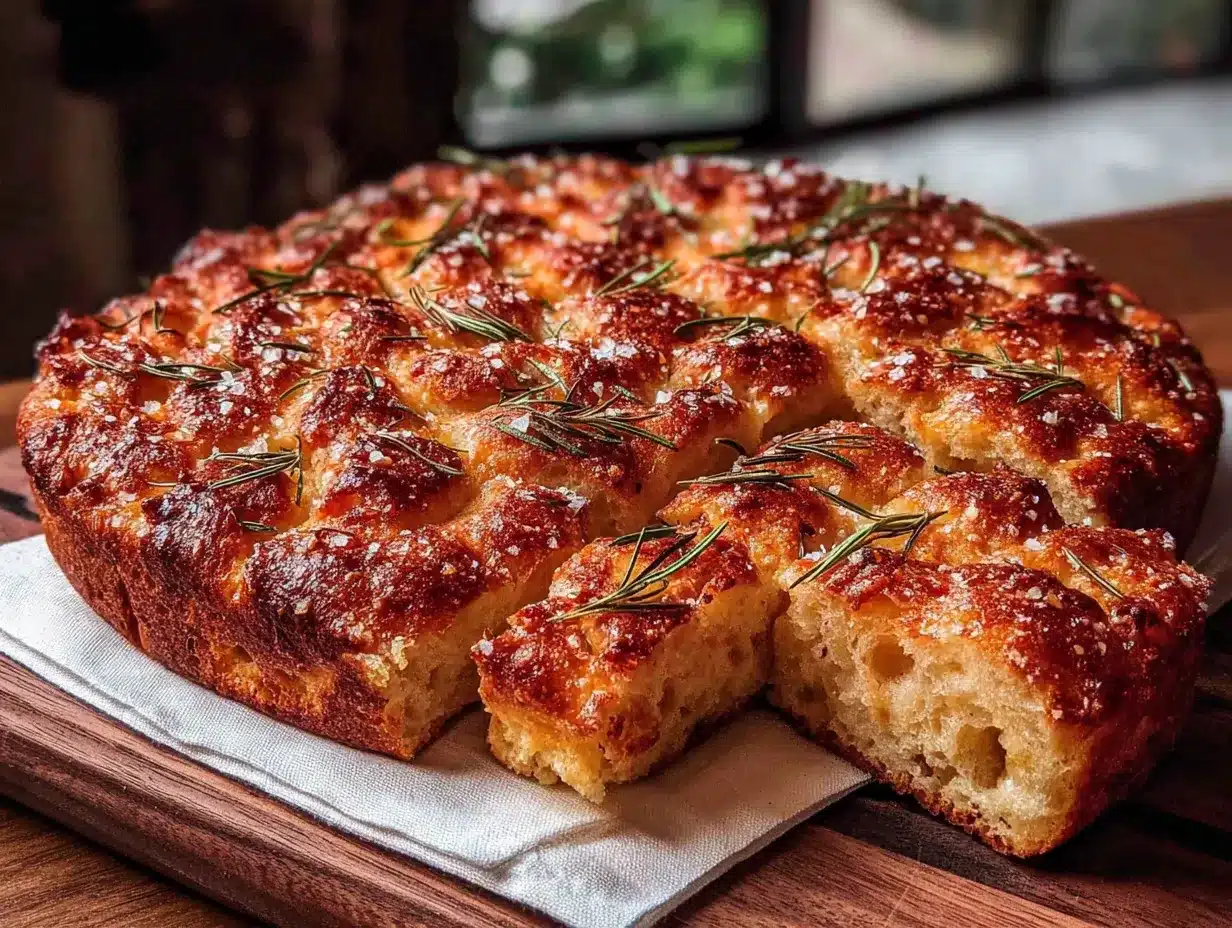
That first batch came out of the oven looking like a golden, blistered landscape of dimples and crispy edges. The rosemary had toasted into these little fragrant spears, and the olive oil had pooled in all the right places. I remember standing there with a kitchen towel over my shoulder, just staring at it. My sister-in-law took the first bite, closed her eyes, and said, “Told you.” She didn’t even say it smugly—just matter-of-fact, like she’d known all along. And the thing is, she was right. That sourdough focaccia was better than any yeast version I’d ever made. It had this subtle tang that cut through the richness of the olive oil, and the texture was somehow both lighter and more substantial.
It was a Tuesday in early December, and the kitchen smelled like a holiday market. I’d been planning to make a simple rosemary focaccia for a small family dinner we were hosting that weekend, but after that accidental success, I knew this was the version I’d be bringing to every gathering from then on. Maybe you’ve been there—stubbornly sticking to a method because it’s what you’ve always done, only to discover that the shortcut or substitution someone suggested actually improves everything. That’s this recipe. It’s the one that taught me to listen more and lecture less. And now, I make it every year for the holiday table, and it’s never, ever the first thing to disappear from the serving board.
Why You’ll Love This Recipe
This Perfect Rosemary Sourdough Focaccia isn’t just another bread recipe. It’s the kind of showstopper that makes people ask for the recipe before they’ve even swallowed their first bite. And honestly, it’s surprisingly simple to pull off, even when you’re juggling a dozen other holiday dishes.
- Made with a sourdough starter : No commercial yeast required. If you keep a starter alive (or want an excuse to start one), this is your recipe. The natural fermentation adds a gentle tang that pairs beautifully with rosemary and olive oil.
- Perfect for holiday hosting : You can prep the dough the night before and let it cold-ferment in the fridge. That means less stress on the day of your gathering. Just pull it out, let it warm up, dimple it, and bake. Easy.
- Simple, pantry-friendly ingredients : Flour, water, olive oil, salt, rosemary, and your sourdough starter. That’s it. No weird additives or hard-to-find specialty items.
- Always gets rave reviews : The texture is incredible—crispy on the bottom, golden and blistered on top, with an airy, chewy crumb that’s perfect for dipping, topping, or just eating plain. Kids love the fun dimples, and adults love the sophisticated flavor.
- Unbelievably forgiving : Focaccia is one of the most beginner-friendly sourdough projects. The dough is wet and sticky, and you don’t need to shape it into a perfect boule. Just stretch it into the pan and let it do its thing.
This isn’t just another focaccia recipe you’ll find online. The secret here is the long, cold fermentation that develops deep flavor and that signature open crumb. Plus, using a sourdough starter instead of yeast gives you a bread that’s more digestible and stays fresh longer. It’s the kind of bread that makes you close your eyes after the first bite—comforting, impressive, and utterly satisfying. Perfect for impressing guests without breaking a sweat.
What Ingredients You Will Need
This Perfect Rosemary Sourdough Focaccia uses simple, wholesome ingredients to deliver that incredible texture and flavor. Most of these are pantry staples if you already maintain a sourdough starter.
- Bread flour : 500g (about 4 cups). I prefer King Arthur Bread Flour for its higher protein content, which gives the focaccia a better structure and chew. You can use all-purpose flour in a pinch, but the crumb won’t be quite as airy.
- Active sourdough starter : 200g (about 1 cup), bubbly and fed within the last 8-12 hours. A hungry starter won’t give you the rise you need. Feed it the night before you plan to mix the dough.
- Warm water : 375g (about 1 ½ cups), around 80°F (27°C). Not too hot, or you’ll kill the beneficial bacteria in your starter. I use filtered water to avoid any chlorine issues.
- Extra-virgin olive oil : 60g (about ¼ cup) for the dough, plus another 2-3 tablespoons for the pan and topping. Use a good-quality oil here—it’s a major flavor component. I love California Olive Ranch for everyday baking.
- Fine sea salt : 10g (about 2 teaspoons). I use Redmond’s Real Salt for its mineral content, but any fine sea salt works. Avoid table salt with anti-caking agents if you can.
- Fresh rosemary : 2-3 tablespoons, finely chopped. Fresh is non-negotiable here. Dried rosemary won’t give you the same aromatic punch. Strip the leaves from the woody stems before chopping.
- Flaky sea salt : For finishing. Maldon is my go-to. Those little crunchy crystals on top make a huge difference.
Substitution Guidance: If you don’t have bread flour, use all-purpose flour, but reduce the water slightly (start with 350g). For a gluten-free version, this recipe isn’t ideal, but you can try a 1:1 gluten-free flour blend with added xanthan gum. Just know the texture will be different. If you’re out of fresh rosemary, try fresh thyme or a mix of dried herbs de Provence (use about half the amount). For a dairy-free option, you’re already good—this recipe contains no dairy.
Equipment Needed
You don’t need a lot of fancy gear to make this Perfect Rosemary Sourdough Focaccia. Here’s what I use:
- Large mixing bowl : A 4-quart bowl is ideal. I use a ceramic one because it doesn’t conduct heat, but glass or stainless steel works fine.
- Digital kitchen scale : Seriously, get one. Measuring flour by volume is inconsistent. A scale ensures you get the hydration right every time. I’ve had my Escali for years and it’s still going strong.
- Bench scraper : Helps with folding the dough and cleaning up sticky messes. A plastic dough scraper is cheap and incredibly useful.
- 9×13-inch baking pan : Metal is best for even browning. Glass or ceramic works, but you might need to bake a few minutes longer. I love my USA Pan for its non-stick coating.
- Plastic wrap or a reusable shower cap : For covering the dough during fermentation. A damp kitchen towel works too, but plastic wrap keeps the moisture in better.
- Cooling rack : Essential for getting that crispy bottom. If you let the focaccia cool in the pan, the steam will make it soggy.
- Pastry brush (optional) : For brushing olive oil on top before baking. You can also just drizzle it.
Budget-friendly tip: Don’t have a digital scale? Start with 4 cups of flour and 1 ½ cups of water. It won’t be as precise, but it’ll still work. And if you don’t have a 9×13 pan, use a cast-iron skillet or a round cake pan—just adjust the baking time.
Preparation Method
This recipe takes a little patience, but the active work time is only about 20 minutes. The rest is just waiting for the sourdough to do its magic.
- Mix the dough (10 minutes). In a large mixing bowl, combine the bread flour and fine sea salt. In a separate bowl or measuring cup, whisk together the warm water, active sourdough starter, and 60g of olive oil until the starter is mostly dissolved. Pour the wet ingredients into the dry ingredients and mix with a spatula or your hand until no dry flour remains. The dough will be very sticky and shaggy—that’s exactly what you want. Cover the bowl with plastic wrap and let it rest for 30 minutes. This autolyse step lets the flour absorb the water and makes the dough easier to work with.
- Perform stretch and folds (5 minutes active over 2 hours). After the rest, wet your hand slightly to prevent sticking. Grab one side of the dough, stretch it up as far as it will go without tearing, and fold it over the top. Rotate the bowl a quarter turn and repeat. Do this 4 times total (one full rotation). Cover and rest for 30 minutes. Repeat this stretch and fold process 3 more times, for a total of 4 sets over 2 hours. By the last set, the dough should feel smoother and more elastic. If it’s still very sticky, that’s okay—sourdough focaccia dough is wetter than regular bread dough.
- Bulk fermentation (8-12 hours at room temperature, or 12-24 hours in the fridge). After the stretch and folds, cover the bowl tightly and let it sit at room temperature until the dough has nearly doubled in size and is bubbly on top. At 70°F (21°C), this usually takes about 10 hours. If your kitchen is warmer, it might take less time. For the best flavor and convenience, I recommend refrigerating the dough after the stretch and folds. Let it cold-ferment for at least 12 hours and up to 24. This develops that wonderful sourdough tang and makes the dough easier to handle.
- Prepare the pan (5 minutes). When you’re ready to bake, generously coat your 9×13-inch baking pan with 2 tablespoons of olive oil. Make sure the bottom and sides are well coated. If you’re using a metal pan, you can place it in the oven while it preheats to get the oil hot—this helps create an incredibly crispy bottom.
- Transfer and stretch the dough (5 minutes). Gently scrape the dough out of the bowl into the oiled pan. It will be soft and full of gas bubbles—try not to deflate it too much. Let it rest for 10 minutes to relax the gluten. Then, using oiled fingertips, gently stretch and press the dough to fill the pan. If it resists, let it rest another 10 minutes and try again. Don’t force it, or you’ll tear the dough.
- Final proof (2-3 hours). Cover the pan with plastic wrap or a damp towel and let the dough proof at room temperature until it’s puffy and has risen to about 1 inch thick. This usually takes 2-3 hours, depending on your kitchen temperature. You’ll know it’s ready when you poke it gently and the dough slowly springs back, leaving a slight indentation.
- Dimple and top (5 minutes). About 20 minutes before baking, preheat your oven to 425°F (220°C) with a rack in the middle. Uncover the proofed dough. Drizzle with another tablespoon of olive oil. Then, using oiled fingertips, press deep dimples all over the surface of the dough—right down to the bottom of the pan. Don’t be shy. These dimples are what hold all that olive oil and create the classic focaccia look. Sprinkle the chopped fresh rosemary evenly over the top, followed by a generous pinch of flaky sea salt.
- Bake (25-30 minutes). Place the pan in the preheated oven. Bake until the focaccia is deep golden brown on top and sounds hollow when tapped on the bottom. If the top is browning too quickly but the bottom isn’t done, tent loosely with foil for the last 5-10 minutes. The internal temperature should reach about 200°F (93°C) if you want to check with a thermometer.
- Cool (at least 20 minutes). Let the focaccia cool in the pan for 5 minutes, then carefully transfer it to a wire rack. Don’t skip this step—cooling on a rack keeps the bottom crispy. Let it cool for at least 20 minutes before slicing. I know it’s hard to wait, but the texture is much better when it’s not piping hot.
Cooking Tips & Techniques
I’ve made this Perfect Rosemary Sourdough Focaccia more times than I can count, and I’ve definitely learned a few things the hard way. Here are my best tips:
- Don’t skip the stretch and folds. I know it seems fussy, but this is what builds the gluten structure that gives focaccia its airy crumb. If you skip it, you’ll end up with a flat, dense bread. Set a timer and make it part of your routine while you’re doing other things in the kitchen.
- Use room temperature water. If your water is too cold, the fermentation will slow way down. Too hot, and you’ll kill the good bacteria in your starter. Aim for about 80°F (27°C)—it should feel like warm bath water.
- Be generous with the olive oil. This is not the time to skimp. The oil in the pan creates that crispy, almost fried bottom, and the oil on top helps the crust get golden and blistered. I’ve made the mistake of using too little oil, and the focaccia came out pale and sad.
- Let it proof until it’s truly puffy. Underproofed focaccia will be dense and doughy. It should look pillowy and jiggle slightly when you shake the pan. If you’re unsure, give it another 30 minutes. Overproofing is harder to do with sourdough than with commercial yeast, so err on the side of longer.
- Get your dimples deep. Press all the way to the bottom of the pan. Those dimples are where the olive oil pools and creates those crispy, flavorful pockets. I use my index and middle fingers together for deeper dimples.
- Preheat the pan for extra crunch. If you’re using a metal pan, place it in the oven with the oil while it preheats. The hot oil will immediately start crisping the bottom of the dough when you transfer it. Just be careful—the pan will be very hot.
One time, I forgot to add the salt to the dough. I realized it halfway through the stretch and folds and tried to work it in, but it never fully dissolved. The focaccia was edible, but it tasted flat and the texture was off. Don’t be like me—add the salt to the flour and mix it in before adding the wet ingredients. Trust me on this.
Variations & Adaptations
This Perfect Rosemary Sourdough Focaccia is wonderfully adaptable. Here are some of my favorite variations:
- Garlic and Herb Focaccia : Add 3-4 cloves of thinly sliced garlic along with the rosemary. The garlic roasts into these sweet, mellow pockets of flavor. I also like to sprinkle dried oregano or thyme into the olive oil before dimpling.
- Caramelized Onion and Feta : While the dough is proofing, caramelize 2 large onions in a bit of olive oil until they’re deep golden and jammy. After dimpling, scatter the onions and crumbled feta cheese over the top before baking. This version is especially good for a holiday appetizer.
- Sun-Dried Tomato and Olive : Chop ¼ cup of oil-packed sun-dried tomatoes and ¼ cup of pitted Kalamata olives. Press them into the dimples before baking. The briny, tangy flavors are incredible with the sourdough tang.
- Everything Bagel Focaccia : Skip the rosemary and top the dimpled dough with everything bagel seasoning (sesame seeds, poppy seeds, dried garlic, dried onion, and salt). This is my go-to for brunch—it’s amazing with cream cheese and smoked salmon.
- Whole Wheat Version : Substitute up to 50% of the bread flour with whole wheat flour. You’ll need to increase the water slightly (add 25-50g) because whole wheat absorbs more liquid. The flavor will be nuttier and more rustic.
Personally, I love the caramelized onion and feta version for holiday gatherings. It feels a little more special, and the salty feta pairs beautifully with the tangy sourdough. Just make sure you press the toppings into the dough so they don’t fall off when you slice it.
Serving & Storage Suggestions
This Perfect Rosemary Sourdough Focaccia is best served warm or at room temperature. If you’re serving it as part of a holiday meal, here are some ideas:
- As a bread basket star : Cut it into squares or strips and arrange on a wooden board. Serve with a dish of good olive oil and balsamic vinegar for dipping.
- As an appetizer : Slice it in half horizontally, toast it lightly, and use it for mini sandwiches with prosciutto, fresh mozzarella, and arugula. Or just serve it alongside a charcuterie board.
- Alongside soup or salad : It’s perfect with a bowl of minestrone, tomato basil soup, or a hearty winter salad.
- For breakfast : Toast leftover focaccia and top it with a fried egg and a sprinkle of flaky salt. Trust me on this one.
Storage: Store leftover focaccia in an airtight container at room temperature for up to 3 days. Do not refrigerate—it will dry out and go stale faster. If you need to keep it longer, wrap it tightly in plastic wrap and then foil, and freeze for up to 3 months.
Reheating: The best way to reheat focaccia is in a 350°F (175°C) oven for 5-10 minutes. This restores the crispy crust. You can also reheat it in a toaster oven or air fryer. Avoid the microwave—it will make the bread rubbery and sad.
The flavor actually improves after a day or two. The rosemary infuses the olive oil more deeply, and the sourdough tang becomes more pronounced. If you can resist eating it all in one sitting, it’s even better the next day.
Nutritional Information & Benefits
Here’s an approximate nutritional breakdown per serving (1 square, assuming 12 servings):
- Calories : 220
- Fat : 8g
- Carbohydrates : 32g
- Fiber : 1g
- Protein : 5g
- Sodium : 380mg
Health Benefits: Sourdough fermentation offers some unique benefits. The natural fermentation process breaks down phytic acid, making the minerals in the flour more bioavailable. It also produces beneficial bacteria and prebiotics that support gut health. Plus, sourdough has a lower glycemic index than bread made with commercial yeast, meaning it won’t spike your blood sugar as dramatically.
Dietary Considerations: This recipe is dairy-free, nut-free, and egg-free. It contains gluten. For a lower-sodium version, reduce the salt in the dough to 7g (about 1 ½ teaspoons) and use a light hand with the flaky salt on top. For a lower-fat version, reduce the olive oil in the pan to 1 tablespoon, but know that the texture won’t be as crispy or luxurious.
I personally love that this bread feels indulgent but is actually made with simple, whole ingredients. It’s the kind of food that nourishes both body and soul, especially when shared around a holiday table.
Conclusion
This Perfect Rosemary Sourdough Focaccia has become a non-negotiable part of my holiday table. It’s the bread that taught me to trust a beginner’s instinct, to let go of rigid rules, and to embrace the happy accidents that happen in the kitchen. Every time I pull a golden, bubbly pan out of the oven, I think of that Tuesday afternoon with my sister-in-law, and I smile.
The best part? It’s forgiving. It’s flexible. And it’s genuinely impressive without requiring hours of hands-on work. Whether you’re hosting a big holiday dinner or just want a beautiful bread to share with friends, this focaccia delivers. Don’t be afraid to make it your own—swap in different herbs, add toppings, or experiment with the hydration level. That’s the beauty of sourdough. It’s alive, and it responds to your touch.
I’d love to hear how yours turns out. Did you try a variation? Did you serve it with something amazing? Drop a comment below and let me know. And if you share a photo on Pinterest, tag me—I want to see your beautiful bread on the holiday table.
Frequently Asked Questions
Can I use a sourdough discard for this recipe?
You can, but the fermentation will be slower and the rise might not be as impressive. For best results, use an active, bubbly starter that’s been fed within the last 8-12 hours. If you only have discard, add ¼ teaspoon of commercial yeast to help with the rise.
Why is my focaccia dense and not airy?
This usually happens for one of three reasons: the dough wasn’t fermented long enough, the gluten wasn’t developed enough (skip the stretch and folds), or the dough was overhandled when transferring to the pan. Be patient with fermentation and handle the dough gently.
Can I make this recipe gluten-free?
This specific recipe is designed for wheat flour, but you can try a 1:1 gluten-free flour blend that contains xanthan gum. The texture will be different—denser and less airy—but it can still be delicious. You may need to adjust the water amount.
How do I know when the focaccia is fully baked?
The top should be deep golden brown, and the bottom should sound hollow when you tap it. If you have an instant-read thermometer, the internal temperature should be around 200°F (93°C). When in doubt, bake it a few minutes longer—underbaked focaccia is gummy.
Can I freeze the unbaked dough?
Yes! After the bulk fermentation and shaping in the pan, you can freeze the unbaked focaccia. Wrap the pan tightly in plastic wrap and then foil. When you’re ready to bake, thaw it in the refrigerator overnight, then let it come to room temperature and proof until puffy before baking as directed.
Pin This Recipe!
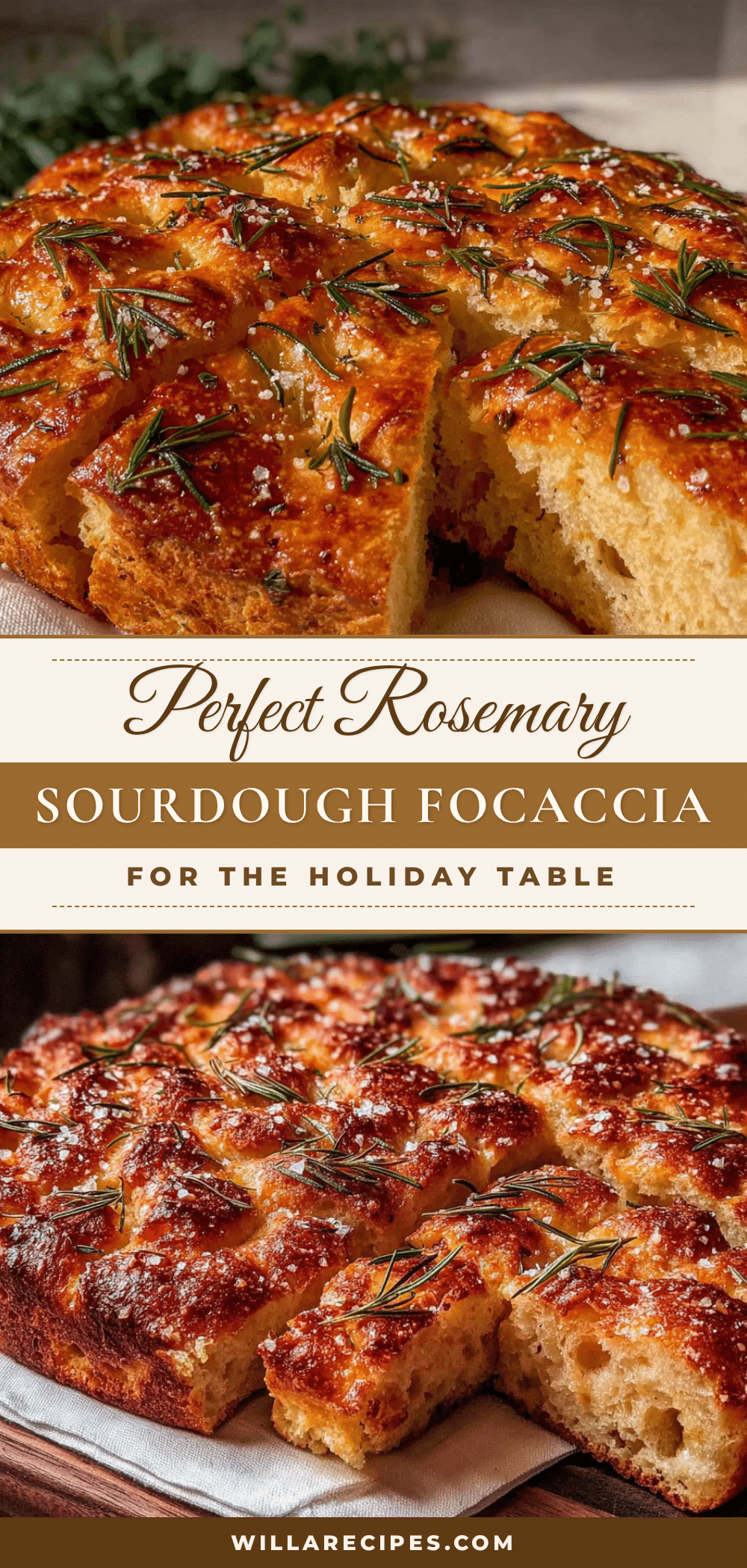
Perfect Rosemary Sourdough Focaccia: Easy Holiday Favorite
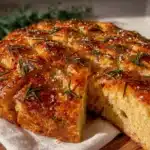
This Perfect Rosemary Sourdough Focaccia is a showstopper bread made with a sourdough starter, featuring a crispy bottom, golden blistered top, and an airy, chewy crumb with a subtle tang. It’s surprisingly simple to make and perfect for holiday hosting.
- Prep Time: 20 minutes
- Cook Time: 25-30 minutes
- Total Time: 12-24 hours (includes fermentation and proofing)
- Yield: 12 servings 1x
- Category: Bread
- Cuisine: Italian
Ingredients
- 500g (about 4 cups) bread flour
- 200g (about 1 cup) active sourdough starter, bubbly and fed within 8-12 hours
- 375g (about 1 ½ cups) warm water, around 80°F (27°C)
- 60g (about ¼ cup) extra-virgin olive oil, plus 2-3 tablespoons for pan and topping
- 10g (about 2 teaspoons) fine sea salt
- 2–3 tablespoons fresh rosemary, finely chopped
- Flaky sea salt (e.g., Maldon) for finishing
Instructions
- Mix the dough: In a large mixing bowl, combine the bread flour and fine sea salt. In a separate bowl or measuring cup, whisk together the warm water, active sourdough starter, and 60g of olive oil until the starter is mostly dissolved. Pour the wet ingredients into the dry ingredients and mix with a spatula or your hand until no dry flour remains. The dough will be very sticky and shaggy. Cover the bowl with plastic wrap and let it rest for 30 minutes.
- Perform stretch and folds: After the rest, wet your hand slightly. Grab one side of the dough, stretch it up as far as it will go without tearing, and fold it over the top. Rotate the bowl a quarter turn and repeat. Do this 4 times total (one full rotation). Cover and rest for 30 minutes. Repeat this stretch and fold process 3 more times, for a total of 4 sets over 2 hours.
- Bulk fermentation: After the stretch and folds, cover the bowl tightly and let it sit at room temperature until the dough has nearly doubled in size and is bubbly on top (about 8-12 hours at 70°F/21°C). For best flavor, refrigerate the dough for 12-24 hours after the stretch and folds.
- Prepare the pan: Generously coat a 9×13-inch baking pan with 2 tablespoons of olive oil, making sure the bottom and sides are well coated.
- Transfer and stretch the dough: Gently scrape the dough out of the bowl into the oiled pan. Let it rest for 10 minutes. Using oiled fingertips, gently stretch and press the dough to fill the pan. If it resists, let it rest another 10 minutes and try again.
- Final proof: Cover the pan with plastic wrap or a damp towel and let the dough proof at room temperature until puffy and risen to about 1 inch thick (2-3 hours).
- Dimple and top: About 20 minutes before baking, preheat your oven to 425°F (220°C). Uncover the proofed dough. Drizzle with another tablespoon of olive oil. Using oiled fingertips, press deep dimples all over the surface of the dough, right down to the bottom of the pan. Sprinkle the chopped fresh rosemary evenly over the top, followed by a generous pinch of flaky sea salt.
- Bake: Place the pan in the preheated oven and bake until deep golden brown on top and sounds hollow when tapped on the bottom (25-30 minutes). If the top is browning too quickly, tent loosely with foil for the last 5-10 minutes.
- Cool: Let the focaccia cool in the pan for 5 minutes, then carefully transfer it to a wire rack. Cool for at least 20 minutes before slicing.
Notes
For extra crunch, preheat the metal pan with oil in the oven while it preheats. Don’t skip the stretch and folds—they build gluten for an airy crumb. Use room temperature water (about 80°F/27°C). Be generous with olive oil for a crispy bottom and golden crust. Let the dough proof until truly puffy and jiggly. Press dimples all the way to the bottom of the pan. Cool on a wire rack to keep the bottom crispy. Store leftovers in an airtight container at room temperature for up to 3 days, or freeze for up to 3 months. Reheat in a 350°F (175°C) oven for 5-10 minutes.
Nutrition
- Serving Size: 1 square
- Calories: 220
- Sodium: 380
- Fat: 8
- Saturated Fat: 1
- Carbohydrates: 32
- Fiber: 1
- Protein: 5
Keywords: sourdough focaccia, rosemary focaccia, holiday bread, sourdough bread, easy focaccia, no yeast bread