I had a long-standing, firmly-held position against skillet dinners. For years, I’d watch friends toss things into a pan and call it a meal, and honestly, I felt a little sorry for them. A real dinner, in my mind, required at least two pots, a timer, and a fair amount of dishwashing commitment. Skillet meals felt like a compromise—a weeknight surrender to convenience over craft. Then my neighbor Karen, who has a way of showing up right when the dinner rush hits, walked in on a Tuesday while I was staring at a package of bratwurst and a jar of mustard, looking defeated.
“Hand me that bowl,” she said, reaching past me for a head of cabbage. I swear, I blinked and she had sliced it into ribbons, thrown it in my biggest cast iron with the sausages, and was deglazing the pan with apple cider vinegar before I could even protest. I stood there, arms crossed, ready to be unimpressed. But the smell—sharp, sweet, a little bit smoky—started to work on me. I grabbed a fork, still skeptical, and took a bite right out of the pan. That was the moment my entire stance on one-pan dinners cracked wide open. It wasn’t just good; it was the kind of meal that made me wonder why I’d been making things so hard for myself all along. I’ve been making this Quick Tangy German Sausage Skillet ever since, and let me tell you, it has completely changed the way I think about a busy weeknight.
Maybe you’ve been there—standing in your kitchen at 6 PM, tired, hungry, and completely out of ideas. You want something that feels like a real meal, not a sad bowl of cereal, but you don’t have the energy for a full production. This is that recipe. It is the dinner you turn to when you need to get food on the table fast, but you still want it to taste like you actually tried. It is tangy, savory, and deeply satisfying, and it comes together in one single skillet. Honestly, I don’t think I’ve gone a month without making it since that night with Karen.
Why You’ll Love This Recipe
This isn’t just another sausage recipe. I have tested this method at least a dozen times, tweaking the vinegar ratio, the cooking time for the cabbage, and the best way to get that perfect golden sear on the sausages. What I landed on is a dinner that delivers on every single level without asking much from you in return.
- Quick & Easy: From start to finish, this meal is on the table in about 20 minutes. No marinating, no complicated steps, just a quick sear and a quick braise.
- Simple Ingredients: You probably have most of these things in your kitchen right now. Sausage, cabbage, onion, apple cider vinegar, and a few pantry spices. No fancy grocery trip required.
- Perfect for Busy Weeknights: This is the ultimate “I forgot to plan dinner” meal. It feels hearty and complete, but it comes together faster than takeout delivery.
- Crowd-Pleaser: I have served this to my family, to friends who claim they don’t like cabbage, and even to my picky nephew. Every single time, the pan comes back empty. It has a way of winning people over.
- Unbelievably Delicious: The magic is in the balance. The tangy vinegar cuts through the richness of the sausage, while the cabbage softens and soaks up all that savory, slightly sweet flavor. It is comfort food that feels bright and fresh at the same time.
What makes this version different from all the other sausage skillets out there? It is the technique. I don’t just cook the cabbage until it’s soft; I let it caramelize just a little before adding the liquid, which brings out a natural sweetness that perfectly balances the tang. And I use a specific ratio of apple cider vinegar to broth that creates a pan sauce so good, you will want to spoon it over everything. This is not just another throw-it-in-a-pan recipe. It is my best version, born from trial, error, and a whole lot of happy eating.
What Ingredients You Will Need
This recipe relies on a short list of simple, humble ingredients that work together to create something truly special. Each one plays a critical role in building the flavor profile, so let’s talk about them.
- Smoked Sausage or Bratwurst (1 lb / 450g): This is the star of the show. I prefer a good quality smoked sausage like kielbasa or a pre-cooked bratwurst. The smoky flavor adds depth that pairs beautifully with the tangy cabbage. Look for one that is firm and plump. I have had great results with Johnsonville brats and also with a local butcher’s smoked kielbasa. If you can find it, a slightly coarser grind gives a better texture.
- Green Cabbage (1 small head, about 1.5 lbs / 680g): Cabbage is the backbone of this dish. When cooked properly, it becomes silky, sweet, and tender. You want a head that feels heavy for its size with tightly packed leaves. A small to medium head is perfect. Savoy cabbage also works well here and has a slightly milder, more buttery flavor.
- Yellow Onion (1 large): The onion provides a savory, aromatic base. As it cooks down, it adds sweetness that balances the acidity of the vinegar. You can substitute with a white or sweet onion, but yellow is my go-to for its balanced flavor.
- Apple Cider Vinegar (3 tablespoons / 45ml): This is the key to the “tangy” in the title. Do not skip it or substitute with white vinegar, which is too harsh. Apple cider vinegar has a fruity, mellow acidity that complements the pork and cabbage perfectly. It brightens the entire dish.
- Chicken or Vegetable Broth (1/2 cup / 120ml): The broth helps braise the cabbage and creates the base for the pan sauce. I use a low-sodium broth so I can control the salt level. A good quality broth makes a difference here—it adds another layer of savory flavor.
- Caraway Seeds (1 teaspoon): This is the secret ingredient that makes the dish taste authentically German. Caraway has a slightly peppery, anise-like flavor that is a classic pairing with cabbage and pork. If you absolutely hate caraway, you can leave it out, but I strongly recommend trying it at least once. It is transformative.
- Salt and Black Pepper (to taste): Simple seasoning is all you need. I use kosher salt for its clean flavor and flaky texture.
- Olive Oil or Butter (2 tablespoons): For searing the sausage and sautéing the vegetables. I use a mix of both sometimes—butter for flavor, oil to prevent it from burning.
- Optional: Fresh Parsley (for garnish): A sprinkle of fresh, chopped parsley adds a pop of color and a fresh, herbaceous note at the end. It is not essential, but it makes the dish look more finished.
Equipment Needed
One of the best things about this recipe is how little equipment it requires. You really only need a few basic tools, and you probably already own them.
- Large Skillet or Cast Iron Pan (12-inch / 30cm): This is the most important piece of equipment. You need a pan big enough to hold all the sausage and cabbage in a single layer. A cast iron skillet is ideal because it holds heat evenly and gives the sausage a beautiful sear. A large stainless steel or non-stick skillet will also work. Avoid using a pan that is too small, or the cabbage will steam instead of browning.
- Sharp Chef’s Knife: A good knife makes preparing the cabbage and onion so much easier. A dull knife is not only frustrating but also dangerous. A sharp 8-inch chef’s knife is my go-to for this job.
- Cutting Board: A sturdy, large cutting board gives you space to work. I prefer a wooden or plastic board that won’t slip around.
- Wooden Spoon or Spatula: For stirring the cabbage and scraping up the flavorful browned bits from the bottom of the pan. A wooden spoon is gentle on your cookware and works perfectly.
- Measuring Spoons and Cups: For accurately measuring the vinegar, broth, and caraway seeds.
If you don’t have a cast iron skillet, don’t worry. I have made this in a regular non-stick pan many times. The sear on the sausage might be slightly less dramatic, but the flavor is still fantastic. Just make sure your pan is large enough to avoid overcrowding.
Preparation Method

This whole process moves quickly, so it helps to have your ingredients prepped and ready to go before you turn on the heat. Trust me, once that sausage hits the pan, things happen fast.
- Prep Your Ingredients (5 minutes): Start by slicing your sausage. Cut the 1 lb (450g) of smoked sausage on a bias into 1/2-inch thick rounds. Slicing on an angle gives you more surface area for browning, which means more flavor. Next, quarter your small head of cabbage through the core, then cut out the tough core piece from each quarter. Slice the cabbage into thin ribbons, about 1/4-inch wide. Finally, thinly slice your large yellow onion. Set everything within arm’s reach of the stove.
- Sear the Sausage (5 minutes): Place your large skillet over medium-high heat and add 1 tablespoon of olive oil or butter. Once the oil is shimmering and hot, add the sliced sausage in a single layer. Let it cook undisturbed for 2-3 minutes, until the bottom is deeply browned and crispy. Flip each piece and cook for another 2 minutes on the second side. The browning here is critical—it creates a fond (those brown bits) that will flavor the entire dish. Use a slotted spoon to transfer the browned sausage to a plate and set it aside. Do not wipe out the pan.
- Sauté the Onion and Cabbage (5 minutes): Reduce the heat to medium. Add the remaining 1 tablespoon of oil or butter to the pan with the rendered sausage fat. Add the sliced onion and cook, stirring occasionally, for 2 minutes until it starts to soften and turn translucent. Add the shredded cabbage to the pan. It will look like a mountain at first, but it will wilt down significantly. Sprinkle the cabbage with 1/2 teaspoon of salt and a few grinds of black pepper. Cook, stirring frequently, for about 3-4 minutes. You want the cabbage to start to soften and get a little bit of color on the edges. Do not rush this step—a little browning on the cabbage adds sweetness.
- Add the Tangy Braising Liquid (2 minutes): Sprinkle the 1 teaspoon of caraway seeds over the cabbage and stir to combine. Pour in the 3 tablespoons of apple cider vinegar and 1/2 cup of chicken broth. Use your wooden spoon to scrape up all those delicious browned bits from the bottom of the pan. This is called deglazing, and it is where a ton of flavor lives. Let the liquid come to a simmer.
- Combine and Simmer (5 minutes): Return the browned sausage slices to the pan, nestling them down into the cabbage. Reduce the heat to medium-low, cover the skillet with a lid, and let everything simmer together for 5 minutes. This allows the flavors to meld and the cabbage to finish softening, absorbing all that tangy, savory liquid. The cabbage should be tender but not mushy, and the sauce should reduce slightly to coat everything nicely.
- Finish and Serve (1 minute): Remove the lid. Taste the cabbage and adjust the seasoning with more salt and pepper if needed. If you are using fresh parsley, sprinkle it over the top for a bright finish. Serve the Quick Tangy German Sausage Skillet hot, straight from the pan. The smell at this point is absolutely incredible—tangy, savory, and deeply comforting.
Cooking Tips & Techniques
I have made this skillet dinner more times than I can count, and I have learned a few things along the way that make a real difference. Let me share some of my hard-won wisdom.
Don’t crowd the pan. This is the number one mistake I see people make. If you pile all the sausage and cabbage in at once, the pan temperature drops, and everything steams instead of searing. You want that beautiful brown crust on the sausage. If your pan is on the smaller side, cook the sausage in two batches. It takes an extra few minutes, but the payoff in flavor is huge.
Let the cabbage get some color. I used to just stir the cabbage until it wilted, and it was fine, but it wasn’t great. Now, I let it sit in the hot pan for a minute or two before stirring it. That little bit of caramelization adds a sweetness that perfectly balances the tangy vinegar. It is a small change that makes a big difference.
Watch your heat. The apple cider vinegar can burn if the heat is too high. When you add the liquid to the pan, make sure the heat is at medium or medium-low. You want a gentle simmer, not a furious boil. A gentle simmer allows the cabbage to cook through and absorb the flavors without the liquid evaporating too quickly.
Taste and adjust. This is the most important tip I can give you. The amount of salt and pepper you need will depend on your sausage and your broth. Some sausages are saltier than others. Always taste the cabbage at the end and adjust the seasoning. A little extra salt can make all the flavors pop.
My biggest failure? The first time I made this, I used way too much vinegar. I thought “tangy” meant “sour,” and I added a full half cup. It was practically inedible. I learned that day that balance is everything. The vinegar should wake up your taste buds, not assault them. Stick with the 3 tablespoons, and you will get that perfect bright, zesty flavor.
Variations & Adaptations
This recipe is wonderfully flexible. Once you have the basic technique down, you can adapt it to suit your tastes, your pantry, or whatever you have on hand.
- Make it Spicy: If you like heat, add a pinch of red pepper flakes along with the caraway seeds. You can also use a spicy andouille sausage or a hot Italian sausage instead of the smoked sausage. The spicy kick pairs beautifully with the tangy cabbage.
- Add More Vegetables: This skillet is a great way to use up vegetables. A sliced bell pepper added with the onion is a fantastic addition. Shredded carrots or a handful of spinach stirred in at the end also work well. I have even added some diced apple along with the cabbage for an extra layer of sweetness.
- Dietary Adaptations: To make this recipe gluten-free, simply ensure your sausage and broth are certified gluten-free. Most smoked sausages are naturally gluten-free, but it is always worth checking the label. For a dairy-free version, use olive oil instead of butter. This recipe is naturally low-carb and keto-friendly as written, thanks to the cabbage and sausage.
- Different Sausage Options: Feel free to experiment with different types of sausage. Chicken or turkey smoked sausage works well for a leaner option. A good quality knackwurst or weisswurst would also be delicious. The cooking time might vary slightly if you use raw sausage—you will need to cook it through before adding the cabbage.
- Swap the Vinegar: While I strongly recommend apple cider vinegar, you can use white wine vinegar or even a splash of red wine vinegar in a pinch. The flavor will be slightly different, but it will still be tangy and delicious. Avoid balsamic vinegar, as it is too sweet and dark for this dish.
Serving & Storage Suggestions
This Quick Tangy German Sausage Skillet is a complete meal all on its own, but it is also wonderful with a few simple sides.
Serving: Serve it hot, directly from the skillet. The leftovers are actually even better the next day, as the flavors have more time to meld. I love serving this with a dollop of whole-grain mustard on the side for an extra punch of tang. A side of crusty bread or rye bread is perfect for soaking up the delicious pan juices. For a low-carb option, it is fantastic on its own or with a simple green salad dressed with a light vinaigrette to cut through the richness. Mashed potatoes or spaetzle would also be a classic and comforting accompaniment.
Storage: Store any leftovers in an airtight container in the refrigerator for up to 4 days. The flavors will continue to develop, and the cabbage will soften even more. I often make a double batch on purpose just for the leftovers.
Reheating: The best way to reheat this is in a skillet over medium-low heat. Add a splash of water or broth to the pan to help rehydrate the cabbage, and stir until everything is hot. You can also reheat it in the microwave in 30-second bursts, but the texture of the sausage will be better if you use the stovetop method. The cabbage will be a bit softer on reheating, but it is still incredibly delicious.
Nutritional Information & Benefits
This recipe is not just fast and delicious; it is also surprisingly nutritious. It is a great example of how eating well doesn’t have to be complicated or time-consuming.
Estimated Nutritional Values (per serving, based on 4 servings):
- Calories: 420-480
- Protein: 20-25g
- Fat: 30-35g
- Carbohydrates: 15-20g
- Fiber: 5-7g
- Sugar: 8-10g
Health Benefits: Cabbage is a nutritional powerhouse. It is packed with vitamin C, vitamin K, and fiber, which is great for digestion. The fiber in cabbage also helps you feel full and satisfied. Sausage provides a good amount of protein and iron. The apple cider vinegar has been linked to helping with blood sugar regulation. This meal is naturally low in carbohydrates and high in protein and fiber, making it a great option for anyone watching their carb intake or looking for a satisfying, balanced dinner. It is a meal that makes you feel good from the inside out.
Dietary Considerations: This recipe is naturally gluten-free (check your sausage and broth labels) and low-carb. It can be made dairy-free by using olive oil instead of butter.
Conclusion
I have made a lot of dinners in my time, but this Quick Tangy German Sausage Skillet has earned a permanent spot in my weekly rotation. It is the answer to that 6 PM question we all face: “What’s for dinner?” It is fast enough for a frantic Tuesday, but it tastes like something you spent an hour on. It is proof that you don’t need a long ingredient list or complicated techniques to make a meal that is deeply satisfying and full of flavor.
I love this recipe because it is forgiving. It adapts to what you have in your fridge. It gets better with time. And it always, always makes me feel like I have my act together, even on the days when I absolutely do not. I hope you give it a try and make it your own. Maybe you will add a little more spice, or swap in a different sausage. That is the beauty of a good skillet meal.
I would love to hear how it turns out for you. Did you make any changes? Did your family go back for seconds? Drop a comment below and let me know. And if you loved it, please share this recipe with a friend who needs a quick and delicious dinner idea. Happy cooking!
Frequently Asked Questions
Can I use red cabbage instead of green cabbage?
Absolutely! Red cabbage works beautifully in this recipe. It will have a slightly firmer texture and a more peppery flavor. It will also turn the dish a vibrant purple color, which is quite striking. The cooking time might be just a minute or two longer for red cabbage to become tender.
Can I make this in an instant pot or slow cooker?
This recipe is designed for speed, so the stovetop skillet method is best. For an Instant Pot, you could use the sauté function for the sausage and onions, then pressure cook on high for 2 minutes with the cabbage and liquid. For a slow cooker, you would need to sear the sausage first, then cook everything on low for 4-6 hours. The texture will be much softer, and you will lose some of that nice caramelization.
What if I don’t have apple cider vinegar?
You can substitute with white wine vinegar or even a squeeze of fresh lemon juice. The flavor profile will shift slightly, but you will still get that necessary tangy brightness. I would not recommend using balsamic or distilled white vinegar, as they are either too sweet or too harsh.
Can I use frozen cabbage instead of fresh?
I really do not recommend using frozen cabbage for this recipe. Frozen cabbage has a much higher water content and will release a lot of liquid as it cooks, resulting in a watery, mushy dish instead of a nicely caramelized one. Fresh cabbage is key to getting the right texture.
How do I make this recipe lower in fat?
To reduce the fat content, you can use a leaner chicken or turkey smoked sausage. You can also drain off some of the rendered fat from the sausage after searing, before you add the onion and cabbage. Using less oil for sautéing will also help. The flavor will still be great, just a little less rich.
Pin This Recipe!
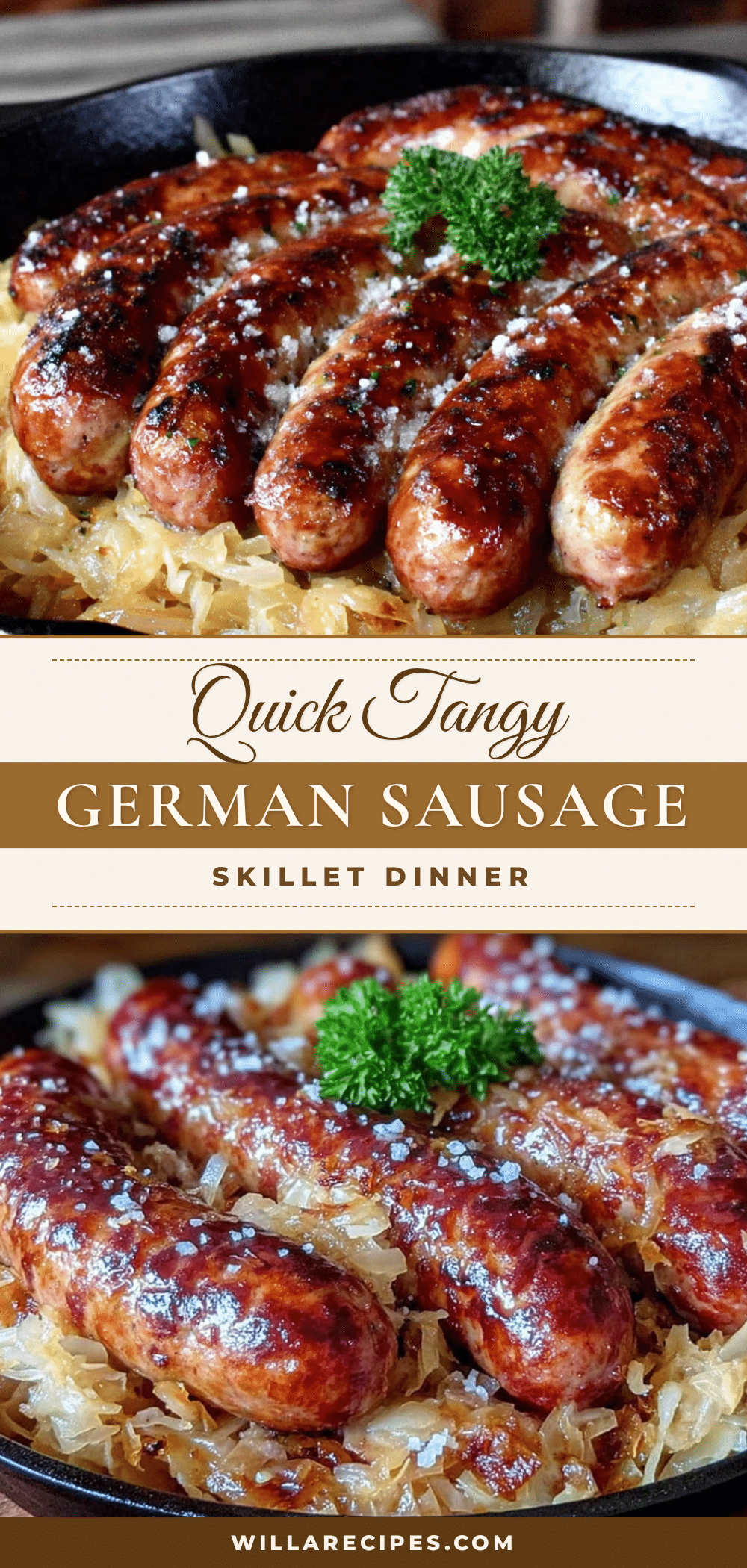
Quick Tangy German Sausage Skillet: Best 20-Minute Dinner

This Quick Tangy German Sausage Skillet is a fast, one-pan dinner that comes together in about 20 minutes. Tangy apple cider vinegar and caramelized cabbage perfectly complement smoky sausage for a deeply satisfying weeknight meal.
- Prep Time: 5 minutes
- Cook Time: 15 minutes
- Total Time: 20 minutes
- Yield: 4 servings 1x
- Category: Main Course
- Cuisine: German
Ingredients
- 1 lb (450g) smoked sausage or bratwurst, sliced into 1/2-inch rounds
- 1 small head green cabbage (about 1.5 lbs / 680g), cored and thinly sliced
- 1 large yellow onion, thinly sliced
- 3 tablespoons (45ml) apple cider vinegar
- 1/2 cup (120ml) low-sodium chicken or vegetable broth
- 1 teaspoon caraway seeds
- Salt and black pepper, to taste
- 2 tablespoons olive oil or butter (divided)
- Optional: fresh parsley, chopped, for garnish
Instructions
- Prep your ingredients: Slice sausage on a bias into 1/2-inch rounds. Quarter cabbage, remove core, and slice into thin ribbons (about 1/4-inch wide). Thinly slice onion.
- Sear the sausage: Heat 1 tablespoon oil or butter in a large skillet over medium-high heat. Add sausage in a single layer and cook undisturbed for 2-3 minutes until deeply browned. Flip and cook 2 more minutes. Transfer to a plate; do not wipe pan.
- Sauté onion and cabbage: Reduce heat to medium. Add remaining 1 tablespoon oil or butter. Cook onion for 2 minutes until softened. Add cabbage, 1/2 teaspoon salt, and pepper. Cook, stirring occasionally, for 3-4 minutes until cabbage starts to soften and brown slightly.
- Add braising liquid: Sprinkle caraway seeds over cabbage. Pour in apple cider vinegar and broth. Scrape up browned bits from pan bottom. Bring to a simmer.
- Combine and simmer: Return sausage to pan, nestling into cabbage. Reduce heat to medium-low, cover, and simmer for 5 minutes until cabbage is tender and flavors meld.
- Finish and serve: Remove lid. Taste and adjust seasoning. Garnish with parsley if desired. Serve hot.
Notes
For best results, don’t crowd the pan; sear sausage in batches if needed. Let cabbage get some color for added sweetness. Adjust heat to maintain a gentle simmer when adding vinegar. Taste and adjust seasoning at the end. Leftovers keep in the refrigerator for up to 4 days and reheat well in a skillet with a splash of broth.
Nutrition
- Serving Size: 1 serving (about 1/4
- Calories: 450
- Sugar: 9
- Sodium: 800
- Fat: 32
- Saturated Fat: 10
- Carbohydrates: 18
- Fiber: 6
- Protein: 22
Keywords: German sausage skillet, quick dinner, one-pan meal, cabbage and sausage, 20-minute dinner, tangy sausage skillet